
Close Menu
    Facebook X (Twitter) Instagram
    SciTechDaily
    • Biology
    • Chemistry
    • Earth
    • Health
    • Physics
    • Science
    • Space
    • Technology
    Facebook X (Twitter) Pinterest YouTube RSS
    SciTechDaily
    Home»Earth»South African Town Covered in Mining Waste After Dam Collapse
    Earth

    South African Town Covered in Mining Waste After Dam Collapse

    By Kathryn Hansen, NASA Earth ObservatoryOctober 23, 2022No Comments3 Mins Read
    Facebook Twitter Pinterest Telegram LinkedIn WhatsApp Email Reddit
    Share
    Facebook Twitter LinkedIn Pinterest Telegram Email Reddit
    Jagersfontein Mining Waste Dam Collapse
    A dam collapse at a diamond mine in Jagersfontein, South Africa, on September 11, 2022, released sludge that poured across the landscape, destroying homes, inundating rivers and grazing land, and injuring dozens.

    Nearly one month after the collapse of a tailings dam, the South African mining town Jagersfontein and nearby water systems remained capped with muddy debris.

    On September 11, 2022, at a diamond mine in Jagersfontein, South Africa, a dam collapsed, releasing a watery mixture of mining waste known as tailings. The sludge streamed across the landscape, inundating rivers and grazing land, destroying homes, and injuring dozens.
    Jagersfontein South Africa October 2022 Annotated
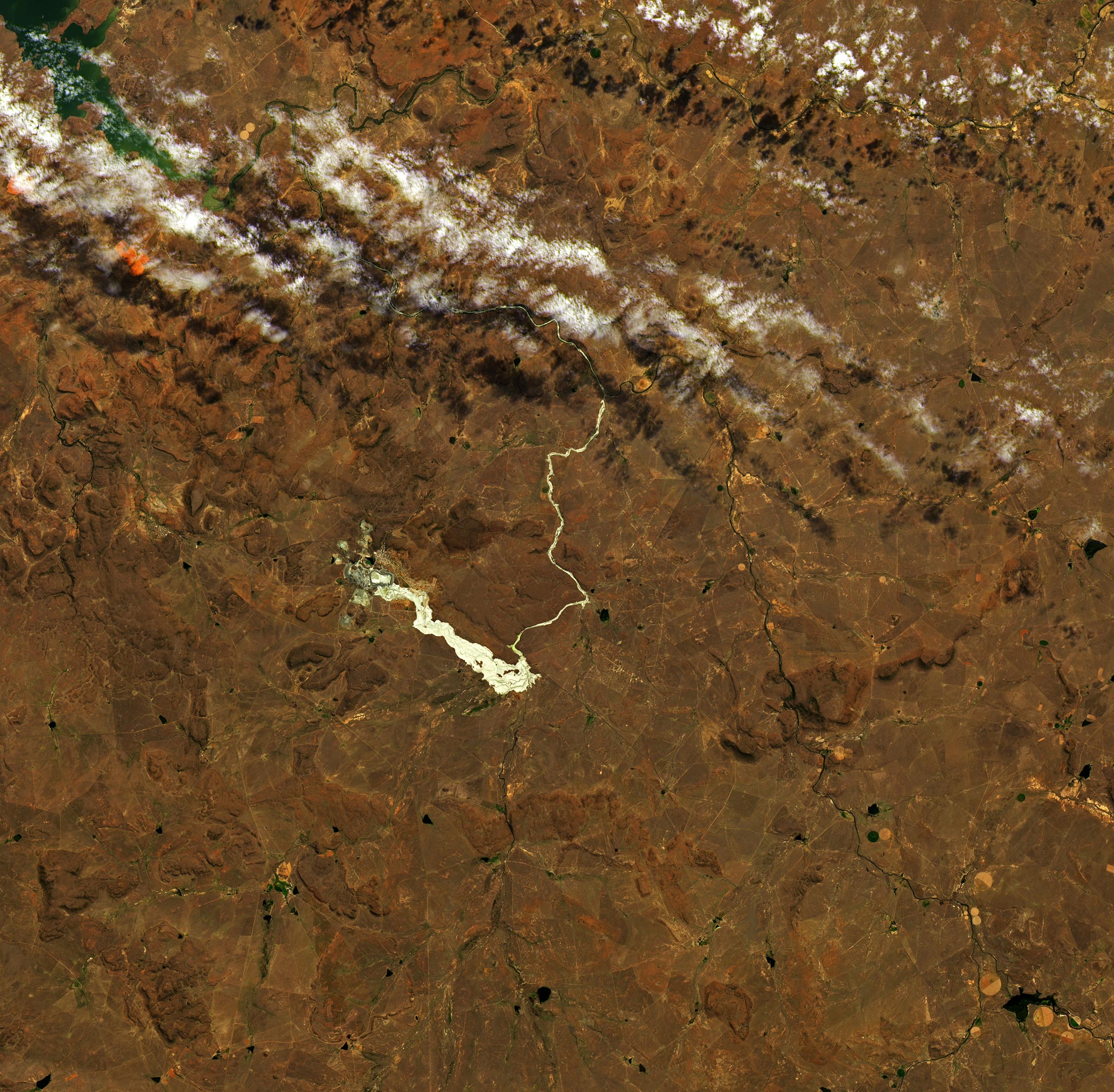
    October 4, 2022 – After the dam collapsed at Jagersfontein.

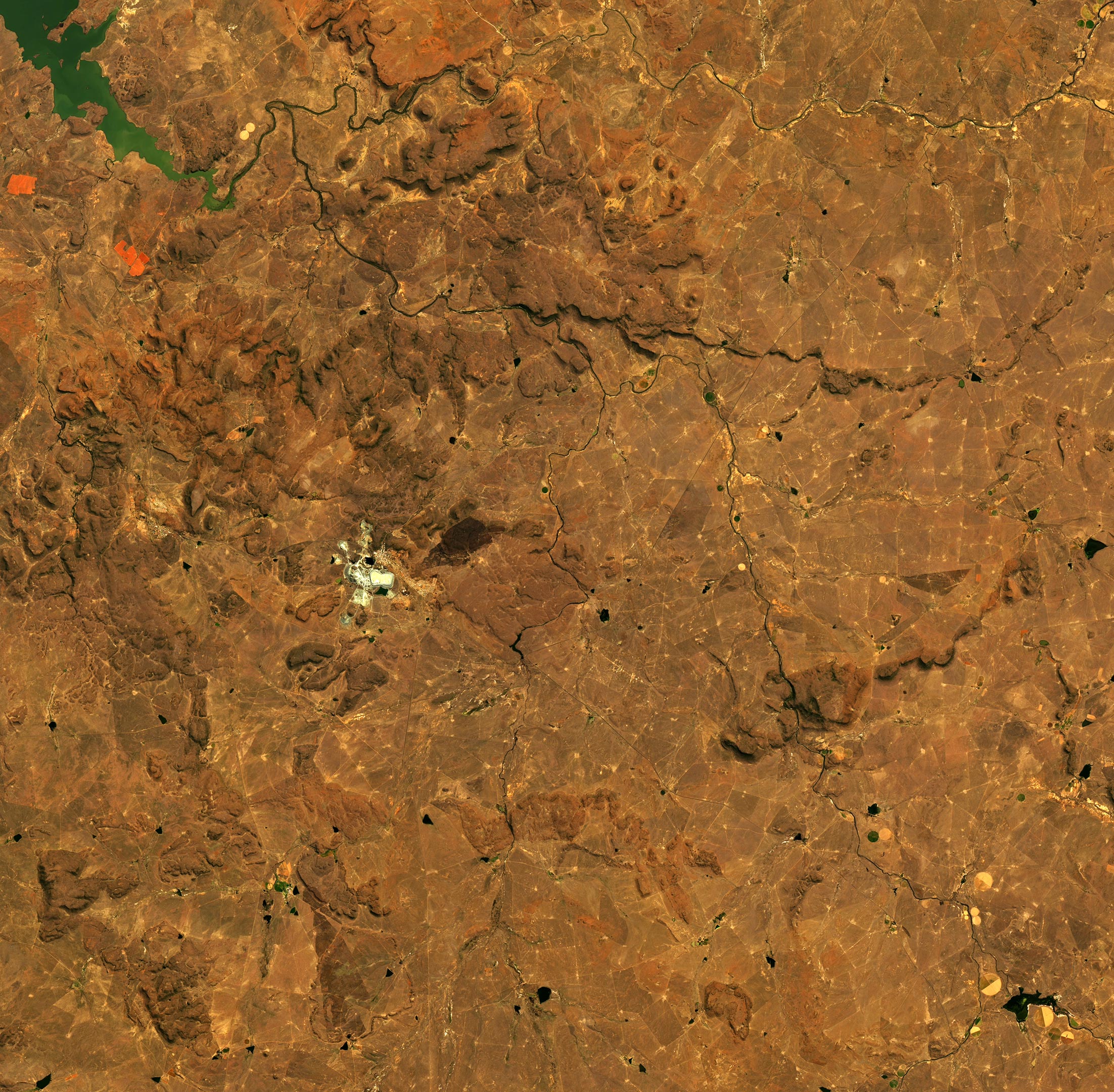
    Almost one month after the incident, satellite images reveal that the landscape remains altered by the coating of sludge. This can be seen in the image above, which was captured on October 4, 2022, by the Operational Land Imager-2 (OLI-2) on Landsat 9. For comparison, the other image (below) was acquired by the Operational Land Imager (OLI) on Landsat 8 on September 10, the day before the dam collapse.
    Jagersfontein South Africa September 2022 Annotated
    September 10, 2022 – Before the dam collapsed at Jagersfontein.

    The breach in the dam is visible on its southern side, through which most of the tailings poured out. Analysis of satellite images by geologist Dave Petley indicated that the plume reached up to 1 mile (1.5 kilometers) wide and extended about 5.3 miles (8.5 kilometers) toward the southeast. The sludge then turned north and entered several streams and rivers, including the Prosesspruit, and continued to at least Kalkfontein Dam (north of this image). It reached water systems used for drinking water and for agriculture.
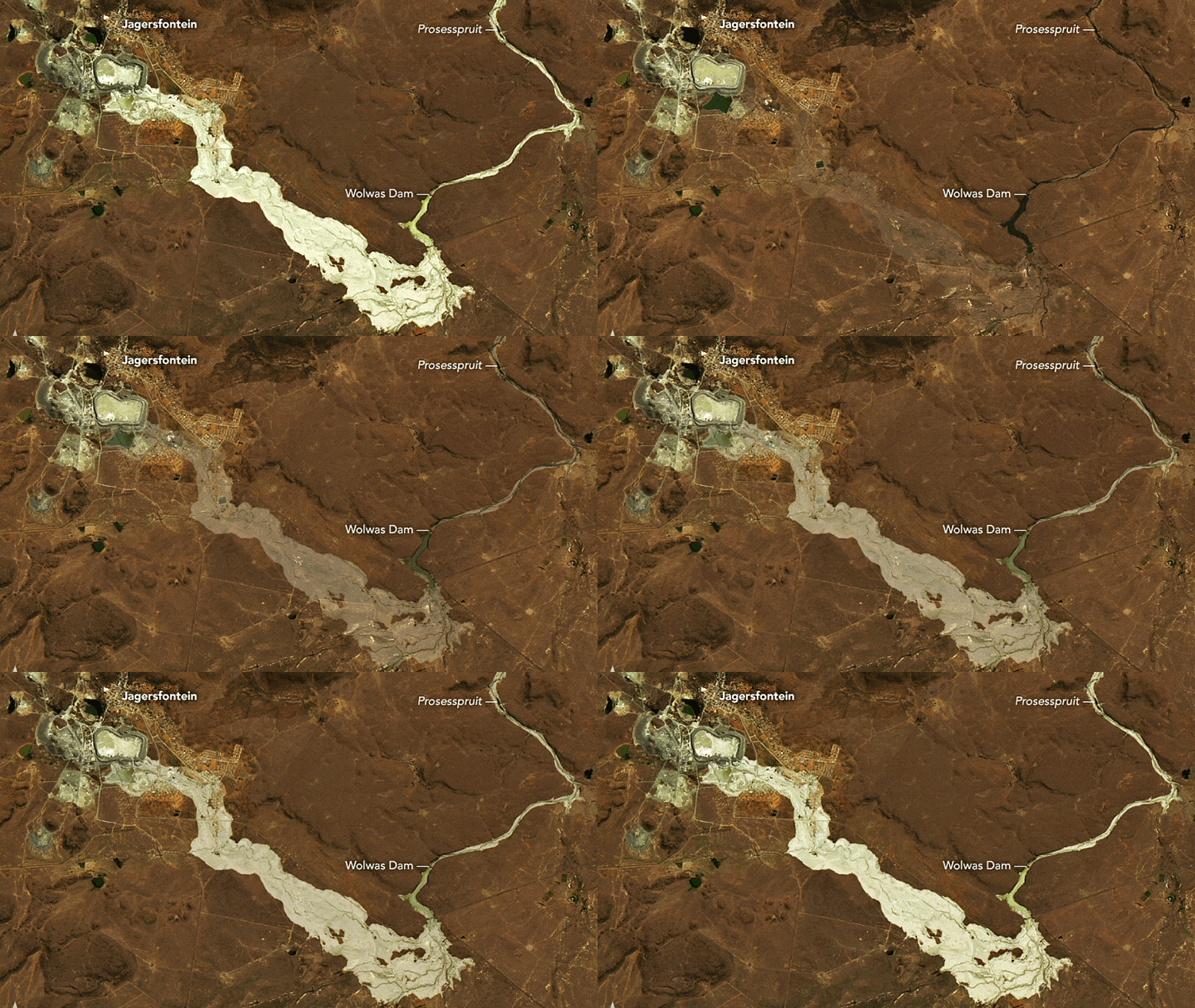
    As the water receded, it left behind white and tan deposits. The lightest areas in this image are likely dried tailings and mud. Notice that the banks of the Prosesspruit appear wider after being eroded and damaged by the flood.

    According to news reports, the flood destroyed more than 160 homes, killed at least one person and hundreds of animals, and damaged more than 10 square miles (26 square kilometers) of grazing land. It remains to be seen how long the muck will persist. As the material dries out and hardens it could begin to blow away with the wind or be washed away by rain.

    NASA Earth Observatory images by Lauren Dauphin, using Landsat data from the U.S. Geological Survey.

    Never miss a breakthrough: Join the SciTechDaily newsletter.
    Follow us on Google and Google News.

    Geography NASA NASA Earth Observatory
    Share. Facebook Twitter Pinterest LinkedIn Email Reddit

    Related Articles

    NASA Picturing Earth: Astronaut Photography In Focus [Video]

    Coloring the Great Salt Lake – Astronaut Takes Beautiful Photograph From Space Station

    Sea Ice in Denmark Strait – Drifted More Than 1,000 Km (600 Miles) From the Arctic Ocean

    NASA Scientists Map Beirut Blast Damage – Devastating Explosion Rocked Port Area

    NASA Advanced Rapid Imaging Satellite Maps Blast Damage: Beirut Explosion Aftermath

    NASA/NOAA Satellites Observe Surprisingly Rapid Increase in Scale and Intensity of Fires in Siberia

    Mars Terraforming: Cultivating Ideas for Mars on Earth

    Meandering Mississippi River: Photo Taken by Astronaut on Space Station Shows Divergence From State Boundaries

    Incredible Rare Peek at Patagonia in Winter

    Leave A Reply Cancel Reply

    • Facebook
    • Twitter
    • Pinterest
    • YouTube

    Don't Miss a Discovery

    Subscribe for the Latest in Science & Tech!

    Trending News

    Why Popular Diabetes Drugs Like Ozempic Don’t Work for Everyone: The “Genetic Glitch”

    Scientists Stunned After Finding Plant Thought Extinct for 60 Years

    Scientists Discover Tiny New Spider That Hunts Prey 6x Its Size

    Natural Component From Licorice Shows Promise for Treating Inflammatory Bowel Disease

    Scientists Warn: Popular Sweetener Linked to Dangerous Metabolic Effects

    Monster Storms on Jupiter Unleash Lightning Beyond Anything on Earth

    Scientists Create “Liquid Gears” That Spin Without Touching

    The Simple Habit That Could Help Prevent Cancer

    Follow SciTechDaily
    • Facebook
    • Twitter
    • YouTube
    • Pinterest
    • Newsletter
    • RSS
    SciTech News
    • Biology News
    • Chemistry News
    • Earth News
    • Health News
    • Physics News
    • Science News
    • Space News
    • Technology News
    Recent Posts
    • Scientists Teach AI To Think Like a Professional Chemist
    • Scientists Were Wrong About This Strange “Rule-Breaking” Particle
    • Webb Space Telescope Uncovers Unexpected Ice Clouds on a Jupiter-Like World
    • 289-Million-Year-Old Reptile Mummy Reveals Origin of Human Breathing System
    • New Brain Discovery Challenges Long-Held Theory of Teenage Brain Development
    Copyright © 1998 - 2026 SciTechDaily. All Rights Reserved.
    • Science News
    • About
    • Contact
    • Editorial Board
    • Privacy Policy
    • Terms of Use

    Type above and press Enter to search. Press Esc to cancel.