
Close Menu
    Facebook X (Twitter) Instagram
    SciTechDaily
    • Biology
    • Chemistry
    • Earth
    • Health
    • Physics
    • Science
    • Space
    • Technology
    Facebook X (Twitter) Pinterest YouTube RSS
    SciTechDaily
    Home»Health»What Happens if Your Body Clock Is Out of Whack? Disrupted Circadian Rhythms Linked to Cancer
    Health

    What Happens if Your Body Clock Is Out of Whack? Disrupted Circadian Rhythms Linked to Cancer

    By University of Rochester Medical CenterOctober 23, 2022No Comments3 Mins Read
    Facebook Twitter Pinterest Telegram LinkedIn WhatsApp Email Reddit
    Share
    Facebook Twitter LinkedIn Pinterest Telegram Email Reddit
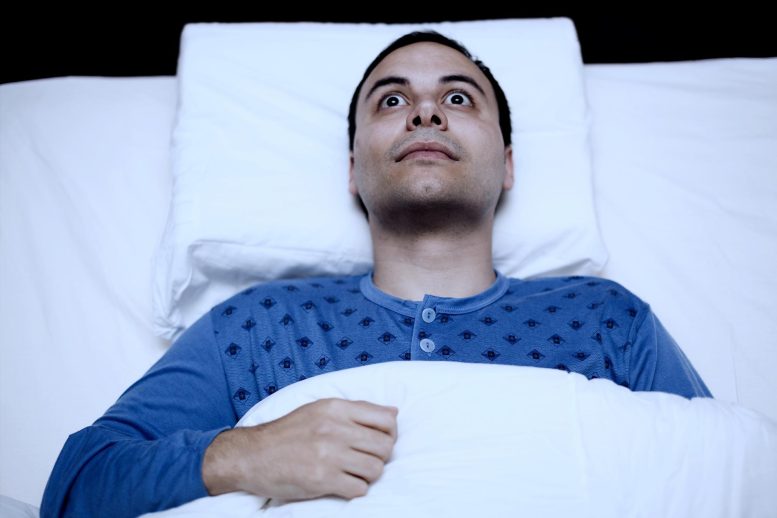
    Insomniac in Bed
    Scientists have uncovered an important molecular link between lung tumor growth and disrupted circadian rhythms. Circadian rhythms, sometimes called the “biological clock,” is the cellular process that rules sleep-wake cycles.

    Scientists discovered that disrupted circadian rhythms activate the gene HSF1, leading to lung tumor formation.

    An important molecular link between lung tumor growth and disrupted circadian rhythms has been uncovered by scientists. The discovery is presented in a new paper co-authored by a Wilmot Cancer Institute investigator and led by the Scripps Research Institute in California.

    Circadian rhythms, sometimes called the “biological clock,” are the cellular processes that rule sleep-wake cycles. Jet lag, nighttime snacking, lack of sleep, or irregular work schedules can mess up circadian rhythms. According to the World Health Organization (WHO), disrupted circadian rhythms are a probable carcinogen as a result of both population and laboratory-based findings.

    Published in the high-impact journal Science Advances, the latest study describes that when the circadian clock gets off track it implicates a cancer-signature gene known as HSF1 that can trigger lung tumors. Lungs are under tight circadian control and seem to be particularly vulnerable to a disrupted biological clock.

    The research paper describes the role of HSF1 signaling in mouse models. This previously unknown mechanism may explain tumor formation in response to rhythm disruption. 

    Potential for Drug Therapy Targeting HSF1

    The findings also suggest that it may be possible to target HSF1 with drug therapy, to prevent cancer among people with frequently disturbed circadian rhythms. 

    Although this study was done in mice, other data link circadian disruption to human tumors, said co-author Brian Altman, Ph.D., an assistant professor of Biomedical Genetics at the University of Rochester Medical Center and a Wilmot faculty member.

    “Everything points in the same direction,” he said. He noted that in this case, when the circadian clocks in mice are disrupted by inconsistent sleep, for example, the outcomes are highly relevant to people who work night shifts or rotating schedules.

    Altman’s chief contribution to the study was to provide expertise on a scientific method to assess how the circadian clock behaves in tissues. The Scripps team reached out to Altman to collaborate after seeing a presentation he gave at a scientific meeting on use of the technique, which was invented in 2018 at Vanderbilt University by Jacob Hughey, Ph.D. Altman and his lab have been focused on circadian rhythms and the connection to cancer for several years.

    Reference: “Circadian disruption enhances HSF1 signaling and tumorigenesis in Kras-driven lung cancer” by Marie Pariollaud, Lara H. Ibrahim, Emanuel Irizarry, Rebecca M. Mello, Alanna B. Chan, Brian J. Altman, Reuben J. Shaw, Michael J. Bollong, R. Luke Wiseman and Katja A. Lamia, 28 September 2022, Science Advances.
    DOI: 10.1126/sciadv.abo1123

    Lead author of the study is Katja Lamia, Ph.D., associate professor of Molecular Medicine at Scripps. Funding was provided by the National Science Foundation and the National Institutes of Health.

    Never miss a breakthrough: Join the SciTechDaily newsletter.
    Follow us on Google and Google News.

    Cancer Circadian Rhythm Sleep Science University of Rochester University of Rochester Medical Center
    Share. Facebook Twitter Pinterest LinkedIn Email Reddit

    Related Articles

    Could Your Energy Drink Be Feeding Cancer? What Scientists Just Discovered

    Circadian Rhythms Control Immune Cells That Clear Away Alzheimer’s Disease Protein

    Unexpected Benefits to Starting the Day Off With Chocolate

    Defying Your Natural Body Clock Linked to Depression and Lower Wellbeing

    Deep Sleep Takes Out the Trash: Waste Clearance Is Crucial for Brain Health

    How Stress and the Circadian Clock Affect Sleep

    Irregular Sleep Schedules Can Worsen Mood and Increase Risk of Depression

    Daily Rhythms May Impact Our Ability to Fight Disease – Immune System Killer Cells Controlled by Circadian Rhythms

    Mental Fog: Research Suggests Vaping Could Cloud Your Thoughts

    Leave A Reply Cancel Reply

    • Facebook
    • Twitter
    • Pinterest
    • YouTube

    Don't Miss a Discovery

    Subscribe for the Latest in Science & Tech!

    Trending News

    The Universe Is Expanding Too Fast and Scientists Can’t Explain Why

    “Like Liquid Metal”: Scientists Create Strange Shape-Shifting Material

    Early Warning Signals of Esophageal Cancer May Be Hiding in Plain Sight

    Common Blood Pressure Drug Shows Surprising Power Against Deadly Antibiotic-Resistant Superbug

    Scientists Uncover Dangerous Connection Between Serotonin and Heart Valve Disease

    Scientists Discover a “Protector” Protein That Could Help Reverse Hair Loss

    Bone-Strengthening Discovery Could Reverse Osteoporosis

    Scientists Uncover Hidden Trigger Behind Stem Cell Aging

    Follow SciTechDaily
    • Facebook
    • Twitter
    • YouTube
    • Pinterest
    • Newsletter
    • RSS
    SciTech News
    • Biology News
    • Chemistry News
    • Earth News
    • Health News
    • Physics News
    • Science News
    • Space News
    • Technology News
    Recent Posts
    • Scientists Overcome Major Quantum Bottleneck, Potentially Transforming Teleportation and Computing
    • Quantum Physics’ Strangest Problem May Hold the Key to Time Itself
    • Scientists Create “Liquid Gears” That Spin Without Touching
    • The Simple Habit That Could Help Prevent Cancer
    • Forgotten Medicinal Plant Shows Promise in Fighting Dangerous Superbugs
    Copyright © 1998 - 2026 SciTechDaily. All Rights Reserved.
    • Science News
    • About
    • Contact
    • Editorial Board
    • Privacy Policy
    • Terms of Use

    Type above and press Enter to search. Press Esc to cancel.