
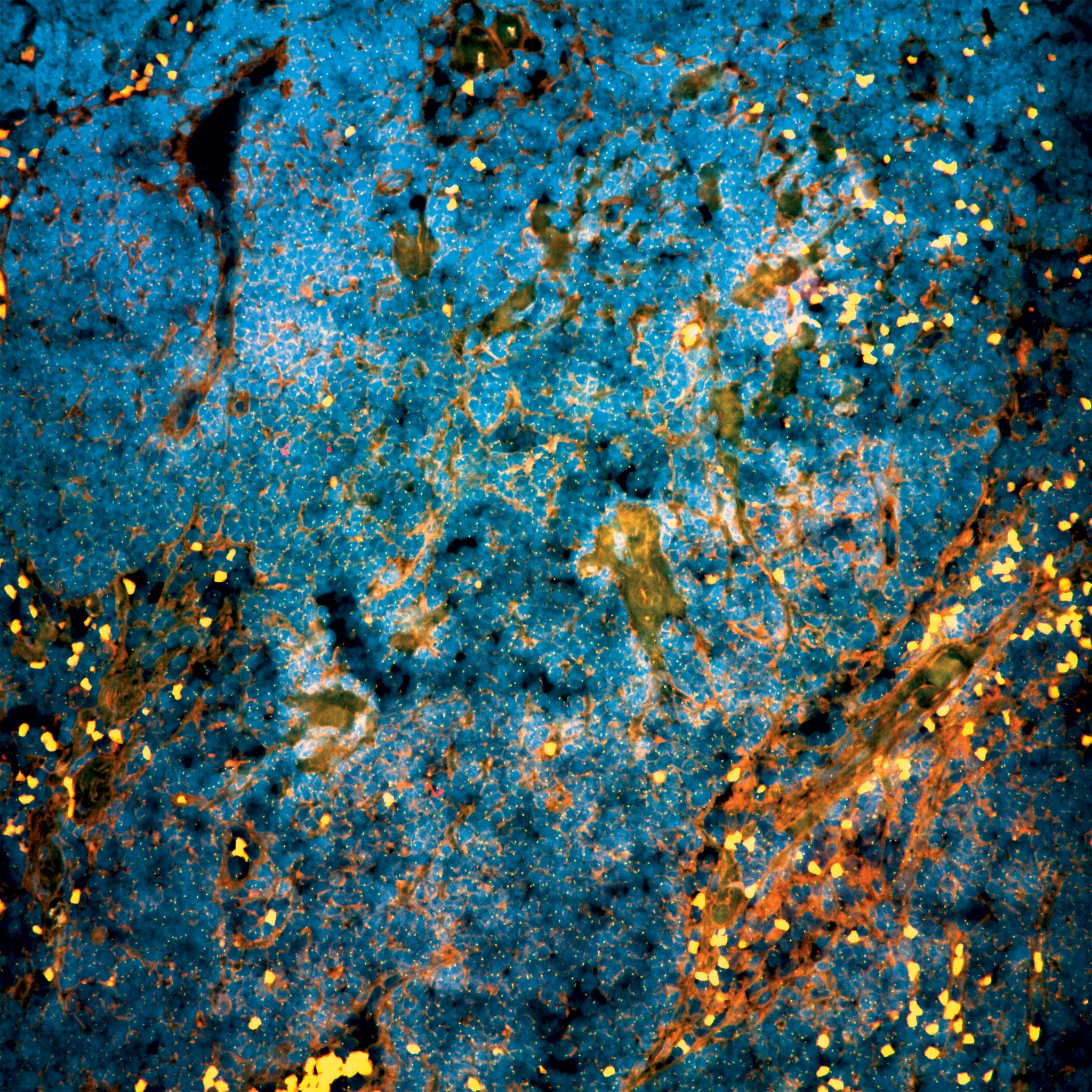
Therapy sensitivity in prostate cancer halted by protein regulating circadian rhythm.
Hormone treatment is successful at controlling metastatic prostate cancer, but the tumor cells eventually develop resistance to it. An unexpected potential solution has now emerged in medicines that are not designed to fight cancer, but rather to target proteins that regulate a cell’s circadian rhythm.
An international team of scientists led by the Netherlands Cancer Institute will publish this discovery today (June 27, 2022) in the renowned journal Cancer Discovery, a journal of the American Association for Cancer Research.
Prostate cancer is a form of tumor that develops under the influence of hormones, primarily testosterone. Patients with metastatic prostate cancer are frequently treated with anti-hormonal therapy, which inhibits the signal sent out by testosterone that stimulates tumor growth.
Anti-hormonal therapy can keep prostate cancer under control for a time, but eventually, the cancer manages to progress despite ongoing treatment. The tumor cells have become resistant. This means that the greatest challenge in treating metastatic prostate cancer isn’t to find drugs that inhibit tumor growth itself, but to find drugs that can prevent resistance to hormonal therapy. The exact process of how tumor cells become resistant to hormone therapy, however, has been a mystery — until now.
An international team of researchers led by scientists from the Netherlands Cancer Institute and Oncode Institute has made a surprising discovery using tissue from patients with prostate cancer who had been treated with testosterone-inhibiting drugs. They found that an unexpected class of proteins, namely proteins that normally regulate the circadian clock, dampens the effects of the anti-hormonal therapy. “Prostate cancer cells no longer have a circadian rhythm,” says Wilbert Zwart, one of the research leaders. “But these ‘circadian clock’ proteins acquire an entirely new function in the tumor cells upon hormonal therapy: they keep these cancer cells alive, despite treatment. This has never been seen before.”
‘Drug Repurposing Could Save a Decade of Research’
Now that they have discovered the tumor’s escape route, the researchers will next work together with Oncode towards the development of novel strategies to block this process, and ultimately increase the efficacy of anti-hormonal therapy against prostate cancer even further.
Zwart: “Our discovery has shown us that we will need to start thinking outside the box when it comes to new drugs to treat prostate cancer and test medicines that affect the circadian clock proteins in order to increase sensitivity to hormonal therapy in prostate cancer. Fortunately, there are already several therapies that affect circadian proteins, and those can be combined with anti-hormonal therapies. This lead, which allows for a form of drug repurposing, could save a decade of research.”
The study was based on tissue from 56 patients with high-risk prostate cancer, who had received three months of anti-hormonal therapy before their surgery. After those three months, their tissue was examined at the DNA level. “We noticed that the genes keeping the tumor cells alive despite the treatment were suddenly controlled by a protein that normally regulates the circadian clock,” says researcher Simon Linder, who will receive his PhD for his research in this study. This surprising discovery also creates new opportunities, because inhibition of this circadian protein was found to further increase sensitivity to anti-hormonal therapy in prostate tumor cells in the lab as well as in mice.
Circadian Disruption and Prostate Cancer Treatment
The results of this study may lead to questions about whether disturbances to the body’s circadian clock, due to shift work, for example, could increase the risk of therapy insensitivity in prostate cancer. “There is no evidence to support this,” medical oncologist André Bergman says. “The circadian rhythm in prostate tumor cells is no longer functional, and the proteins have taken on an entirely new role. This new escape route of the tumor cell has our full attention now, and follow-up research will show whether inhibition of this process can improve prostate cancer treatment.”
Reference: “Drug-Induced Epigenomic Plasticity Reprograms Circadian Rhythm Regulation to Drive Prostate Cancer toward Androgen Independence” by Simon Linder, Marlous Hoogstraat, Suzan Stelloo, Nils Eickhoff, Karianne Schuurman, Hilda de Barros, Maartje Alkemade, Elise M. Bekers, Tesa M. Severson, Joyce Sanders, Chia-Chi Flora Huang, Tunc Morova, Umut Berkay Altintas, Liesbeth Hoekman, Yongsoo Kim, Sylvan C. Baca, Martin Sjöström, Anniek Zaalberg, Dorine C. Hintzen, Jeroen de Jong, Roelof J.C. Kluin, Iris de Rink, Claudia Giambartolomei, Ji-Heui Seo, Bogdan Pasaniuc, Maarten Altelaar, René H. Medema, Felix Y. Feng, Amina Zoubeidi, Matthew L. Freedman, Lodewyk F. A. Wessels, Lisa M. Butler, Nathan A. Lack, Henk van der Poel, Andries M. Bergman and Wilbert Zwart, 27 June 2022, Cancer Discovery.
DOI: 10.1158/2159-8290.CD-21-0576
This research has been financially supported by KWF Dutch Cancer Society/Alpe d’Huzes and Oncode Institute.
Never miss a breakthrough: Join the SciTechDaily newsletter.
Follow us on Google and Google News.
3 Comments
Hope this research is successful as I am currently on hormone therapy and would like for it to continue to keep my PSA level down. Thanks for the post💪
My doctors said I have prostate cancer and prostate enlarged. Is there any trail going on that I can take part in?
Very interesting and important study. I hope they work quickly as there are so many men that could benefit greatly from this. Including my husband. Did some searches after reading and found this https://www.ncbi.nlm.nih.gov/pmc/articles/PMC3158680/