
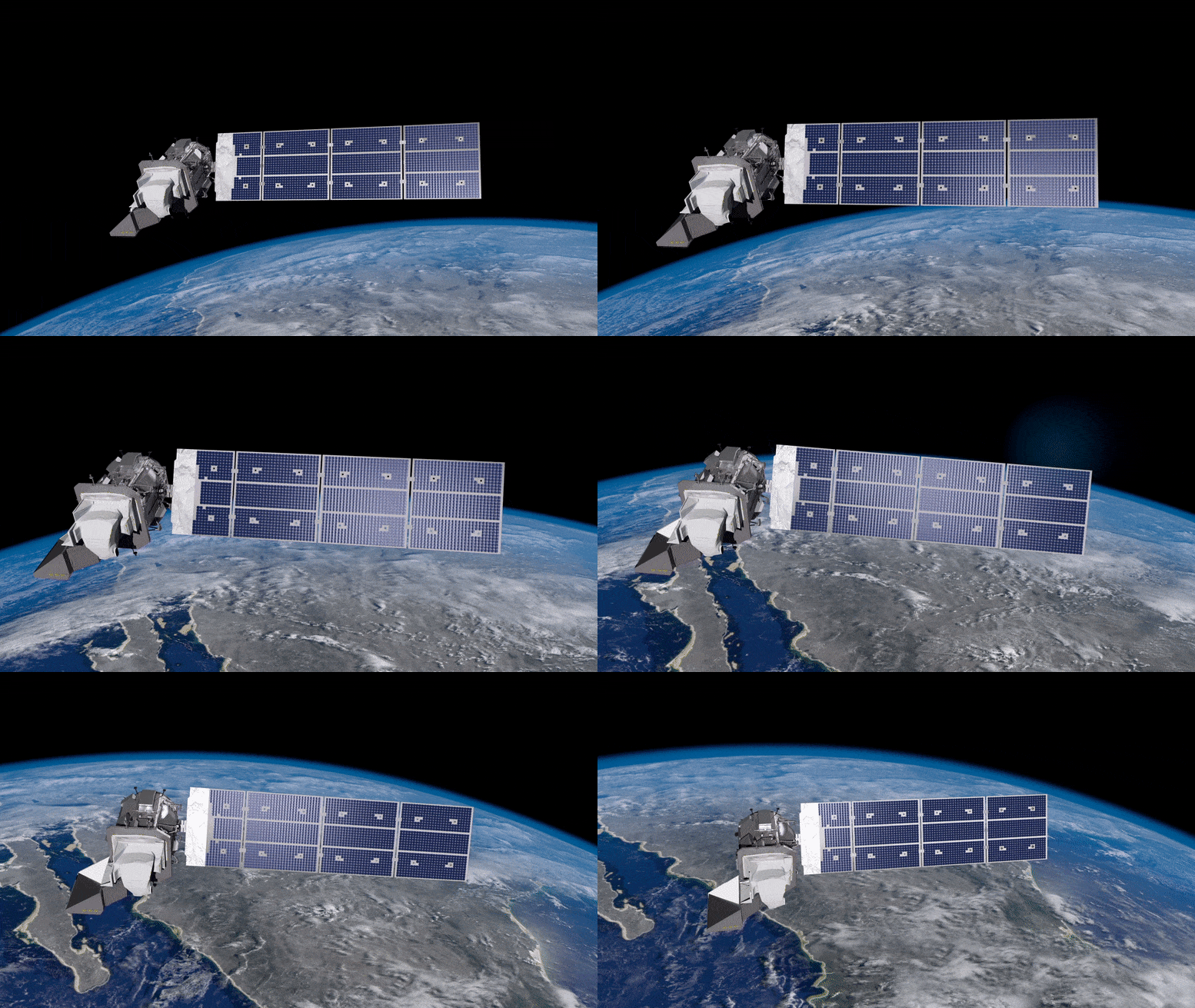
Landsat, launched in 1972, provides over 10 million images of Earth, aiding in environmental monitoring and agricultural analysis.
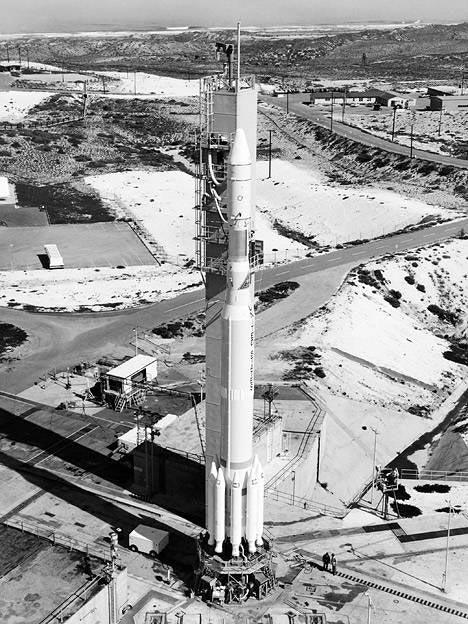
On a warm July day in 1972, NASA launched the Earth Resources Technology Satellite, a new Earth-imaging satellite. “ERTS” was the first satellite of what later became NASA and the U.S. Geological Survey’s Landsat Program, an ambitious effort with a goal of documenting the entirety of Earth from space. The first Landsat was so successful it sparked a series of satellites that have created the longest contiguous record of Earth’s surface from a space-eye view. In fact, it continues growing to this day, 50 years later.
“The early Landsats revolutionized the way we observed the Earth from space,” said Jim Irons, director emeritus of the Earth Sciences Division at NASA’s Goddard Space Flight Center in Greenbelt, Maryland.
Since it started, Landsat has amassed over 10 million images. These images, also called scenes, show current snapshots of land and coasts. However, when paired with images of years past, they also reveal changes through time. This includes glaciers slowly disappearing and urban spaces sprawling across the landscape.
These scenes and time series have a wide range of useful applications around the globe: Ecologists use them to determine the extent of deforestation; hydrologists use them to track how rivers change; farmers and agricultural organizations use them to analyze crop health.
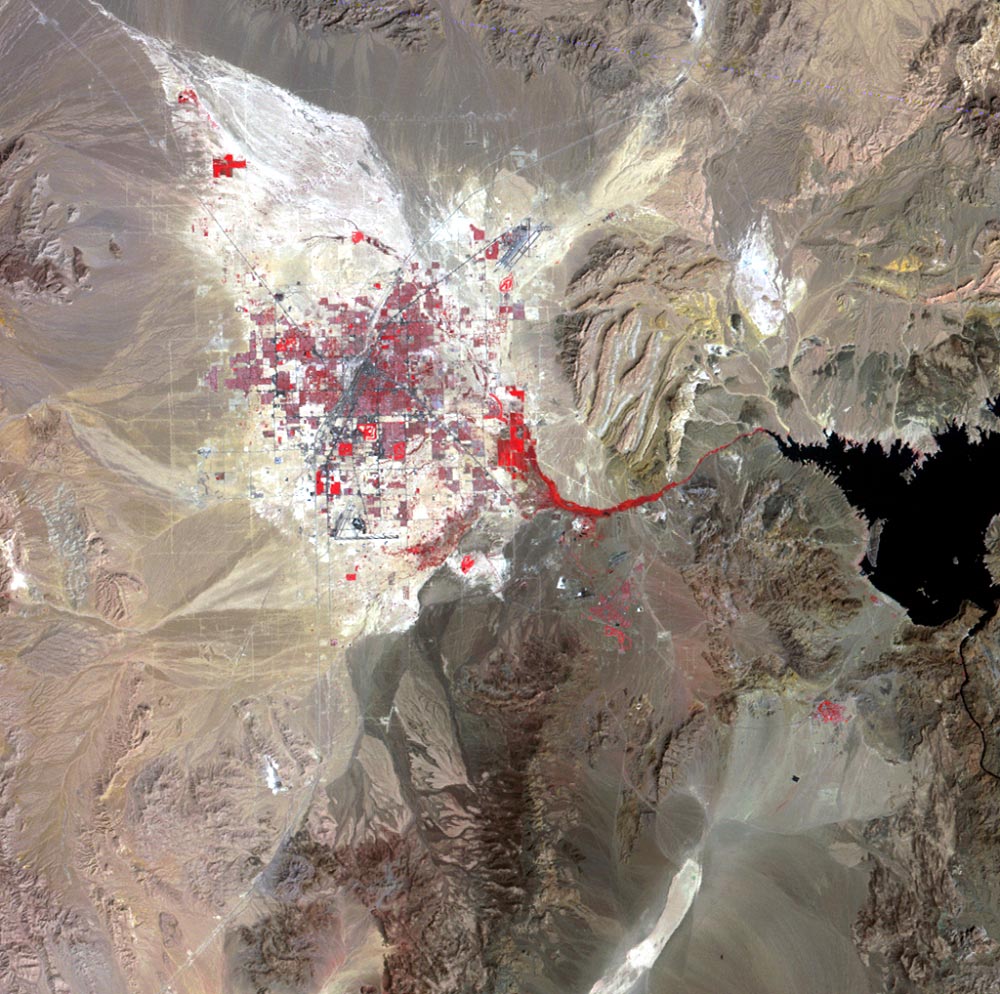
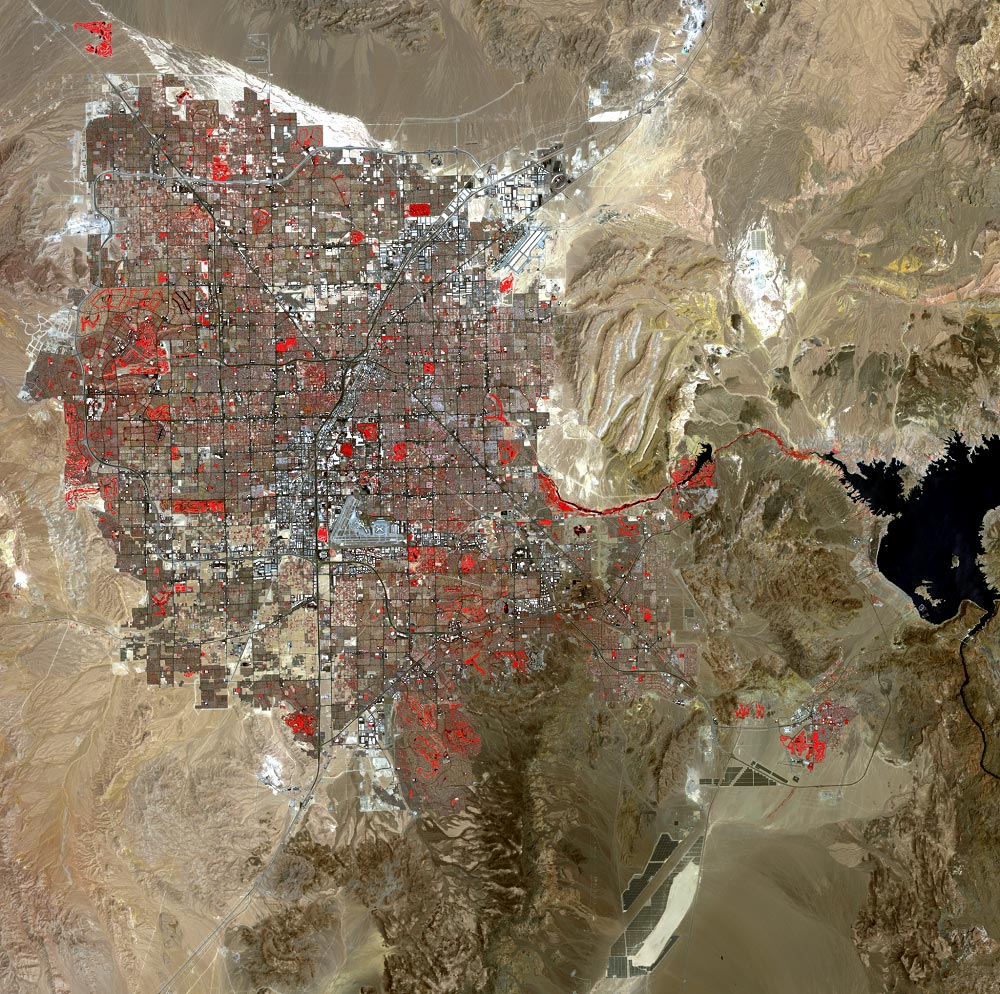
During Landsat’s five decades, eight different Landsat satellites have orbited the planet. Currently, three continue to collect global observations from space: Landsats 7, 8, and 9. (Landsat 6 was lost shortly after launch.) Landsat 9, the newest of the bunch, entered orbit in the fall of 2021. While Landsat 9 shares similarities with its predecessors, the Landsat satellite design has evolved immensely since the program started.
Early Days
The first two Landsats were able to see in four spectral bands, or wavelengths of light: visible light in red and green, and two near-infrared bands. While the near-infrared allowed the satellites to distinguish vegetation from other land cover and assess plant health, the visible wavelengths differentiated bright surfaces, like snow, deserts, and clouds, from dark surfaces like water. Each scene encompassed a roughly square area of around 115 miles (185 kilometers) to a side.
Virginia T. Norwood, known as the person who could solve impossible problems, played a crucial role in the development of the first space-based multispectral scanner instrument that flew on Landsat 1 and made the mission a success. Working together with NASA, USGS, university researchers, and her team at Hughes, Norwood successfully yoked the pioneering technology that made regular digital imagery of Earth from space possible. Credit: NASA’s Goddard Space Flight Center
The data transmitted to Earth from the first Landsats were recorded on magnetic tapes, the same basic tech as music cassettes – but much bigger: The bulky wideband video tape recorders that flew on the first three Landsats each had 1,800 feet (550 meters) of tape and weighed in at 76 pounds (34 kilograms) apiece.
From this data, scientists generated and printed out photographic images. These photos gave a general space-eye view of an area, but the real power of the data came after computer algorithms helped scientists and resource managers to more efficiently identify the categories of land cover they represented. Printers spat out paper maps with letter, number, and symbol combinations, where each character represented a land cover category, such as forest or cropland.
“You’d get out colored pencils or magic markers and you’d color the different characters, each with its own color,” Irons said. “That would give you an early version of a color-coded land cover map.”
Going back to the program’s inception, Goddard has been NASA’s home for Landsat. Irons served as the deputy project scientist on Landsat 7 and project scientist on Landsat 8, helping to further shape the program and playing a pivotal role in the satellites’ development. In his 43 years working with Landsat, he’s watched the satellites grow into what they are today.
Landsat data in the ’80s and ’90s were critical to many projects, such as understanding the extent of tree loss in rainforests, Irons said. Likewise, Chris Neigh, Landsat 9’s project scientist at Goddard, uses time series to watch the slow northward creep of boreal forests, as the trees progressively inch toward the pole in response to global warming. The long pedigree of Landsat data is essential for this kind of research, Neigh added: there are few other records to reference, and none as comprehensive.
2000s: Free Access to the Landsat Archive
After a failed launch of Landsat 6, Landsat 7 embarked successfully in 1999, equipped with an improved instrument. NASA deliberated for seven years between the launches of Landsat 7 and Landsat 8, trying to decide how to move forward with the program before beginning another seven-year process of building and launching the next satellite.
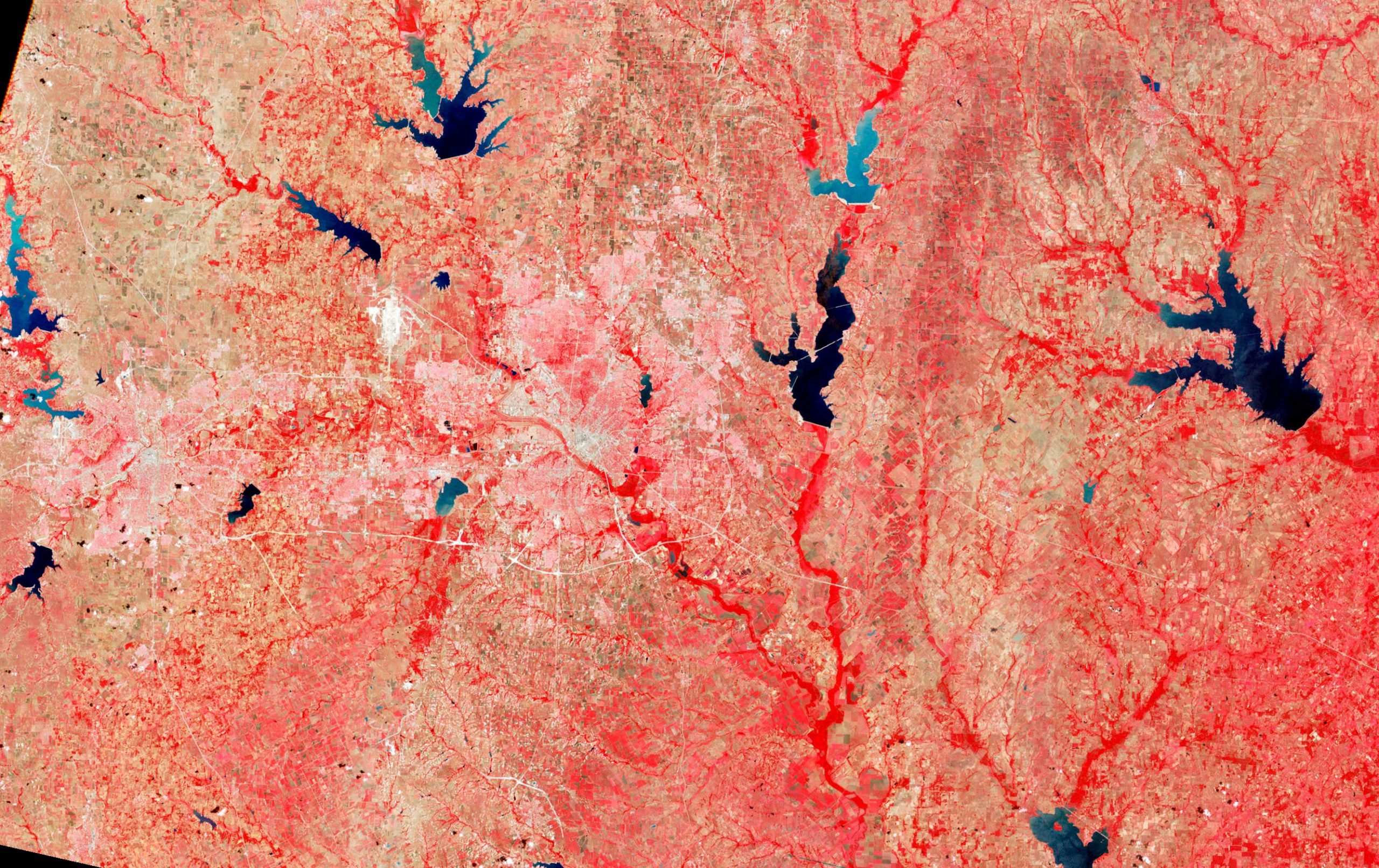
In that time, image management returned from commercial providers to USGS, which made the entire Landsat archives freely available in 2008. Image requests skyrocketed. Landsat all-time downloads topped 100 million scenes in 2020, and the number continues to rise.
As Landsat continues to transform, the people and projects that use it grow too: The United States Department of Agriculture relies on Landsat to guide farmers in watering practices and land management; climate scientists watch glaciers retreat as temperatures rise; in the drought-stricken West, water managers monitor reservoir levels.
Landsat’s Next Adventure
With a data user community that keeps growing, scientists and engineers are already looking forward to the next mission. NASA and USGS are developing options for the next iteration of Landsat, currently called Landsat Next.
Landsat’s eyes in space have granted new opportunities for understanding our changing planet, but the simple awe of seeing Earth is sometimes forgotten, Irons said.
“We can’t all be astronauts,” Irons said. “But if we look at Landsat images, we can understand what the Earth would look like if we were orbiting the Earth in space.”
Never miss a breakthrough: Join the SciTechDaily newsletter.
Follow us on Google and Google News.