
Michael Bartlett will engineer wearable, whole-body sensing networks with a Young Investigator Award from the Office of Naval Research.
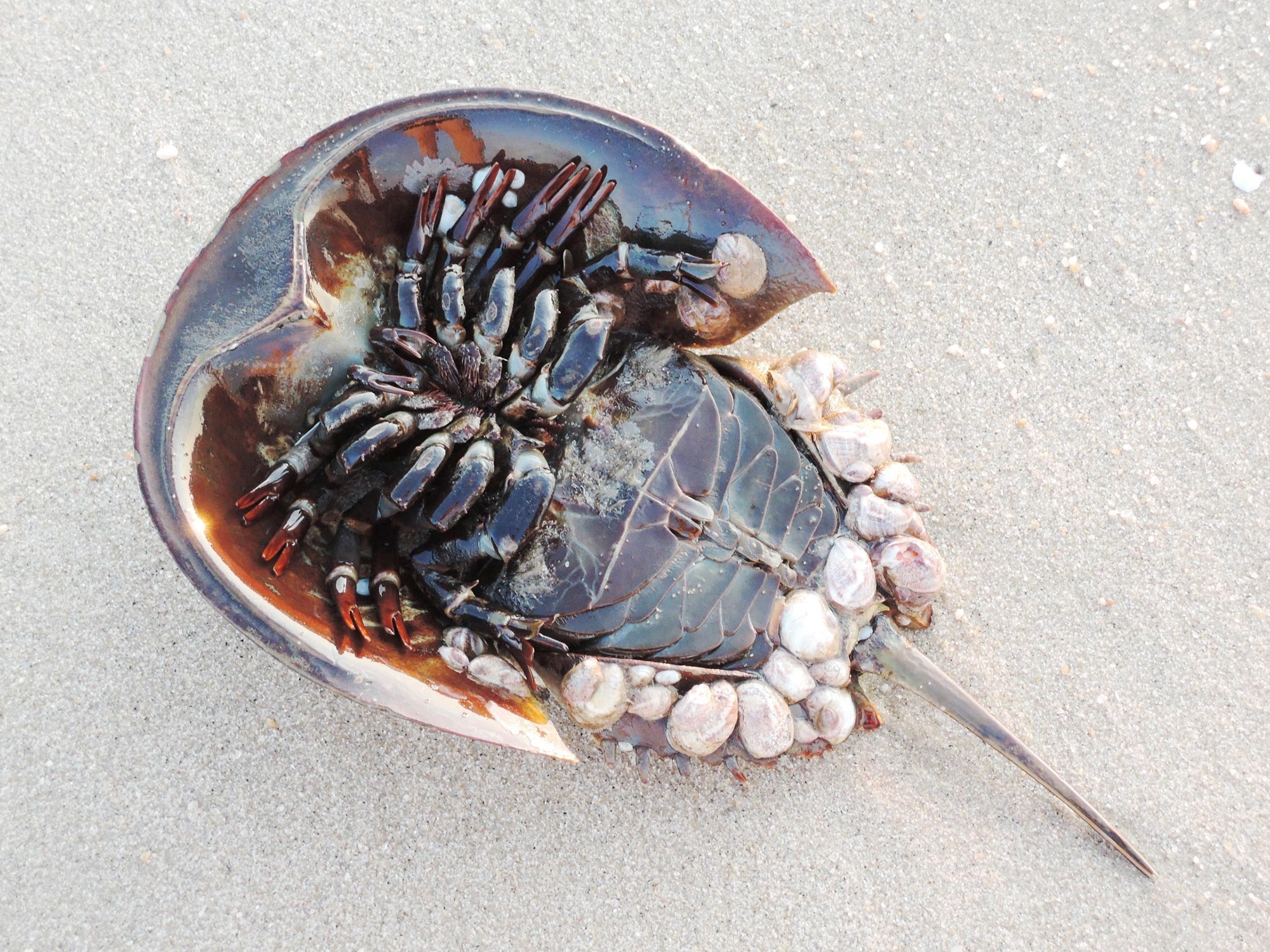
The horseshoe crab is often referred to as a “living fossil” because its evolution has been virtually stagnant for millions of years. Despite its lack of evolution over the long term, however, the crab has a unique sensory system with a network of multiple “eyes,” some of which are photoreceptors that distinguish between light and dark.
With funding from the Office of Naval Research, mechanical engineering Assistant Professor Michael Bartlett is putting a bio-inspired electronic version of that sensory system to work in a series of soft electronics to be worn by humans.
Bartlett received a 2021 Young Investigator Program award from the Office of Naval Research’s Littoral Geosciences and Optics program for his efforts to translate the physiology of underwater creatures into next-generation sensor technology.
Lessons from Horseshoe Crabs, Octopuses, and Mantis Shrimp
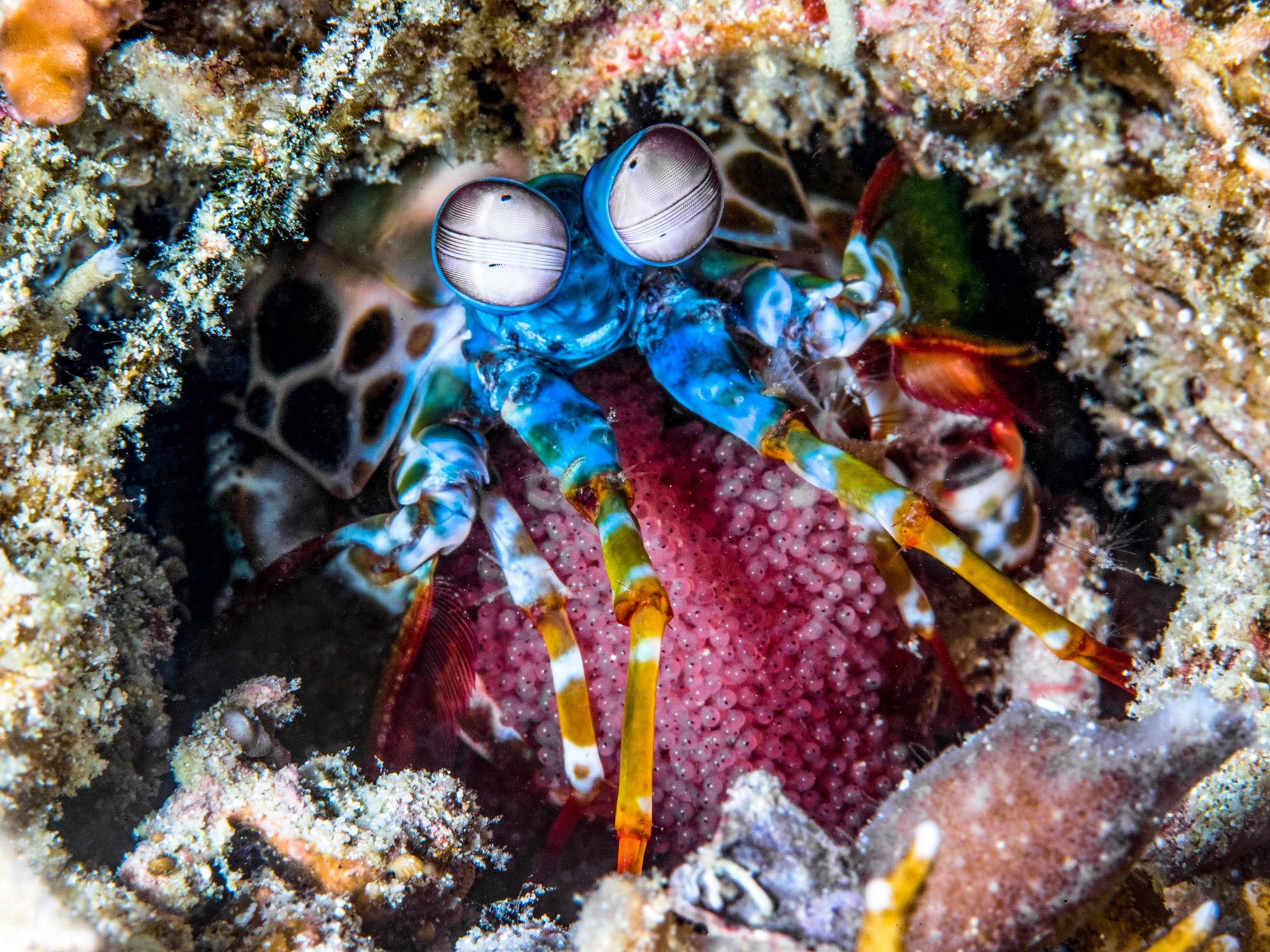
Bartlett and his team in the Soft Materials and Structures Lab are intrigued by creatures like the horseshoe crab, octopus, and mantis shrimp because of the variety of natural sensors used by the animals. From the 10 “eyes” distributed across the shell of the horseshoe crab to the articulating compound eyes of the mantis shrimp, these organisms have the means to adapt their behavior based on a myriad of information relayed to their brains about their environment.
“These organisms see their world very differently, being able to take in multiple pieces of information to assess their environment,” Bartlett said. “This situational awareness is really remarkable and got us thinking about how we can design sensors to enhance awareness for humans.”
Bartlett’s approach applies the idea of an intricate cognitive system to an integrated electronic network. Inspired by the system through which a horseshoe crab’s movement is informed by its many eyes, the team will equip a wearable apparatus with miniaturized sensors that will process the environment in motion.
Multi-Sensor Processing for Situational Awareness
Data fed from the sensors will be combined to give a more robust picture of a subject’s surroundings. The wearable network’s central processor will use its connected sensors to provide advanced visual, sound, and proximity capabilities to navigate potential issues.

To develop the technology, Bartlett will source concepts from his rich background in soft electronics. In a recent project, he developed polymer composites with liquid metal inclusions — devices that replace traditional wires and rigid materials with highly flexible materials sandwiched together. These novel devices feel like skin, but carry an electrical current. The lab has since adapted these skin-like electronics for use in soft wireless charging devices and robust, self-healing electrical circuits. For this sensor array, the team is rebuilding many of the connected rigid components as soft electronics, accommodating maximum range of motion and comfort.
Wearables That Feel Like a Second Skin
“With the development of soft electronics, we see the potential to create wearable devices that feel like a second skin and provide diverse data to the user,” Bartlett said. “This could enhance sensory perception in a way that allows for a better understanding of someone’s environment.”
Bartlett believes that the “second skin” nature of the technology could translate to next-generation diving suits made of soft-matter components more like natural tissue — over rigid, heavy gear — with a greater range of movement and faster motor response.
“Ultimately, we aim to significantly advance fundamental knowledge of soft sensing architectures, enabling wearable platforms that mimic underwater organisms and provide real-time sensor data to a user for a better understanding of their environment,” Bartlett said. “What if you could sense the environment all around you? It would be like having eyes in the back of your head.”
Never miss a breakthrough: Join the SciTechDaily newsletter.
Follow us on Google and Google News.