
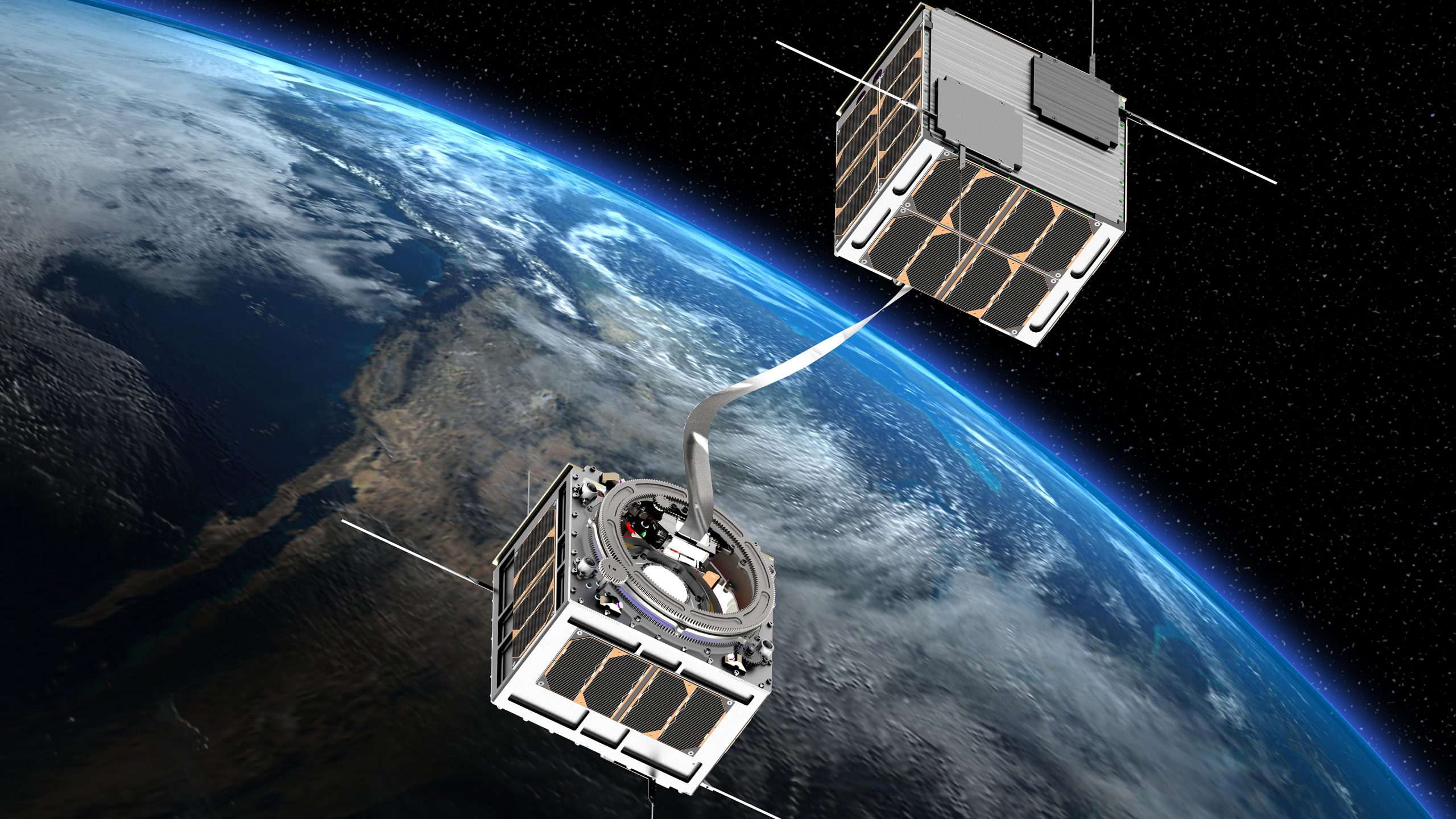
Electrodynamic tethers use electric current to generate thrust or braking forces without propellant, enabling orbital maneuvers and satellite deorbiting. A Spanish team has proposed adding thin-film solar cells to boost power.
How to propel a spacecraft without propellant? Use electrodynamic tethers. These are long, strong conductors connecting two spacecraft. When direct current is applied to the tether, the tether exerts a force on the spacecraft, causing it to either accelerate or brake.
Such tethers might be used to perform fuel-free orbital maneuvers, or deorbit satellites at the end of their working lifetime to prevent buildup of orbital debris.
Universidad Carlos III de Madrid in Spain has proposed an improved tether design incorporating thin-film solar cells to harvest added power for the tether plasma circuit, intended for end-of-life deorbiting.
The idea was proposed through ESA’s Open Space Innovation Platform (OSIP) Open Discovery ideas Channel, seeking novel ideas for new space research activities. This innovative concept has been accepted by ESA for implementation, along with numerous others.
Never miss a breakthrough: Join the SciTechDaily newsletter.
Follow us on Google and Google News.