
Close Menu
    Facebook X (Twitter) Instagram
    SciTechDaily
    • Biology
    • Chemistry
    • Earth
    • Health
    • Physics
    • Science
    • Space
    • Technology
    Facebook X (Twitter) Pinterest YouTube RSS
    SciTechDaily
    Home»Biology»Weird and Wonderful: Coral Symbionts Have a Genome Like No Other
    Biology

    Weird and Wonderful: Coral Symbionts Have a Genome Like No Other

    By King Abdullah University of Science & Technology (KAUST)October 8, 2021No Comments3 Mins Read
    Facebook Twitter Pinterest Telegram LinkedIn WhatsApp Email Reddit
    Share
    Facebook Twitter LinkedIn Pinterest Telegram Email Reddit
    Genetic Sequencing Concept
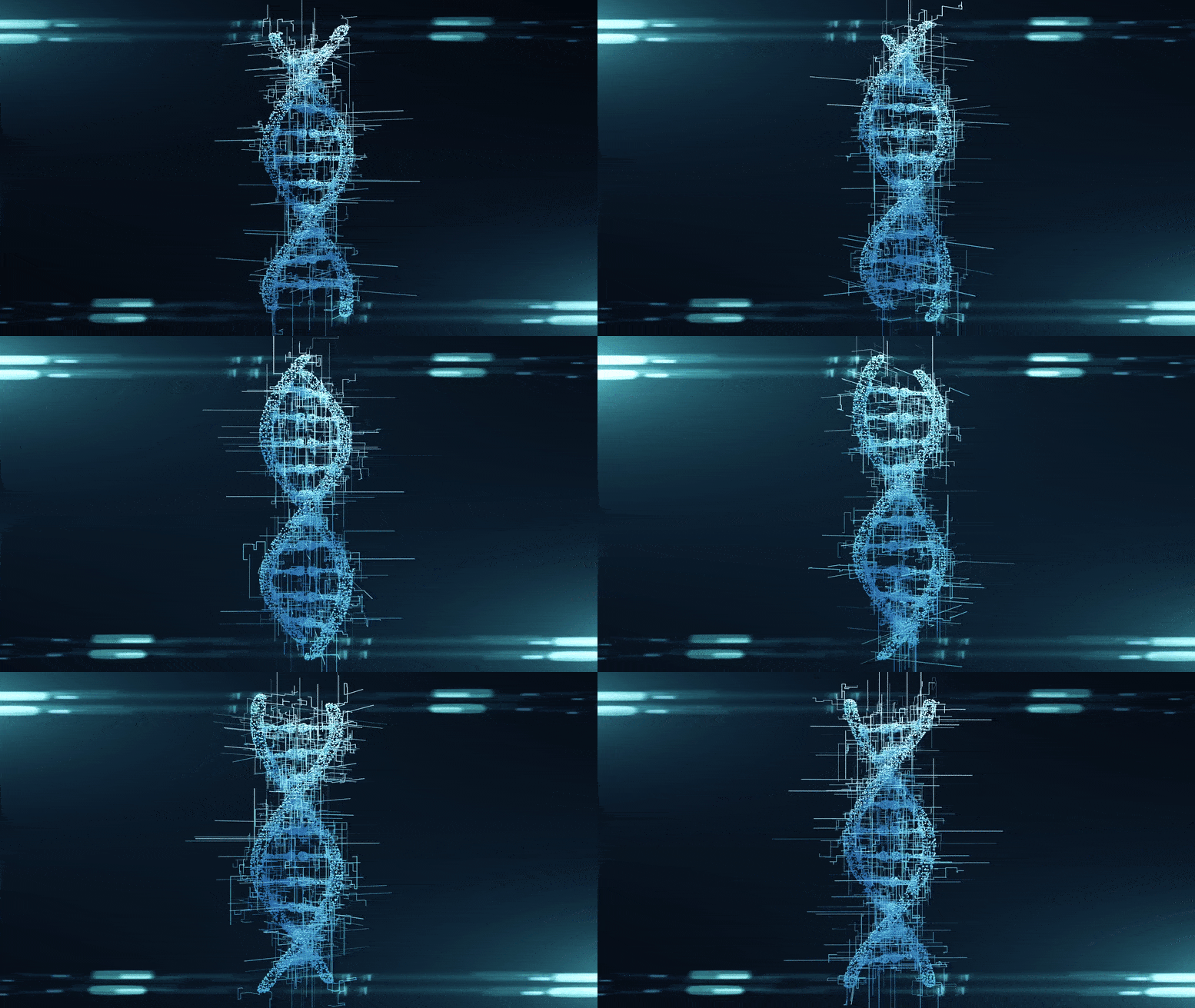
    Researchers found the genome of single-celled plankton, known as dinoflagellates, is organized in an incredibly strange and unusual manner.

    The weird and wonderful genome of dinoflagellates looks nothing like other eukaryotic genomes.

    The genome of single-celled plankton, known as dinoflagellates, is organized in an incredibly strange and unusual way, according to new research. The findings lay the groundwork for further investigation into these important marine organisms and dramatically expand our picture of what a eukaryotic genome can look like.

    Researchers from KAUST, the U.S., and Germany have investigated the genomic organization of the coral-symbiont dinoflagellate Symbiodinium microadriaticum. The S. microadriaticum genome had already been sequenced and assembled into segments known as scaffolds but lacked a chromosome-level assembly.

    The team used a technique known as Hi-C to detect interactions in the dinoflagellate’s chromatin, the combination of DNA and protein that makes up a chromosome. By analyzing these interactions, they could figure out how the scaffolds were connected together into chromosomes, giving them a view into the spatial and structural organization of the genome.
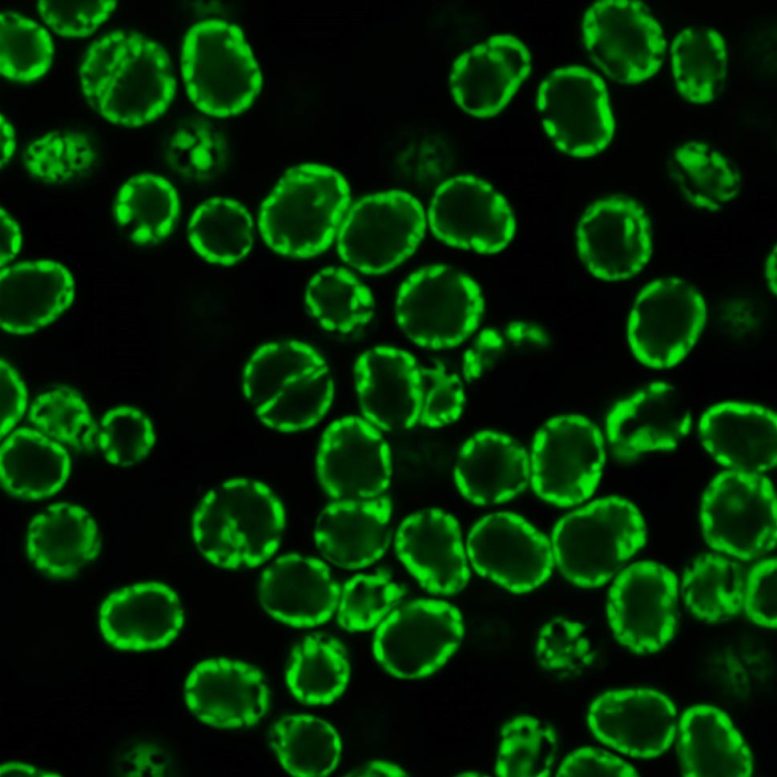
    Unique Dinoflagellate Genome
    The international research team discovered that the genome of dinoflagellates is organized in a unique way compared to other eukaryotic genomes. Credit: © 2021 KAUST

    A striking finding was that the genes in the genome tended to be organized in alternating unidirectional blocks. “That’s really, really different to what you see in other organisms,” says Octavio Salazar, a Ph.D. student in Manuel Aranda’s group at KAUST and one of the lead authors of the study. The orientation of genes on a chromosome is usually random. In this case, however, genes were consistently oriented one way and then the other, with the boundaries between blocks showing up clearly in the chromatin interaction data.

    “Nature can work in a completely different way than we thought.”

    This organization is also reflected in the three-dimensional structure of the genome, which the team inferred comprises rod-shaped chromosomes that fold into structural domains at the boundaries where gene blocks converge. Even more intriguingly, this structure appears to be dependent on transcriptional activity. When the researchers treated cells with a chemical that blocks gene transcription, the structural domains disappeared.

    This unusual link is consistent with another strange fact about dinoflagellates — they have very few transcription factors in their genome and do not seem to respond to environmental changes by altering gene expression. They may use gene dosage to control expression and adapt to the environment by losing or gaining chromosomes or perhaps via epigenetic structural modifications. The researchers plan to explore all of these questions.

    Another open question is the origin of this exceptional genome structure. Dinoflagellates produce very few histones, the proteins used by other eukaryotes to structure their DNA, instead of using viral proteins incorporated into their genome long ago. The extraordinary genome structure and genetic regulation may be a consequence of how these viral proteins work, but that remains to be confirmed.

    The dinoflagellate genome defies the expectation and dogmas built from studying other eukaryotes. “It shows that nature can work in a completely different way than we thought,” says Salazar. “There are so many possibilities for what could have happened as life evolved.”

    Reference: “Genetic and spatial organization of the unusual chromosomes of the dinoflagellate Symbiodinium microadriaticum” by Ankita Nand, Ye Zhan, Octavio R. Salazar, Manuel Aranda, Christian R. Voolstra and Job Dekker, 29 April 2021, Nature Genetics.
    DOI: 10.1038/s41588-021-00841-y

    Never miss a breakthrough: Join the SciTechDaily newsletter.
    Follow us on Google and Google News.

    DNA Genetics KAUST Plankton Popular
    Share. Facebook Twitter Pinterest LinkedIn Email Reddit

    Related Articles

    Maternally Inherited Diseases: New Technology Uncovers Hidden Mitochondrial DNA Mutations

    Scientists Discover Genes for a Longer, Healthier Life

    New Epigenetic Algorithm Accurately Predicts Male Sexual Orientation

    Prolific Changes in the Human Genome in the Past 5,000 Years

    Mitochondrial Transfer Technology Could Reduce Risk of Childhood Disease

    Improved Estimates of DNA’s Mutation Rate Paint Clearer Picture of Human Prehistory

    Butterfly Research Reveals Genetic Sharing from Hybridization

    3-D Image Shows How DNA Packs Itself into a “Fractal Globule”

    Researchers Complete Genome Sequence of a Denisovan Human Finger Bone

    Leave A Reply Cancel Reply

    • Facebook
    • Twitter
    • Pinterest
    • YouTube

    Don't Miss a Discovery

    Subscribe for the Latest in Science & Tech!

    Trending News

    Largest-Ever Study Finds Medicinal Cannabis Ineffective for Anxiety, Depression, PTSD

    250-Million-Year-Old Egg Solves One of Evolution’s Biggest Mysteries

    Living With Roommates Might Be Changing Your Gut Microbiome Without You Knowing

    Century-Old Cleaning Chemical Linked to 500% Increased Risk of Parkinson’s Disease

    What if Your Memories Never Happened? Physicists Take a New Look at the Boltzmann Brain Paradox

    One of the Universe’s Largest Stars May Be Getting Ready To Explode

    Scientists Discover Enzyme That Could Supercharge Ozempic-Like Weight Loss Drugs

    Popular Sweetener Linked to DNA Damage – “It’s Something You Should Not Be Eating”

    Follow SciTechDaily
    • Facebook
    • Twitter
    • YouTube
    • Pinterest
    • Newsletter
    • RSS
    SciTech News
    • Biology News
    • Chemistry News
    • Earth News
    • Health News
    • Physics News
    • Science News
    • Space News
    • Technology News
    Recent Posts
    • Scientists Say This Overlooked Organ Could Hold the Key to Longer Life
    • Want Less Stress? Landmark Study Points to a Simple Habit
    • Scientists Reveal Eating Fruits and Vegetables May Increase Your Risk of Lung Cancer
    • AI Reveals Explosive Growth of Floating Algae Across the World’s Oceans
    • 5.5 Million Bees Discovered Living Beneath a New York Cemetery
    Copyright © 1998 - 2026 SciTechDaily. All Rights Reserved.
    • Science News
    • About
    • Contact
    • Editorial Board
    • Privacy Policy
    • Terms of Use

    Type above and press Enter to search. Press Esc to cancel.