
Close Menu
    Facebook X (Twitter) Instagram
    SciTechDaily
    • Biology
    • Chemistry
    • Earth
    • Health
    • Physics
    • Science
    • Space
    • Technology
    Facebook X (Twitter) Pinterest YouTube RSS
    SciTechDaily
    Home»Space»State-of-the-Art Climate Model Shows That Venus Could Never Have Had Oceans
    Space

    State-of-the-Art Climate Model Shows That Venus Could Never Have Had Oceans

    By CNRSNovember 14, 2021No Comments3 Mins Read
    Facebook Twitter Pinterest Telegram LinkedIn WhatsApp Email Reddit
    Share
    Facebook Twitter LinkedIn Pinterest Telegram Email Reddit
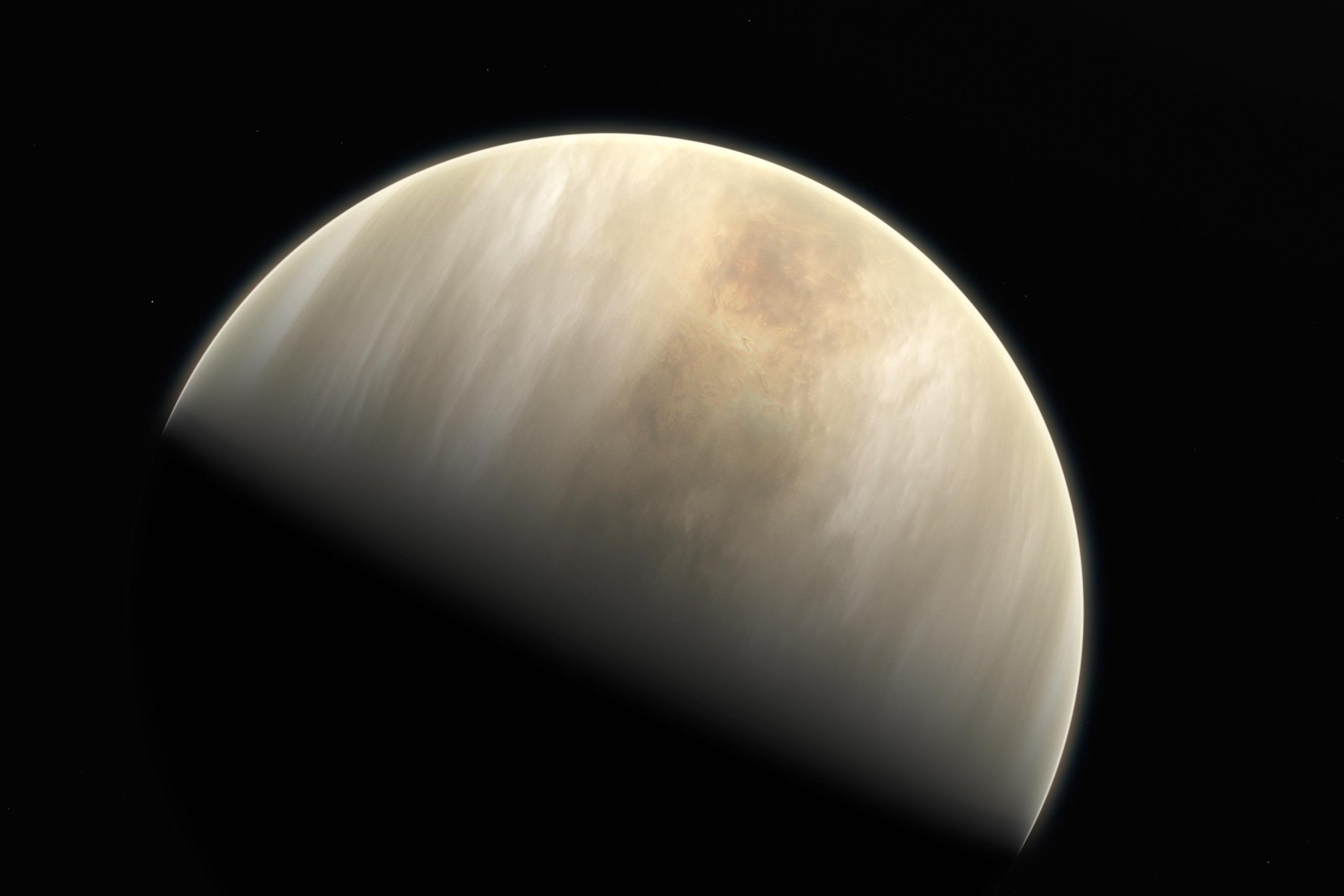
    Venus Artistic Impression
    This artistic impression depicts Venus. Credit: ESO (European Southern Observatory)/M. Kornmesser & NASA/JPL/Caltech

    A new study challenges the idea that Venus once had oceans. A new climate model suggests that despite the Sun being 30% fainter billions of years ago, Venus’ surface never cooled enough for rainfall to form oceans.

    Whether Venus, one of the Solar System’s four terrestrial planets, ever had oceans remains an unsolved puzzle. Although an American study hypothesized that it did, this is now challenged in a paper published recently in Nature, involving in particular scientists from the CNRS and University of Versailles-Saint Quentin-en-Yvelines[1] (UVSQ). Using a state-of-the-art climate model, the research team has come up with an alternative scenario to the American study.
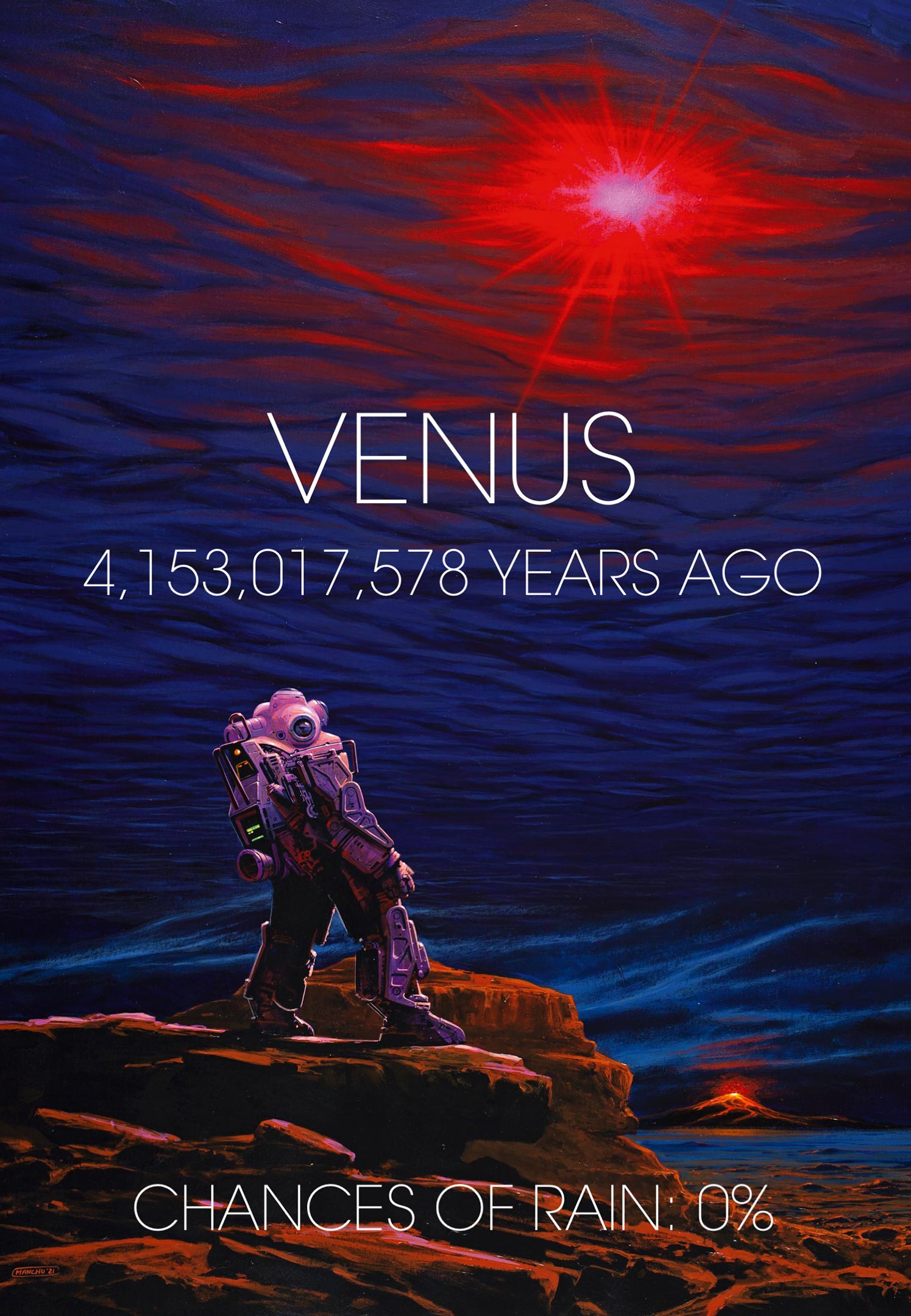
    Surface and Atmosphere of Early Venus
    Artist’s impression illustrating the lack of water on Venus. Credit: © Manchu

    Shortly after its birth 4.5 billion years ago, the young Venus was covered with magma. To form oceans, the temperature of its atmosphere would have had to decrease enough for water to condense and fall as rain over a period of several thousand years, as happened on Earth. However, although the Sun at that time was 30% fainter than it is now, this would not have been sufficient to reduce the young planet’s temperature to a point where oceans could form. Such a fall in temperature would only have been possible if the surface of Venus had been shielded from solar radiation by clouds.

    The researcher’s climate model, however, showed that clouds would have preferentially formed on the night side of Venus, where they couldn’t shield the surface from sunlight since that side receives none. On the contrary, instead of acting as a shield, the clouds helped maintain high temperatures by causing a greenhouse effect that trapped heat in the planet’s dense atmosphere.

    According to this climate model, the high surface temperatures prevented any rainfall, and, as a result, the oceans were never able to form. Data collected by future space missions[2] to Venus should make it possible to test these theoretical results.

    Footnotes

    1. In France, researchers from the Laboratoire d’astrophysique de Bordeaux (LAB) (CNRS / University of Bordeaux) and the Laboratoire « atmosphère et observations spatiales » (LATMOS) (IPSL, CNRS / University Versailles St Quentin / Sorbonne University) took part in this work. The study was led by the University of Geneva, Switzerland.
    2. The goal of the Envision mission planned for 2030 as well as the Davinci and Veritas missions scheduled for 2029 is to study Venus.

    For more on this research, see New Findings Suggest Venus Never Had Oceans, Conditions Needed for Life.

    Reference: “Day–night cloud asymmetry prevents early oceans on Venus but not on Earth” by Martin Turbet, Emeline Bolmont, Guillaume Chaverot, David Ehrenreich, Jérémy Leconte and Emmanuel Marcq, 13 October 2021, Nature.
    DOI: 10.1038/s41586-021-03873-w

    Never miss a breakthrough: Join the SciTechDaily newsletter.
    Follow us on Google and Google News.

    Astronomy Climate Science CNRS Planets Venus
    Share. Facebook Twitter Pinterest LinkedIn Email Reddit

    Related Articles

    Life on Venus? Scientists Shed More Light on Molecules Linked to Life on Other Planets

    Two Scientists Have Figured Out What Caused Saturn’s Tilt

    Signs of Life on Venus? What This Means for Earthlings

    BepiColombo Images Venus During Close Approach for Gravity Assist

    If It Wasn’t for Jupiter, Venus Might Be Habitable Today

    Astronomers Find Possible Signs of Life on Venus

    “Mushballs”: Exotic Ammonia-Rich Hailstones Shed New Light on Jupiter’s Weather

    Terrestrial Life Unlikely to Contaminate Mars According to Habitability Climate Model

    Spacecraft Reveals Venus’ Super-Rotation Maintained by Atmospheric Tidal Waves

    Leave A Reply Cancel Reply

    • Facebook
    • Twitter
    • Pinterest
    • YouTube

    Don't Miss a Discovery

    Subscribe for the Latest in Science & Tech!

    Trending News

    One of the Universe’s Largest Stars May Be Getting Ready To Explode

    Scientists Discover Enzyme That Could Supercharge Ozempic-Like Weight Loss Drugs

    Popular Sweetener Linked to DNA Damage – “It’s Something You Should Not Be Eating”

    Ancient “Rock” Microbes May Reveal How Complex Life Began

    Researchers Capture Quantum Interference in One of Nature’s Rarest Atoms

    “A Plague Is Upon Us”: The Mass Death That Changed an Ancient City Forever

    Scientists Discover Game-Changing New Way To Treat High Cholesterol

    This Small Change to Your Exercise Routine Could Be the Secret to Living Longer

    Follow SciTechDaily
    • Facebook
    • Twitter
    • YouTube
    • Pinterest
    • Newsletter
    • RSS
    SciTech News
    • Biology News
    • Chemistry News
    • Earth News
    • Health News
    • Physics News
    • Science News
    • Space News
    • Technology News
    Recent Posts
    • Natural Compounds Boost Bone Implant Success While Killing Bacteria and Cancer Cells
    • After 60 Years, Scientists Uncover Unexpected Brain Effects of Popular Diabetes Drug Metformin
    • New Research Uncovers Hidden Side Effects of Popular Weight-Loss Drugs
    • Scientists Rethink Extreme Warming After Surprising Ocean Discovery
    • The Surprising Role of Asteroids in the Origin of Life
    Copyright © 1998 - 2026 SciTechDaily. All Rights Reserved.
    • Science News
    • About
    • Contact
    • Editorial Board
    • Privacy Policy
    • Terms of Use

    Type above and press Enter to search. Press Esc to cancel.