
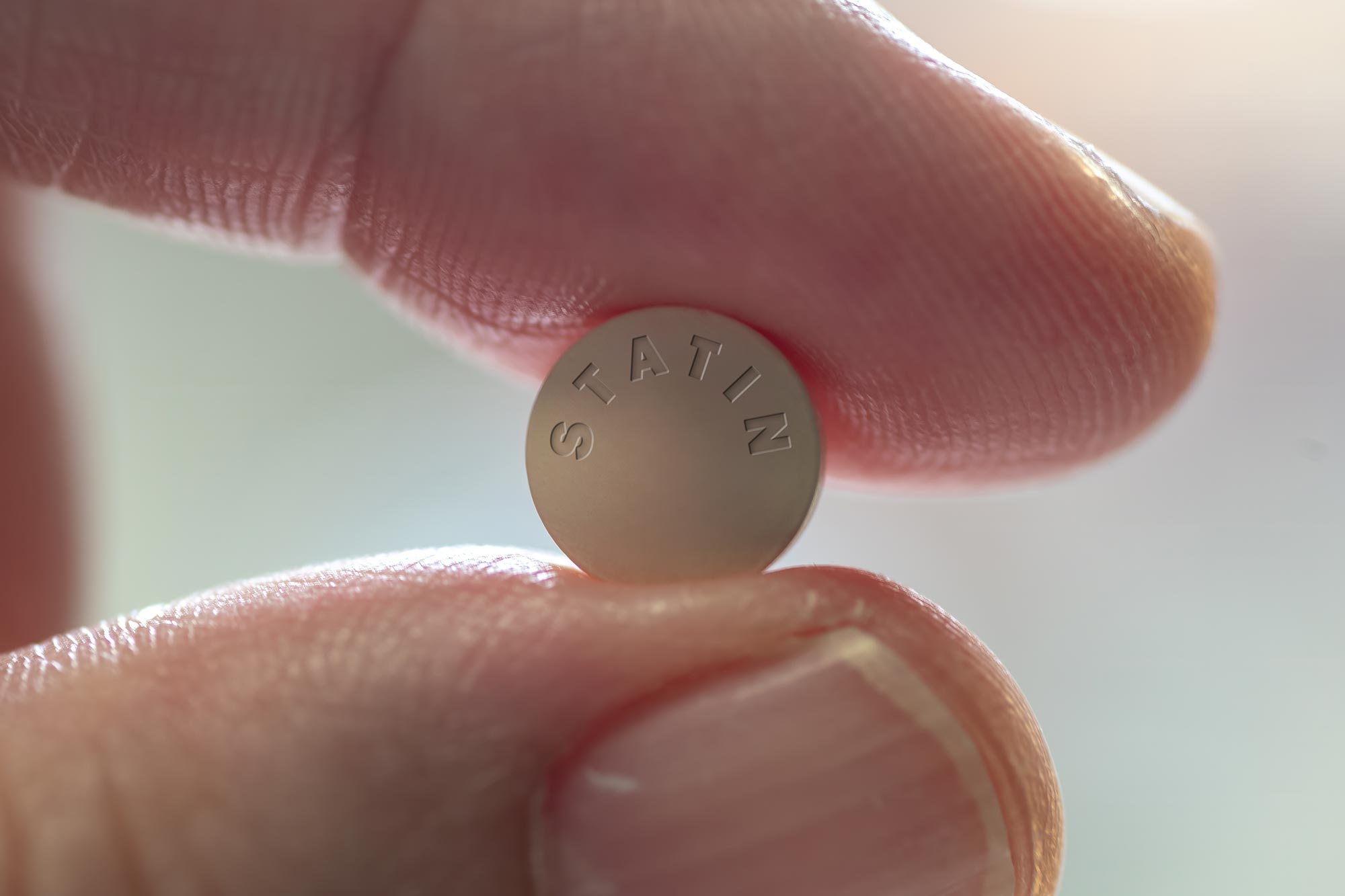
An extensive Charité study refutes the belief that statins have any additional positive effect beyond lowering cholesterol.
Statins are cholesterol-lowering medications used for high cholesterol to lower the risk of atherosclerosis, heart attack, and stroke. Small studies had hinted that these drugs might also ease depression, so a team at Charité – Universitätsmedizin Berlin conducted a comprehensive study to test that idea.
The researchers did not find evidence that statins provide additional antidepressive effects. They recommend continuing to use statins to control cholesterol, not to treat depression. The study was published in JAMA Psychiatry.
Statins are among the most commonly prescribed drugs worldwide. They have anti-inflammatory effects and reduce cholesterol production in the liver, which lowers the chance of cardiovascular disease. Earlier small investigations had proposed possible antidepressive benefits in addition to these established effects.
“If statins really did have this antidepressive effect, we could kill two birds with one stone,” says Prof. Christian Otte, Director of the Department of Psychiatry and Neurosciences on the Charité Campus Benjamin Franklin, and leader of the study. “Depression and adiposity, or obesity, are among the most common medical conditions globally. And they actually often appear together: Those who are obese are at a higher risk of depression. In turn, those with depression are at a higher risk of obesity.”
Obese patients often have higher cholesterol levels, so statins are administered to reduce the risk of cardiovascular diseases. But could they also alleviate depression?
An extensive, controlled study
Led by Christian Otte, the research team conducted a comprehensive study to investigate the potential antidepressive effects of statins that have been suggested. A total of 161 patients took part in the study, all of whom suffered from both depression and obesity. During the 12-week study, all participants were treated with a standard antidepressant (Escitalopram).
Half of the participants also received a cholesterol-lowering drug (Simvastatin), while the other half were given a placebo. It was decided at random who would receive statins and who would be given the placebo – the recipients of each were unknown to both the medical team and the participants. This ensured a randomized and double-blind study that would produce reliable results.
“This method should show us whether we can observe a stronger antidepressive effect among participants treated with statins, compared to those in the placebo group,” explains co-lead author Dr. Woo Ri Chae, Charité BIH Clinician Scientist at the Department of Psychiatry and Neurosciences.
The researchers used established clinical interviews and self-completed questionnaires to record the severity of depression in the patients at the beginning and end of the study. Blood samples were taken from the participants to determine their blood lipid levels and the level of the C-reactive protein (CRP), which are known indicators of inflammatory processes in the body.
“People with obesity and/or depression commonly exhibit slightly raised inflammatory markers in the blood. For some of those affected, this can actually be the cause of depression,” explains Christian Otte. “And this is precisely where we began with our hypothesis on the potential antidepressive effect of statins: If administering statins leads to an improvement in inflammatory markers, could this also possibly be accompanied by an antidepressive effect for some of the study participants?”
Traditional antidepressants remain the gold standard
At the beginning of the study, the participants ranged from moderately to severely depressed. Over the course of the 12-week study, the depression symptoms in all patients showed clear improvement – there was, however, no difference between those who received statins and those in the placebo group.
“Administering the cholesterol-lowering drug improved blood lipid levels, as expected, and the inflammatory marker CRP also displayed a marked reduction,” says Woo Ri Chae. “So, unfortunately, this does not point to an additional antidepressive effect.” Christian Otte adds: “When it comes to treating depression, statins therefore have no additional benefit. To our present knowledge, traditional antidepressants remain the gold standard.” According to current guidelines, statins should be prescribed to reduce the risk of atherosclerosis and cardiovascular diseases. The researchers recommend that the same should naturally also apply for patients suffering from depression.
In further studies, Christian Otte’s team will conduct a more thorough analysis of the blood samples taken as part of this research on a cellular and molecular level, to reveal potential differences and correlations. The researchers are also continuing to work at full speed on improved strategies for treating patients with depression who also suffer from other conditions.
Reference: “Simvastatin as Add-On Treatment to Escitalopram in Patients With Major Depression and Obesity: A Randomized Clinical Trial” by Christian Otte, Woo Ri Chae, Deniz Yildirim Dogan, Dominique Piber, Stefan Roepke, An Bin Cho, Samuel Trumm, Michael Kaczmarczyk, Jelena Brasanac, Katja Wingenfeld, Stefanie Koglin, Johannes Wieditz, Klaus Junghanns, Michael Lucht, David Prvulovic, Tillmann H. C. Krüger, Jan Terock, Moritz Haaf, Tobias Hofmann, Nicole Mauche, Jan Philipp Klein, Hans Jörgen Grabe, Andreas Reif, Kai G. Kahl, Deborah Janowitz, Gregor Leicht, Kim Hinkelmann, Maria Strauß, Tim Friede and Stefan M. Gold, 4 June 2025, JAMA Psychiatry.
DOI: 10.1001/jamapsychiatry.2025.0801
Never miss a breakthrough: Join the SciTechDaily newsletter.
Follow us on Google and Google News.