

In a retrospective study of patients tested for COVID-19, researchers at the University of Chicago Medicine found an association between vitamin D deficiency and the likelihood of becoming infected with the coronavirus.
“Vitamin D is important to the function of the immune system and vitamin D supplements have previously been shown to lower the risk of viral respiratory tract infections,” said David Meltzer, MD, Ph.D., Chief of Hospital Medicine at UChicago Medicine and lead author of the study. “Our statistical analysis suggests this may be true for the COVID-19 infection.”
The research team looked at 489 UChicago Medicine patients whose vitamin D level was measured within a year before being tested for COVID-19. Patients who had vitamin D deficiency (< 20ng/ml) that was not treated were almost twice as likely to test positive for the COVID-19 coronavirus compared to patients who had sufficient levels of the vitamin.
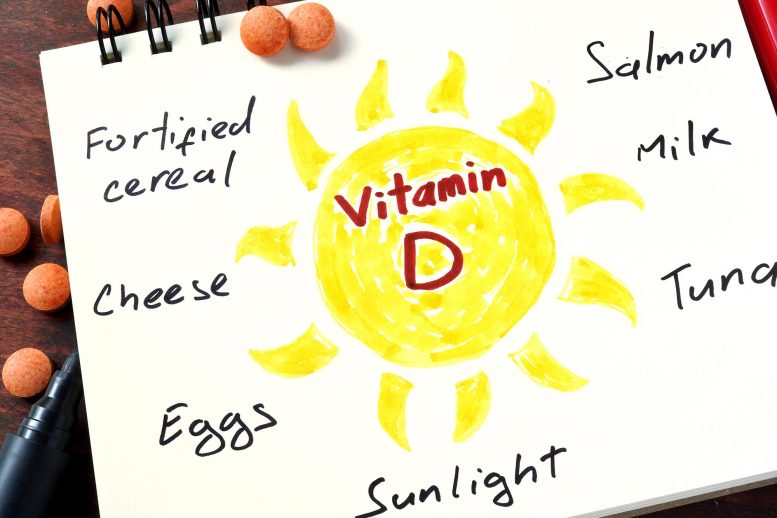
The study, Association of Vitamin D Status and Other Clinical Characteristics With COVID-19 Test Results, was published on September 3, 2020, in JAMA Network Open. Findings were previously reported on medRxiv, a preprint server for the health sciences.
Half of Americans are deficient in Vitamin D, with much higher rates seen in African Americans, Hispanics, and individuals living in areas like Chicago where it is difficult to get enough sun exposure in winter.
“Understanding whether treating Vitamin D deficiency changes COVID-19 risk could be of great importance locally, nationally, and globally,” Meltzer said. “Vitamin D is inexpensive, generally very safe to take, and can be widely scaled.”
Meltzer and his team emphasize the importance of experimental studies to determine whether vitamin D supplementation can reduce the risk, and potentially severity, of COVID-19. They also highlight the need for studies of what strategies for vitamin D supplementation may be most appropriate in specific populations. They have initiated several clinical trials at UChicago Medicine and with partners locally.
Reference: “Association of Vitamin D Status and Other Clinical Characteristics With COVID-19 Test Results” by David O. Meltzer, MD, Ph.D.; Thomas J. Best, Ph.D.; Hui Zhang, Ph.D.; Tamara Vokes, MD; Vineet Arora, MD, MPP and Julian Solway, MD, 3 September 2020, JAMA Network Open.
DOI: 10.1001/jamanetworkopen.2020.19722
medRxiv
NOTE: Patients should contact their physician to have Vitamin D level tested. Only take the dose recommended by your doctor.
Never miss a breakthrough: Join the SciTechDaily newsletter.
Follow us on Google and Google News.
2 Comments
Vitamin D stops Rickets we’ve known for almost a century. But that was only the tip of the iceberg: it’s not only that Rickets causes bow-leggedness but it affects the development of the pelvis, leading to higher rates of infant mortality and death in childbirth. And thus we see lighter pigmented people surviving further north: what reduces skin cancer also decreases vitamin D synthesis. By “losing” the pigmentation we are able to get it from the Sun further north for more of the year. Other alternatives? Eating fish. Even whale muktuk contains vitamin D. Also organ meats, eggs and sun dried mushrooms (the mushrooms must be exposed to radiation, the ergosterol works similar to cholesterol, which makes the vitamin D in our skin) Genomics studies (look up Bruce Hollis prostate research) show it up-regulates several genes, including those that regulate inflammatory and immune responses…
Does it matter if the eggs are eaten raw, boiled or scrambled? Also does lack of vitamin D cause female baldness in the scalp?