
You might be surprised to learn that over a third of adults in the United States don’t get enough vitamin D.[1] In fact, vitamin D deficiency is the most common medical condition in the world[2] and is especially likely to occur in the winter months when people don’t get enough sunlight. This is because ultraviolet sunlight absorbed through your skin triggers vitamin D production[3] and that’s why it’s sometimes referred to as “the sunshine vitamin.”
Vitamin D holds a few other surprises as well.
In this short guide, you’ll find out:
- Vitamin D’s unexpected wellness role in your body
- How a vitamin D deficiency can negatively impact your health
- Four fast ways to boost your vitamin D levels in wintertime

What is Vitamin D?
Vitamin D is an organic compound that is actually not a vitamin at all! It’s a type of prohormone known as a ‘secosteroid’.[4] Prohormones are substances that your body changes into hormones using metabolic functions.[5]
In its role as a prohormone, vitamin D works within your endocrine system to help keep your serotonin, dopamine, adrenaline, and noradrenaline levels well-regulated.[6] It also helps with the absorption of calcium and phosphorous for optimal bone and tooth health.[7] There’s even evidence that it supports long-term immune health.[8]
Your skin, kidneys, and liver all work together to synthesize the active form of vitamin D, known as calcitriol, which healthcare practitioners use to measure your levels of the prohormone.
In order to maintain healthy levels of vitamin D in your body, the National Institutes of Health (NIH) recommend the following daily allowances in micrograms (mcg) or International Units (IU):[9]
- Babies up to age 12 months: 400 IU or 10 mcg
- Children and Adults aged 1-70: 600 IU or 15 mcg
- Adults aged 71 and older: 800 IU or 20 mcg
What Are the Health Impacts of a Vitamin D Deficiency?
The fact that receptors for vitamin D are found in almost every cell in your body shows its importance for keeping your mind-body health well balanced. A vitamin D deficiency may lead to a variety of mental and physical health issues, including:[10,11,12, 13]
- Depression
- Seasonal Effective Disorder
- Osteoporosis
- Bone fractures
- Rickets (weak and malformed bones) in children
- Weakened muscles
- Autoimmune conditions
- Increased risk for cancer, diabetes, and high blood pressure
- Increased risk for severe COVID-19
A blood test from your healthcare practitioner can help you determine if you have enough vitamin D in your system. Vitamin D deficiency symptoms may include weakness, bone pain, and muscle spasms.
4 Fast Ways to Boost Your Vitamin D in Winter
Normally it’s recommended to get about 10-30 minutes of sunshine each day (especially around the mid-day mark) in order to keep your vitamin D levels stable,[14] but this can be difficult to do if you’re living in colder climates. Luckily, there are several ways to get enough of this vitally important prohormone, even in the wintertime.
Take a look at 4 fast ways to boost your vitamin D levels in the winter.
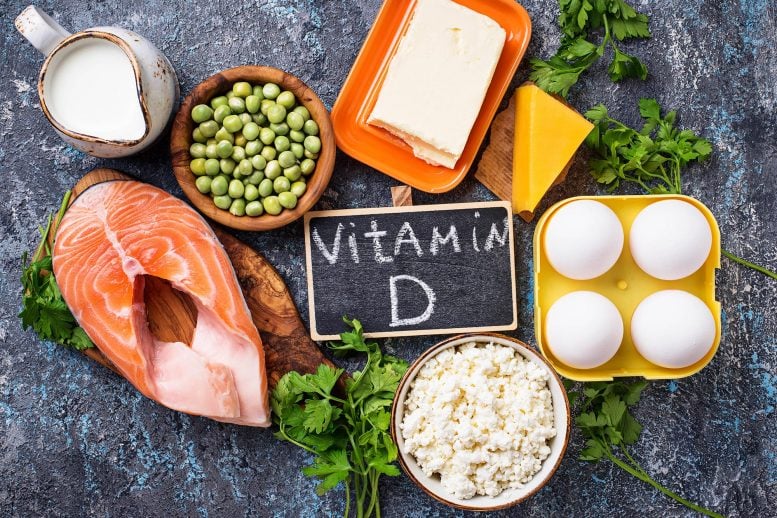
1. Add More Fish, Eggs, and Mushrooms to Your Diet
Certain types of fish and seafood are naturally rich in vitamin D. These include:[15]
- Salmon
- Halibut
- Tilapia
- Tuna
- Cod
- Sardines
- Haddock
- Shrimp
- Scallops
In addition, cod liver oil, eggs, and beef are great sources of vitamin D,[16] For vegetarians and vegans, mushrooms are the best natural option. However, just like people, these fungi need to be exposed to the sun in order to produce vitamin D, so be sure to leave them by a window or other spot with natural rays.
2. Use an Ultraviolet (UV) Lamp
The sun emits a type of light known as UVB,[17] and it’s synthesized by your skin (via a compound called 7-DHC) to begin vitamin D production in your body.[18] A UVB lamp works by using the same type of rays as the sun so that you can stay indoors where it’s warm and still get the benefits of a sunny summer day. In fact, some LED lights at certain wavelengths have been found to be more efficient at stimulating the skin’s vitamin D production than the sun![19]
It’s recommended to check with your healthcare provider before beginning a UV light therapy routine because certain factors, like skin melanin content and age, may affect absorption and production rates.[20]

3. Try Nutritional Supplements
Humans and animals produce vitamin D3, while plants like mushrooms produce vitamin D2. Some science suggests that vitamin D2 is the less effective of the two.[21] If you eat fish and meat, you can look for supplements that contain vitamin D3. Vegan and vegetarian options may contain vitamin D2, although some manufacturers have begun to produce vegan-friendly vitamin D3.[22]
These vitamin D supplements come in a wide array of convenient options, including powders, capsules, drops, gummies, softgels, chewables, and sprays.
4. Add in Vitamin D Fortified Foods
There are fortified versions of some of the most common foods to help you get the extra vitamin D you need throughout the winter months (and the entire year). These include milk, cereals, juices, fat spreads, and yogurt.
Because vitamin D is fat-soluble, always make sure you avoid fat-free fortified items. The amount of vitamin D may also vary between products, so be sure to check the labels!
References:
- ncbi.nlm.nih.gov/books/NBK532266/
- “Prevalence of Vitamin D Deficiency among Adult Population of Isfahan City, Iran” by Silva Hovsepian, Massoud Amini, Ashraf Aminorroaya, Peyvand Amini and Bijan Iraj, April 2011, Journal of Health, Population and Nutrition.
DOI: 10.3329/jhpn.v29i2.7857 - ods.od.nih.gov/factsheets/VitaminD-HealthProfessional/
- “From vitamin D to hormone D: fundamentals of the vitamin D endocrine system essential for good health” by Anthony W Norman, 1 August 2008, The American Journal of Clinical Nutrition.
DOI: 10.1093/ajcn/88.2.491S - medical-dictionary.thefreedictionary.com/prohormone
- endocrine.org/patient-engagement/endocrine-library/hormones-and-endocrine-function/endocrine-related-organs-and-hormones
- ncbi.nlm.nih.gov/books/NBK279023/
- “Vitamin D: Nutrient, Hormone, and Immunomodulator” by Francesca Sassi, Cristina Tamone and Patrizia D’Amelio, 3 November 2018, Nutrients.
DOI: 10.3390/nu10111656 - ods.od.nih.gov/factsheets/VitaminD-Consumer/
- medlineplus.gov/vitaminddeficiency.html
- webmd.com/vitamins-and-supplements/what-to-know-about-vitamin-d-and-mental-health
- news.harvard.edu/gazette/story/2022/01/vitamin-d-reduced-rate-of-autoimmune-diseases-by-22/
- webmd.com/lung/news/20220208/vitamin-d-deficiency-tied-to-severe-covid
- healthline.com/nutrition/vitamin-d-from-sun
- nutritionix.com/list/which-seafood-has-the-most-vitamin-d/6D96E5
- ods.od.nih.gov/factsheets/VitaminD-HealthProfessional/
- fda.gov/radiation-emitting-products/tanning/ultraviolet-uv-radiation
- “Vitamin D and the skin: Focus on a complex relationship: A review” by Wedad Z. Mostafa and Rehab A. Hegazy, 8 February 2014, Journal of Advanced Research.
DOI: 10.1016/j.jare.2014.01.011 - “Ultraviolet B Light Emitting Diodes (LEDs) Are More Efficient and Effective in Producing Vitamin D3 in Human Skin Compared to Natural Sunlight” by T. A. Kalajian, A. Aldoukhi, A. J. Veronikis, K. Persons and M. F. Holick, 13 September 2017, Scientific Reports.
DOI: 10.1038/s41598-017-11362-2 - medicaljournals.se/acta/content/html/10.2340/00015555-0980
- “A Review of Mushrooms as a Potential Source of Dietary Vitamin D” by Glenn Cardwell, Janet F. Bornman, Anthony P. James and Lucinda J. Black, 13 October 2018, Nutrients.
DOI: 10.3390/nu10101498 - vegan.com/health/vitamin-d/
Never miss a breakthrough: Join the SciTechDaily newsletter.
Follow us on Google and Google News.
1 Comment
Great article, except you talk about leaving mushrooms in the window. UVB is required to produce D in mushrooms. UVB cannot pass through glass.