
Close Menu
    Facebook X (Twitter) Instagram
    SciTechDaily
    • Biology
    • Chemistry
    • Earth
    • Health
    • Physics
    • Science
    • Space
    • Technology
    Facebook X (Twitter) Pinterest YouTube RSS
    SciTechDaily
    Home»Biology»Stunning Deep-Sea Coral Gardens Discovered in the Submarine Canyons Off Australia
    Biology

    Stunning Deep-Sea Coral Gardens Discovered in the Submarine Canyons Off Australia

    By Schmidt Ocean InstituteFebruary 29, 2020No Comments3 Mins Read
    Facebook Twitter Pinterest Telegram LinkedIn WhatsApp Email Reddit
    Share
    Facebook Twitter LinkedIn Pinterest Telegram Email Reddit
    Deep Sea Coral Study Sites
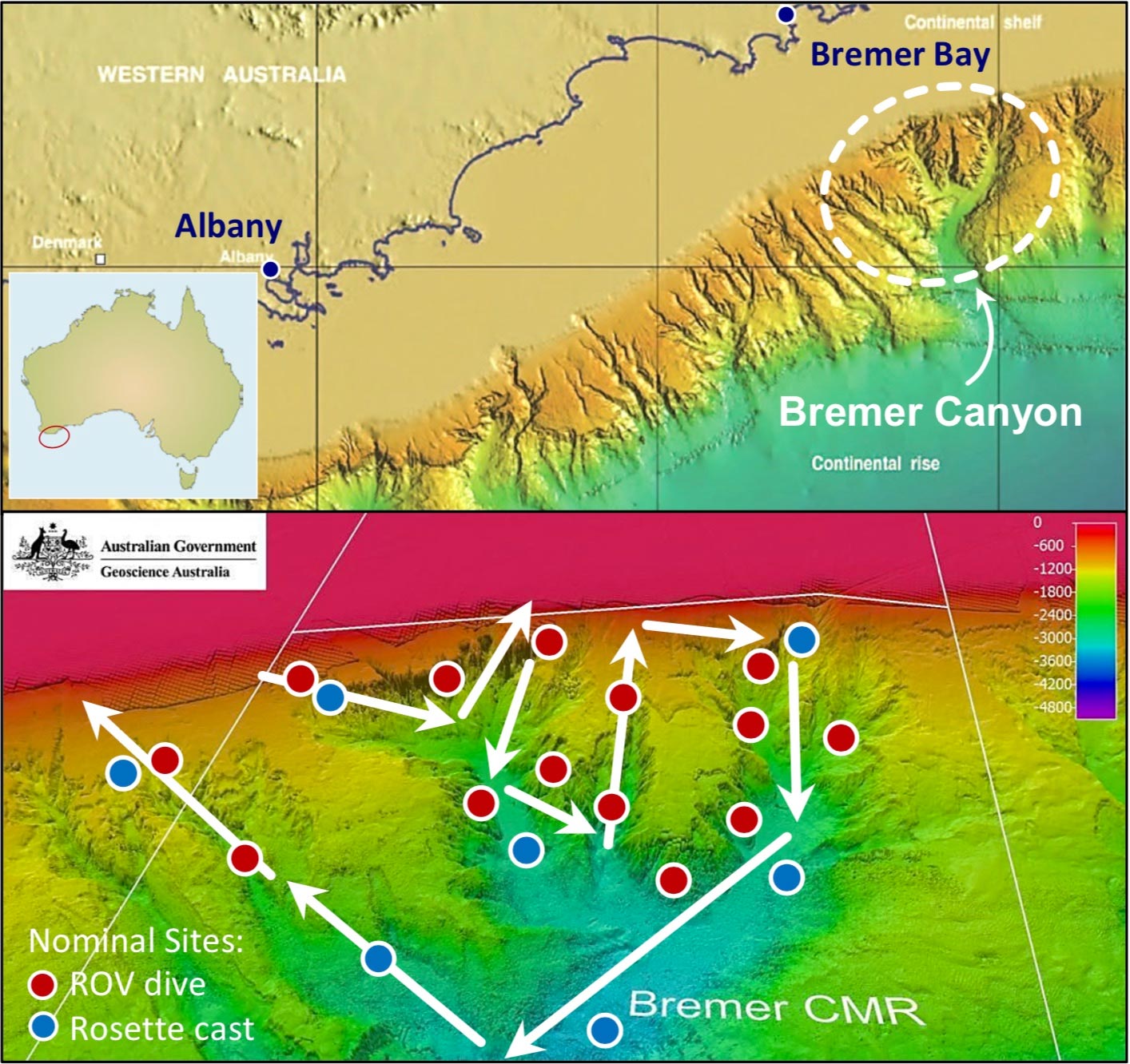
    Maps of some main study sites: Bremer Canyon and nearby canyons of the Albany Group. Transect indicated by arrows, and nominal ROV dive sites and Rosette casts shown in red and blue. Credit: Exon et al., 20152 (top), Geoscience Australia (bottom).

    Bremer Canyon Marine Park is already known as a biodiversity hotspot for marine species such as whales and dolphins, however, a recent expedition focused on the deep sea has now revealed rich and diverse ecosystems inhabiting the cold waters deep within the canyon. Led by researchers from the University of Western Australia (UWA), these discoveries were only made possible by the philanthropic Schmidt Ocean Institute’s (SOI) deep-sea remotely operated vehicle, SuBastian, which is capable of sampling depths to 4,500 meters (15,000 feet).

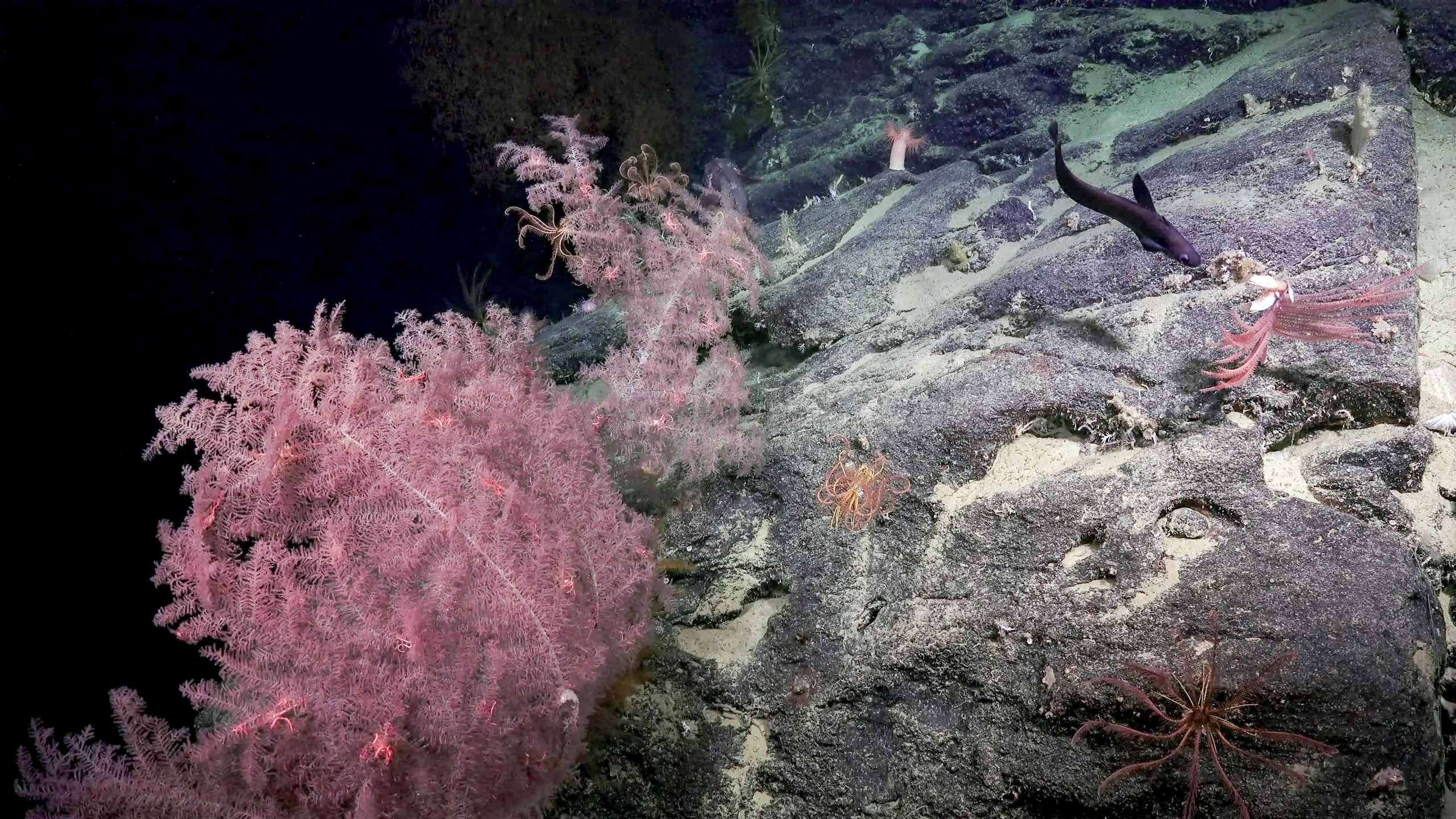
    The team strategically collected deep-sea corals, associated fauna, seawater, and geological samples from the abyssal depths (~4,000 meters or 13,000 feet) to the continental shelf (~200 meters or 660 feet). “We have already made a number of remarkable discoveries from the Bremer Canyon,” said Dr. Julie Trotter, the Chief Scientist from UWA who led the expedition. “The vertical cliffs and ridges support a stunning array of deep-sea corals that often host a range of organisms and form numerous mini-ecosystems.”

    Coral Garden Found in Bremer Canyon
    Coral garden found in Bremer Canyon, Western Australia as part of a month-long expedition exploring canyon depths for the first time with ROV SuBastian. Credit: Schmidt Ocean Institute

    These new discoveries are being integrated into a comprehensive package of biological, geological, and bathymetric data. Such rare records of these deep-sea habitats are a new and very important contribution to the Marine Parks, which will help managers as well as the broader community to better understand and protect these previously unknown ecosystems.

    The deeper waters in the three oceans that surround Australia, including the world’s largest barrier reef and submarine canyons, are largely unexplored. The expedition explored the Bremer, Leeuwin, and Perth canyons, all of which have extensive fossil coral deposits, with the Leeuwin especially notable for a massive pedestal-like coral graveyard.
    Bremer Canyon Diversity
    A large coral found with interesting fish caught during a dive with ROV SuBastian during a month long expedition to the Bremer Canyon in Western Australia. Credit: Schmidt Ocean Institute

    “This has global implications given these waters originate from around Antarctica which feed all of the major oceans and regulate our climate system,” said Professor Malcolm McCulloch from UWA.

    Australia has only one oceanographic vessel available for scientific research and no supporting deep-sea underwater robots, which makes this expedition so important and rare.

    Facing the Southern Ocean, the Bremer Canyon provides important information on the recent and past histories of climate change and ocean conditions in this region, as well as global-scale events. Because the Southern Ocean completely encircles Antarctica, it is the main driver of the global climate engine and regulates the supply of heat and nutrient-rich waters to the major oceans. “A particular species of solitary cup coral was found during the expedition. This is significant because we are working on the same coral in the Ross Sea on the Antarctic shelf, in much colder waters,” said collaborator and co-Chief Scientist Dr. Paolo Montagna from the Institute of Polar Sciences in Italy. “This is an important connection between disparate sites across the Southern Ocean, which helps us trace changes in water masses forming around Antarctica and dispersing northward into the Indian and other oceans.”

    Never miss a breakthrough: Join the SciTechDaily newsletter.
    Follow us on Google and Google News.

    Biodiversity Coral Reefs Marine Biology
    Share. Facebook Twitter Pinterest LinkedIn Email Reddit

    Related Articles

    Scientists Discover Coral Reefs Are Teeming With Previously Unknown Life

    Scientists Debunk Long-Held “Darwin’s Paradox” Myth About Coral Reefs

    Coral Calamity: Scientists Uncover Hidden Perils of Bleaching

    Genetic Research Reveals Hidden Diversity of Coral More Important for Conservation Than Previously Thought

    The Great Barrier Reef Has Lost Half Its Corals – Massive Declines in Just 3 Decades

    Reef Sharks in Decline – Already Functionally Extinct on Many of the World’s Reefs

    “Treasure Trove” of New Coral Species Discovered Along the Great Barrier Reef

    Rare Species of Animals and Plants Organize in Ghettos to Survive

    New Deep-Water Coral Discovered in Part of Unexplored Marine Ecosystem

    Leave A Reply Cancel Reply

    • Facebook
    • Twitter
    • Pinterest
    • YouTube

    Don't Miss a Discovery

    Subscribe for the Latest in Science & Tech!

    Trending News

    Wasp Colonies Explode Into Violence After Losing Their Queen

    Scientists Create “Living Plastic” That Self-Destructs in Just Six Days

    Your Blood May Carry a 700-Million-Year-Old Secret

    Scientists Discover Some “Zombie Cells” May Actually Help You Live Longer

    Earth May Be Seeding Venus With Life, According to New Research

    What Scientists Found Inside a 117-Year-Old Woman Reveals New Clues to Long Life

    Scientists Discover Mysterious Creature Living in the Great Salt Lake – and It Exists Nowhere Else on Earth

    It’s Alive? Surprising Discovery Changes What We Know About Fog

    Follow SciTechDaily
    • Facebook
    • Twitter
    • YouTube
    • Pinterest
    • Newsletter
    • RSS
    SciTech News
    • Biology News
    • Chemistry News
    • Earth News
    • Health News
    • Physics News
    • Science News
    • Space News
    • Technology News
    Recent Posts
    • Mystery Solved: The Decades-Old Secret Lurking Beneath North Carolina’s Blueberry Farms
    • Surprising New Study Challenges a Century-Old Theory of Habit Formation
    • Scientists Turn Seawater Into Drinking Water Without Toxic Brine
    • A Psychologist Explains Why 40% of People Are Avoiding the News
    • Scientists Discover Alzheimer’s-Linked Proteion’s Surprising Role in Making Memories Last
    Copyright © 1998 - 2026 SciTechDaily. All Rights Reserved.
    • Science News
    • About
    • Contact
    • Editorial Board
    • Privacy Policy
    • Terms of Use

    Type above and press Enter to search. Press Esc to cancel.