
Scientists have created a new type of super-strong antibody that could significantly enhance cancer immunotherapy.
In an exciting advance for cancer treatment, scientists have developed a new type of powerful antibody that could help the immune system fight cancer more effectively.
Researchers at the University of Southampton have redesigned antibodies, tiny proteins produced by white blood cells to defend against harmful invaders like bacteria and viruses. By tweaking the shape and stiffness of these proteins, the team discovered they could make them more effective at rallying the immune system against cancer cells.
Their newly engineered antibody, which is more rigid than natural ones, triggered a significantly stronger immune response in early tests.
Their findings, which were funded by Cancer Research UK, have been published in the journal Nature Communications.
Key Insights From the Study
Professor Mark Cragg, from the Centre for Cancer Immunology at the University of Southampton, said: “The concept of using immuno-stimulation for cancer treatment is very exciting.
“Our study confirms that making even subtle increases in the rigidity of antibodies significantly stimulates immune activity, creating a powerful immune response against the disease. This approach works for multiple antibodies targeting different immune receptors. The ability to engineer these rigid antibodies could help develop more potent drugs that can stimulate the immune system to target cancer or other diseases.”
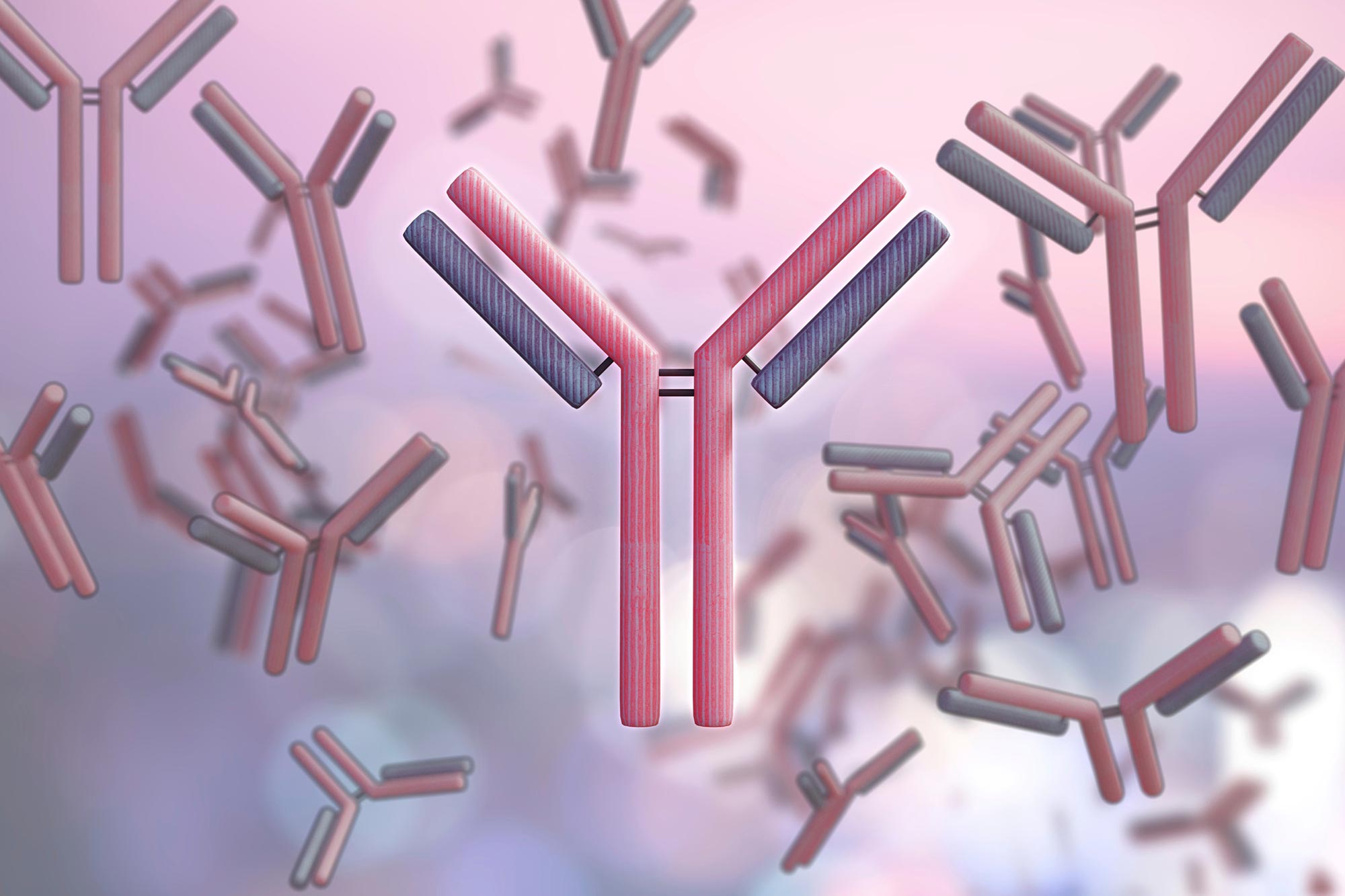
The Y-shaped antibodies fight infections by targeting and then binding onto molecules on the surface of bacteria and viruses, or even cancerous cells.

They can also be engineered to attach to receptors on immune cells to activate our body’s immune defences.
But not all antibodies do this effectively, said study co-author Isabel Elliott, a PhD student from Southampton.
She added: “The shape and flexibility of antibodies is crucial for how well they can activate immune cells – and we found more rigid antibodies seem to be better at this. The reason for this is likely because these rigid antibodies can hold molecules on the immune cells closer together, which triggers a stronger activation signal. Floppier antibodies are less likely to do this effectively.”
Engineering the Antibody Structure
The two arms of antibodies, which give its Y shape, are linked by a series of bridges, named disulfide bonds.
The Southampton scientists managed to add extra bridges between the microscopic arms of the antibodies and tested it against standard variants.
Dr Ivo Tews, a Professor in Structural Biology at Southampton, added: “We used a supercomputer to visualise the structure of the antibody in atomic detail, allowing us to position extra disulfide bonds in the modified antibody.
“The results showed that the experiment worked and that the new, more rigid antibodies were more effective at activating immune cells. This idea of controlling antibody activity by making them more rigid seems to apply to many other similar molecules on immune cells.”
Executive Director of Research and Innovation at Cancer Research UK, Dr Iain Foulkes, said: “Refining our understanding of how to enable our immune systems to fight cancer is a complex but fundamental step in helping cancer patients to have the best chance of a good outcome when receiving immunotherapy treatment. Using the latest technologies to engineer this type of super-strong antibody that could trigger a promising immune response will empower us to continue pioneering new ways to outsmart cancer.”
Reference: “Structure-guided disulfide engineering restricts antibody conformation to elicit TNFR agonism” by Isabel G. Elliott, Hayden Fisher, H. T. Claude Chan, Tatyana Inzhelevskaya, C. Ian Mockridge, Christine A. Penfold, Patrick J. Duriez, Christian M. Orr, Julie Herniman, Kri T. J. Müller, Jonathan W. Essex, Mark S. Cragg and Ivo Tews, 12 April 2025, Nature Communications.
DOI: 10.1038/s41467-025-58773-8
The research was funded by Cancer Research UK.
Never miss a breakthrough: Join the SciTechDaily newsletter.
Follow us on Google and Google News.
1 Comment
Does making an Ab more rigid come at a price? If you get increased T cell activation do you sacrifice the ability of the Ab to recognize a wider variety of foreign antigens?