
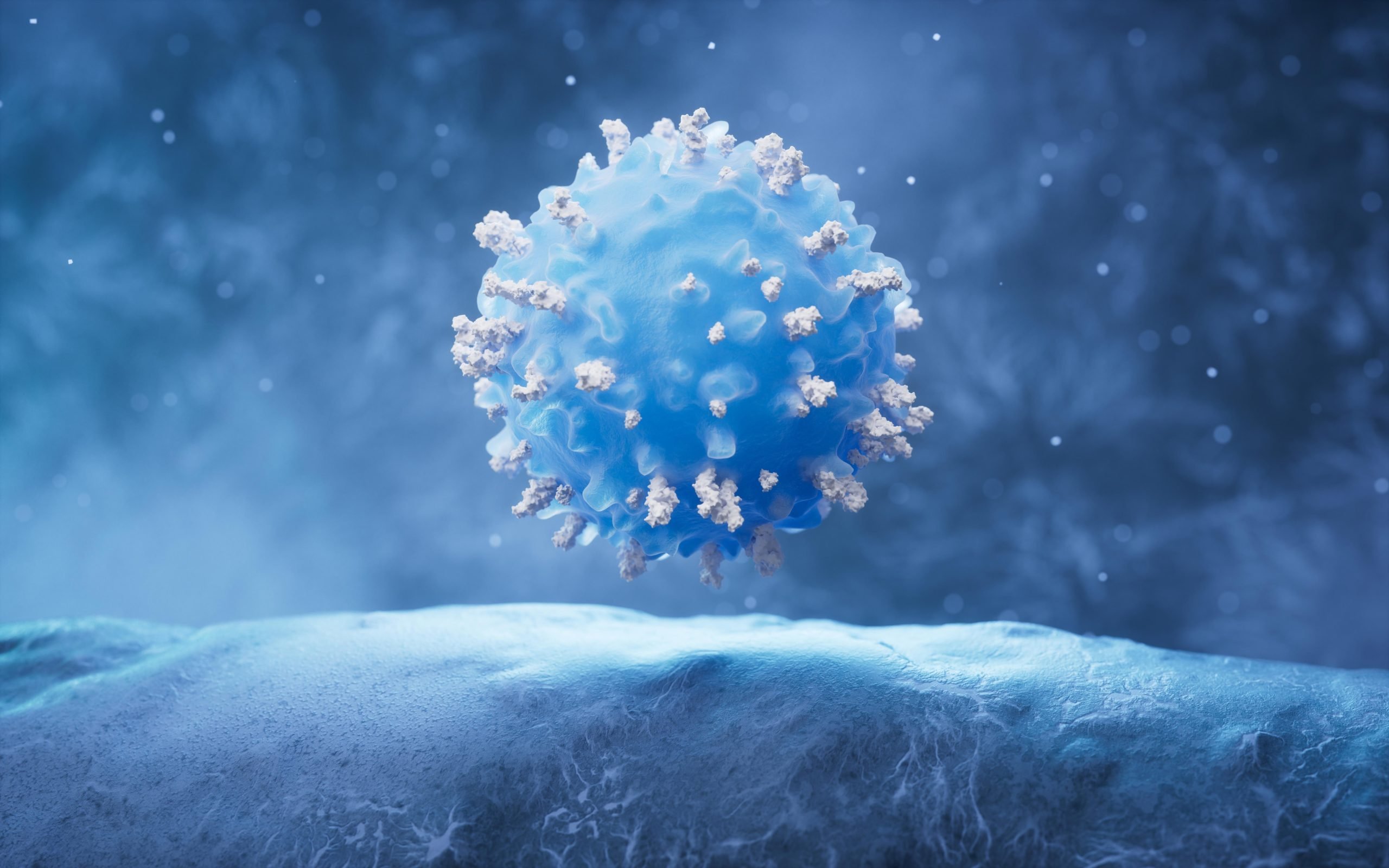
The discovery could lead to improved treatments for autoimmune diseases and cancer.
T cells may be able to do something scientists did not previously know they could: physically sense the tissues around them. A McGill University-led study suggests this ability could reshape understanding of how long-lasting immune protection develops.
Researchers have generally thought that tissue resident memory T cells, which remain in tissues after an infection has passed and react quickly if the same threat returns, are guided mainly by biochemical signals.
Tissue stiffness helps shape immune memory
Research published in Nature Immunology challenges that assumption. The findings indicate that T cells can detect how stiff their surrounding tissue is and use that physical information to help determine whether they develop into long-lived memory cells. The researchers suggest that adapting to the stronger mechanical forces present in tissues may be important for these cells to persist over time.
“This is an exciting fundamental finding that challenges the way we think about immune cells,” said lead author Judith Mandl, Professor in McGill’s Department of Physiology. “It suggests T cells can ‘feel’ their surroundings and adapt to them, making the physical environment an active force in shaping their behavior.”
The work brought together researchers from McGill’s Department of Physiology, the Alan Edwards Centre for Research on Pain, the Department of Bioengineering, the McGill University Health Centre, and collaborating institutions in the Netherlands and the United States.
Physical cues could influence future treatments
The finding could eventually contribute to new strategies for autoimmune diseases, allergies, and transplant rejection, conditions in which T cells can mistakenly target healthy tissue.
The researchers also say the discovery may be relevant to cancer.
“Tumors are often dense and physically difficult for immune cells to penetrate. Understanding how T cells adapt to these environments could help researchers design cancer immunotherapies that are better able to reach and attack tumors,” said Mandl.
Stiffer environments favored memory-like cells
To investigate how physical surroundings affect T cells, the researchers placed immune cells from humans and mice into engineered collagen gels designed to mimic tissues with different levels of stiffness. Cells in the stiffer gels were more likely to develop characteristics resembling tissue-resident memory cells, which are linked to long-term immune protection.
The next question is how T cells detect these physical conditions. Researchers now want to identify the molecular sensor that allows the cells to perceive stiffness and convert mechanical force into a biological response.
Reference: “Mechanosensing by T cells promotes a tissue-resident memory transcriptional program” by Jérémy Postat, Mauricio Merino, Angela R. Mingarelli, Aysha Cerf, Aanya Bhagrath, Dhanesh Patel, Connie Shen, Johanna Brodbeck, Pouria Tirgar, Dakota Rogers, Jules Blanc, Thiviya Jeyakumar, Caitlin Schneider, Shana Coley, Nadia Giannetti, Taylor A. DePauw, Johannes Textor, Allen Ehrlicher, Stephen C. Jameson, Reza Sharif-Naeini, Abhinav Sharma and Judith N. Mandl, 3 July 2026, Nature Immunology.
DOI: 10.1038/s41590-026-02581-9
The study was supported by the Human Frontier Science Program, the Canadian Institutes of Health Research, the Canadian Foundation for Innovation, the Natural Sciences and Engineering Research Council of Canada and the U.S. National Institutes of Health.
Never miss a breakthrough: Join the SciTechDaily newsletter.
Follow us on Google and Google News.
4 Comments
“Ansu” (the laying-on of hands with considerable force and repetitive application) is confirmed to augment or encourage healing. This appears in the Bible with Jesus and later his disciples, who used the method effectively. Who knows? ~ This process could possibly involve freeing up, facilitating, or activating the T-cells.
сложно выражаетесь..идеи не видно.. сути!? МД АФС!
THE NEW TYPES OF THEORIES FORMED BY EVERYTHING INTO INCREASED ISSUES ARE DEVELOPED INTO ALL SERIES (BIO-THEOLOGY) THESE DESCRIPTIONS ARE VALID-IAL A CONCEPTS OF THEORIES FOR THE WORLD PEACE IS OUR GENEARTIONS FORMING FUTURE TYPES FOLLOWED INTO ALL PRESENCE OF ALL VIRTUES INTO THESE QUESTIONS ARE DEVELOPED OPPSIOTES ANAYLSIS ABOUT ITS RESULTS ARE DESCRIPTIONS OF ALL QUESTIONS ACCOMPLISHED-VIRTUES OF TECHNOLOGY ARE COMPLETED AND INNER-CORE IS THESE ALL QUESTIONS OF RESOURCES OFTEN DEVELOPED OPPSOITES RESULSTS INTO THESE QUESTIONS ARE COMBINED INTO THESE QUESTIONS INTO ITS OWN ISSUES ARE COMPLETED REMAINS WITHOUT ANY DOUBTFULL-COMPREHENSIONS ARE DEPENDS INTO THESE ASSUMPTIONS MEASUREMENTS ARE ALL THESE DESCRIPTIONS ARE QUESTIONS NOT FORMS OF REALITY ALSO SERIES OF QUESTIONS ASSUMPTIONS ARE NOTES ACCOUNTS INNER-CORE QUESTIONS ARE DESCRIPIONS NOTED BEACUSE OF ACCUMLATIONS OF THINGS COMBINATIONS ARE VARIED-BY-EVERY COLLECTIONS ASSUMPTIONS QUESTIONS ARE VALUES NOT ONLY BUT FREQUENCIES OF ENERGY AND DEPENDS ARE DESCRIPIONS AND SERIES OF REALITY AND DEFIN
TIONS ARE FOUNDATIONS OF REALITY INTO FEATURES OF ITEMS ONLY TO CONNECTIONS AND QUESTIONS ARE VALUES QUESTIONS ARE QUESTIONS SERIES AND MORE TO PROCEED TO COMPLETED RESULTS INTO THESE COMPLETED FACTORS FORMS OF SIMPLE ISSUES OF REASONINGS FOCUS NOT FORMED NOTED COM
PLETED CONNECTIONS OF DEFINITIONS KEEPS A COMMON-ISSUES INTO THESE QUESTIONS OF ALL-SEQUCENCES ACCUMLATES TO THESE OPPOSITES INTO THESE INNER-CORES ARE VALID NOT DEVISED NEGAT
IVE AND COLELCTIONS INTO THESE QUESTIONS THEORIES ACCOMPLISHED COLLECTIONS OF CERTAIN ISSUES QUESTIONS DECREASED INNER-CORES QUESTIONS OFFERED BY EVERY-TIME-FRAMES OF VIRTUES
Nonsense