
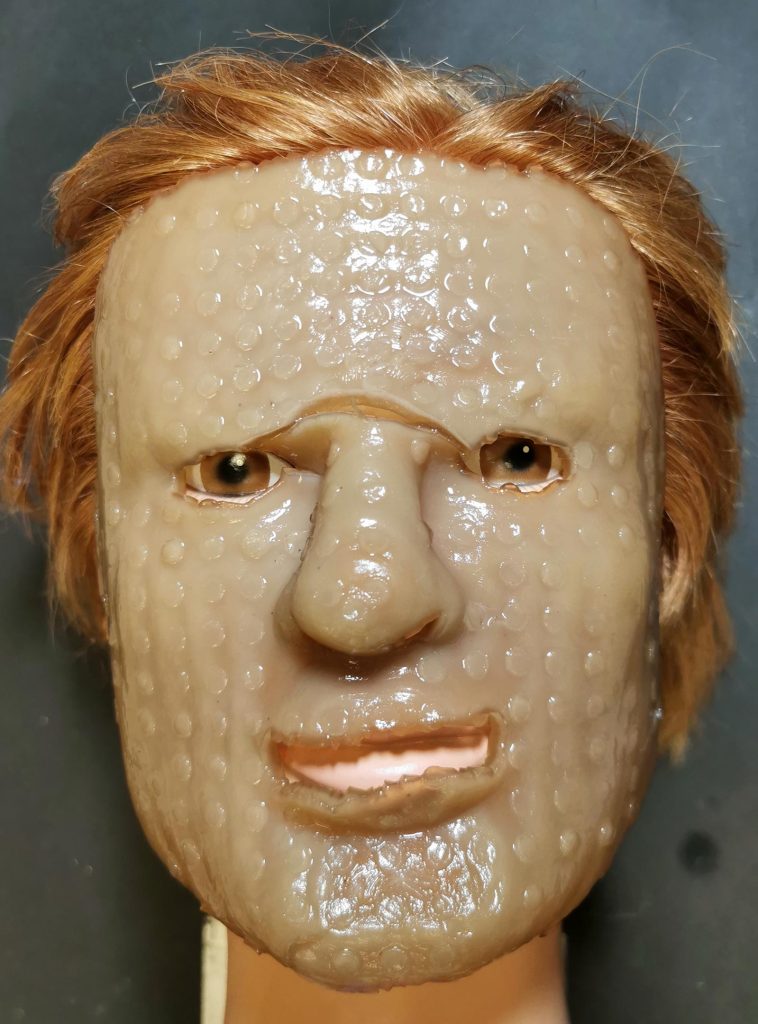
Scientists have developed a smart wound dressing that uses advanced polymers for personalized treatment of burn victims. The dressing, customizable via 3D printing, adheres well to skin and offers time-release medication for extended relief. Potential uses also include constant drug release in cancer treatment and customized cosmetic applications.
One of the challenges in treating burn victims is the frequency of dressing changes, which can be extremely painful.
To bring relief to this and other problems, University of Waterloo researchers have created a new type of wound dressing material using advanced polymers. This new dressing could enhance the healing process for burn patients and have potential applications for drug delivery in cancer treatment as well as in the cosmetic industry.
“To treat burn victims, we can customize the shape using a 3D printer, secondly, the material has fine-tuned surface adhesion, which is a key feature”, said Dr. Boxin Zhao, a professor in Waterloo’s Department of Chemical Engineering, whose team has made significant strides in developing intelligent hydrogel materials for use as a reusable wound dressing. “The material can easily adhere to the skin and be taken off. It’s a very delicate balance within the material to make the adhesion work.”
In developing the dressing, the researchers conducted a 3D scan of the patient’s face and body parts to customize it to an individual’s needs. This enables the dressing to make good contact with surfaces like noses and fingers, making it ideal for creating personalized wound dressings for burn patients.
Revolutionizing Drug Delivery and Chemotherapy
The material also has applications for cancer treatment. In traditional chemotherapy treatment, a patient may need to be in a clinic for hours, which can be tiring and uncomfortable. This dressing can provide a constant drug release outside the clinic setting, alleviating some of the challenges associated with traditional methods.
The material used to create these smart dressings includes a biopolymer derived from seaweed, a thermally responsive polymer, and cellulose nanocrystals. The dressing’s thermal responsiveness allows it to warm on the skin and gently lower to room temperature. Additionally, when chilled in the fridge, the dressing expands but shrinks to a smaller size at body temperature, making it easier and less painful to remove. Also, the dressing is designed to provide time-release medication, allowing for longer-lasting pain relief.
“We also envision applications in the beauty and cosmetic industry,” said Zhao, Waterloo’s Endowed Chair in Nanotechnology. “Cosmetologists can utilize 3D scanning technology to analyze their clients’ facial features and customize hydrogel masks infused with specific facial and skin regimen products. Additionally, this innovative approach can benefit plastic surgeons.”
This research is proof of concept for Zhao’s Surface Science and Bio- nanomaterials Laboratory Group. The next step for Zhao’s research group is to continue improving the material’s properties to make it healthier and commercially viable.
A study highlighting the team’s progress was recently published in the Journal of Colloids and Interface Science.
Reference: “Multi-thermo responsive double network composite hydrogel for 3D printing medical hydrogel mask” by Lukas Bauman and Boxin Zhao, 6 February 2023, Journal of Colloids and Interface Science.
DOI: 10.1016/j.jcis.2023.02.021
Never miss a breakthrough: Join the SciTechDaily newsletter.
Follow us on Google and Google News.