
Close Menu
    Facebook X (Twitter) Instagram
    SciTechDaily
    • Biology
    • Chemistry
    • Earth
    • Health
    • Physics
    • Science
    • Space
    • Technology
    Facebook X (Twitter) Pinterest YouTube RSS
    SciTechDaily
    Home»Technology»Testing Environment for Future Astronaut Expeditions into Deep Space
    Technology

    Testing Environment for Future Astronaut Expeditions into Deep Space

    By Michelle M. Murphy (Wyle Information Systems, LLC)May 19, 2015No Comments2 Mins Read
    Facebook Twitter Pinterest Telegram LinkedIn WhatsApp Email Reddit
    Share
    Facebook Twitter LinkedIn Pinterest Telegram Email Reddit
    Journey to Space in a Vacuum Chamber VF-5
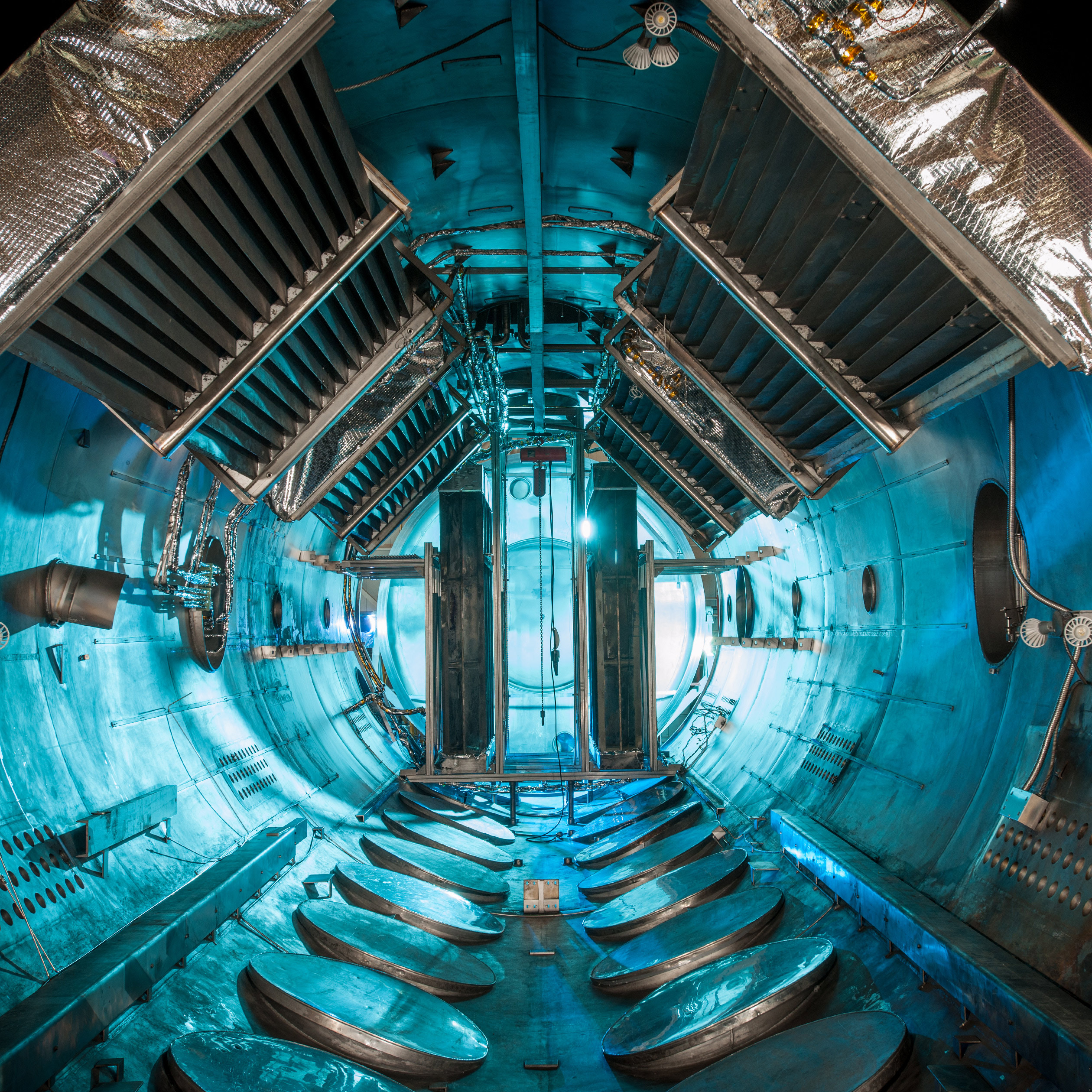
    NASA’s Glenn Research Center Vacuum Chamber 5. Credit: NASA

    NASA’s Glenn Research Center Vacuum Chamber 5 provides a testing environment for Glenn’s advanced Solar Electric Propulsion technology needed for future astronaut expeditions into deep space, including to Mars.

    When you need to test hardware designed to operate in the vast reaches of space, you start in a vacuum chamber. NASA’s Glenn Research Center in Cleveland has many of them, but Vacuum Chamber 5 (VF-5) is special. Supporting the testing of electric propulsion and power systems, VF-5 has the highest pumping speed of any electric propulsion test facility in the world, which is important in maintaining a continuous space-like environment.

    The cryogenic panels at the top and back of the chamber house a helium-cooled panel that reaches near absolute zero temperatures (about -440 degrees Fahrenheit). The extreme cold of this panel freezes any air left in the chamber and quickly freezes the thruster exhaust, allowing the chamber to maintain a high vacuum environment. The outer chevrons are cooled with liquid nitrogen to shield the cryogenic panels from the room-temperature surfaces of the tank.

    Most electric propulsion devices, such as Hall Thrusters, use xenon as a propellant, which is very expensive. By capturing the used xenon as ice during testing, researchers are able to recover the propellant to reuse, saving NASA and test customers considerable costs.

    The oil diffusion pumps along the bottom of the tank capped by circular covers use a low vapor pressure silicon oil to concentrate small amounts of gas to the point where it can be mechanically pumped from the chamber.

    VF-5 will continue to provide a testing environment for Glenn’s advanced Solar Electric Propulsion technology needed for future astronaut expeditions into deep space, including to Mars.


    Never miss a breakthrough: Join the SciTechDaily newsletter.
    Follow us on Google and Google News.

    Engineering NASA Space Exploration
    Share. Facebook Twitter Pinterest LinkedIn Email Reddit

    Related Articles

    NASA Engineers Successfully Test Heat Shield for Future Mars Exploration Vehicles

    Nanosatellites Provide New Opportunities for Space Science

    Engineers Developing ‘Hedgehog’ Robots That Hop and Tumble in Microgravity

    NASA SLS Program ‘Right on Track’ for Journey to Mars

    “Windbots” – The Future Explorers of Planetary Skies?

    Distributed Electric Propulsion May Usher in a New Era of Flight

    NASA Scientists Are Developing Tools to Allow Astronauts to “Live Off the Land”

    NASA Begins Testing Electric Propulsion Technologies

    NASA to Test Jet Engine With a Helping of Cereal and Crayons

    Leave A Reply Cancel Reply

    • Facebook
    • Twitter
    • Pinterest
    • YouTube

    Don't Miss a Discovery

    Subscribe for the Latest in Science & Tech!

    Trending News

    Popular Sugar-Free Sweetener Linked to Liver Disease, Study Warns

    What Is Hantavirus? The Deadly Disease Raising Alarm Worldwide

    Scientists Just Discovered How the Universe Builds Monster Black Holes

    Scientists Unveil New Treatment Strategy That Could Outsmart Cancer

    A Simple Vitamin May Hold the Key to Treating Rare Genetic Diseases

    Scientists Think the Real Fountain of Youth May Be Hiding in Your Gut

    Ravens Don’t Follow Wolves, They Predict Them

    This Common Knee Surgery May Be Doing More Harm Than Good

    Follow SciTechDaily
    • Facebook
    • Twitter
    • YouTube
    • Pinterest
    • Newsletter
    • RSS
    SciTech News
    • Biology News
    • Chemistry News
    • Earth News
    • Health News
    • Physics News
    • Science News
    • Space News
    • Technology News
    Recent Posts
    • Scientists Revive Ancient Chemistry Trick To Engineer Next-Generation Glass
    • Scientists Use AI To Supercharge Ultrafast Laser Simulations by More Than 250x
    • Scientists Just Found a Surprising Way To Destroy “Forever Chemicals”
    • Popular Supplement Ingredient Linked to Shorter Lifespan in Men
    • Scientists May Have Found a Way To Repair Nerve Damage in Multiple Sclerosis
    Copyright © 1998 - 2026 SciTechDaily. All Rights Reserved.
    • Science News
    • About
    • Contact
    • Editorial Board
    • Privacy Policy
    • Terms of Use

    Type above and press Enter to search. Press Esc to cancel.