
Close Menu
    Facebook X (Twitter) Instagram
    SciTechDaily
    • Biology
    • Chemistry
    • Earth
    • Health
    • Physics
    • Science
    • Space
    • Technology
    Facebook X (Twitter) Pinterest YouTube RSS
    SciTechDaily
    Home»Technology»NASA Engineers Successfully Test Heat Shield for Future Mars Exploration Vehicles
    Technology

    NASA Engineers Successfully Test Heat Shield for Future Mars Exploration Vehicles

    By NASAOctober 6, 2015No Comments2 Mins Read
    Facebook Twitter Pinterest Telegram LinkedIn WhatsApp Email Reddit
    Share
    Facebook Twitter LinkedIn Pinterest Telegram Email Reddit
    NASA Completes Heat Shield Testing for Mars Exploration Vehicles
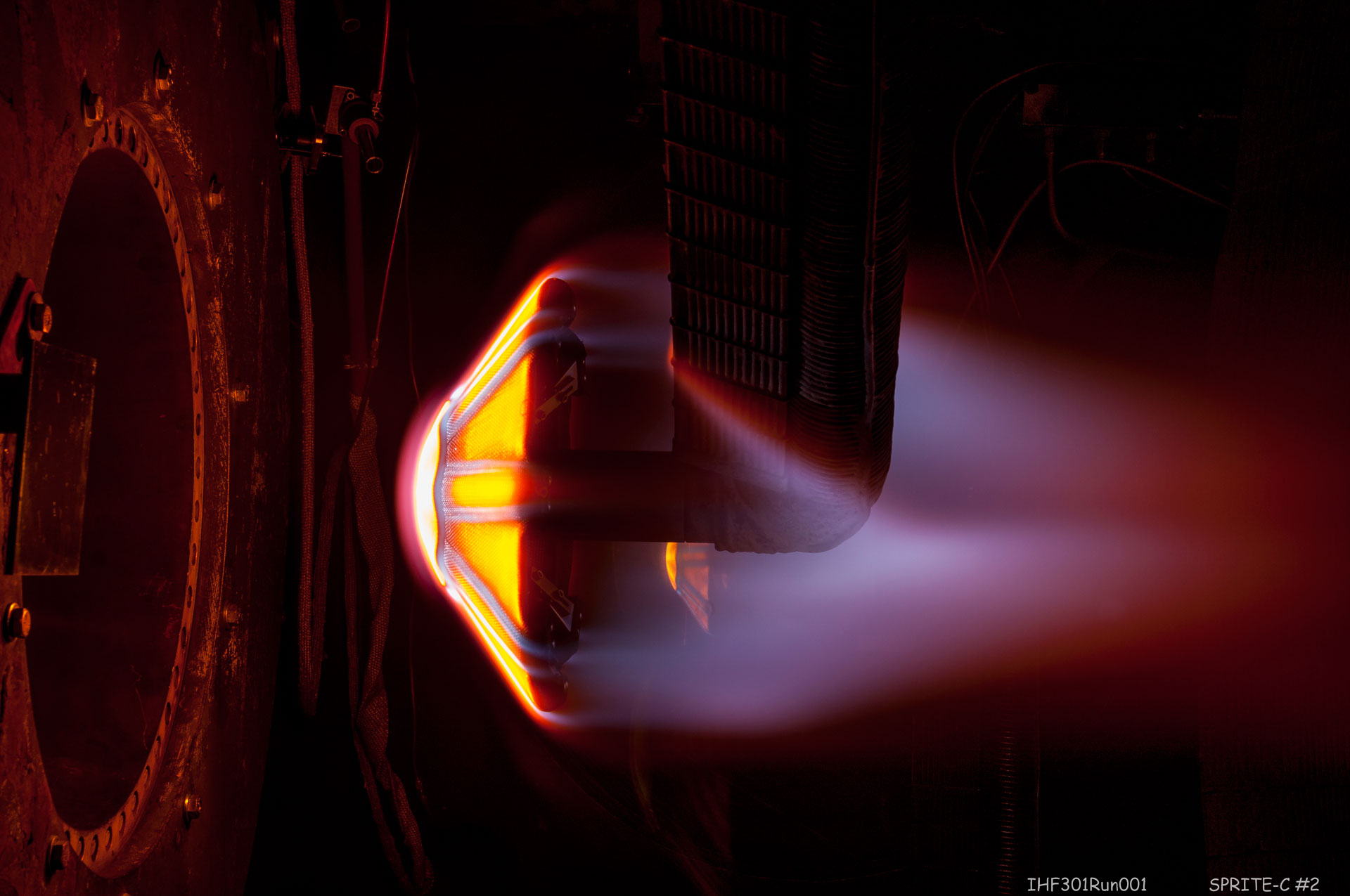
    ADEPT is a mechanically-deployable heat shield concept using carbon fabric: a flexible heat shield that expands to “open” like an umbrella.

    NASA engineers have successfully completed heat shield testing of an Adaptive Deployable Entry and Placement Technology (ADEPT) model under conditions akin to entering the Martian atmosphere.

    As NASA missions to Mars progress with science and complex human exploration missions, spacecraft will require larger heat shields to protect against the extreme heat of entering a planet’s atmosphere and decelerating at a safe altitude in the thin Martian atmosphere.

    Today’s rockets have limited space to accommodate spacecraft and their heat shields. However, engineers at NASA’s Ames Research Center in Silicon Valley, California, have a solution to accommodate that limitation.

    NASA’s Adaptive Deployable Entry and Placement Technology (ADEPT) is one solution. ADEPT is a mechanically-deployable heat shield concept using carbon fabric: a flexible heat shield that expands to “open” like an umbrella. Recently, Ames’ engineers successfully completed heating simulation testing of an ADEPT model under conditions akin to entering the Martian atmosphere.

    The photograph above shows one of these tests. In it, a flow of extremely heated air is exiting the 21-inch diameter nozzle from the left, causing a bow shock to form in front of the ADEPT test article, which is attached to a water-cooled support arm. Surface temperatures on the test article reached 3,100 degrees Fahrenheit. The bluish-hue streaks, streaming away from the test article, are due to the decomposition of the resin-infused protective layers that prevent degradation of the stitched fabric joints.

    Extensive instrumentation and imaging products from the test will be used to validate how materials respond to the testing conditions, and thermo-structural design codes. The testing approach demonstrated with this test will enable future, more extensive testing of the ADEPT configuration – toward possible future use of the system on missions bigger than anything NASA’s ever flown.

    The ADEPT project is led by NASA’s Ames Research Center, with contributions from multiple other NASA centers. Testing, conducted by Ames’ Entry Systems and Technology Division, was funded by the Game Changing Development Program within NASA’s Space Technology Mission Directorate.

    Never miss a breakthrough: Join the SciTechDaily newsletter.
    Follow us on Google and Google News.

    Ames Research Center Engineering Materials Science NASA Space Exploration
    Share. Facebook Twitter Pinterest LinkedIn Email Reddit

    Related Articles

    “Windbots” – The Future Explorers of Planetary Skies?

    Testing Environment for Future Astronaut Expeditions into Deep Space

    Engineers Develop a New Approach for Graphene Logic Circuits

    Researchers Develop One-Kilobit Memory Chips Based on Silicon Oxide

    Printing Innovation Improves Organic Semiconductor Efficiency 10-Fold

    New 3D Form of Graphene May Lead to Flexible Electronics

    Self-Assembling Polymer Increases Hard Drive Capacity Fivefold

    Superhydrophobic Coating Allows Boiling Water without the Creation of Bubbles

    NASA to Test Jet Engine With a Helping of Cereal and Crayons

    Leave A Reply Cancel Reply

    • Facebook
    • Twitter
    • Pinterest
    • YouTube

    Don't Miss a Discovery

    Subscribe for the Latest in Science & Tech!

    Trending News

    Scientists Discover Game-Changing New Way To Treat High Cholesterol

    This Small Change to Your Exercise Routine Could Be the Secret to Living Longer

    Scientists Discover 430,000-Year-Old Wooden Tools, Rewriting Human History

    AI Could Detect Early Signs of Alzheimer’s in Under a Minute – Far Before Traditional Tests

    What if Dark Matter Has Two Forms? Bold New Hypothesis Could Explain a Cosmic Mystery

    This Metal Melts in Your Hand – and Scientists Just Discovered Something Strange

    Beef vs. Chicken: Surprising Results From New Prediabetes Study

    Alzheimer’s Breakthrough: Scientists Discover Key Protein May Prevent Toxic Protein Clumps in the Brain

    Follow SciTechDaily
    • Facebook
    • Twitter
    • YouTube
    • Pinterest
    • Newsletter
    • RSS
    SciTech News
    • Biology News
    • Chemistry News
    • Earth News
    • Health News
    • Physics News
    • Science News
    • Space News
    • Technology News
    Recent Posts
    • Milk Nanoparticles Could Revolutionize Treatment for Deadly Bile Duct Cancer
    • Largest-Ever Study Finds Medicinal Cannabis Ineffective for Anxiety, Depression, PTSD
    • Scientists Reveal Why a Common Drug Causes Birth Defects and Autism
    • A Medieval Japanese Diary Just Helped Scientists Detect a Dangerous Solar Event
    • Humans Returned to Britain 500 Years Earlier Than Scientists Thought
    Copyright © 1998 - 2026 SciTechDaily. All Rights Reserved.
    • Science News
    • About
    • Contact
    • Editorial Board
    • Privacy Policy
    • Terms of Use

    Type above and press Enter to search. Press Esc to cancel.