
Close Menu
    Facebook X (Twitter) Instagram
    SciTechDaily
    • Biology
    • Chemistry
    • Earth
    • Health
    • Physics
    • Science
    • Space
    • Technology
    Facebook X (Twitter) Pinterest YouTube RSS
    SciTechDaily
    Home»Technology»New 3D Form of Graphene May Lead to Flexible Electronics
    Technology

    New 3D Form of Graphene May Lead to Flexible Electronics

    By SciTechDailyDecember 6, 20121 Comment2 Mins Read
    Facebook Twitter Pinterest Telegram LinkedIn WhatsApp Email Reddit
    Share
    Facebook Twitter LinkedIn Pinterest Telegram Email Reddit
    graphene-monash-elastic
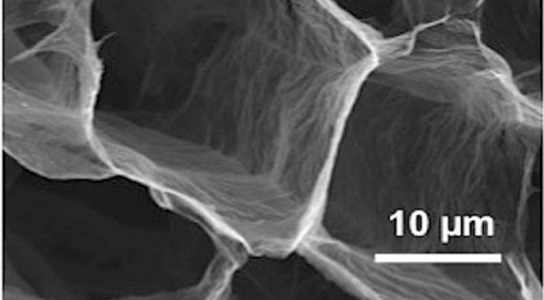
    Freeze casting was used to chemically modify the structure of graphene. The modified 3D graphene is highly elastic and light. Researchers suggest it will revolutionize fields such as composite materials. Credit: Ling Qiu/Monash University

    Graphene can support 50,000 times its own weight and can spring back into shape after being compressed by up to 80%. Graphene also has a much lower density than comparable metal-based materials. A new super-elastic, three-dimensional form of graphene can conduct electricity, and will probably pave the way for flexible electronics.

    The scientists published their findings in the journal Nature Communications. Dan Li, a materials engineer at Monash University in Clayton, Australia, was able to coax 1-centimeter-high graphene blocks from tiny flakes of graphene oxide using ice crystals as templates.
    super-elastic-graphene-synthesized
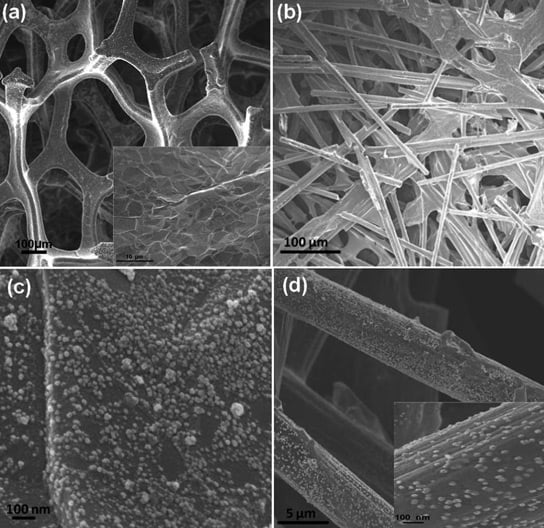
    Electrodeposited Pt on three-dimensional interconnected graphene as a free-standing electrode for fuel cell application. Credit: Thandavarayan Maiyalagan, Xiaochen Dong, Peng Chen and Xin Wang doi: 10.1039/c2jm16541d

    Graphene is a two-dimensional form of carbon that was first discovered less than a decade ago. It has exceptional strength and electrical conductivity, but being able to use these properties implies that scientists need to find ways to scale graphene up from nano-sized flakes.

    Li and his colleagues used a technique called freeze casting, which involves growing layers of graphene oxide, an oxygen-coated soluble version of graphene, between forming ice crystals. A thin layer of nanomaterial becomes trapped between the growing crystals, forming a continuous network that retains its structure once the ice is thawed.

    This method was used before, but the resulting material has poor mechanical strength. In this study, researchers have shown that partially stripping the oxygen coating before freeze casting could enhance the bonding between adjacent flakes in the network.

    The honeycomb-like network retained its shape after the ice was removed. The scientists chemically converted the graphene oxide into graphene, strengthening the inter-sheet bonding. These properties were attributed to the material’s structure, which forms an ordered network of hexagonal pores.

    The structure could be used as a scaffold for flexible battery electrodes or form the basis of many composite materials. This super-elastic graphene has the potential to be used in biomedical applications as well.

    Reference: “Biomimetic superelastic graphene-based cellular monoliths” by Ling Qiu, Jeffery Z. Liu, Shery L.Y. Chang, Yanzhe Wu and Dan Li, 4 December 2012, Nature Communications.
    DOI: 10.1038/ncomms2251

    Never miss a breakthrough: Join the SciTechDaily newsletter.
    Follow us on Google and Google News.

    Engineering Graphene Materials Science Nanotechnology
    Share. Facebook Twitter Pinterest LinkedIn Email Reddit

    Related Articles

    MIT Engineers Design New 3D Forms of Graphene

    MIT Researchers Create Perfect Nanoscrolls from Graphene Oxide

    Hybrid Boron Nitride Nanostructures Will Keep Small Electronics Cool

    Rice Engineers Design Flexible and Stackable Laser Induced Graphene Supercapacitors

    Triangular Layers of Tungsten Disulfide May Have Applications in Optical Technology

    Growing Graphene Without the Defects

    A Step Towards 2D Devices, Hybrid Graphene/Hexagonal Boron Nitride

    Controlled Graphene Crumpling Used as Artificial Muscle Actuators

    “Patterned Regrowth” May Lead to Graphene-Based Circuits

    1 Comment

    1. Cloudcom on December 16, 2012 10:23 pm

      Nice! Dreaming about a flexible keyboard.

      Reply
    Leave A Reply Cancel Reply

    • Facebook
    • Twitter
    • Pinterest
    • YouTube

    Don't Miss a Discovery

    Subscribe for the Latest in Science & Tech!

    Trending News

    Scientists Discover Stem Cells That Could Regrow Teeth and Bone

    Early Cannabis Use May Stall Key Brain Skills in Teens

    Popular Vitamin D Supplement Has “Previously Unknown” Negative Effect, Study Finds

    Study Reveals Malaria’s Hidden Role in Human Evolution

    The Hidden Risk of Taking Breaks From Weight-Loss Drugs Like Ozempic

    Scientists Warn That This Common Pet Fish Can Wreck Entire Ecosystems

    Scientists Make Breakthrough in Turning Plastic Trash Into Clean Fuel Using Sunlight

    This Popular Supplement May Interfere With Cancer Treatment, Scientists Warn

    Follow SciTechDaily
    • Facebook
    • Twitter
    • YouTube
    • Pinterest
    • Newsletter
    • RSS
    SciTech News
    • Biology News
    • Chemistry News
    • Earth News
    • Health News
    • Physics News
    • Science News
    • Space News
    • Technology News
    Recent Posts
    • Cancer-Like Mutations Found in the Brain May Be Driving Alzheimer’s Disease
    • A Simple Molecule Could Unlock Safer, Easier Weight Loss
    • Stretching Diamonds Unlocks Powerful New Quantum Sensing Abilities
    • This Robot Could Explore Mars 3x Faster Than Today’s Rovers
    • Scientists Just Built a Quantum Battery That Charges Almost Instantly
    Copyright © 1998 - 2026 SciTechDaily. All Rights Reserved.
    • Science News
    • About
    • Contact
    • Editorial Board
    • Privacy Policy
    • Terms of Use

    Type above and press Enter to search. Press Esc to cancel.