
Close Menu
    Facebook X (Twitter) Instagram
    SciTechDaily
    • Biology
    • Chemistry
    • Earth
    • Health
    • Physics
    • Science
    • Space
    • Technology
    Facebook X (Twitter) Pinterest YouTube RSS
    SciTechDaily
    Home»Chemistry»Shaping the Rings of Molecules – Using Biocatalysis to Control the Shapes of Macrocycles
    Chemistry

    Shaping the Rings of Molecules – Using Biocatalysis to Control the Shapes of Macrocycles

    By University of MontrealFebruary 23, 20201 Comment3 Mins Read
    Facebook Twitter Pinterest Telegram LinkedIn WhatsApp Email Reddit
    Share
    Facebook Twitter LinkedIn Pinterest Telegram Email Reddit

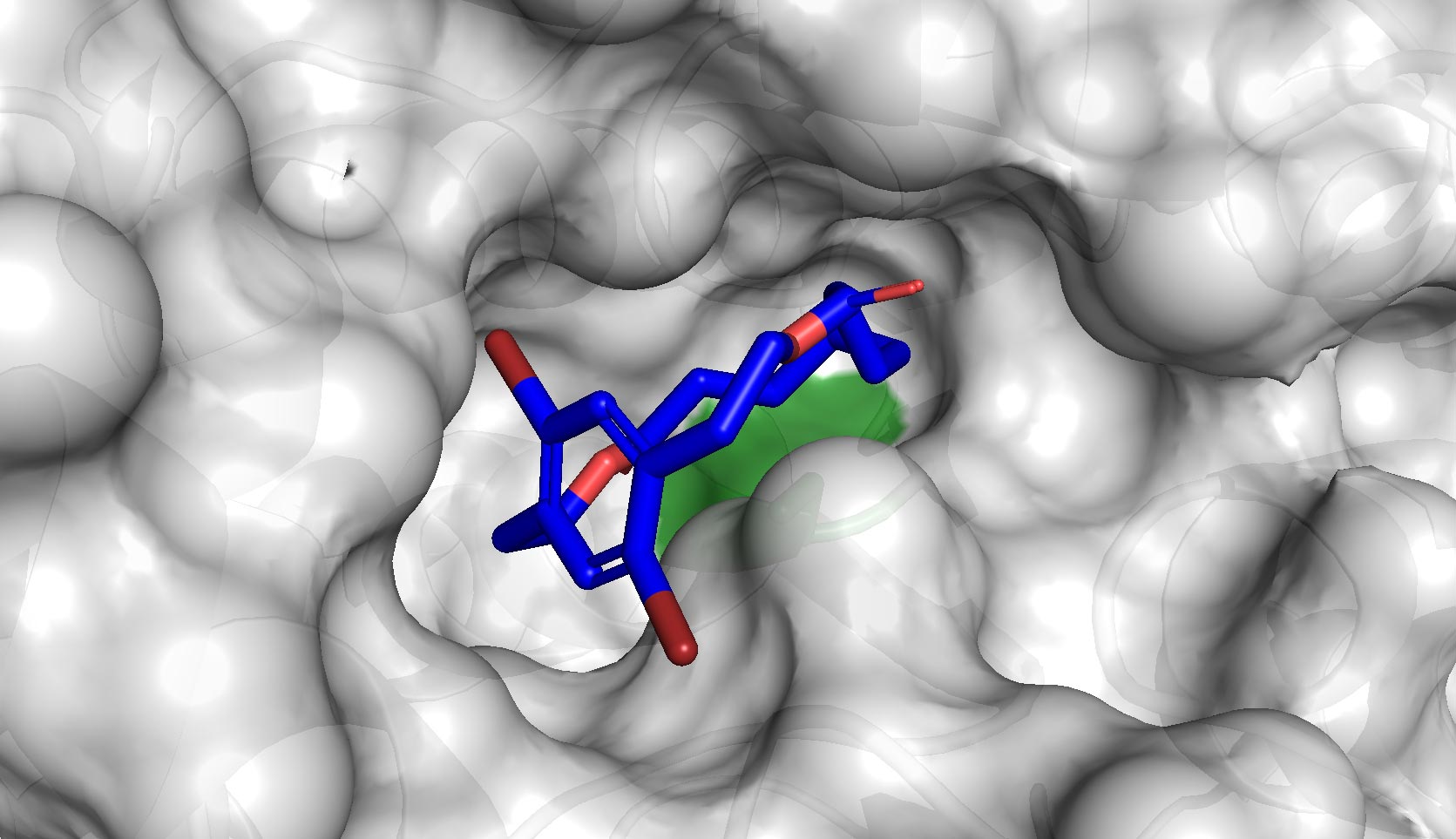
    Macrocycle in Enzym
    Model chiral macrocycle (shown in blue) in the catalytic pocket of the enzyme CALB (shown in grey, catalytic serine 105 colored in green [PDB ID 5GV5]). The figure was generated using The PyMOL Molecular Graphics System, Version 1.2r3pre, Schrödinger, LLC. The docking of the macrocycles was carried out with the Fitted program from the Forecaster computational platform. Credit: Université de Montréal
    Macrocycles are molecules made of large rings of atoms. Despite being relatively big and flexible, the molecules don’t always stay “floppy” — they can actually lock themselves into specific shapes and geometries.

    In manufacturing, controlling the three-dimensional shapes of macrocycles is critical. It helps decide, for example, whether the aroma in a perfume is unique or whether a prescription drug will work on a particular disease.

    But for synthetic chemists, those who study the construction of molecules, controlling the topology of the large rings has not been a straightforward process — until now, that is, thanks to research done at Université de Montréal.

    In a study published on February 21, 2020, in Science, a team led by chemistry professor Shawn Collins reports they have succeeded in using a natural process called biocatalysis to control the shapes of macrocycles.

    And that could be a boon for the making of pharmaceuticals and electronics, they say.

    “The shapes of the macrocycles we have made is what makes them special — they are what we call planar chiral,” said Collins. “And the planar chiral topology controls how the molecules interact with nature. In general, macrocycles with planar chirality are underexplored, because chemists usually have a lot of trouble making them.”

    Until now, they had two choices: perform multi-step syntheses that are tedious and wasteful, or they could exploit methods that employ catalysts based on elements that are toxic, expensive and non-abundant in the Earth’s crust, such as ruthenium and rhodium.

    Both approaches have long frustrated chemists, and Collins’ team looked for an alternative. They found it in biocatalysis, a process that uses enzymes, biological and typically non-toxic catalysts, as a solution to preparing planar chiral macrocycles.

    Remarkably, even though chemists had never before explored biocatalysis for the synthesis of planar chiral macrocycles, it turned out there was a commercially available product that could prepare the macrocycle: a lipase enzyme called CALB.

    Using it, the biocatalysts were able to shape the macrocycles in often near-perfect selectivity, even though the enzyme had not evolved for that purpose.

    Importantly, Collins and his team came up with a synthetic plan that involved using simple molecular building blocks to “decorate” macrocycles with functionality. “Functionality are handles, or simple groups of atoms that be easily transformed into arrangements that are more complex,” Collins explained.

    “Our hope is that the macrocycles can now be tailored to impact industry. Planar chiral macrocycles have already been known to act as antibiotics and anticancer agents. Applications in electronic materials — in lasers and display devices, for example — could be possible using the approach.”

    Reference: “Biocatalytic synthesis of planar chiral macrocycles” by Christina Gagnon, Éric Godin, Clémentine Minozzi, Johann Sosoe, Corentin Pochet and Shawn K. Collins, 21 February 2020, Science.
    DOI: 10.1126/science.aaz7381

    Never miss a breakthrough: Join the SciTechDaily newsletter.
    Follow us on Google and Google News.

    Biochemistry Particle Physics University of Montreal
    Share. Facebook Twitter Pinterest LinkedIn Email Reddit

    Related Articles

    Rewriting the Rules: Scientists Tinker With the “Clockwork” Mechanisms of Life

    Scientists Shed New Light on the “Dark Matter” of Cellular Biology

    Chemists Use DNA To Build the World’s Tiniest Antenna – “Like a Two-Way Radio”

    Breakthrough Could Lead to Single-Molecular Systems for Both Diagnosing and Treating Cancer in Real Time

    “Proto-RNA Bases” Assemble in Water, Hint at Origins of Life

    Amino Acid Organocatalyst Halves Synthesis of Prostaglandin-Class Drugs

    Working to Recycle Greenhouse Gases

    Foldit Players Remodel Catalyst Enzyme for Diels-Alder Reactions

    Chemists Work on Synthetic Cell Creation

    1 Comment

    1. Henry an on February 18, 2021 3:25 am

      Nice post.

      Reply
    Leave A Reply Cancel Reply

    • Facebook
    • Twitter
    • Pinterest
    • YouTube

    Don't Miss a Discovery

    Subscribe for the Latest in Science & Tech!

    Trending News

    Beyond Pain Relief: Scientists Discover a Protein That Could Stop Osteoarthritis in Its Tracks

    Scientists Discover Why Alcohol Prevents the Liver From Healing, Even After You Quit

    Scientists Stunned As Volcano Removes Methane From the Air

    Scientists Discover Signs Africa May Be Splitting Apart Beneath Zambia

    Common Blood Pressure Drug Supercharges Cancer Treatment in Surprising New Study

    540-Million-Year-Old Fossils Reveal a Huge Surprise About Early Life on Earth

    Scientists Reverse Stroke Damage Using Stem Cells in Breakthrough Study

    Eating One Egg a Day Could Cut Alzheimer’s Risk by 27%

    Follow SciTechDaily
    • Facebook
    • Twitter
    • YouTube
    • Pinterest
    • Newsletter
    • RSS
    SciTech News
    • Biology News
    • Chemistry News
    • Earth News
    • Health News
    • Physics News
    • Science News
    • Space News
    • Technology News
    Recent Posts
    • Scientists Uncover Promising New Strategy To Stop Parkinson’s in Its Tracks
    • New Study Reveals How Vitamin D Could Calm Gut Inflammation
    • Experts Reveal the Surprising Cancer Link Behind a Common Vitamin
    • NASA’s Roman Space Telescope Could Finally Find the Milky Way’s Missing Neutron Stars
    • Strange “Worm Towers” Found in the Wild for the First Time May Be Hitchhiking on Beetles
    Copyright © 1998 - 2026 SciTechDaily. All Rights Reserved.
    • Science News
    • About
    • Contact
    • Editorial Board
    • Privacy Policy
    • Terms of Use

    Type above and press Enter to search. Press Esc to cancel.