
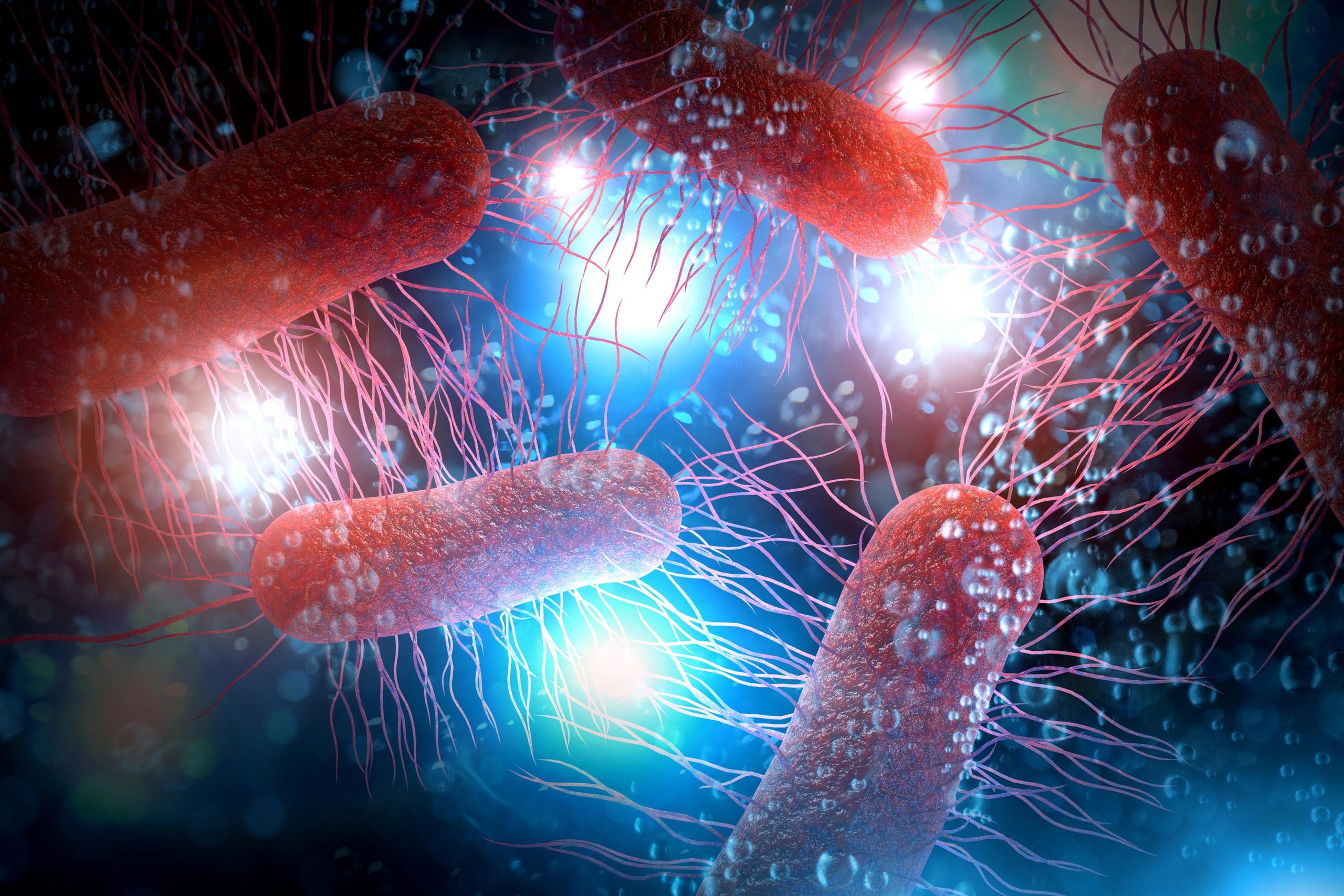
Scientists developed a polymer-based method to enhance biofilm formation in E. coli, improving biocatalysis and offering wide potential applications.
Scientists from the University of Birmingham have revealed a new method to increase efficiency in biocatalysis. Their method is described in a paper published today (August 1, 2022) in the journal Materials Horizons.
Biocatalysis uses enzymes, cells, or microbes to catalyze chemical reactions. It is used in settings such as the food and chemical industries to make products that are not accessible by chemical synthesis. It can produce pharmaceuticals, fine chemicals, or food ingredients on an industrial scale.
However, a major challenge in biocatalysis is that the most commonly used microbes, such as probiotics and non-pathogenic strains of Escherichia coli, are often very poor at forming biofilms. These growth-promoting ecosystems form a protective micro-environment around communities of microbes and increase their resilience. In short, biofilms are important to boost productivity.
Genetic engineering is typically employed to solve this problem. However, this is often a costly and time-consuming process. Therefore, researchers Dr. Tim Overton from the University of Birmingham’s School of Chemical Engineering, and Dr. Francisco Fernández Trillo from the School of Chemistry,* both of whom are members of the Institute of Microbiology and Infection, set out to create an alternative method to bypass this process.
The scientists identified a library of synthetic polymers and screened them for their ability to induce biofilm formation in E. coli, a bacterium that is one of the most widely studied micro-organisms and commonly used in biocatalysis.
This screening used a strain of E. coli (MC4100) that is widely used in fundamental science to study genes and proteins and is known to be poor at forming biofilms, and compared it to another E. coli strain PHL644, an isogenic strain obtained through evolution that is a good biofilm former.
Improved Biofilm Formation and Biocatalytic Activity in E. coli
This screening revealed the chemistries that are best suited to stimulating biofilm formation. Hydrophobic polymers outperformed mildly cationic polymers, with aromatic and heteroaromatic derivatives performing much better than the equivalent aliphatic polymers.
The researchers then monitored the biomass and biocatalytic activity of both strains incubated the presence of these polymers, and found that MC4100 matched and even outperformed PHL644.
Further studies examined how the polymers stimulate these profound increases in activity. Here the research indicated that the polymers precipitate in solution, and act as coagulants, stimulating a natural process called flocculation that triggers bacteria to form biofilms.
Broad Applications and Advantages of Synthetic Polymers
Dr. Fernandez-Trillo said: “We explored a broad chemical space and identified the best-performing chemistries and polymers that increase the biocatalytic activity of E. coli, a workhorse in biotechnology. This has resulted in a small library of synthetic polymers that increase biofilm formation when used as simple additives to microbial culture. To the best of our knowledge, currently, there are no methods that provide this simplicity and versatility when promoting biofilms for beneficial bacteria.”
“These synthetic polymers may bypass the need to introduce the traits for biofilm formation through gene editing, which is costly, time-consuming, non-reversible and requires a skilled person in microbiology to implement it. We believe this approach has an impact beyond biofilms for biocatalysis. A similar strategy could be employed to identify candidate polymers for other microorganisms such as probiotics or yeasts, and develop new applications in food science, agriculture, bioremediation or health.”
Reference: “Polymer-Induced Biofilms for Enhanced Biocatalysis” by Pavan Adoni, Andrey Romanyuk, Tim W Overton and Paco Fernandez-Trillo, 21 July 2022, Materials Horizons.
DOI: 10.1039/D2MH00607C
University of Birmingham Enterprise has filed a patent application for the method and polymer additives, and is now seeking commercial partners for licensing.
*Dr Fernandez-Trillo is now at the Universidade da Coruña, Spain.
Never miss a breakthrough: Join the SciTechDaily newsletter.
Follow us on Google and Google News.