
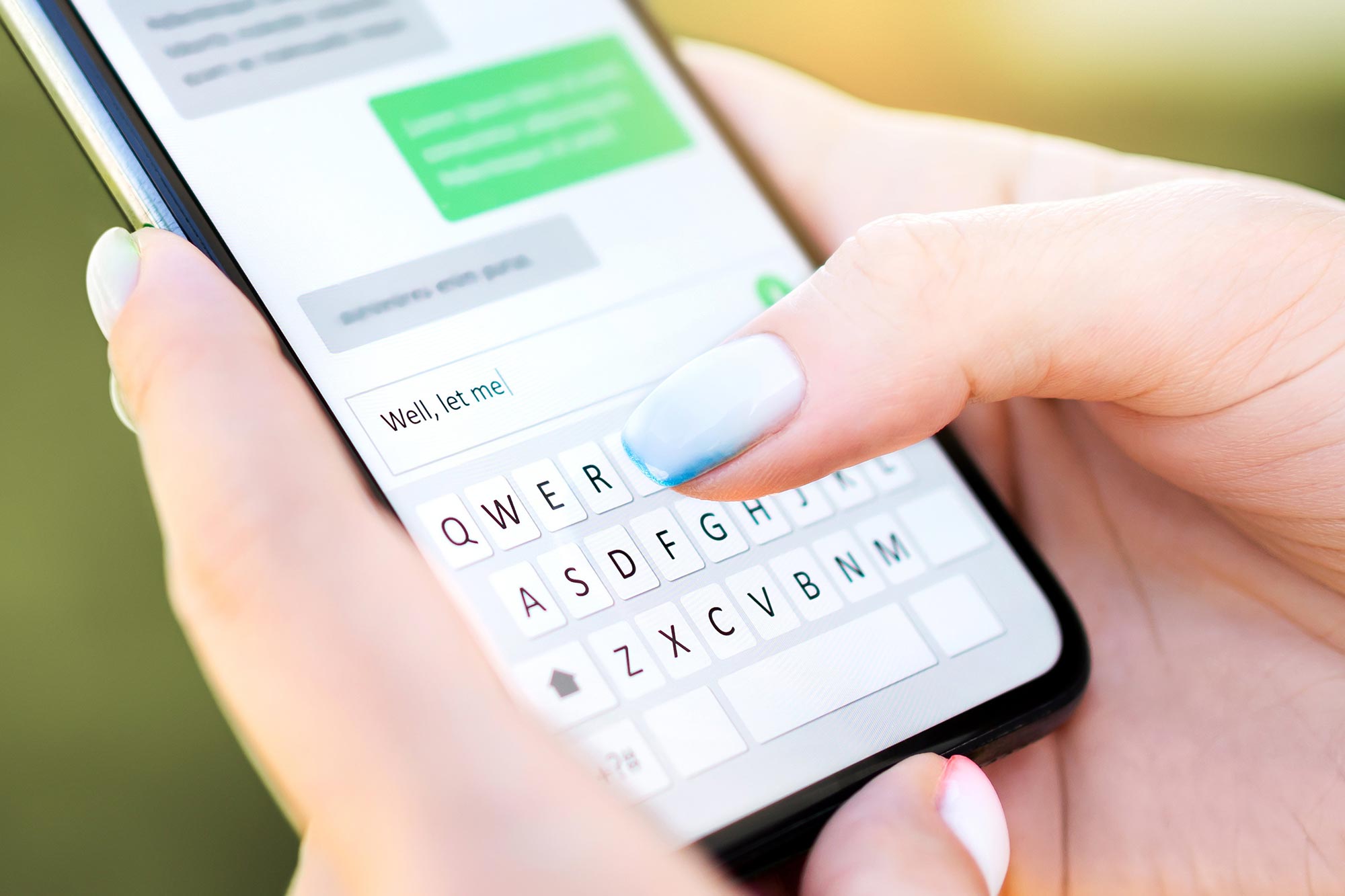
Research has shown that using full words in texts, instead of abbreviations, makes individuals appear more sincere and increases the likelihood of receiving responses.
This study, involving over 5,300 participants, highlighted that texters who abbreviate are often seen as less effortful, impacting how others perceive their sincerity and willingness to engage in meaningful conversations.
Research Findings on Texting and Perception
To appear more sincere and get more responses to your texts, try spelling out words instead of abbreviating them, suggests new research published by the American Psychological Association.
Researchers conducted eight experiments with a total of over 5,300 participants, using a variety of methods. Across the studies, participants who used abbreviations in texts were perceived as less sincere and received fewer replies, as they were seen as putting less effort into the conversation. These findings were published today (November 14) in the Journal of Experimental Psychology: General.
“In daily interactions, we often encounter people who could be considered good texters or poor texters,” said lead researcher David Fang, a doctoral student in behavioral marketing at Stanford University. “We thought texters might like abbreviations because it would convey an informal sense of closeness, so we were surprised that abbreviations elicited negative perceptions about people who use them.”
The Hidden Costs of Texting Abbreviations
Texting is now a primary form of communication, and most people use at least some abbreviations, like “IDK” for “I don’t know” or “GOAT” for “greatest of all time.” But the costs of these shortcuts are often overlooked. In a preliminary survey, 99% of respondents said they used abbreviations, while 84% didn’t think others would mind.
The experiments included an analysis of replies to Discord group chat users, dating scenarios, and Tinder dating app users’ conversation histories spanning 37 countries. Other experiments included participants who rated their texting conversations with people who either were or weren’t using abbreviations.
Age Differences in Texting Preferences
In the experiments, texters who used abbreviations received shorter and fewer responses and were less likely to receive contact information from the other texter. While young people tend to use more texting abbreviations, they still weren’t fans of them, although the findings were inconsistent in some of the studies, Fang said.
“While our overall results on age were mixed, it’s clear that younger people are not particularly fond of abbreviations, though the strength of this aversion may vary by age,” Fang said.
Social Implications of Texting Styles
Texting abbreviations could contribute to loneliness if people find that social bonds weaken over time because they receive less frequent or positive replies to their texts, Fang said. But he doesn’t believe people should stop using abbreviations altogether.
“We often tailor the effort we put into conversations to match the significance of the relationship. In some cases, it makes sense to invest less effort and accept being perceived as less sincere, like quickly texting with a delivery driver,” Fang said. “However, our findings are especially relevant when we want to appear more sincere and strengthen social ties, such as at the beginning of a relationship or when we need to make a good impression.”
Reference: “Shortcuts to Insincerity: Texting Abbreviations Seem Insincere and Not Worth Answering” by David Fang, BCom, and Yiran (Eileen) Zhang, MS, Stanford University, and Sam J. Maglio, PhD, University of Toronto, 14 November 2024, Journal of Experimental Psychology: General.
DOI: 10.1037/xge0001684
Never miss a breakthrough: Join the SciTechDaily newsletter.
Follow us on Google and Google News.
2 Comments
The mind’s mysterious remains in the darkness.
Interesting insight! It’s a reminder that how we text affects how we’re perceived—taking the time to type things out might make a big difference!