
Close Menu
    Facebook X (Twitter) Instagram
    SciTechDaily
    • Biology
    • Chemistry
    • Earth
    • Health
    • Physics
    • Science
    • Space
    • Technology
    Facebook X (Twitter) Pinterest YouTube RSS
    SciTechDaily
    Home»Space»The Great Interplanetary Adventure: NASA’s Moon to Mars Masterplan
    Space

    The Great Interplanetary Adventure: NASA’s Moon to Mars Masterplan

    By NASAApril 22, 20232 Comments2 Mins Read
    Facebook Twitter Pinterest Telegram LinkedIn WhatsApp Email Reddit
    Share
    Facebook Twitter LinkedIn Pinterest Telegram Email Reddit
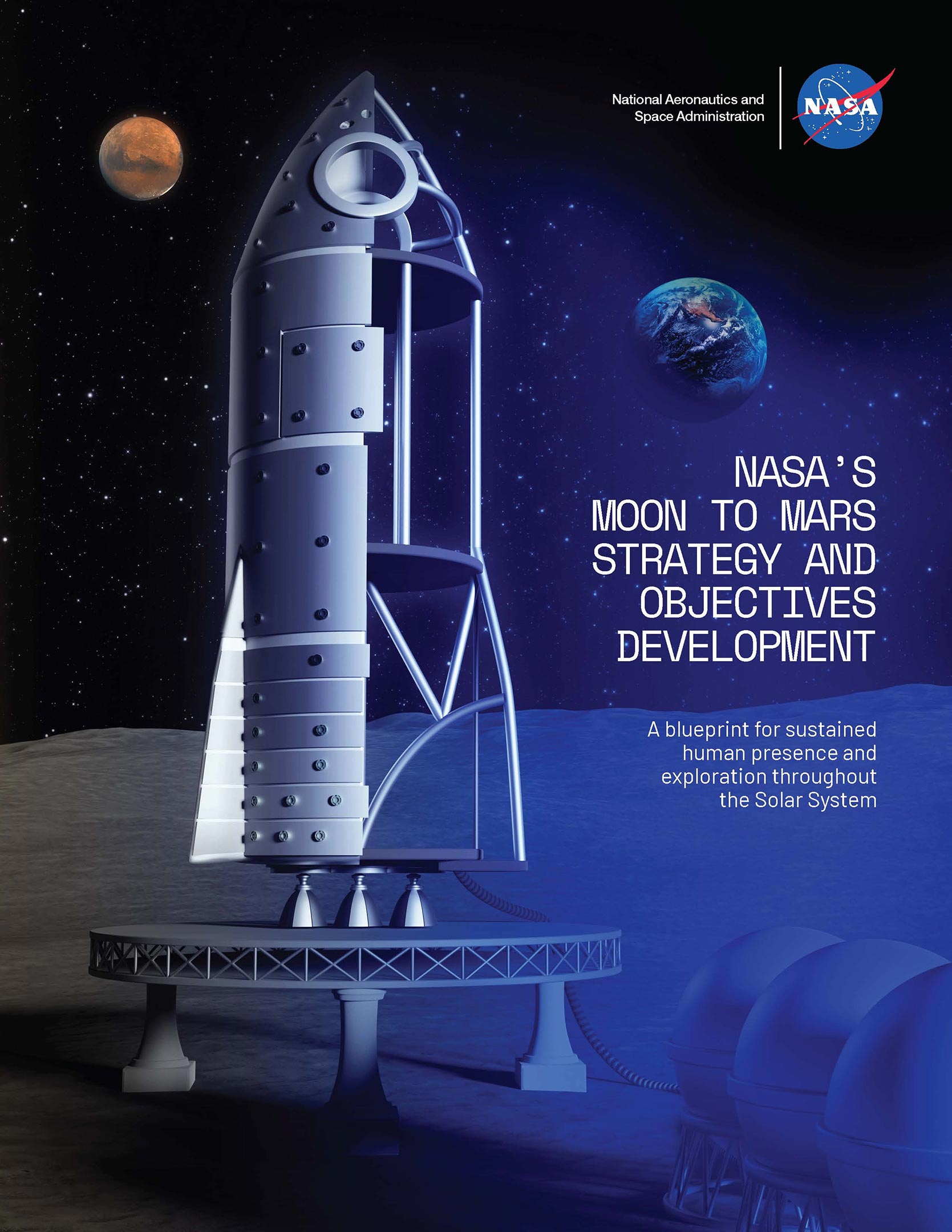
    NASA Moon to Mars Strategy and Objectives Development
    The Moon to Mars Strategy and Objectives Development document details NASA’s Moon to Mars strategy and top-level goals and objectives, designed to achieve the vision to create a blueprint for sustained human presence and exploration throughout the solar system. Credit: NASA

    NASA has outlined its Moon to Mars Strategy and Objectives Development, focusing on a sustainable, long-term human presence in the solar system through an objectives-driven architectural review process under the Artemis program.

    As NASA evolves its blueprint for shaping exploration throughout the solar system, the agency is detailing its process to develop a sustainable, resilient path forward for exploration. In a document published Wednesday, April 19, the agency explains its methodology behind developing NASA’s Moon to Mars Objectives that drive its architecture, plans, and efforts to enable long-term human presence and exploration throughout the solar system.

    NASA’s Moon to Mars Strategy and Objectives Development provides insight into how NASA developed and refined its Moon to Mars Objectives released in 2022, and describes how the agency is establishing an objectives-driven architectural review process to ensure efforts to develop, build, and achieve exploration activities at the Moon and Mars are resilient for decades to come.

    NASA’s overall Moon to Mars strategy seeks to develop a roadmap with input from a wide variety of U.S. and global stakeholders to define overarching exploration goals to enable the agency and others to build capabilities to meet those goals, a shift from a capabilities-driven approach to exploration.

    Through the Artemis program, NASA aims to expand lunar exploration beyond previous efforts. With the recent announcement of the Artemis II crew, NASA is preparing to send humans back to the Moon and establish a series of missions, including those targeting the lunar south polar region. These missions will lay the groundwork for a long-term presence on the Moon, which will serve as a foundation for exploring more distant destinations, such as Mars and other potential locations in the solar system.

    The Moon to Mars Strategy and Objectives Development document is available online (PDF).

    Never miss a breakthrough: Join the SciTechDaily newsletter.
    Follow us on Google and Google News.

    Mars Moon NASA
    Share. Facebook Twitter Pinterest LinkedIn Email Reddit

    Related Articles

    We Asked a NASA Expert: How Long Does It Take to Get to the Moon… Mars… Jupiter? [Video]

    NASA’s Farside Seismic Suite: Measuring Moonquakes With Help From Mars InSight Lander

    Frontiers of Fungal Engineering: NASA’s Mycotecture for Lunar and Martian Habitats

    September 2020 Skywatching Tips From NASA – Mars, Venus and a Star With a Planet…That Wasn’t

    NASA Wants to Go Nuclear on the Moon and Mars for Astronaut Settlement

    Self-Replicating, Self-Repairing Homes on the Moon and Mars Made of Fungi

    Win for Space Colonization: Soil on Moon and Mars Likely to Support Crops

    NASA’s Exploration Campaign: Back to the Moon and on to Mars

    Phobos May Provide Evidence of Life on Mars

    2 Comments

    1. Sunny on April 22, 2023 6:44 pm

      You woke, biased eejits will dance around reporting on anything SpaceX, despite most of the American stuff in orbit and advancements come from them.

      Reply
    2. Jojo on April 23, 2023 1:06 am

      We should be building a major, maybe 10 mile in diameter, space station first. We can have offices, homes, research and factories in it. We could then trap asteroids to feed the factories running in the space station and build space ships there that won’t have to fight gravity to take off.

      Reply
    Leave A Reply Cancel Reply

    • Facebook
    • Twitter
    • Pinterest
    • YouTube

    Don't Miss a Discovery

    Subscribe for the Latest in Science & Tech!

    Trending News

    AI Could Detect Early Signs of Alzheimer’s in Under a Minute – Far Before Traditional Tests

    What if Dark Matter Has Two Forms? Bold New Hypothesis Could Explain a Cosmic Mystery

    This Metal Melts in Your Hand – and Scientists Just Discovered Something Strange

    Beef vs. Chicken: Surprising Results From New Prediabetes Study

    Alzheimer’s Breakthrough: Scientists Discover Key Protein May Prevent Toxic Protein Clumps in the Brain

    Quantum Reality Gets Stranger: Physicists Put a Lump of Metal in Two Places at Once

    Scientists May Have Found the Key to Jupiter and Saturn’s Moon Mystery

    Scientists Uncover Brain Changes That Link Pain to Depression

    Follow SciTechDaily
    • Facebook
    • Twitter
    • YouTube
    • Pinterest
    • Newsletter
    • RSS
    SciTech News
    • Biology News
    • Chemistry News
    • Earth News
    • Health News
    • Physics News
    • Science News
    • Space News
    • Technology News
    Recent Posts
    • Simple and Cheap Blood Test Could Detect Cancer and Other Diseases Before Symptoms Appear
    • Century-Old Cleaning Chemical Linked to 500% Increased Risk of Parkinson’s Disease
    • What if Your Memories Never Happened? Physicists Take a New Look at the Boltzmann Brain Paradox
    • Students Found an Ancient Star That Shouldn’t Be in the Milky Way
    • Astronomers Solve 50-Year Mystery and Reveal Hidden Culprit Behind Strange X-Ray Emissions
    Copyright © 1998 - 2026 SciTechDaily. All Rights Reserved.
    • Science News
    • About
    • Contact
    • Editorial Board
    • Privacy Policy
    • Terms of Use

    Type above and press Enter to search. Press Esc to cancel.