
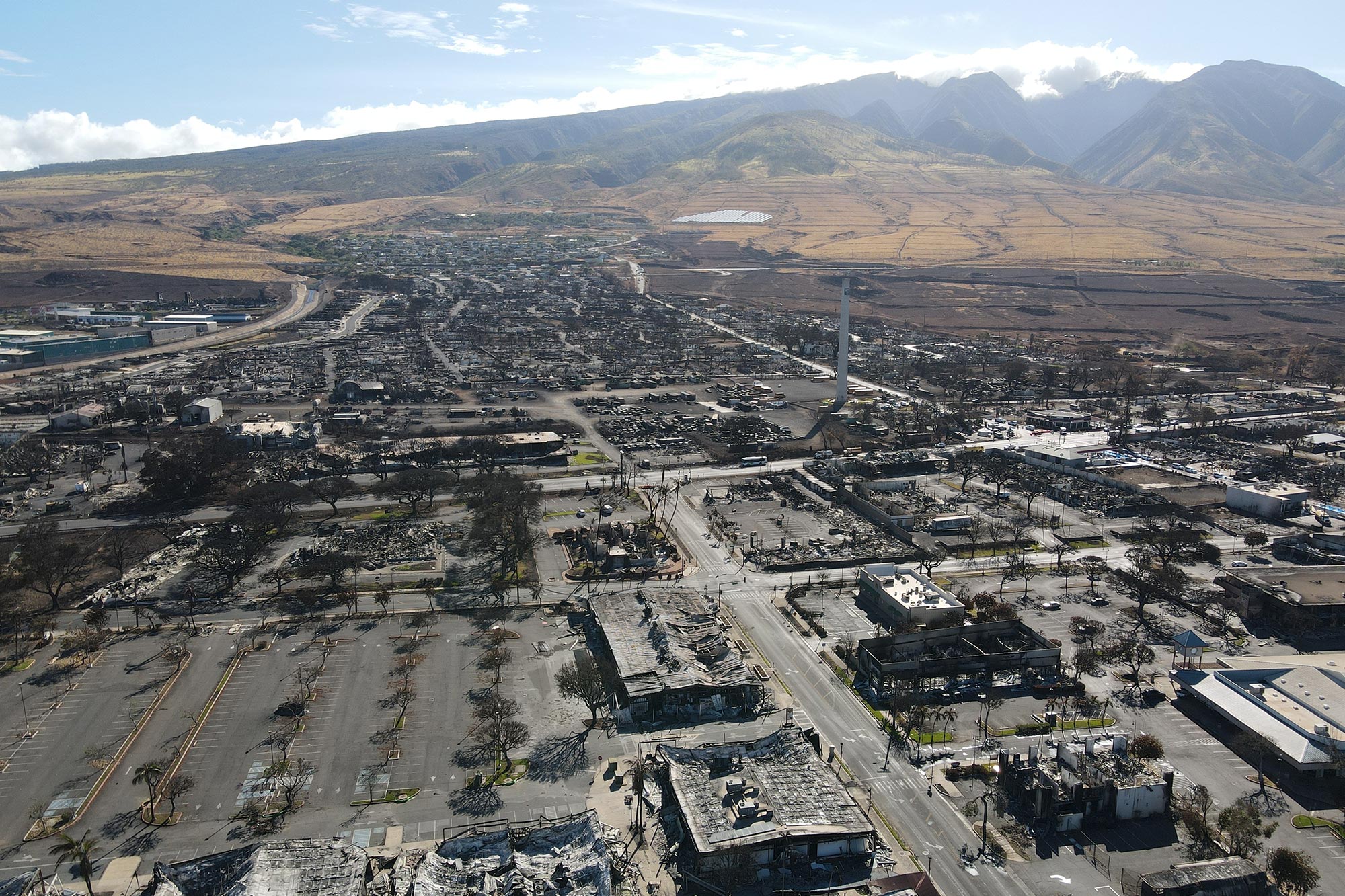
A new study reveals that the August 2023 Maui wildfires killed far more people than official records suggest, with excess deaths surging by 67% during the disaster.
Many victims never reached medical care, and the toll went well beyond direct fire injuries, including deaths from disrupted healthcare and worsened chronic conditions.
Deadly Wildfire’s Hidden Toll
New research has revealed the full scale of the tragedy caused by the August 2023 wildfires in Lāhainā, Maui, Hawaiʻi. The study shows that wildfire temporarily became a leading cause of death in the area. By comparing death records over time, researchers discovered that mortality in August was two-thirds higher than expected. The team stresses that preventing similar outcomes in the future will require significant policy action, including removing highly flammable invasive plants and strengthening disaster readiness.
“Wildfires can cause a measurable, population-wide increase in mortality, beyond what is captured in official fatality counts,” explained Michelle Nakatsuka of the Grossman School of Medicine, co-first author of the study published in Frontiers in Climate. “This suggests the true toll of the Lāhainā wildfire was even broader than previously understood.”
“It also points to the need for prevention strategies that go beyond reactive wildfire control,” added Nakatsuka. “As Native Hawaiians, the co-first authors are especially hopeful that wildfire mitigation strategies will center kānaka maoli perspectives, including the restoration of traditional agroecological systems.”
Fire Risk
With climate change driving more frequent and destructive wildfires, it has become essential to measure their full impact. To capture the potential range of deaths caused by the Maui fires, the researchers calculated the all-cause excess death rate, which reflects how many more deaths occurred during a given period compared to what would normally be expected. Their model used demographic data from Maui County between August 2018 and July 2023, and was adjusted to remove deaths related to COVID-19.
“Wildfires can cause death in a variety of ways,” said Dr. Kekoa Taparra of UCLA, co-first author. “In this case, recent reports suggest many deaths were due to direct exposure, smoke inhalation and burns. Others likely stemmed from disruptions in healthcare, like not being able to access critical medications or emergency treatment. Wildfires can also exacerbate pre-existing conditions.”
Staggering Numbers
The researchers found that in August 2023, 82 more deaths were reported than expected: an excess death rate of 67%. In the week of August 19, the rate was 367% higher than expected compared to previous years. 80% of these deaths didn’t take place in a medical context, 12% higher than in other months, suggesting some people never reached medical care because of the fires. At the same time, the proportion of deaths with a non-medical cause rose from 68% to 80%.
This differs slightly from the official fatality count of 102, although it’s very close to the 88 fire-related deaths reported in August 2023 by the CDC.
“We think this might reflect a temporary drop in other causes of death, like car accidents, during the fire period, similar to what we saw during Covid-19, when deaths from some non-Covid causes dropped during lockdowns,” said Nakatsuka. “It’s also possible that some deaths occurred after the August time window we studied, for example, from missed treatments or worsening of chronic conditions.”
Data Limitations
The scientists point out that there are some limitations to this analysis. For instance, the data is not geographically granular enough to identify whether the death toll was particularly high in Lāhainā itself.
“Our study only covers a short time window, so we can’t speak to longer-term mortality impacts,” explained Nakatsuka. “Excess mortality models also can’t determine exact causes of death, and we didn’t have access to detailed death certificate data like toxicology reports or autopsy findings. Still, we believe this type of analysis offers important insights into the broader health impacts of disasters like the Lāhainā fire.”
Planting the Future
To protect Hawaiʻi from similar tragedies in the future, the researchers call for improved disaster preparedness and investment in the restoration of Native Hawaiian plants and agroecological systems, which reduce the likelihood of destructive wildfires compared to modern monocultures and invasive plant species.
“In the short term, it’s critical for people exposed to wildfires to get immediate medical treatment,” said Nakatsuka. “Fast, accessible emergency care can save lives.”
Long-Term Prevention
“In the long term, we’d like to see more policy investment in wildfire prevention rooted in Native Hawaiian ecological knowledge,” said Taparra. “This includes restoring traditional agroecological systems, removing dry, non-native grasses, restoring traditional pre-colonial water systems, and improving fire risk modeling to better guide preparedness efforts.”
Reference: “All-cause excess mortality associated with the Lāhainā, Maui fires” by Michelle Nakatsuka, Kekoa Taparra, Benjamin Renton, Alexander Junxiang Chen, Ji Chen, Harlan M. Krumholz and Jeremy Samuel Faust, 25 June 2025, Frontiers in Climate.
DOI: 10.3389/fclim.2025.1611198
Never miss a breakthrough: Join the SciTechDaily newsletter.
Follow us on Google and Google News.
4 Comments
What a BS article. It gets no where near any real truths about that fire. It does coddle the mainstream narrative. I thought your work was above that.
What are the “real truths”?
The issue about wild-fire injuries includes the damage caused by inhalation of smoke from burning vegetation and also toxic products such as plastic/petroleum-based materials etc. This can led to non-fatal lung damage which is debilitating, costs money for the sufferers seeking subsequent health-care and most certainly cannot be cured, although there may be medicines/strategies that could alleviate some of that lung damage for a time.
Given the increasing preponderance of wild-fires and their ferocity, that issue needs careful study and perhaps societies need to consider some form of compensation such as access to free medical care and even disability payments for those affected; not that this will be acknowledge, let alone acted on in Trump’s USA. However, assuming that such wildfires are an increasing issue, any decent society would acknowledge that such increasing risks are shared by society as the risks are indeed a social risk.
Wild? Man-made isn’t “wild”. You know what’s “wild”? The people who started the fire, stole the children, cut off the water and cooked those people alive. The sons of Zarah that will all be wiped from the earth by about the middle of 2033. That’s what’s wild. What’s wild is that people don’t speak the Truth or are ignorant of it or flat out deny it or call it a lie. 2033 Scarlet Dies