
Long-buried traces of Denisovan DNA have resurfaced in modern human genomes — and they may still be working for us today.
Scientists discovered a gene variant passed down from these extinct human relatives that likely helped our ancestors survive as they spread into the Americas.
Ancient Interbreeding Gave Humans Helpful Genetic Tools
A new study suggests that encounters between early modern humans and other archaic human groups may have supplied genetic traits that helped our species adjust to unfamiliar environments as people moved across the world.
Published in Science, the research centers on a gene called MUC19, which helps produce proteins involved in saliva and in protective mucosal layers within the digestive and respiratory systems. The team found that a version of this gene inherited from Denisovans, a little-known archaic human group, appears in many people in Latin America who have Indigenous American ancestry. The same variant was also detected in DNA recovered from individuals who lived at archeological sites throughout North and South America.
Evidence suggests that this gene variant became common because it provided a meaningful survival advantage. Although scientists do not yet know the exact benefit, the gene’s role in immune-related processes raises the possibility that it may have helped early populations combat unfamiliar pathogens as they entered the Americas.
“From an evolutionary standpoint, this finding shows how ancient interbreeding can have effects that we still see today,” said study author Emilia Huerta-Sánchez, a professor of ecology, evolution and organismal biology at Brown University. “From a biological standpoint, we identify a gene that appears to be adaptive, but whose function hasn’t yet been characterized. We hope that leads to additional study of what this gene is actually doing.”
Huerta-Sánchez conducted the work with Fernando Villanea, a former post-doctoral researcher at Brown who is now at University of Colorado, Boulder; David Peede, a graduate student at Brown; and colleagues from several international institutions.
What We Know About Denisovans
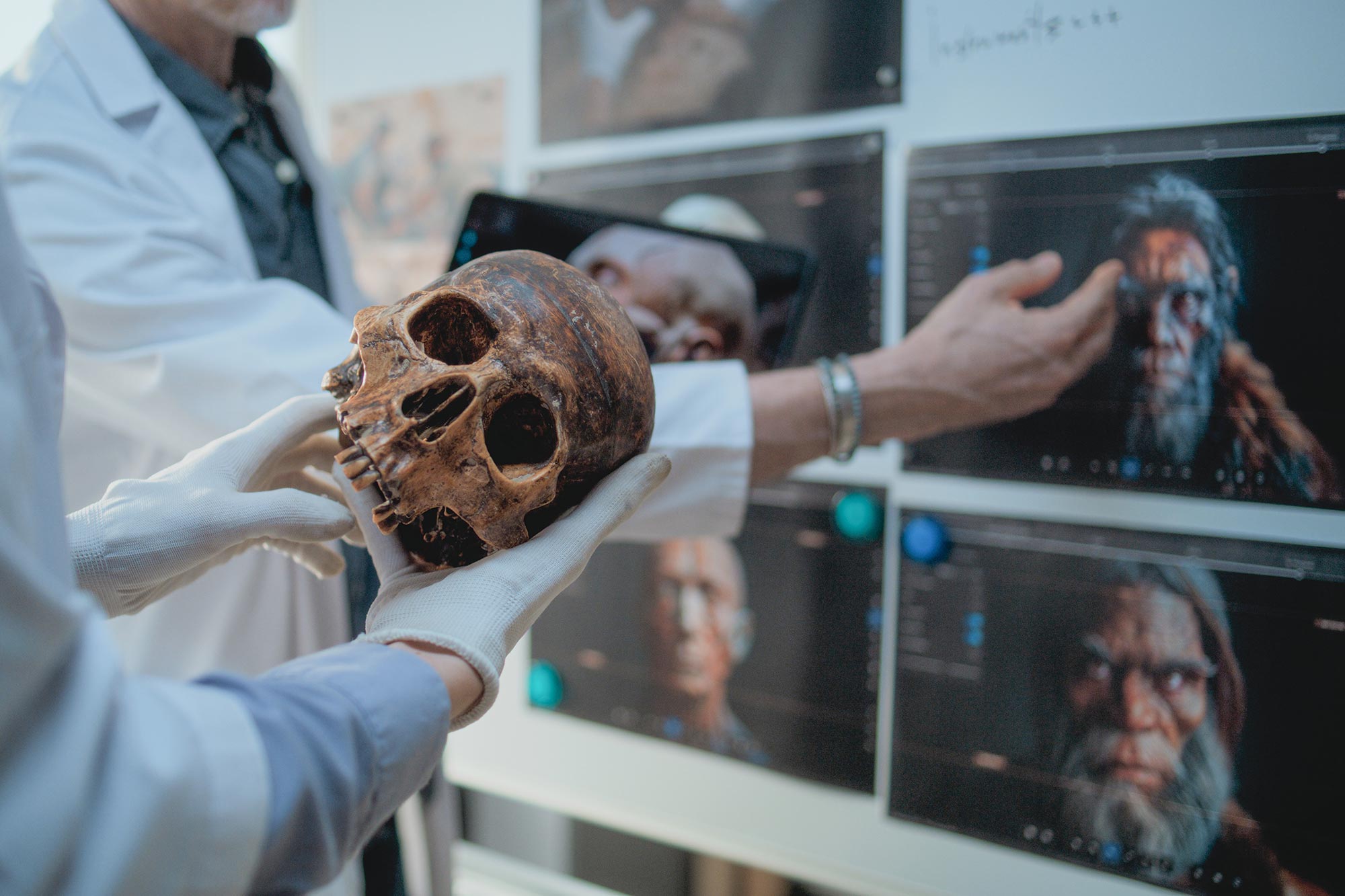
Scientists have limited information about the Denisovans, who lived across parts of Asia between 300,000 and 30,000 years ago. Existing fossils include a small collection of remains from Denisova cave in Siberia, two jawbones from Tibet and Taiwan, and a recently identified nearly complete skull from China.
One of the Siberian fossils contained ancient DNA, which allowed researchers to trace shared genetic features between Denisovans and modern humans. Earlier work by Huerta-Sánchez showed that Tibetan people, including Sherpas, carry a Denisovan-derived version of the EPAS1 gene that aids adaptation to high-altitude environments.
Denisovan DNA in Ancient and Modern Populations
In the new study, researchers compared Denisovan genomic sequences with data from the 1,000 Genomes Project, which catalogs global human genetic diversity. This analysis revealed that the Denisovan-linked MUC19 variant appears at especially high levels among people in Latin America with Indigenous American ancestry.
The team also examined DNA from 23 ancient individuals recovered from archeological sites in Alaska, California, Mexico, and other locations across the Americas. The Denisovan-derived MUC19 variant was similarly common in these ancient samples.
Several statistical approaches showed that this version of the gene rose to prominence in both ancient Indigenous peoples and their present-day descendants because of strong natural selection. The gene also sits within an unusually long segment of archaic DNA, another indicator that selection played a key role. The researchers concluded that the gene likely passed from Denisovans into Neanderthals through interbreeding, and Neanderthals later transferred it to early modern humans.
How Interbreeding Expanded Human Genetic Diversity
Huerta-Sánchez noted that these findings highlight how interbreeding among different human groups supplied useful genetic variation that shaped our evolutionary path.
“Typically, genetic novelty is generated through a very slow process,” Huerta-Sánchez said. “But these interbreeding events were a sudden way to introduce a lot of new variation.”
This influx of new variation may have been especially important as early modern humans entered the Americas, potentially improving immune responses in unfamiliar environments.
“Something about this gene was clearly useful for these populations, and maybe still is or will be in the future,” Huerta-Sánchez said.
She hopes that the growing recognition of MUC19’s importance will encourage additional research to uncover how these protein-altering genetic variants function and whether they reveal new biological mechanisms.
Explore Further: DNA From a Mysterious Extinct Hominin May Have Helped Ancient Americans Survive
Reference: “The MUC19 gene: An evolutionary history of recurrent introgression and natural selection” by Fernando A. Villanea, David Peede, Eli J. Kaufman, Valeria Añorve-Garibay, Elizabeth T. Chevy, Viridiana Villa-Islas, Kelsey E. Witt, Roberta Zeloni, Davide Marnetto, Priya Moorjani, Flora Jay, Paul N. Valdmanis, María C. Ávila-Arcos and Emilia Huerta-Sánchez, 21 August 2025, Science.
DOI: 10.1126/science.adl0882
The research was supported by The Leakey Foundation, the National Institutes of Health (1R35GM128946- 01, T32 GM128596, R35GM142978, R01NS122766), the Alfred P. Sloan Foundation, the Blavatnik Family Graduate Fellowship in Biology and Medicine, the Brown University Predoctoral Training Program in Biological Data Science (NIH T32 GM128596), the Burroughs Wellcome Fund and the Human Frontier Science Program.
Never miss a breakthrough: Join the SciTechDaily newsletter.
Follow us on Google and Google News.
2 Comments
Denisovan or Scythian I wonder how long dezinformata will work do I believe this theory NO
Nobody cares what you believe!