
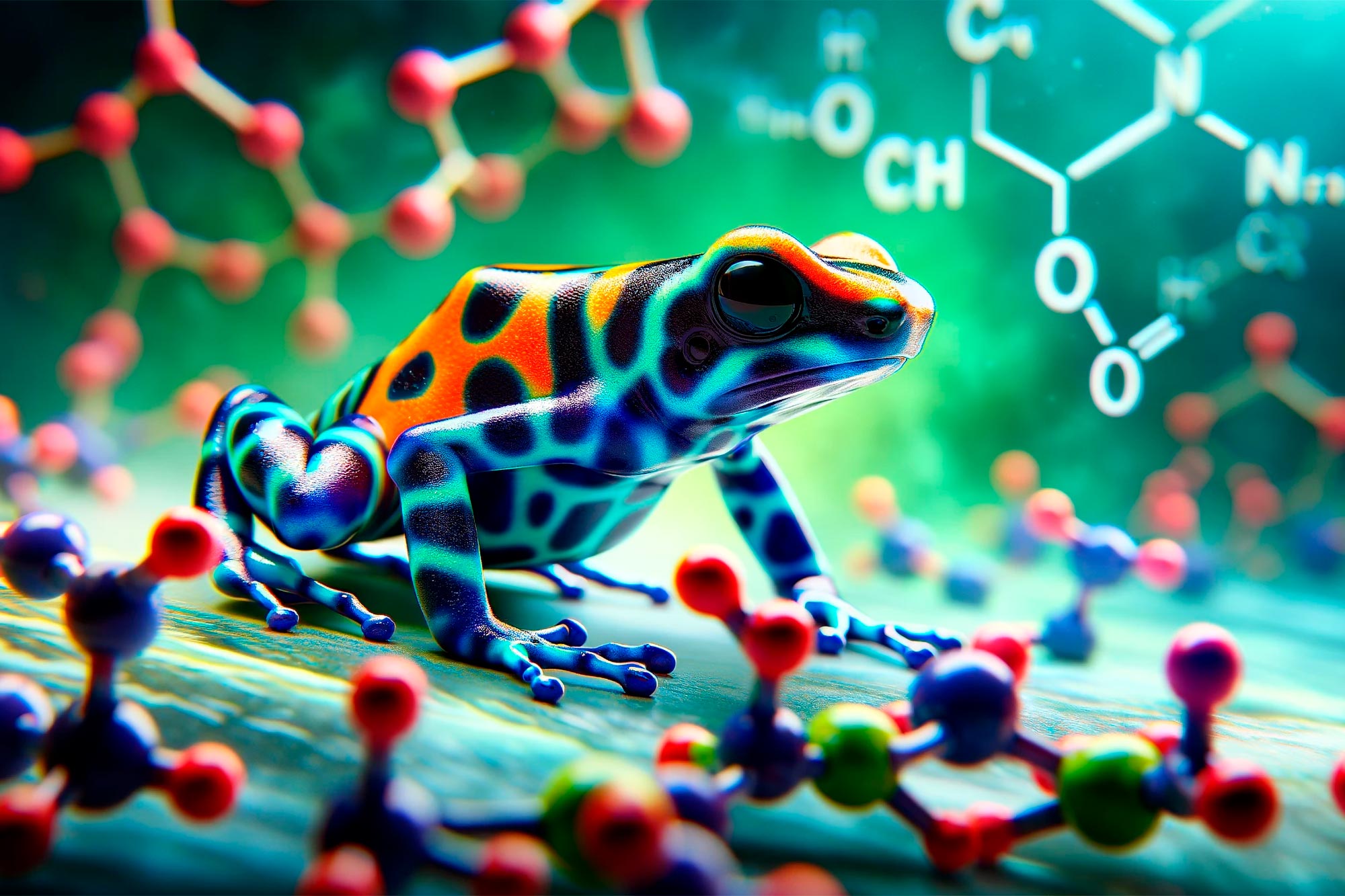
A newly identified protein helps poison dart frogs accumulate and store a potent toxin in their skin which they use for self-defense against predators.
Scientists have identified the protein that helps poison dart frogs safely accumulate their namesake toxins, according to a study published on December 19 in the journal eLife.
The findings solve a long-standing scientific mystery and may suggest potential therapeutic strategies for treating humans poisoned with similar molecules.
Alkaloids: From Coffee to Frog Skin
Alkaloid compounds, such as caffeine, make coffee, tea, and chocolate delicious and pleasant to consume, but can be harmful in large amounts. In humans, the liver can safely metabolize modest amounts of these compounds. Tiny poison dart frogs consume far more toxic alkaloids in their diets, but instead of breaking the toxins down, they accumulate them in their skin as a defense mechanism against predators.
“It has long been a mystery how poison dart frogs can transport highly toxic alkaloids around their bodies without poisoning themselves,” says lead author Aurora Alvarez-Buylla, a PhD student in the Biology Department at Stanford University in California, US. “We aimed to answer this question by looking for proteins that might bind and safely transport alkaloids in the blood of poison frogs.”
Unraveling the Frog’s Secret
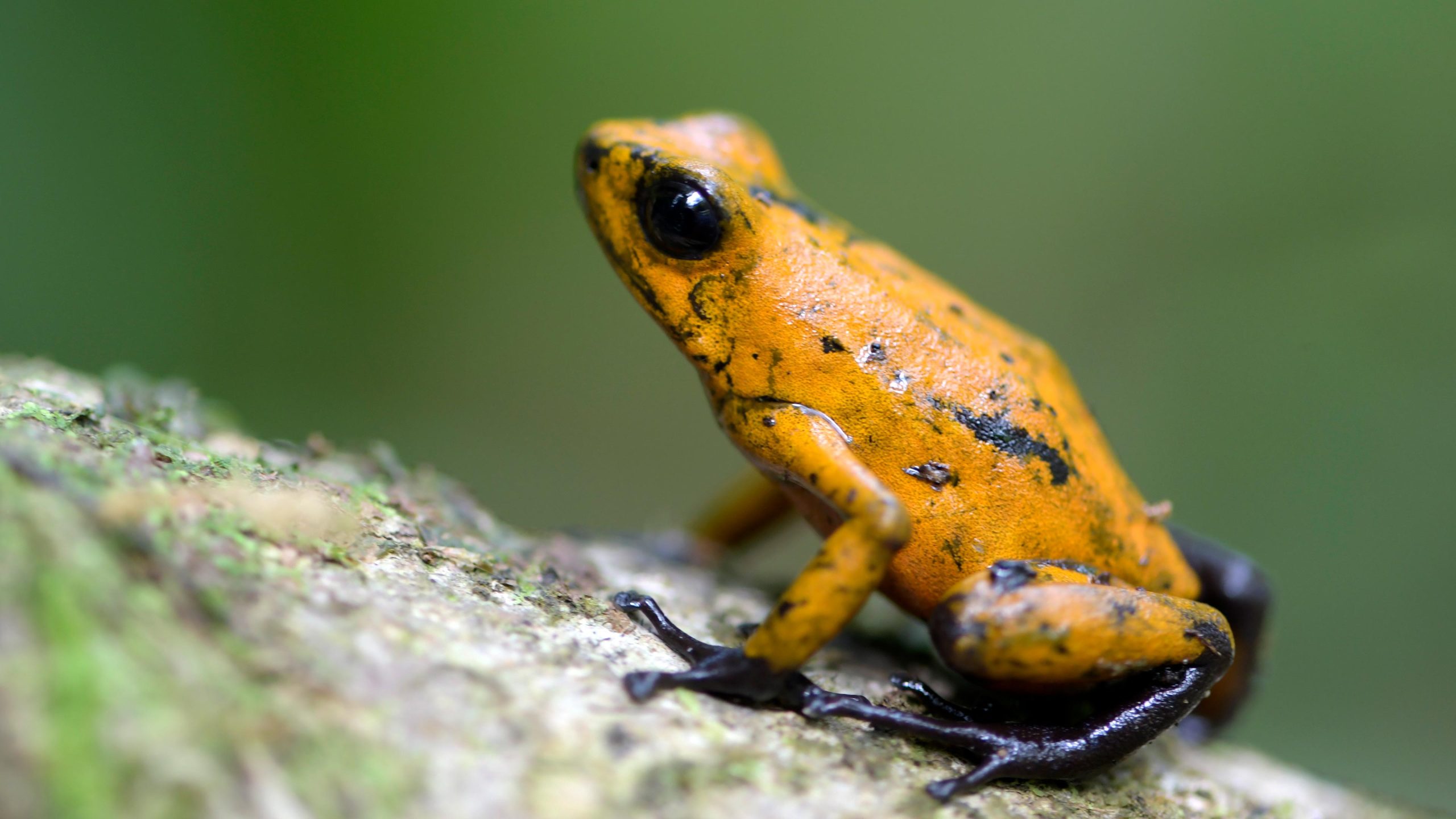
Alvarez-Buylla and her colleagues used a compound similar to the poison frog alkaloid as a kind of ‘molecular fishing hook’ to attract and bind proteins in blood samples taken from the Diablito poison frog. The alkaloid-like compound was bioengineered to glow under fluorescent light, allowing the team to see the proteins as they bound to this decoy.
Next, they separated the proteins to see how each one interacted with alkaloids in a solution. They discovered that a protein called alkaloid binding globulin (ABG) acts like a ‘toxin sponge’ that collects alkaloids. They also identified how the protein binds to alkaloids by systematically testing which parts of the protein were needed to bind it successfully.
Human Implications and Future Research
“The way that ABG binds alkaloids has similarities to the way proteins that transport hormones in human blood bind their targets,” Alvarez-Buylla explains. “This discovery may suggest that the frog’s hormone-handling proteins have evolved the ability to manage alkaloid toxins.”
The authors say the similarities with human hormone-transporting proteins could provide a starting point for scientists to try and bioengineer human proteins that can ‘sponge up’ toxins. “If such efforts are successful, this could offer a new way to treat certain kinds of poisonings,” says senior author Lauren O’Connell, Assistant Professor in the Department of Biology, and a member of the Wu Tsai Neurosciences Institute, at Stanford University.
“Beyond potential medical relevance, we have achieved a molecular understanding of a fundamental part of poison frog biology, which will be important for future work on the biodiversity and evolution of chemical defenses in nature,” O’Connell concludes.
Reference: “Binding and sequestration of poison frog alkaloids by a plasma globulin” by Aurora Alvarez-Buylla, Marie-Therese Fischer, Maria Dolores Moya Garzon, Alexandra E Rangel, Elicio E Tapia, Julia T Tanzo, H Tom Soh, Luis A Coloma, Jonathan Z Long and Lauren A O’Connell, 19 December 2023, eLife.
DOI: 10.7554/eLife.85096
Funding: National Science Foundation, New York Stem Cell Foundation, National Science Foundation Graduate Research Fellowship Program, Howard Hughes Medical Institute, Fundación Alfonso Martín Escudero, Wu Tsai Human Performance Alliance.
Never miss a breakthrough: Join the SciTechDaily newsletter.
Follow us on Google and Google News.