
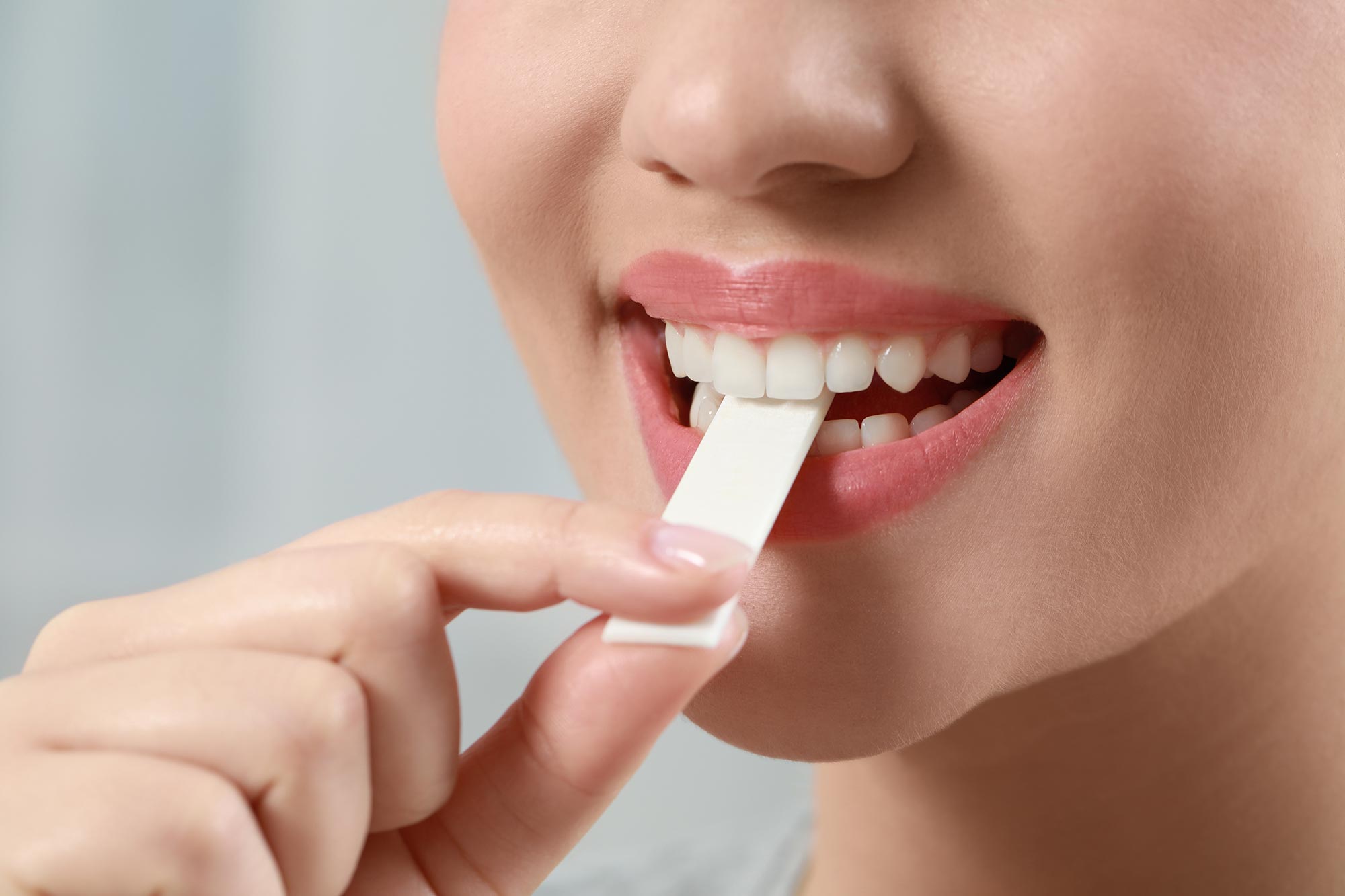
Chewing sugary gum may boost the heart and blood vessel benefits of nitrate-rich vegetables.
What happens in your mouth after eating vegetables may be just as important as the vegetables themselves. Researchers at King’s College London have found the first evidence that chewing sugary gum after consuming nitrate-rich vegetables such as beetroot, spinach, and kale can temporarily enhance the body’s ability to lower blood pressure.
Vegetables absorb nitrate from the soil, but bacteria in the mouth must convert it into nitrite before the body can use it. Nitrite relaxes and widens blood vessels, improving circulation and reducing blood pressure.
Since this conversion relies on oral bacteria, scientists have been investigating ways to optimize the process. One little-studied idea is that making saliva more acidic could improve nitrate conversion, leading the team to test whether sugary chewing gum could influence the body’s response to dietary nitrate.
Testing saliva acidity
To examine that possibility, the study tested whether sugar-containing gum, which is acidic and lowers mouth pH, could increase nitrite production.
Dr. Andrew Webb, Clinical Senior Lecturer in the School of Cardiovascular & Metabolic Medicine & Sciences, King’s College London, said: “Whether and how the acidity of the saliva in the mouth impacts the conversion of the inactive nitrate, to the more active nitrite, is a fundamental question, as it impacts a range of important physiological functions, including blood pressure. However, this process has not been studied much.
“While most research suggests that increasing acidity inhibits the conversion of nitrate, this has never been investigated in the whole body, over several hours.
“Incidentally, we previously found that combining grapefruit juice with beetroot juice decreased the acidity of the saliva and inhibited the conversion of nitrate to nitrite in the saliva. So, we wanted to formally test whether doing the opposite – increasing the acidity of the saliva – would enhance the conversion of nitrate to nitrite.”
Healthy volunteers drank a shot of beetroot juice and were randomly assigned to chew either sugar-containing (Hubba Bubba bubble) gum or sugar-free (Wrigley’s Extra) chewing gum for three to six hours. Blood pressure was measured, and blood and saliva samples were analyzed throughout the study. At least one week later, the volunteers returned and repeated the experiment with the other gum.
Sugar boosted nitrite production
When participants chewed Hubba Bubba, their saliva became more acidic than it did with sugar-free gum, shown by (measured by a 1.4 decrease in pH). They also had 45% more nitrite in the mouth and 25% more nitrite circulating through the body than when they chewed sugar-free gum.
Sugary gum also significantly reduced systolic blood pressure (when the heart pushes blood out) and diastolic blood pressure (when the heart relaxes between beats) by almost 3 over 2 mmHg compared with sugar-free gum.
Not a health recommendation
The finding may matter for athletes who already use beetroot to support performance, but the researchers emphasize that sugary gum should not be treated as a blood pressure therapy.
Dr. Webb added: “The effects were only short-term, lasting several hours, and long-term use of sugar-containing products would not be recommended for dental health. Nonetheless, the classic culinary tradition of following a starter and a main course, especially if they contain nitrate-rich salad leaves and vegetables, with a sweet dessert, which could be fruit, may temporarily increase blood pressure-lowering and exercise enhancement.
“We also suggest that sugary chewing gum will have a greater effect compared to drinking sugary drinks, as it stays in the mouth for a longer period of time.”
Co-author Dr. Charlotte Mills, University of Reading, added: “The bacteria that live in our mouths play a critical role in converting nitrate from foods such as beetroot into beneficial compounds that help relax blood vessels and lower blood pressure. Our findings suggest that the presence of sugar may create a more favorable environment for this process.
“We are certainly not suggesting that people should start chewing sugary gum regularly. Frequent sugar consumption is harmful for dental health and is also detrimental to cardiometabolic health when consumed in excess. Instead, our findings provide a proof of concept that we may be able to improve how the body processes dietary nitrate, and future research should focus on developing tooth-friendly, metabolically sound approaches that achieve the same effect.
“The challenge now is to identify alternative strategies that are both effective and appropriate for long-term use.
“Because dietary nitrate is already a recognized sports supplement, there is potential to optimize how athletes use it. If we can enhance nitrate conversion, we may be able to improve the physiological benefits that athletes obtain from nitrate-rich foods.
“We found that something as simple as the type of chewing gum used alongside beetroot juice can influence how effectively the body converts dietary nitrate into compounds that help lower blood pressure.”
Athletes may be next
The next proposed step is a larger study in athletes to better understand how sugary chewing gum may affect nitrate conversion, blood pressure, and athletic performance.
Reference: “Lowering salivary pH with sugar-containing gum augments salivary nitrite production and blood pressure reduction with dietary nitrate (beetroot juice)” by Andrew J. Webb, Harriet Clift, Callum Hill, Nur Mousa, Navanithan Arun Jayaraj, Jasmine Quraishi, Charlotte E. Mills and Kevin O’Gallagher, 18 June 2026, British Journal of Clinical Pharmacology.
DOI: 10.1002/bcp.70640
Never miss a breakthrough: Join the SciTechDaily newsletter.
Follow us on Google and Google News.
2 Comments
Surely I can’t be the only person who read this and wondered what the typical pH of saliva is! So, I looked it up. It is commonly cited as ranging from 6.2-7.6, 6.7-7.4, or 6.5 to 7.8; that comes out to mid-range values of 6.9, 7.1 (7.05), and 7.2 (7.15), or an average, not surprisingly, of 7.1, or close to neutrality (pH 7). Therefore, it doesn’t take much to push it down into the range of defined acidity.
This effect might not have anything to do with nitrites or mouth pH. I feel better after eating a big meal even if I don’t have a sweet dessert with it. I’ve checked my blood pressure and it does come down after a meal. It could simply be due to feeling full and satisfied. My BP is high and my blood sugar is low when I’m hungry, so the hunger is gone and I feel overall better after eating. Even more so if I eat dessert. Sugary foods have ALWAYS made me feel better. There is a feeling of deep satisfaction and satiety that I just don’t get from eating non-sweet foods.
The sugary gum chewing that caused the lowered BP in the study could simple be due to the pleasurable experience of chewing gum and tasting sugar. It’s calming and soothing. Sugar-free things taste like artificial chemical junk so you don’t get that same effect. And also probably blood sugar levels coming back up will make people feel better and calmer and bring down BP.
Hubba Bubba bubble gum is also simply fun. You can do all kinds of things with your tongue and mouth and blow bubbles and whatnot. Total distraction from life. This brings down stress, too, and probably lowers BP. The Wrigley’s gum is smaller and you can do less with it. I can’t imaging chewing gum for 3-6 hours, though. They don’t say if it was the same piece of gum for the whole 6 hours? Or did they have multiple pieces of gum and chewed a new one each time the flavor ran out for the current piece they were chewing. That would make a big difference. Did they have constant flavor or were they chewing flavorless gum for the majority of the time?
They also should have studied people who chewed the gum but did not drink the beet juice. To see if it had anything to do with beet juice at all. I bet not. Chewing gum just makes you feel better. That is the entire point of chewing gum. Mastication is a stress reliever, too. When stress is lowered and you feel good, your BP will come down. The sugary gum probably worked better than the sugar-free gum simply because it tastes better and brings up the blood sugar.
They also don’t explain why they think chewing the sugary gum AFTER drinking the beet juice would change the nitrates to nitrites in the beet juice that was already in the stomach. Seems like they should have had the study participants chew gum BEFORE drinking the beet juice. I mean…right? If it starts in the mouth with Ph and saliva then how could chewing gum AFTER drinking the beet juice affect the beet juice in the stomach?? And the stomach environment is WAY more acidic than the mouth. Their theory really doesn’t make sense at all.