
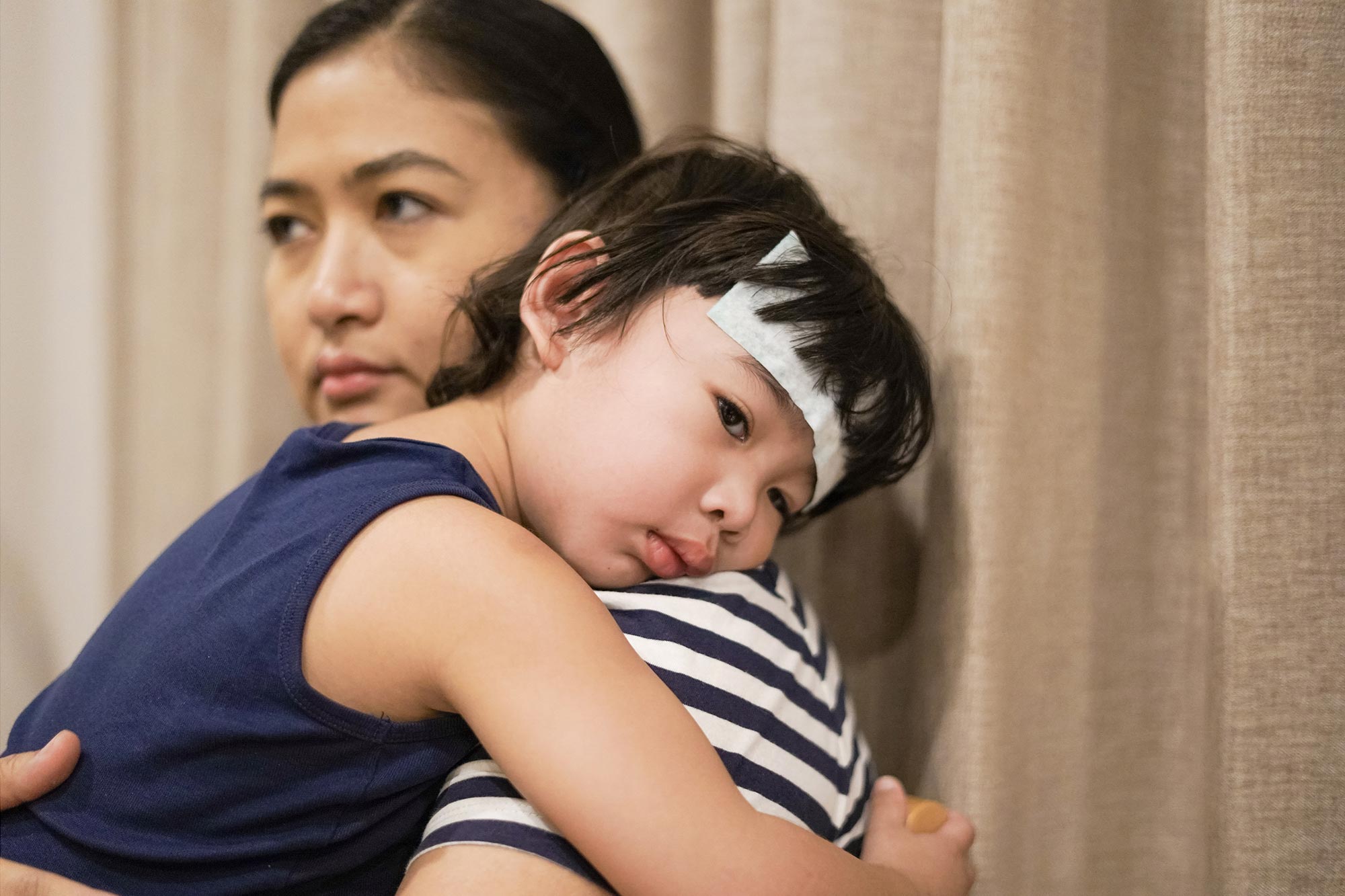
A comprehensive study confirms that long COVID significantly affects children, manifesting in symptoms that are both severe and specific to different age groups, challenging the notion that COVID-19 is mild for the younger population.
The kids were correct all along.
In the most comprehensive national study since the onset of the COVID-19 pandemic, a team of researchers that includes a Rutgers-organized consortium of pediatric sites has concluded that long COVID symptoms in children are tangible, pervasive, wide-ranging, and clinically distinct within specific age groups.
Results of the study, funded by the National Institutes of Health (NIH), are published today (August 21) in the Journal of the American Medical Association.
“We have convincing evidence that COVID-19 is not just a mild, benign illness for children,” said Lawrence C. Kleinman, a professor of pediatrics and population health expert at Rutgers Robert Wood Johnson Medical School (RWJMS) and the study’s third co-author. “There are children who are clearly disabled by long COVID for long periods of time.”
Persistent COVID-19 Impact in Young Patients
In the early stages of the pandemic, a myth arose and was perpetuated suggesting that because children often developed only mild cases of COVID-19, the risks for young patients were not serious. But this conjecture dissipated amid a rash of data demonstrating that a few children infected with COVID-19 will get very sick and others will suffer an array of health complications long after initial exposure.
Broadly defined, long COVID includes symptoms, signs, and conditions – such as aches, fatigue, memory loss, and stomach pain – that develop, persist or relapse more than a month after a COVID-19 infection. Worldwide, an estimated 65 million people, including children, live with long COVID. Until recently, most research into COVID-19’s lingering effects focused on adults.
Data Analysis and Survey Findings
To quantify long COVID’s impact on children and determine whether symptoms experienced by the youngest COVID-19 patients differ by age group and from adults, Kleinman and more than 140 researchers throughout the United States crunched data from NIH’s Researching COVID to Enhance Recovery (RECOVER) Initiative, a national effort to survey COVID-19’s long-term impact.
As part of RECOVER, caregivers for 5,367 children (898 school-aged children and 4,469 adolescents) completed online surveys about their children’s health in time for this data analysis. Roughly 86 percent of the sample had previously been infected with COVID-19, while 14 percent – the control group – had not. The survey assessed 74 known and potential long COVID-19 symptoms across nine domains: eyes, ears, nose and throat; heart and lungs; gastrointestinal; dermatologic; musculoskeletal; neurologic; behavioral and psychological; menstrual; and general.
Distinct Symptoms Across Age Groups
By analyzing the responses, researchers found 45 percent of COVID-19 infected school-age children (ages 6 to 11) reported at least one prolonged symptom after initial recovery versus 33 percent of uninfected children. Thirty-nine percent of COVID-19 infected adolescents (ages 12 to 17) reported one prolonged symptom, compared with 27 percent of uninfected adolescents. These differences implicate the virus as a likely causal factor, rather than just having lived through the pandemic.
Long COVID symptoms in children also were clustered in patterns distinct from adults and from each other. For instance, the most common symptom in adolescents was loss of smell and taste, followed by low energy, muscle aches, and fatigue. For school-age children, memory and focus issues topped the list, followed by stomach pain, headaches, and back or neck pain.
Comparison of Long COVID Symptoms in Children and Adults
Children experienced prolonged symptoms after COVID-19 infection “in almost every organ system, with the vast majority having multisystem involvement,” the authors wrote.
By contrast, adults with COVID-19 report 37 symptoms more frequently than those who did not have COVID-19, including post-exertional malaise, brain fog, and gastrointestinal and heart symptoms, among others.
Ongoing Research and Future Directions
Recruitment for the RECOVER project is partially facilitated by an RWJMS collaboration of 10 national pediatric organizations. The Rutgers Collaborative Long-term study of Outcomes of COVID-19 in Kids (CLOCK), which Kleinman heads as lead investigator, was launched in 2021 and received an NIH grant of more than $30 million the following year. To date, CLOCK has recruited 2,200 children for the pediatric RECOVER study.
The Realness of Long COVID in Children
While more work is needed to understand long COVID’s symptoms in the youngest patients, and to develop effective treatment protocols, Kleinman said the latest findings leave no doubt that long COVID in children is real.
“Children do get long COVID, and it’s not rare,” he said. “Some children are severely affected; they are not faking it or making it up.
“This is a new chronic illness in children with all the unknowns that brings. We will need to be prepared to deal with it for a generation.”
Reference: “Characterizing Long COVID in Children and Adolescents” by Rachel S. Gross, Tanayott Thaweethai, Lawrence C. Kleinman, Jessica N. Snowden, Erika B. Rosenzweig, Joshua D. Milner, Kelan G. Tantisira, Kyung E. Rhee, Terry L. Jernigan, Patricia A. Kinser, Amy L. Salisbury, David Warburton, Sindhu Mohandas, John C. Wood, Jane W. Newburger, Dongngan T. Truong, Valerie J. Flaherman, Torri D. Metz, Elizabeth W. Karlson, Lori B. Chibnik, Deepti B. Pant, Aparna Krishnamoorthy, Richard Gallagher, Michelle F. Lamendola-Essel, Denise C. Hasson, Stuart D. Katz, Shonna Yin, Benard P. Dreyer, Megan Carmilani, K. Coombs, Megan L. Fitzgerald, Nick Güthe, Mady Hornig, Rebecca J. Letts, Aimee K. Peddie, Brittany D. Taylor, Andrea S. Foulkes, Melissa S. Stockwell, RECOVER-Pediatrics Consortium, RECOVER-Pediatrics Group Authors, Venkataraman Balaraman, Amanda Bogie, Hulya Bukulmez, Allen J. Dozor, Daniel Eckrich, Amy J. Elliott, Danielle N. Evans, Jonathan S. Farkas, E. Vincent S. Faustino, Laura Fischer, Sunanda Gaur, Ashraf S. Harahsheh, Uzma N. Hasan, Daniel S. Hsia, Gredia Huerta-Montanez, Kathy D. Hummel, Matt P. Kadish, David C. Kaelber, Sankaran Krishnan, Jessica S. Kosut, Jerry Larrabee, Peter Paul C. Lim, Ian C. Michelow, Carlos R. Oliveira, Hengameh Raissy, Zaira Rosario-Pabon, Judith L. Ross, Alice I. Sato, Michelle D. Stevenson, Maria M. Talavera-Barber, Ronald J. Teufel, Kathryn E. Weakley, Emily Zimmerman, […] Mary M. Heitzeg, Megan M. Herting, Joanna Jacobus, Angela R. Laird, Christine L. Larson, Krista M. Lisdahl, Monica Luciana, Beatriz Luna, Pamela A.F. Madden, Erin C. McGlade, Eva M. Müller-Oehring, Bonnie J. Nagel, Michael C. Neale, Martin P. Paulus, Alexandra S. Potter, Perry F. Renshaw, Elizabeth R. Sowell, Lindsay M. Squeglia, Susan Tapert, Lucina Q. Uddin, Sylia Wilson and Deborah A. Yurgelun-Todd, 21 August 2024, JAMA.
DOI: 10.1001/jama.2024.12747
Never miss a breakthrough: Join the SciTechDaily newsletter.
Follow us on Google and Google News.