

Scientists searching for dark matter have made groundbreaking progress using new infrared spectrographic technology and the Magellan Clay Telescope.
By analyzing light from distant galaxies, they placed unprecedented constraints on the possible lifetime of axionlike particles, a leading dark matter candidate. Their observations—though not detecting dark matter directly—marked a milestone in the field, demonstrating the power of their method. Their work also hints at unexplained anomalies, suggesting that with more data, we may be closer than ever to discovering what makes up the invisible mass shaping our universe.
Unlocking Dark Matter’s Secrets with New Technology
A research team led by Associate Professor Wen Yin of Tokyo Metropolitan University has made significant progress in the search for dark matter. Using advanced spectrographic technology and the Magellan Clay Telescope, they observed distant galaxies and gathered precise infrared measurements. In just four hours of observation, they established new constraints on the possible lifetime of dark matter. Their findings not only demonstrate the power of their technology but also expand the search into less-explored regions of the electromagnetic spectrum.
For over a century, cosmologists have struggled with an unresolved mystery in our understanding of the universe. Observations of galaxy rotation suggest that there is far more mass present than what we can directly see. This unseen mass, known as “dark matter,” remains one of physics’ greatest enigmas. The challenge in detecting it lies not just in its invisibility but also in the uncertainty surrounding its fundamental nature.
Cutting-Edge Observations with Infrared Spectroscopy
To tackle this, researchers are combining theoretical models with cutting-edge observational techniques to better define dark matter’s potential properties. In a recent breakthrough, a Japanese team used an innovative spectrographic approach to analyze light from two distant galaxies, Leo V and Tucana II.
They employed the 6.5-meter Magellan Clay Telescope in Chile to capture and study this light, focusing on the infrared spectrum, a promising but complex region for dark matter detection.
A New Approach to Detecting Dark Matter
The team focused on a promising dark matter candidate, the axionlike particle (ALP), and considered how it “decays” and spontaneously emits light. Leading theoretical models make the near infrared part of the spectrum a particularly promising place to look. However, the infrared is also a crowded and confusing part of the electromagnetic spectrum. This is because of the vast range of sources of noise and interference from other sources. Examples include zodiacal light, the dim scatter of sunlight by interstellar dust, and light emitted by the atmosphere when it is heated by the sun.
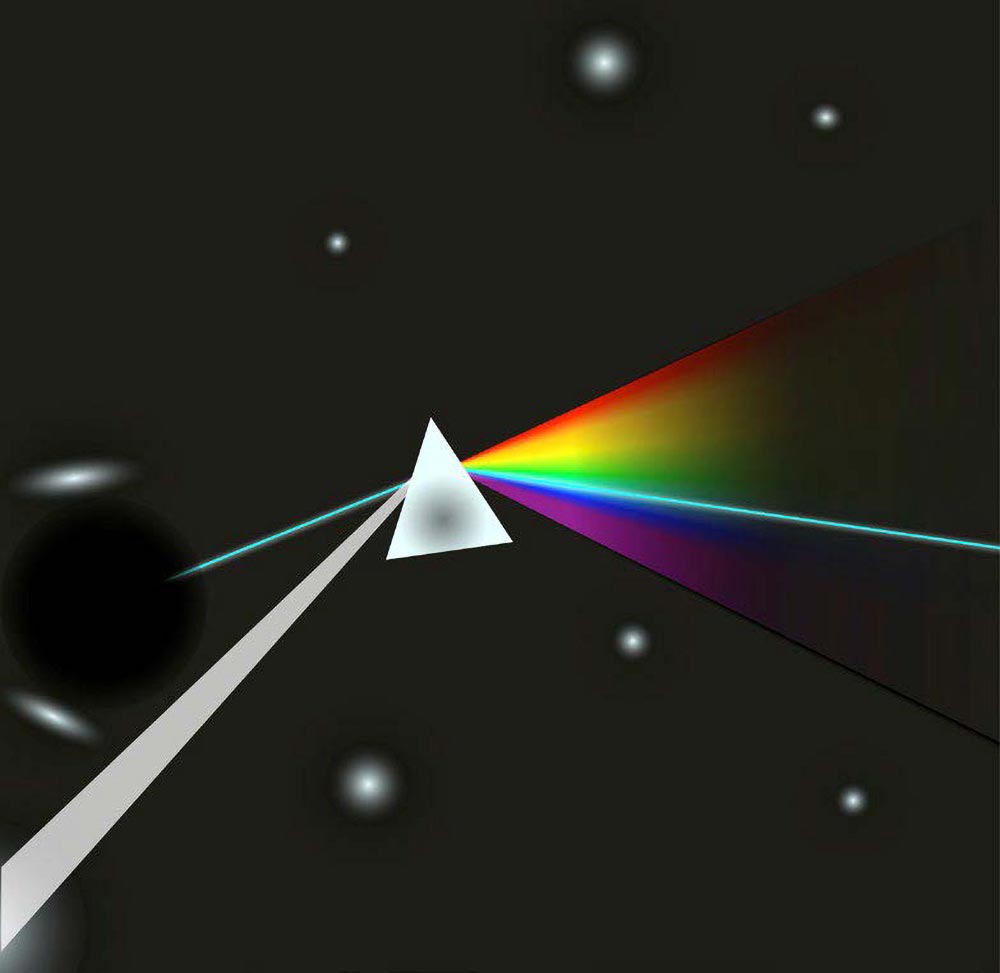
To get around this, in their previous work, they proposed a new technique that uses the fact that background radiation tends to include a broader range of wavelengths, whereas light from a specific decay process is more strongly skewed to a narrow range. Just like light spilling off a prism gets dimmer as different colors are spread thinner and thinner, decay events confined to a narrow range get sharper and sharper. Various state‐of‐the‐art infrared spectrographs—such as NIRSpec on the James Webb Space Telescope, WINERED on the Magellan Clay Telescope, and many others—can be used to implement this technique, effectively turning these instruments into excellent dark matter detectors.

Precision Measurements Push the Boundaries
Thanks to the precision of the team’s technology (WINERED), they were able to account for all the light they detected in the near infrared to significant statistical accuracy. The fact that no decay was found was then used to set upper bounds on the frequency of these decay events, or a lower bound on the lifetime of ALP particles. Their new lower bound in seconds is 10 with 25 to 26 zeros after it, or ten to a hundred million times the age of the universe.
Breaking Limits and the Future of the Search
The finding is not only significant because this is the most stringent limit yet for the lifetime of dark matter. The work uses cutting-edge technology from infrared cosmology to address problems in fundamental particle physics. And while their conclusions are based on stringent analysis of the data so far, there are hints of anomalies or “excesses” which offer the tantalizing prospect of actual detection of dark matter with more data and more analysis. The search goes on for the missing piece of our universe.
Reference: “First Result for Dark Matter Search by WINERED” by Wen Yin, Taiki Bessho, Yuji Ikeda, Hitomi Kobayashi, Daisuke Taniguchi, Hiroaki Sameshima, Noriyuki Matsunaga, Shogo Otsubo, Yuki Sarugaku, Tomomi Takeuchi, Haruki Kato, Satoshi Hamano and Hideyo Kawakita, 7 February 2025, Physical Review Letters.
DOI: 10.1103/PhysRevLett.134.051004
This work was supported by JSPS KAKENHI Grant Numbers 22K14029, 20H05851, 21K20364, and 22H01215, and the Incentive Research Fund for Young Researchers from Tokyo Metropolitan University. WINERED data was gathered with the 6.5-m Magellan Clay Telescope located at Las Campanas Observatory, Chile, under the proposal “eV-Dark Matter search with WINERED.” WINERED was developed by the University of Tokyo and the Laboratory of Infrared High-resolution Spectroscopy, Kyoto Sangyo University, under the financial support of JSPS KAKENHI Grant Numbers 16684001, 20340042, and 21840052, and the MEXT Supported Program for the Strategic Research Foundation at Private Universities (Nos. S0801061 and S1411028). The observing runs in June, 2023 and November, 2023 were partly supported by JSPS KAKENHI Grant Number 19KK0080, JSPS Bilateral Program Number JPJSBP120239909, and Project Research Number AB0518 from the Astrobiology Center, NINS, Japan.
Never miss a breakthrough: Join the SciTechDaily newsletter.
Follow us on Google and Google News.
25 Comments
Was Wen Yin channeling some Pink Floyd with that illustration?
“Matter of fact, it’s all dark.”
You, are laying. You, don’t know anything.
Unless you know all the hidden ingredients of matter, you cannot even begin to fabricate matter in the laboratory. And, dark matter is just the begining
New matter is created all the time, even in our bodies our metabolic processes use bond energies which adds (or detracts) mass and residual radioactivity fabricates new particles such as in beta decay. The most common radioactive source in our bodies, Potassium-40 in our skeleton, does the latter.
“New matter is created all the time, even in our bodies….” Alas, it is adipose tissue….
Physical objects have been created out of light. Do you know of that existing anywhere other than a quantum physics laser lab? Soon, we will have physical, quantum computers made completely out of photons. Do YOU know what YOU even talk about?
NOTE 2503080215 Source1. Analyzing_【
The universe is hiding something huge (nk2) – and scientists are closer than ever to finding it.
_Outside of [2-2]msbase.galaxy, there exists a (*) domain of the hypothesis that dark matter exists. The center of the galaxy is the msbase.nk2 ending, with the heaviest mass and is at the center of time and space on the long journey. However, its position is not centered in the distal.
This is because the light emitted during the decay process, the axionlike, is distorted so that it has a stronger local point of position like the end of the fuselage. It is the end of a long search.
The position is the expiration state of a fuselage void.qpeoms(*) or empty space void vnk2 to fill the mass, where the starting light mass and the tip heavy mass can halve and meet the void number across the middle mass band nk chiral center.
1-3.) Spectroscopic techniques that separate light from decaying dark matter pre-stage nk2 and background light. WINERED uses the broader spectral properties of background light to distinguish it from light from decay events.
The light of dark matter is the light of a powerful supernova that builds up in the mass of elementary particles in the qpeoms at a continuous, narrow, sharp moment of nk2. Uh-huh.
≈≈≈≈≈=========
1.
The universe is hiding something huge – and scientists are closer than ever to finding it.
Using advanced infrared spectroscopy, the researchers set a record limit on the lifetime of dark matter candidates called axionlike particles. Their findings improve our understanding of dark matter, while also hinting at a possible anomaly that could take us closer to discovery.
1-1.
Scientists searching for dark matter have made breakthroughs using new infrared spectroscopy techniques and the Magellanic Clay telescope.
By analyzing light from distant galaxies, they have placed unprecedented constraints on the possible lifetime of the leading dark matter candidate, axion-like particles. Their observations did not directly detect dark matter, but marked milestones in the field and demonstrated the power of their methods. Their work also suggests unexplained anomalies, suggesting that with more data we may be closer than ever to discovering what constitutes the invisible mass that forms the universe.
1-2. Unlock the secrets of Dark Matter with new technology
The research team has made significant progress in the search for dark matter. They used advanced spectroscopy technology and the Magellan Clay telescope to observe distant galaxies and collect accurate infrared measurements. With just four hours of observation, they have established new constraints on the possible lifetime of dark matter. Their findings not only show the power of their technology, but also extend the search to less explored areas of the electromagnetic spectrum.
1-3.)
For more than a century cosmologists have wrestled with an unsolved mystery in our understanding of the universe. Observations of galactic rotation suggest that there is much more mass than we can see for ourselves. This invisible mass, known as “dark matter,” remains one of the greatest mysteries of physics. The challenge in detecting it lies not only in being invisible but also in the uncertainty surrounding its fundamental nature.
Spectroscopic techniques that separate light from decaying dark matter and background light. WINERED uses the broader spectral properties of background light to distinguish it from light coming from decay events.
2. State-of-the-art observations using infrared spectroscopy
To address this, researchers are combining theoretical models with state-of-the-art observation techniques to better define the potential properties of dark matter. In recent breakthroughs, a Japanese team used an innovative spectroscopic approach to analyze the light emanating from two distant galaxies, Leo V and Tucana II.
They captured and studied this light using the 6.5m Magellanic Clay telescope in Chile, focusing on infrared spectra, a promising but complex region for dark matter detection.
2-1. A new approach for dark matter detection
The team focused on axion-like particles (ALPs), which are promising dark matter candidates, and considered how they “collapse” and emit light spontaneously. Major theoretical models make the near-infrared part of the spectrum a particularly promising subject of study. However, infrared rays are also a congested and chaotic part of the electromagnetic spectrum. This is due to the wide range of noise sources and interferences from other sources. Examples are ecliptic, faint scattering of sunlight by interstellar dust, and light emitted by the atmosphere when heated by the sun.
2-2.
To address this, they have proposed a new technique in previous work that takes advantage of the fact that background radiation tends to cover a wider range of wavelengths, while light from [2-2]certain decay processes is more strongly distorted to a narrow range.
Decay events confined to a narrow range become sharper, just as light pouring from a prism darkens as other colors become thinner and thinner. This technique can be implemented using a variety of state-of-the-art infrared spectroscopy, such as NIRSpec at the James Webb Space Telescope and WINERED at the Magellan Clay Telescope, and so on, effectively converting these instruments into superior dark matter detectors.
2-3.
Limits on the frequency of dark matter decay events. Scientists have estimated lower bounds on the lifetime of dark matter using specific models (NFW, Navarro-Frenk-White Profile, Generalized Hernquist Profile) for dark matter. Using the NFW model, the lower bounds on decay lifetime are around 10 in seconds with 25 to 26 zeros.
2-4. Expand the boundaries with precision measurements
Thanks to the precision of the team’s technique (WINERED), they were able to explain all the light detected in the near-infrared with significant statistical accuracy.
Its hiding spiritual dimensions that one day I hope science finally realises that it’s real and not a load of make believe nonsense
What can be asserted without evidence can also be dismissed without evidence.
Such as, the Universe expanding at ludicrous speed from a theoretical singularity?
I hear that all the time from the ladies about my Levi’s
Unless you know all the hidden ingredients of matter, you cannot even begin to fabricate matter in the laboratory. And, dark matter is just the begining
New matter is created all the time, even in our bodies our metabolic processes use bond energies which adds (or detracts) mass and residual radioactivity fabricates new particles such as in beta decay. The most common radioactive source in our bodies, Potassium-40 in our skeleton, does the latter.
In other words, they still have no fricking clue! If dark matter does in fact exist, we should be able to find it much closer to Earth. Alpha particles are all around us – no need for a fancy telescope. Try a G-M counter or ZnS scintillator, or something similar that has been adapted for detection outside of our atmosphere.
The article describes how new clues has come to, well, light.
Our planetary system contains about an asteroid’s worth of dark matter. How are you going to find that?
Meanwhile, we observe consistent dark matter densities in larger volumes by many independent means. Here is a new way:
“We present a novel method that enables us to estimate the acceleration of individual millisecond pulsars (MSPs) using only their spin period and its time derivative. For our binary MSP sample, we show that one can obtain an empirical calibration of the magnetic braking term that relies only on observed quantities. We find that such a model for magnetic braking is only valid for MSPs with small surface magnetic field strengths ( 5 Gyr). With this method we are able to effectively double the number of pulsars with line-of-sight acceleration measurements, from 28 to 54 sources. This expanded dataset leads to an updated measurement of the total density in the midplane, which we find to be ρ0 = 0.086 ± 0.001 stat. ± 0.006 sys. M⊙/pc3, and an updated measurement of the local dark matter density, which we calculate to be ρ0,DM = 0.014 ± 0.005 stat. ± 0.006 sys. M⊙/pc3 (0.53 ± 0.30 GeV/cm3). This updated value for ρ0,DM is in good agreement with literature values derived from kinematic estimates.” [arXiv:2501.03409]
Whatever type of hidden wave particles form Dark Matter & its energy, it should be confirmed that more than 70% of universe contains some kind of matter & its energy, which is not yet detectable with the existing technology.
So far we know that this invisible matter matters as the largest content of the universe.
Vacuum “dark” energy density is the sum of energy densities of all quantum fields, dark matter is something else. “Vacuum energy is an underlying background energy that exists in space throughout the entire universe.[1] The vacuum energy is a special case of zero-point energy that relates to the quantum vacuum.[2]” [Wikipedia]
Let’s hide the dark matter in the closet and concentrate how to reduce the scorching unbearable heat we are experiencing all over the world.
Better yet, do both. Science and technology works faster when it works on everything without hinder.
Talking to one of your close friends again, I see.
That’s life as a realistic reddit group AI-like character working for a bait-and-switch hasbara machine and doing too much complaining behind the scenes, I suppose.
Read some new research that has used laser light photons to create supersolids , the breakdown of the anomaly looks surprisingly familiar to how a Black Hole is depicted taking in all surrounding material . light being a catalyst and gravitational waves bombarding the advent structure at super cold temperatures creates a crystalline structure of 2D matter as the structure builds in size over several million years the structure would be transformed to 3D spinning vortex the more 2D matter and surroundings light the larger the spinning vortex becomes . space time would be warped and at several light years a viewing lens phononimum would be observed , the secretion event herrison would be the waiting room until the structure core votex manipulated the 2D enough adding to 3D Vortex core . Just a Thought .
There is no “phononium”. Phonons are solid matter vibrations and those have nothing to do with gravitational waves.
This is what happens when rich bait-and-switch closet ultra-nationalists continue to claim gravity theory competence through Einstein, even though the errors increase with distance from mass.
This is what happens when bait-and-switch commenters continue to harass science sites.
You don’t impress me in any positive way, but you are a master baiter here, and of course your beloved supremacist royal society European bait-and-switch colonial ox got gored again.