
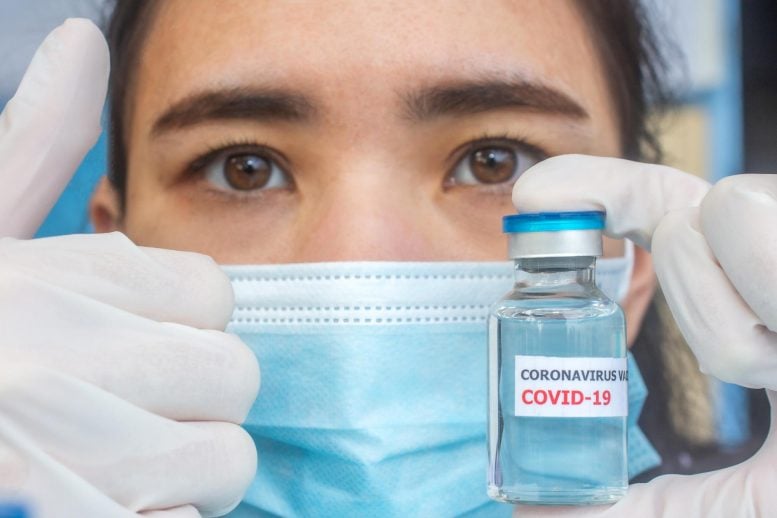
Research finds COVID-19 vaccines significantly lower hospitalization and mortality rates in cancer patients. Age, rather than cancer type, was the biggest predictor of mortality.
Cancer patients saw a significant decline in COVID-related hospitalizations and mortality following the rollout of COVID-19 vaccines in the first panoramic study of its kind.
Published today (July 25) in the journal Scientific Reports, the research looked at the impact of the global pandemic on case-outcome rates for cancer patients across a 21-month period from November 2020 to August 2022. The team of researchers led by the University of Birmingham found that hospitalizations in the period fell from nearly one in three patients (30.58%) to one in 13 patients (7.45%); and, case-mortality rates fell from more than one in five patients (20.53%) to less than one in 30 patients (3.25%).
Among cancer patients, the study also found that age was a greater predictor of mortality rates than the type of cancer that a patient had. In 2022, the case mortality rate for patients over 80 was more than one in ten (10.32%) compared to less than one in 35 (2.83%) for those under 80.
Compared to the general population, COVID-19 infections leave cancer patients more than twice as likely to be hospitalized (2.1 times as likely) or sadly die (2.54 times as likely) at the end of the study period.
Dr. Lennard Lee from the Institute of Cancer and Genomic Sciences at the University of Birmingham and lead author of the study said:
“People living with cancer are worried that they have been forgotten. Our work shows that the UK is emerging out of the tunnel of the global pandemic, and we know who are still at the greatest risk of the consequences of COVID-19 infection so that they’re not left behind.
“This data is undoubtedly good news for cancer patients, but despite significant falls in hospitalizations and mortality over the years we studied we can still see the additional risk
Thomas Starkey, PhD researcher from the University of Birmingham and first author of the study said:
“By collating and analyzing electronic healthcare data for evaluating the real-world impact of the global pandemic in the UK, we can now use population-scale data to protect people living with cancer from infectious diseases such as COVID-19.”
Reference: “A population-scale temporal case-control evaluation of COVID-19 disease phenotype and related outcome rates in patients with cancer in England (UKCCP)” by Thomas Starkey, Maria C. Ionescu, Michael Tilby, Martin Little, Emma Burke, Matthew W. Fittall, Sam Khan, Justin K. H. Liu, James R. Platt, Rosie Mew, Arvind R. Tripathy, Isabella Watts, Sophie Therese Williams, Nathan Appanna, Youssra Al-Hajji, Matthew Barnard, Liza Benny, Alexander Burnett, Jola Bytyci, Emma L. Cattell, Vinton Cheng, James J. Clark, Leonie Eastlake, Kate Gerrand, Qamar Ghafoor, Simon Grumett, Catherine Harper-Wynne, Rachel Kahn, Alvin J. X. Lee, Oliver Lomas, Anna Lydon, Hayley Mckenzie, NCRI Consumer Forum, Hari Panneerselvam, Jennifer S. Pascoe, Grisma Patel, Vijay Patel, Vanessa A. Potter, Amelia Randle, Anne S. Rigg, Tim M. Robinson, Rebecca Roylance, Tom W. Roques, Stefan Rozmanowski, René L. Roux, Ketan Shah, Remarez Sheehan, Martin Sintler, Sanskriti Swarup, Harriet Taylor, Tania Tillett, Mark Tuthill, Sarah Williams, Yuxin Ying, Andrew Beggs, Tim Iveson, Siow Ming Lee, Gary Middleton, Mark Middleton, Andrew Protheroe, Tom Fowler, Peter Johnson and Lennard Y. W. Lee, 25 July 2023, Scientific Reports.
DOI: 10.1038/S41598-023-36990-9
The study drew from data from the UKCCP, one of the United Kingdom’s longest-running pandemic responses with a mission to safeguard, evaluate and protect patients with cancer.
This project was a population-based study of COVID-19 outcomes in patients with cancer from the study period of 1st November 2020 to 31st August 2022, initiated to define the disease phenotype in the highest clinical risk groups.
Never miss a breakthrough: Join the SciTechDaily newsletter.
Follow us on Google and Google News.
1 Comment
I don’t have statistics to back this up, you can look those up, but I don’t think I can leave this one alone. The pandemic led to an overburdering of healthcare systems worldwide, so people weren’t going to see the doctor unless obviously urgent. There are now dramatically higher excess-deaths known in OECD countries, including due to cancer. A reduction in COVID mortality due to cancer over the pandemic is exactly what you’d expect, along with the dramatic spike in undiscovered and untreated now-late-stage cancers that we’re seeing now. A victory dance is uncalled for.