
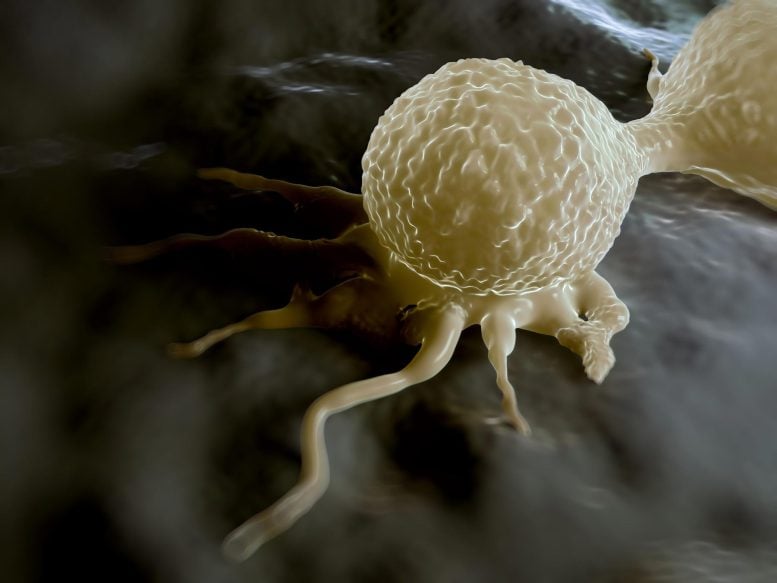
Scientists are using mRNA technology from COVID-19 vaccines to target the p53 protein in triple-negative breast cancer, aiming to develop new treatments. This approach could be applicable to other cancers as well.
Scientists at Queen’s University Belfast have received funding from Breast Cancer Now to support their quest for new treatments inspired by COVID-19 vaccine innovation. The research team will adapt lessons from the development of COVID-19 vaccines in the search for new treatments for an aggressive form of breast cancer.
Dr. Niamh Buckley and Professor Helen McCarthy from the School of Pharmacy secured a £228,900 (~$278,000) grant from Breast Cancer Now to tackle protein p53 – which is found at very high levels in around 90% of triple-negative breast cancer (TNBC) tumors.
The Role of mRNA Technology in Cancer Treatment
They will use Messenger RNA (mRNA) – a molecule that provides temporary instructions to create proteins in cells – to target breast cancer cells with high levels of p53. This echoes a similar approach taken by Pfizer and Moderna scientists who deployed mRNA in the development of their COVID-19 vaccines.
Around 15% of breast cancers are classed as triple negative but there are currently few targeted treatments. Triple-negative breast cancer is more likely than most other breast cancers to return or spread during the first years following successful treatment.
Dr. Buckley said: “This grant from Breast Cancer Now will allow us to exploit the promising new research routes highlighted by the innovative science behind the COVID-19 vaccines to search for new treatments for breast cancer.
“Scientists must investigate what to include in the vaccine to trigger the right immune response, and that depends on the part of the virus or cell they need to target. For the COVID-19 vaccine this was the ‘spike protein’. In our work, we are targeting p53, which can mutate and cause triple-negative breast cancer – and many other types of tumors. The p53 protein is often present in very high levels in each cancer cell, and this is why we think it will be a good target.
“We hope to develop an mRNA vaccine that will help the immune system to recognize, hunt down and destroy cancer cells with p53 mutations. This would ultimately provide patients with an important new treatment option.”
Prior to the pandemic, researchers used vaccination technology to find novel cancer therapies. However, they now have a far better grasp of how to employ mRNA more effectively. Another benefit for the creation of vaccines is that mRNA leaves the body considerably faster than DNA.
Since the mutated p53 protein is found in unusually high levels in at least half of all cancer types, it’s possible the research could be used more broadly. This could lead to treatments for other types of breast cancer and other cancers – with relatively low development costs because much of the groundwork will have been laid.
Impact of COVID-19 on Cancer Research
When the pandemic hit, Breast Cancer Now was concerned about how it would affect its ability to support research but, thanks to the incredible generosity of its supporters, the charity is funding 11 new research projects in 2022.
Dr. Simon Vincent, Director of Research, Support and Influencing at Breast Cancer Now, said: “The pandemic was a devasting global health emergency which had a particularly significant impact on people with cancer symptoms and those already receiving treatment. However, it also brought the breakthrough development of the COVID-19 vaccines and it’s exciting we can now capitalize on the brilliant science behind them to expand the limited targeted treatments available to treat this aggressive type of breast cancer.
“Each year, around 8,000 UK women are diagnosed with triple-negative breast cancer and it’s vital we find new and effective ways to treat this devastating disease, which is why it’s so important we’re backing innovative research like this.”
Jade Townsend, a mother of two who twice recovered from triple-negative breast cancer before the age of 31, praised the “absolutely brilliant” NHS staff who cared for her but found chemotherapy particularly grueling.
Jade said: “It was absolutely horrendous juggling chemotherapy with caring for two small children during the pandemic. However, I was incredibly fortunate my treatment was successful. It would be brilliant if this research helps to deliver new treatments and results in fewer women having to undergo the intense chemotherapy I went through.”
Never miss a breakthrough: Join the SciTechDaily newsletter.
Follow us on Google and Google News.