
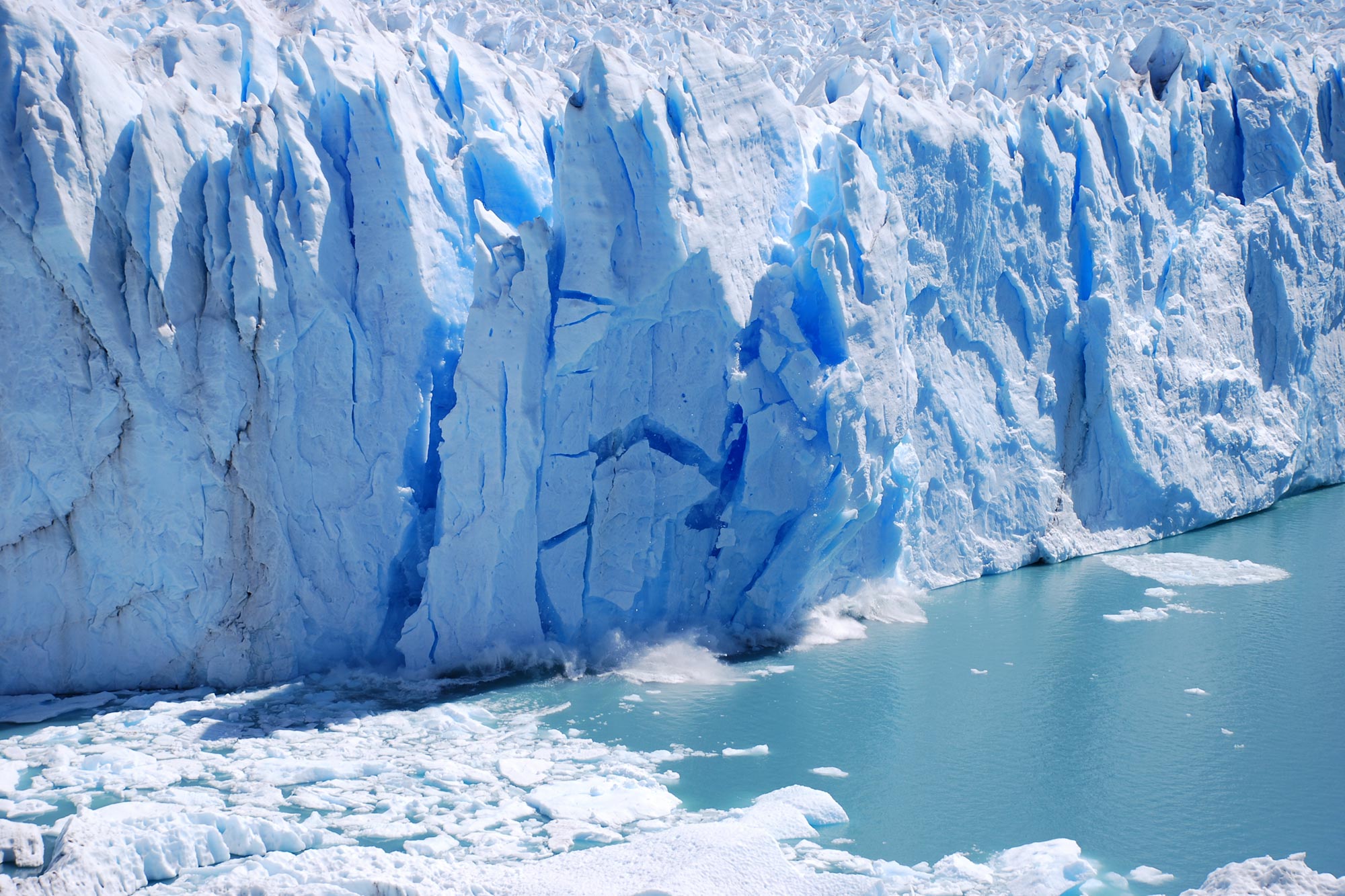
A global analysis of more than 3,100 surging glaciers reveals a dynamic and unevenly distributed phenomenon that challenges conventional expectations about glacier retreat.
While most of the world’s glaciers are steadily shrinking as temperatures rise, a small subset behaves in a very different way. These glaciers can suddenly accelerate, surge forward, and reshape entire landscapes within a few years, sometimes with dangerous consequences.
An international team led by the University of Portsmouth set out to better understand these unusual glaciers on a global scale. Their analysis explores where surges occur, what drives them, and how climate change is beginning to disrupt long-standing patterns.
A glacier surge is a short-lived but intense burst of motion. Ice that may have been creeping along slowly for decades can suddenly race downhill, pushing large volumes of ice toward lower elevations. These episodes can last several years, followed by long quiet periods before the cycle repeats. Scientists still do not fully agree on what triggers every surge, but factors such as internal ice deformation and the buildup of meltwater beneath the glacier both play important roles.
Mapping Surging Glaciers Worldwide
The study, published in Nature Reviews Earth and Environment, compiled a database of more than 3,100 glaciers that have experienced surges. Rather than being randomly distributed, these glaciers cluster in dense groupings across the Arctic, High Mountain Asia, and the Andes.
The research outlines the key features and processes that control glacier surges, characterizes the wide range of surging behaviors, and maps their global distribution alongside the climate conditions that cause them to cluster in specific regions.
“Surge-type glaciers are very unusual and can be troublesome,” said lead author Dr. Harold Lovell, Senior Lecturer and glaciologist from the University of Portsmouth’s School of the Environment and Life Sciences. “As a friend and fellow glaciologist once put it, they save up ice like a savings account and then spend it all very quickly like a Black Friday event. But while they only represent 1 they only represent 1 percent of all glaciers worldwide, they affect just under one-fifth of global glacier area, and their behavior can result in serious and sometimes catastrophic natural disasters that affect thousands of people.”
Researchers also found that these glaciers may be especially sensitive to climate change. During surge events, they can account for a significant share of ice loss in some regions.
Six major hazards identified
The study highlights six major hazards linked to glacier surges, many of which threaten communities in high mountain regions and can damage infrastructure or cause loss of life:
- Glacier advance – ice can overrun buildings, roads, and farmland
- River blockages – surging ice can dam rivers, forming unstable lakes that may suddenly release destructive floods
- Meltwater outbursts from beneath the glacier – these sudden releases of water can also trigger severe flooding
- Sudden detachments of glaciers – large sections of ice and rock can break away, causing avalanches
- Widespread crevassing – faster ice movement fractures the surface, making travel dangerous in areas where glaciers act as routes between settlements or tourist paths, and affecting climbing routes that rely on glacier access
- Iceberg hazards – when surging glaciers reach the ocean, they can release many icebergs in a short period, creating risks for ships and marine tourism
Using this information, the team identified 81 glaciers that present the greatest danger during surges. Most are located in the Karakoram Mountains in High Mountain Asia, where large glaciers sit above populated valleys and critical infrastructure. These glaciers are close to communities and many have a history of repeated surging.
Climate change is making surges increasingly unpredictable
One of the most concerning findings is that climate change is altering how glacier surges behave, making them harder to predict at a time when accurate forecasts are increasingly important.
“By drawing on previous studies, we have been able to piece together the growing body of evidence that shows how climate change is affecting glacier surges, including where and how often they happen,” Dr. Lovell said. “This includes instances of extreme weather such as heavy rainfall events or very warm summers triggering earlier than expected surges, suggesting an increasing unpredictability in their behavior.”
The patterns are complex and vary by region. Some glaciers are surging more often than they did several decades ago, while others are becoming less active. In some cases, glaciers have thinned so much that they may no longer be able to build up enough ice to surge again.
Surging may also begin in new regions. At present, most surge-type glaciers are found in the Arctic and sub-Arctic (48 percent) and High Mountain Asia (50 percent), where conditions favor their development. However, continued warming could shift this distribution significantly.
In places such as Iceland, surges may largely disappear as glaciers shrink and struggle to accumulate enough ice. In contrast, they could become more frequent in parts of High Mountain Asia and in the Canadian and Russian Arctic, where warmer temperatures and increased meltwater may promote surging. Scientists also suggest that surging could emerge in new locations, including the Antarctic Peninsula.
The Challenge of Predicting Future Surges
Co-author Professor Gwenn Flowers, from Simon Fraser University in Canada, said: “The challenge we face is that just as we’re starting to develop a more comprehensive understanding of the mechanisms behind glacier surges, climate change is rewriting the rules. Extreme weather events that might have been rare even 50 years ago could become triggers for unexpected surges. Given that surges cause hazards in some settings, this makes protecting vulnerable communities much more difficult.”
Dr. Lovell added, “This research is extremely important because understanding which regions have concentrations of surging glaciers helps us plan monitoring efforts and understand future behavior. Knowing which specific glaciers pose the greatest risks can help protect communities, especially those most at risk. But the increasing unpredictability means we need much better surveillance and forecasting capabilities.”
The researchers emphasize the need for continued satellite monitoring, more field observations during surge events, improved computer models, and better predictions of how these glaciers will respond as the climate continues to warm.
Reference: “Glacier surging and surge-related hazards in a changing climate” by Harold Lovell, Douglas I. Benn, Hester Jiskoot, Chris R. Stokes, Gwenn E. Flowers, Gregoire Guillet, Erik Schytt Mannerfelt, Daniel Falaschi, Andreas Kääb, Owen King, Ívar Örn Benediktsson, Rakesh Bhambri, Mingyang Lv, Sher Muhammad and Adrian Luckman, 12 February 2026, Nature Reviews Earth & Environment.
DOI: 10.1038/s43017-025-00757-9
Never miss a breakthrough: Join the SciTechDaily newsletter.
Follow us on Google and Google News.
2 Comments
“One of the most concerning findings is that climate change is altering how glacier surges behave, making them harder to predict at a time when accurate forecasts are increasingly important.”
Yet, before making that claim, they also said, “Scientists still do not fully agree on what triggers every surge, but factors such as internal ice deformation and the buildup of meltwater beneath the glacier both play important roles.” It would seem that the claim about climate change is an obligatory declaration to demonstrate allegiance to the reigning paradigm, and thus ensure publication.
How does surface air temperature get communicated to the base, at least hundreds of feet lower, to create the meltwater that is most commonly considered responsible for surging? I think that the best that glaciologists can do is demonstrate a correlation between a warming globe and surging. A correlation that probably is spurious. Surging has been observed for hundreds of years and is not a new phenomenon associated with burning fossil fuels.
“However, continued warming COULD shift this distribution significantly.”
A virtually meaningless claim! “Could” only means something that is not impossible, but is nevertheless a low probability event. Qualitative lawyer words are inappropriate in science generally, except perhaps in the realm of poorly supported speculation, which is why I refer to them as “lawyer words.” Lawyers may use them to try to convince a jury that there is no way to be absolutely certain that their client is guilty — that there is reasonable doubt.
The language of science is mathematics. Unless someone who calls themselves a scientist can provide a justifiable numeric estimate of a probability, along with the range or uncertainty (margin of error), they should refrain from making meaningless speculations. After all, in an infinite universe, an infinite troupe of monkeys ‘could’ write Shakespeare’s plays on their smartphones. 🙂