
Close Menu
    Facebook X (Twitter) Instagram
    SciTechDaily
    • Biology
    • Chemistry
    • Earth
    • Health
    • Physics
    • Science
    • Space
    • Technology
    Facebook X (Twitter) Pinterest YouTube RSS
    SciTechDaily
    Home»Earth»“This Is From a Meteorite”: Scientist Stunned by Water Inside 400-Million-Year-Old Plant
    Earth

    “This Is From a Meteorite”: Scientist Stunned by Water Inside 400-Million-Year-Old Plant

    By University of New MexicoNovember 3, 20254 Comments4 Mins Read
    Facebook Twitter Pinterest Telegram LinkedIn WhatsApp Email Reddit
    Share
    Facebook Twitter LinkedIn Pinterest Telegram Email Reddit
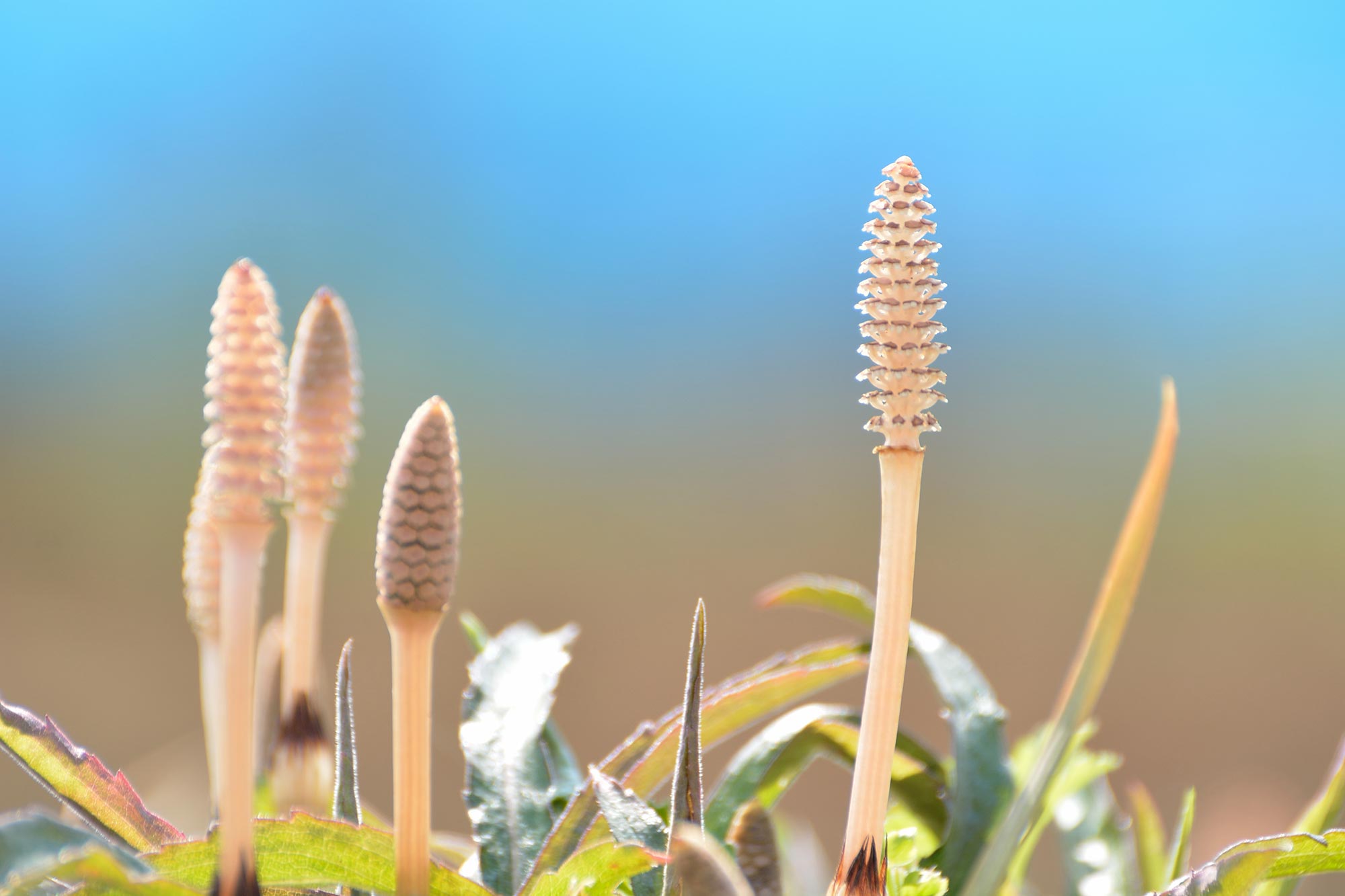
    Young Field Horsetail
    A strange plant with ancient roots may hold a hidden record of Earth’s forgotten climates. What researchers found inside its stems could reshape how we trace the planet’s past. Credit: Shutterstock

    Ancient horsetails may hold the key to understanding Earth’s prehistoric climate.

    A group of scientists from The University of New Mexico has discovered that an ancient and unusual plant could hold the key to revealing details about Earth’s distant climate history.

    The research, led by Zachary Sharp, a professor in UNM’s Department of Earth and Planetary Sciences, was recently published in the Proceedings of the National Academy of Sciences (PNAS). The study centers on horsetails, a family of hollow-stemmed plants that have survived on Earth for more than 400 million years.

    The researchers found that water moving through these plants experiences such a powerful natural purification process that its oxygen isotope composition closely matches that of meteorites and other materials from beyond our planet.

    “It’s a meter-high cylinder with a million holes in it, equally spaced. It’s an engineering marvel,” Sharp said. “You couldn’t create anything like this in a laboratory.”
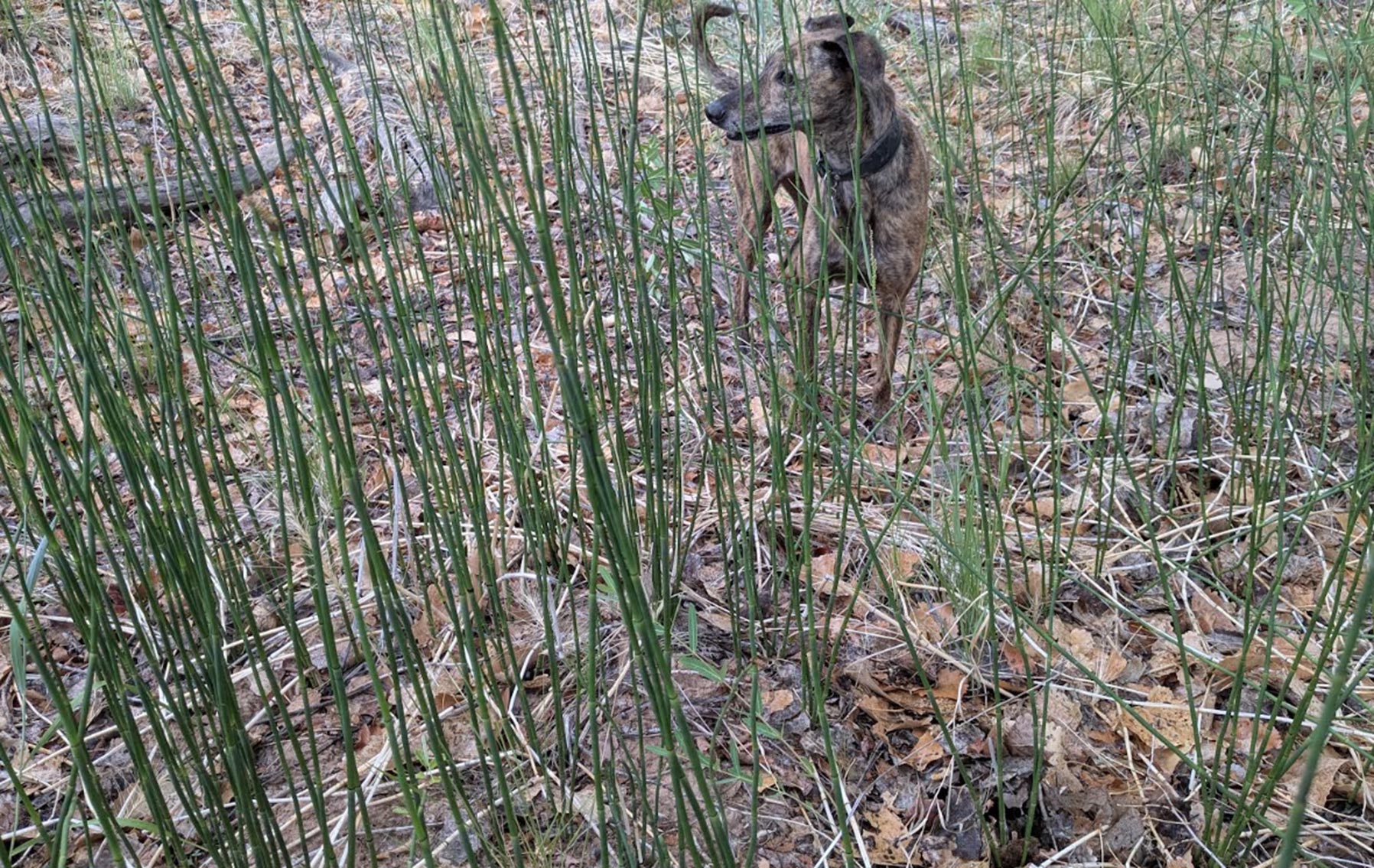
    Horsetail Along the Rio Grande
    Horsetail along the Rio Grande in Albuquerque, NM with researcher’s dog Coco as perspective. Credit: Zachary Sharp

    Decoding Desert Mysteries

    The team’s discovery sheds light on long-standing questions about oxygen isotope patterns in desert plants and provides scientists with a new way to study past climate conditions, particularly in dry regions.

    In water, oxygen isotopes serve as natural markers that help researchers trace where the water originated, how quickly plants release it through transpiration, and what the surrounding humidity levels might have been. However, because the heavier isotopes are present in only tiny quantities, it has been challenging to accurately model how their ratios shift under real-world environmental conditions.

    Sharp’s team collected samples from smooth horsetails (Equisetum laevigatum) along the Rio Grande in New Mexico, measuring how the isotope ratios evolved from the plant’s base to its tip. The uppermost water samples showed unprecedented readings, values that previously seemed to fall far outside of the range of anything on Earth.
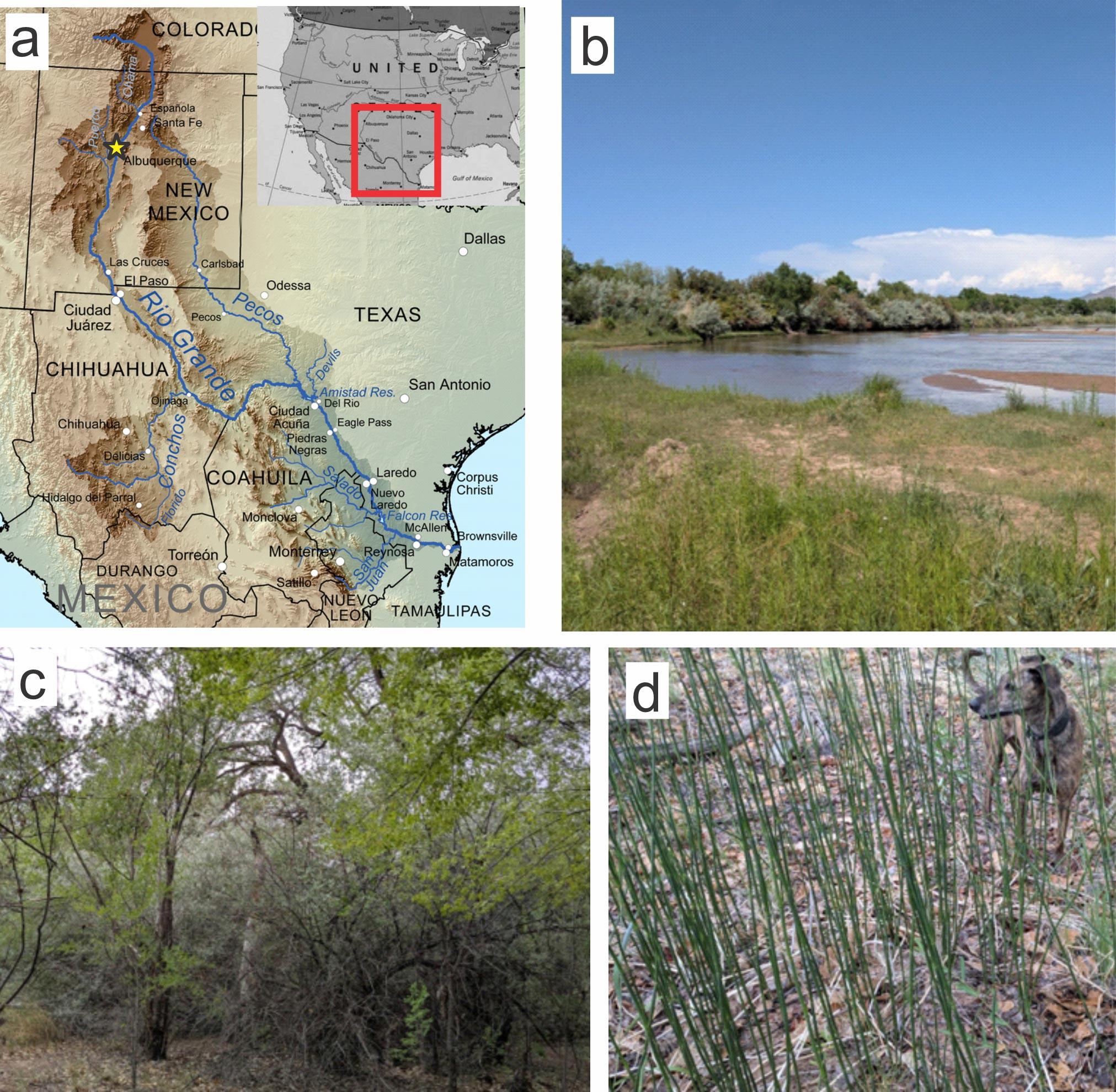
    Map of Rio Grande Field Sites
    A. Map of Rio Grande B. Picture of the Rio Grande C. Picture of Bosque D. Equisetum (horsetails ) found at the Rio Grande, showcasing Sharp’s dog Coco for scale. Credit: Zachary Sharp

    This past July, Sharp had the opportunity to present this research at the Goldschmidt Geochemistry Conference in Prague.

    “If I found this sample, I would say this is from a meteorite,” Sharp said during the conference. “But in fact, these values do go down to these crazy low levels.”

    Rewriting Climate Models

    The new data allowed the researchers to refine their models, offering fresh insights into previously unexplainable results from other desert plants. Sharp believes these improved models could be used to understand ancient climate systems as well.

    Fossilized horsetails, which once grew up to 30 meters tall, contain tiny silica structures called phytoliths that may preserve isotope ratios for millions of years. These phytoliths act as a “paleo-hygrometer,” or an ancient humidity gauge, according to Sharp.

    “We can now begin to reconstruct the humidity and climate conditions of environments going back to when dinosaurs roamed the Earth,” he said.

    This research adds to UNM’s growing contributions to geosciences and positions horsetails — some of nature’s oldest survivors — an unlikely but powerful climate storytellers.

    Reference: “Extreme triple oxygen isotope fractionation in Equisetum” by Zachary Sharp, Jordan Wostbrock, Anthony Gargano, Vincent Hare, Jessica Johnson, Thure Cerling, Payal Banerjee, Catherine Peshek, Cloe Knutson, Lauren Hartzell, Erick Cano, Elena Stiles, Kelley R. Bassett, Kira Holland, Michael H. Dowd, Jarunetr (Nadia) Sae-Lim, Teresa Dominguez, Dalton Bryant, Eduardo Di Marcantonio, Jensen Wainwright, Maxwell Horsford, Paul Botté, Catherine Gagnon, Paula J. Rudall and James Ehleringer, 28 October 2025, Proceedings of the National Academy of Sciences.
    DOI: 10.1073/pnas.2507455122

    Never miss a breakthrough: Join the SciTechDaily newsletter.
    Follow us on Google and Google News.

    Earth Science Evolutionary Biology Geochemistry Paleoclimatology Plant Science University of New Mexico
    Share. Facebook Twitter Pinterest LinkedIn Email Reddit

    Related Articles

    Scientists Discover 5,000-Year Climate Pulse Hidden in Earth’s Ancient Greenhouse World

    Unlocking Earth’s Ancient Secrets: New Study Rewrites Our Understanding of Earth’s Deep Carbon and Chlorine Cycles

    Evolution of Earth’s First Animals Caused Global Warming

    Lunar Rocks Reveal a Different Story About Earth’s Early Days

    Scientists Identify Key Ingredients When First Organisms Appeared on Earth

    Scientists Document a Surprising Trend in a Study on Extinctions

    Geochemists Suggest That Earth’s Mantle Varies in Composition

    Oxygen-Rich Iron Reservoirs Could Have Played a Crucial Role in the Creation of Life

    Nitrogen Pollution Is Altering Sensitive Ecosystems

    4 Comments

    1. Ken Towe on November 3, 2025 10:49 am

      Are they sure that the amorphous silica phytoliths haven’t been diagenticaly altered?

      Reply
      • Bruzote on November 5, 2025 7:51 am

        Well, the paper was presented at a conference, so I would think both the researchers and the audience were on top of that. Also, the takeaway here is that the fractionation changes along the length of the horsetails. Diagenesis wouldn’t change that discovery.

        Reply
    2. JDow on November 3, 2025 11:23 pm

      I wonder how much ancient horsetails have upset the oxygen ratios scientists have relied upon for their other analyses.
      {^_^}

      Reply
      • Bruzote on November 5, 2025 7:55 am

        Ha! But maybe that’s a basis for getting new grant money! 😀

        Reply
    Leave A Reply Cancel Reply

    • Facebook
    • Twitter
    • Pinterest
    • YouTube

    Don't Miss a Discovery

    Subscribe for the Latest in Science & Tech!

    Trending News

    Scientists Warn That This Common Pet Fish Can Wreck Entire Ecosystems

    Scientists Make Breakthrough in Turning Plastic Trash Into Clean Fuel Using Sunlight

    This Popular Supplement May Interfere With Cancer Treatment, Scientists Warn

    Scientists Finally Solved One of Water’s Biggest Mysteries

    Could This New Weight-Loss Pill Disrupt the Entire Market? Here’s What You Should Know About Orforglipron

    Earth’s Crust Is Tearing Open in Africa, and It Could Form a New Ocean

    Breakthrough Bowel Cancer Trial Leaves Patients Cancer-Free for Nearly 3 Years

    Natural Compound Shows Powerful Potential Against Rheumatoid Arthritis

    Follow SciTechDaily
    • Facebook
    • Twitter
    • YouTube
    • Pinterest
    • Newsletter
    • RSS
    SciTech News
    • Biology News
    • Chemistry News
    • Earth News
    • Health News
    • Physics News
    • Science News
    • Space News
    • Technology News
    Recent Posts
    • The Most Effective Knee Arthritis Treatments Aren’t What You Expect
    • Scientists Develop Bioengineered Chewing Gum That Could Help Fight Oral Cancer
    • Popular Weight-Loss Drugs Found To Cut Heart Attack and Stroke Risk
    • After 37 Years, the World’s Longest-Running Soil Warming Experiment Uncovers a Startling Climate Secret
    • NASA Satellite Captures First-Ever High-Res View of Massive Pacific Tsunami
    Copyright © 1998 - 2026 SciTechDaily. All Rights Reserved.
    • Science News
    • About
    • Contact
    • Editorial Board
    • Privacy Policy
    • Terms of Use

    Type above and press Enter to search. Press Esc to cancel.