
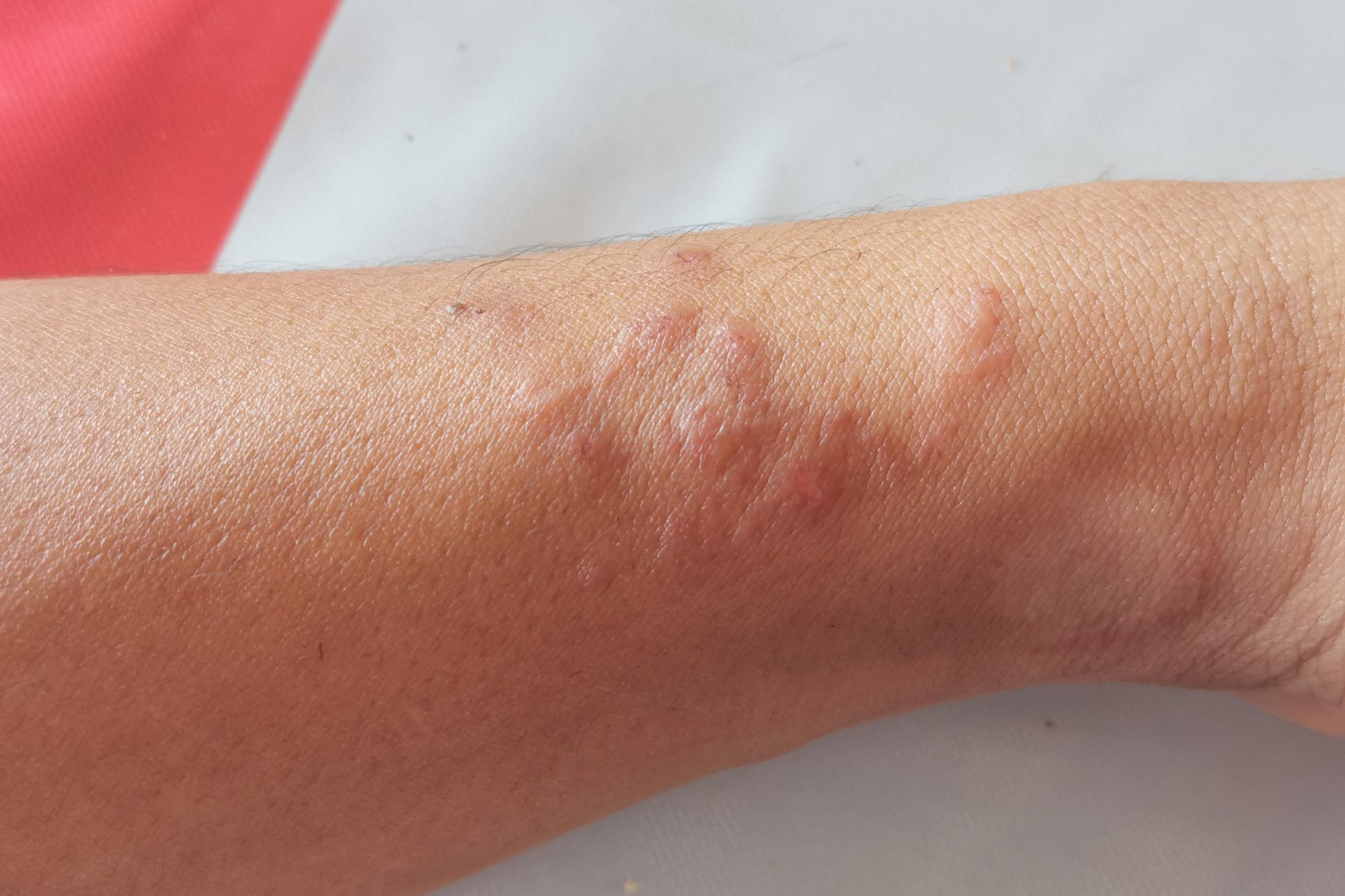
A parasitic worm can invade without you feeling a thing by shutting down pain and itch signals in the skin. Scientists hope this discovery will lead to better pain treatments and new ways to block infection.
A recent study in The Journal of Immunology has revealed that a parasitic worm can interfere with nerve activity in the skin, allowing it to slip past the body’s defenses without being noticed. Scientists believe this ability likely developed over time as a survival strategy. They also suggest that identifying the molecules behind this nerve suppression could eventually help in creating new types of pain medication.
Schistosomiasis, the disease linked to this parasite, is caused by helminths (a category of parasitic worms). People can become infected when their skin comes into contact with contaminated water during activities such as swimming, washing clothes, or fishing. In these conditions, the worm’s larvae are able to penetrate the skin. Unlike many bacteria and parasites that trigger pain, itching, or visible irritation, this worm often goes undetected by the immune system.
Why This Worm Doesn’t Trigger Pain
Researchers at Tulane School of Medicine set out to uncover why the species Schistosoma mansoni does not cause pain or itching during skin penetration. They discovered that the worm reduces the activity of TRPV1+, a protein that communicates sensations of heat, pain, and itching to the brain. This protein, found in sensory neurons, also influences immune responses in situations ranging from infections and allergies to cancer, autoimmune conditions, and even hair growth.
Their experiments showed that S. mansoni produces molecules that dampen TRPV1+ activity, stopping these nerve signals before they reach the brain. By doing so, the worm can enter and establish itself in the skin with little interference from the body’s defenses. The researchers suggest that this nerve-blocking ability likely evolved to give the parasite a better chance of survival.
Potential for New Pain Therapies
“If we identify and isolate the molecules used by helminths to block TRPV1+ activation, it may present a novel alternative to current opioid-based treatments for reducing pain,” said Dr. De’Broski R. Herbert, Professor of Immunology at Tulane School of Medicine, who led the study. “The molecules that block TRPV1+ could also be developed into therapeutics that reduce disease severity for individuals suffering from painful inflammatory conditions.”
The study also found that TRPV1+ is necessary for initiating host protection against S. mansoni. TRPV1+ activation leads to the rapid mobilization of immune cells, including gd T cells, monocytes, and neutrophils, that induce inflammation. This inflammation plays a crucial role in host resistance to the larval entry into the skin. These findings highlight the importance of neurons that sense pain and itching in successful immune responses.
Toward Preventive Treatments
“Identifying the molecules in S. mansoni that block TRPV1+ could inform preventive treatments for schistosomiasis. We envision a topical agent which activates TRPV1+ to prevent infection from contaminated water for individuals at risk of acquiring S. mansoni,” said Dr. Herbert.
In this study, mice were infected with S. mansoi and evaluated for their sensitivity to pain as well as the role of TRPV1+ in preventing infection. Researchers next plan to identify the nature of the secreted or surface-associated helminth molecules that are responsible for blocking TRPV1+ activity and specific gd T cell subsets that are responsible for immune responses. The researchers also seek to further understand the neurons that helminths have evolved to suppress.
Reference: “TRPV1+ neurons promote cutaneous immunity against Schistosoma mansoni” by Juan M Inclan-Rico, Adriana Stephenson, Camila M Napuri, Heather L Rossi, Li-Yin Hung, Christopher F Pastore, Wenqin Luo and De’Broski R Herbert, 7 August 2025, The Journal of Immunology.
DOI: 10.1093/jimmun/vkaf141
Never miss a breakthrough: Join the SciTechDaily newsletter.
Follow us on Google and Google News.