

UCR researchers discovered that diets high in soybean oil can damage gut health and increase susceptibility to inflammatory bowel disease.
The oil’s main component, linoleic acid, feeds harmful E. coli while depleting beneficial gut bacteria. It also weakens the intestinal barrier, allowing toxins to leak into the bloodstream. The team recommends limiting soybean oil intake and favoring healthier fats like olive or avocado oil.
Soybean Oil Linked to More Than Just Obesity and Diabetes
High intake of soybean oil has already been associated with conditions such as obesity and diabetes and may also play a role in autism, Alzheimer’s disease, anxiety, and depression. Researchers are now adding ulcerative colitis, a type of inflammatory bowel disease (IBD) marked by ongoing inflammation of the large intestine, to that list of possible concerns.
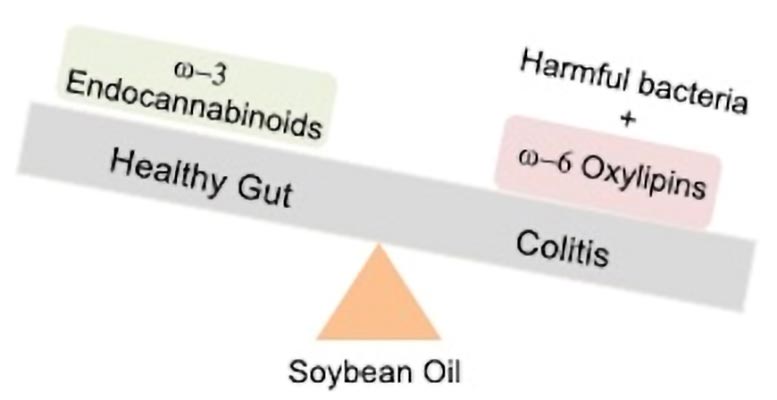
Scientists at the University of California, Riverside, studied the gut health of mice that were fed a soybean oil-rich diet for up to 24 weeks. Their findings showed a decline in beneficial bacteria and a rise in harmful bacteria (specifically, adherent invasive Escherichia coli), conditions known to contribute to colitis.
Gut Microbiome Disruption
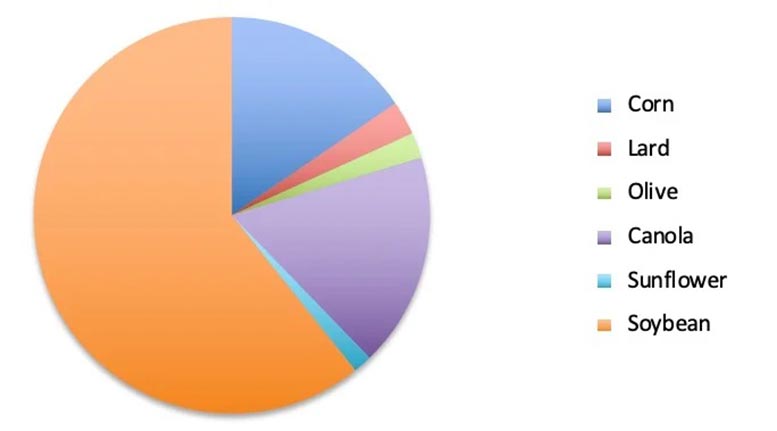
Soybean oil is the most widely consumed edible oil in the United States and is gaining popularity in other major countries, including Brazil, China, and India. In the U.S., large-scale soybean cultivation began in the 1970s primarily for animal feed, and soybean oil became an abundant byproduct. Because soybeans are inexpensive and easy to grow, their use expanded rapidly.
“Our work challenges the decades-old thinking that many chronic diseases stem from the consumption of excess saturated fats from animal products, and that, conversely, unsaturated fats from plants are necessarily more healthful,” said Poonamjot Deol, an assistant professional researcher in the Department of Microbiology and Plant Pathology and a co-corresponding author of the study, which was published in Gut Microbes, an open-access journal.

Rethinking “Healthy” Fats
According to Deol, the main concern is linoleic acid, a key component of soybean oil.
“While our bodies need 1-2% of linoleic acid daily, based on the paleodiet, Americans today are getting 8-10% of their energy from linoleic acid daily, most of it from soybean oil,” she said. “Excessive linoleic acid negatively affects the gut microbiome.”
Deol and her colleagues discovered that diets high in soybean oil promote the growth of adherent invasive E. coli in the gut. This bacterium uses linoleic acid as a carbon source to fuel its growth. At the same time, several beneficial bacterial species are unable to tolerate linoleic acid and die off, allowing harmful bacteria to thrive. In humans, adherent invasive E. coli has been linked to IBD.
“It’s the combination of good bacteria dying off and harmful bacteria growing out that makes the gut more susceptible to inflammation and its downstream effects,” Deol said. “Further, linoleic acid causes the intestinal epithelial barrier to become porous.”
When the Gut Barrier Breaks Down
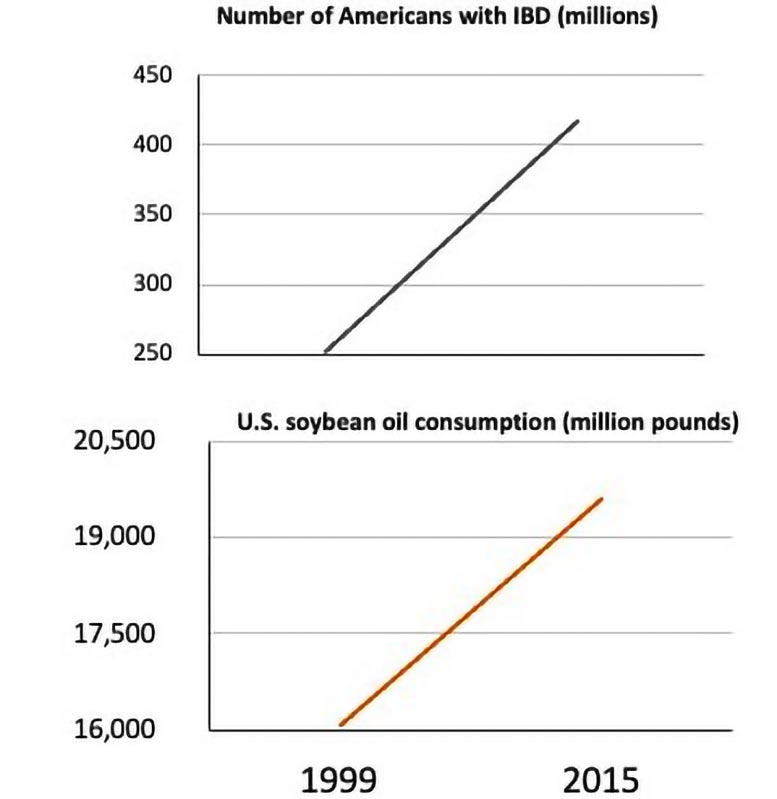
The barrier function of the intestinal epithelium is critical for maintaining a healthy gut; when disrupted, it can lead to increased permeability or leakiness. Toxins can then leak out of the gut and enter the bloodstream, greatly increasing the risk of infections and chronic inflammatory conditions, such as colitis. The researchers note that the increase in IBD parallels the increase in soybean oil consumption in the U.S. and hypothesize the two may be linked.
Rethinking the “Good Fat” Narrative
Toxicologist Frances M. Sladek, a professor of cell biology and a co-corresponding author on the research paper, recalled that heart disease was linked to saturated fats in the late 1950s.
“Since studies showed that saturated fats can be unhealthy, it was assumed that all unsaturated fats are healthy,” she said. “But there are different types of unsaturated fats, some of which are healthful. For example, the unsaturated fat fish oil is well known to have many beneficial health effects. People, therefore, assumed that soybean oil is perfectly safe and healthier to consume than other types of oils, without actually doing a direct comparison as we have done.”
Sladek noted that linoleic acid is an essential fatty acid. The soybean oil the researchers used in their experiments had 19% linoleic acid. The American Heart Association recommends 5 to 10% of daily calories be from omega-6 polyunsaturated fatty acids, such as linoleic acid, in order for the heart to remain healthy. Many seed oils – safflower and sunflower, for example — are sources of linoleic acid. Animal fat can also be a source.
The Double-Edged Role of Linoleic Acid
“Every animal has to get linoleic acid from the diet,” Sladek said. “No animal can make it. A small amount of it is needed by the body. But just because something is needed does not mean a lot of it is good for you. Several membranes in the body, in the brain, for example, require linoleic acid for the cells to function properly. If all we ate was saturated fats, our cell membranes would become too rigid and not function properly. Future studies are needed to determine the tipping point for how much daily linoleic acid consumption is safe.”
According to Sladek and Deol, olive oil, which has lower amounts of linoleic acid, is a healthier oil to consume.
“Olive oil, the basis of the Mediterranean diet, is considered to be very healthy; it produces less obesity and we have now found that, unlike soybean oil, it does not increase the susceptibility of mice to colitis,” Sladek said.
Olive Oil vs. Soybean Oil
James Borneman, a professor of microbiology and plant pathology at UCR and a co-corresponding author on the paper, is an expert on the gut microbiome. He has collaborated at UCR with several groups on research projects, including studies investigating how gut microbes prevent obese people from losing weight. For the current study, he teamed up with Deol and Sladek to examine the gut microbes of the mice that were fed a high soybean oil diet.
“Adherent invasive E. coli contributes to IBD in humans, and the fact that we find this E. coli in these mice is concerning,” he said. “Sometimes, it can be unclear how research done in mice translates to humans, but in this study it is fairly clear.”
The research team was also surprised to find that the mice fed on a high soybean oil diet showed a reduction in the gut of endocannabinoids, cannabis-like molecules made naturally by the body to regulate a wide variety of physiological processes. At the same time, the gut showed an increase in oxylipins, which are oxygenated polyunsaturated fatty acids that regulate inflammation.
Surprising Molecular Shifts
“We previously found that oxylipins in the liver correlate with obesity,” Deol said. “Some oxylipins have also been found to be bioactive in colitis studies. The bottom line of our current study is that a soybean oil-enriched diet similar to the current American diet causes oxylipin levels to increase in the gut and endocannabinoid levels to decrease, which is consistent with IBD in humans.”
Most processed foods in the U.S. contain soybean oil, perhaps explaining why many Americans have more than the recommended daily allowance for linoleic acid. Further, most restaurants in the U.S. use soybean oil because it is relatively inexpensive.
Soybean Oil in Everyday Foods
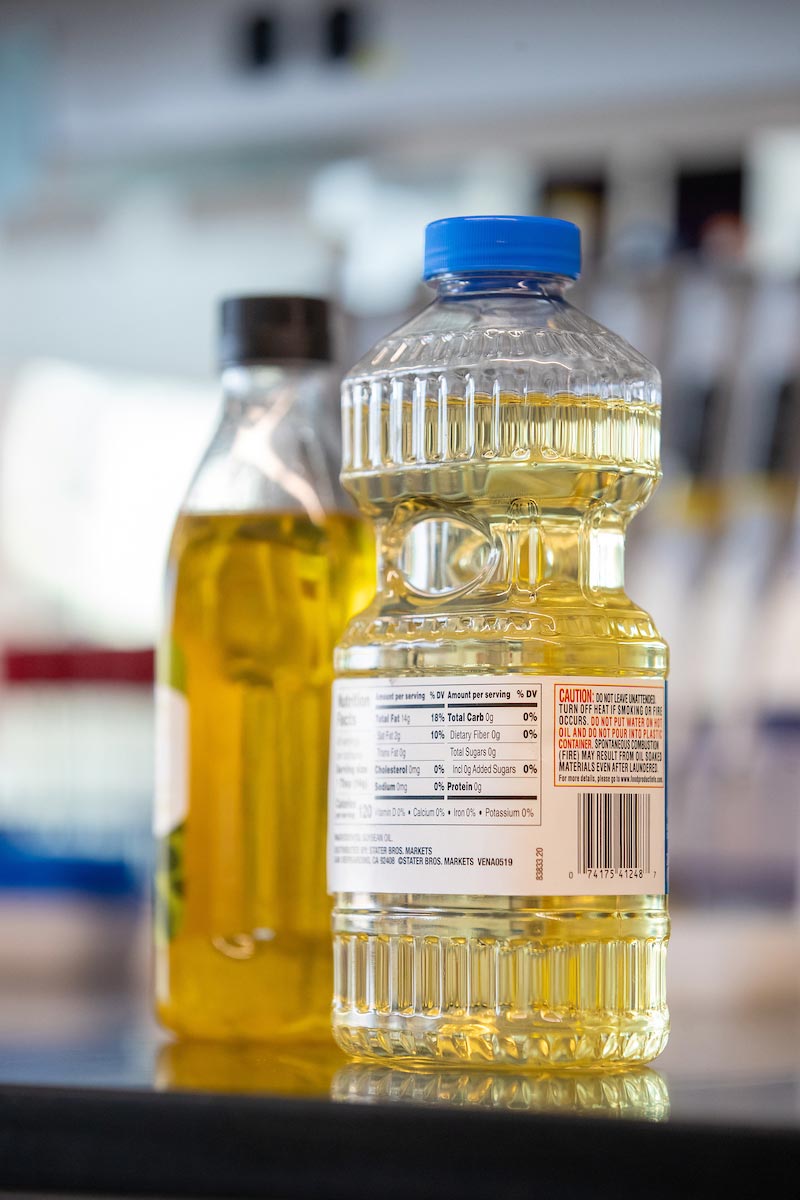
“Try to stay away from processed foods,” Sladek advised. “When you buy oil, make sure you read the nutrition facts label. Air fryers are a good option because they use very little oil.”
The researchers use olive oil for cooking and salads. Other healthy options for cooking, they said, are coconut oil and avocado oil. They cautioned that corn oil, on the other hand, has the same amount of linoleic acid as soybean oil.
“We recommend keeping track of the soybean oil in your diet to make sure you are not consuming excessive linoleic acid,” Deol said. “That is our take-home message.”
Reference: “Diet High in Linoleic Acid Dysregulates the Intestinal Endocannabinoid System and Increases Susceptibility to Colitis in Mice” by Poonamjot Deol, Paul Ruegger, Geoffrey D. Logan, Ali Shawki, Jiang Li, Jonathan D. Mitchell, Jacqueline Yu, Varadh Piamthai, Sarah H. Radi, Sana Hasnain, Kamil Borkowski, John W. Newman, Declan F. McCole, Meera G. Nair, Ansel Hsiao, James Borneman and Frances M. Sladek, 3 July 2023, Gut Microbes.
DOI: 10.1080/19490976.2023.2229945
Deol, Sladek, and Borneman were joined by Paul Ruegger, Geoffrey D. Logan, Ali Shawki, Jiang Li, Jonathan D. Mitchell, Jacqueline Yu, Varadh Piamthai, Sarah H. Radi, Sana Hasnain, Declan F. McCole, Meera G. Nair, and Ansel Hsiao of UCR; and Kamil Borkowski and John W. Newman of UC Davis.
The research was funded by grants from the National Institutes of Health, Crohn’s and Colitis Foundation, American Gastroenterological Association, UCR Metabolomics Core Seed Grant, UC Davis West Coast Metabolomics Center, and U.S. Department of Agriculture.
A version of this article was originally published in July 2023.
Editor’s Note (October 17, 2025)
This story covers a 2023 UCR study in Gut Microbes (DOI: 10.1080/19490976.2023.2229945) showing that high-soybean oil (linoleic-acid–rich) diets made mice more susceptible to colitis by disrupting the gut microbiome and weakening the intestinal barrier. As of October 2025, the core findings remain relevant: subsequent animal research generally supports microbiome disruption and inflammation with high linoleic-acid intake, while human data are still mixed and observational. Experts emphasize overall diet context (especially the omega-6 to omega-3 balance) and moderation rather than eliminating any single food. Practical takeaway: limit ultra-processed foods, be mindful of high-linoleic-acid oils, and consider lower-linoleic options like olive oil alongside a varied, whole-food diet.
Never miss a breakthrough: Join the SciTechDaily newsletter.
Follow us on Google and Google News.
2 Comments
The fact they dont just call it “soybean oil” and its marketed as vegetable oil should tell you something.
Sunflower oil ain’t much better either.
There’s a compelling evidence that introduction of these omega-6 rich oils into any particular country was quickly followed by an increased incidence of diabetes, obesity, certain types if cancer, as well as certain types of impaired vision. These oils are worse than carbo-hydrates, in fact.