
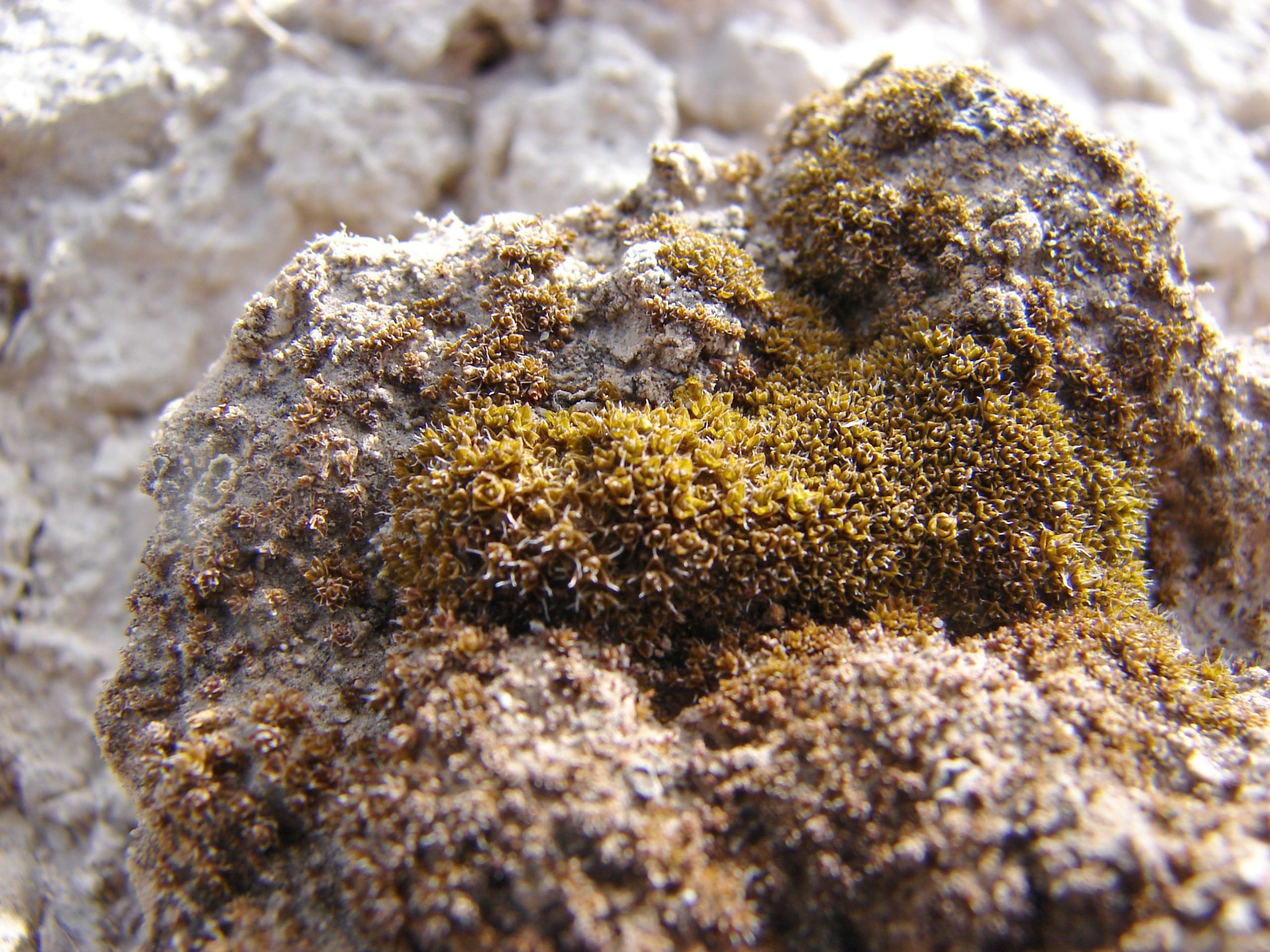
The desert moss Syntrichia caninervis could be key to colonizing Mars due to its ability to survive extreme cold, radiation, and Mars-like conditions, potentially supporting sustainable extraterrestrial habitats.
The desert moss Syntrichia caninervis shows great promise for Mars colonization due to its remarkable resilience to extreme conditions that are typically fatal for most life forms. Known for its drought tolerance, researchers reported in the journal The Innovation that this moss can also withstand freezing temperatures as low as −196°C, high levels of gamma radiation, and simulated Martian environments with these combined stressors. In all scenarios, prior dehydration appeared to enhance the moss’s ability to endure these harsh conditions.
“Our study shows that the environmental resilience of S. caninervis is superior to that of some of highly stress-tolerant microorganisms and tardigrades,” write the researchers, who include ecologists Daoyuan Zhang and Yuanming Zhang and botanist Tingyun Kuang of the Chinese Academy of Sciences. “S. caninervis is a promising candidate pioneer plant for colonizing extraterrestrial environments, laying the foundation for building biologically sustainable human habitats beyond Earth.”
Testing in Extreme Conditions
A small number of previous studies have tested the ability of microorganisms, algae, lichens, and plant spores to withstand the extreme environments of outer space or Mars, but this is the first study to test whole plants.
Syntrichia caninervis is a common moss species with a widespread global distribution. It grows in remarkably extreme desert environments including Tibet, Antarctica, and the circumpolar regions as part of the biological soil crust—a widespread and resilient type of ground cover often found in arid lands. Given the moss’s ability to survive extreme environmental conditions, the researchers decided to test its limits in the lab.
To test the moss’s cold tolerance, the researchers stored plants at −80°C (in an ultra-cold freezer) for 3 and 5 years and at −196°C (in a liquid nitrogen tank) for 15 and 30 days. In all cases, the plants regenerated when they were defrosted, though their rebound was less rapid compared to control specimens that had been dehydrated but not frozen, and plants that were not dehydrated prior to freezing rebounded more slowly than plants that were dried, and then frozen.
The moss also demonstrated the ability to survive gamma radiation exposure that would kill most plants, and doses of 500 Gy even seemed to promote the plants’ growth. For comparison, humans experience severe convulsions and death when exposed to around 50 Gy. “Our results indicate that S. caninervis is among the most radiation-tolerant organisms known,” the researchers write.
Mars Simulation Trials
Finally, the researchers tested the moss’s ability to endure Mars-like conditions using the Chinese Academy of Sciences’ Planetary Atmospheres Simulation Facility. The simulator’s Martian conditions included air composed of 95% CO2, temperatures that fluctuated from −60°C to 20°C, high levels of UV radiation, and low atmospheric pressure. Dried moss plants achieved a 100% regeneration rate within 30 days after being subjected to the Martian conditions for 1, 2, 3, and 7 days. Hydrated plants, which were only subjected to the simulator for one day, also survived, though they regenerated more slowly than their desiccated counterparts.
“Although there is still a long way to go to create self-sufficient habitats on other planets, we demonstrated the great potential of S. caninervis as a pioneer plant for growth on Mars,” the researchers write. “Looking to the future, we expect that this promising moss could be brought to Mars or the Moon to further test the possibility of plant colonization and growth in outer space.”
Reference: “The extremotolerant desert moss Syntrichia caninervis is a promising pioneer plant for colonizing extraterrestrial environments” by Xiaoshuang Li, Wenwan Bai, Qilin Yang, Benfeng Yin, Zhenlong Zhang, Banchi Zhao, Tingyun Kuang, Yuanming Zhang and Daoyuan Zhang, 1 July 2024, The Innovation.
DOI: 10.1016/j.xinn.2024.100657
This research was supported by the Chinese Academy of Sciences, the Leading Talents in Technological Innovation Program, and The Third Xinjiang Scientific Expedition Program.
Never miss a breakthrough: Join the SciTechDaily newsletter.
Follow us on Google and Google News.
3 Comments
The trick may be in preventing the introduction of exotic organisms from Earth and taking over everything with no natural controls or competition. Let’s hope we manage to map the geology thoroughly before it is covered in moss and lichen.
Only if you plant it in Elon Musk’s ass.
Do you really feel that was a civil contribution to understanding science news?