
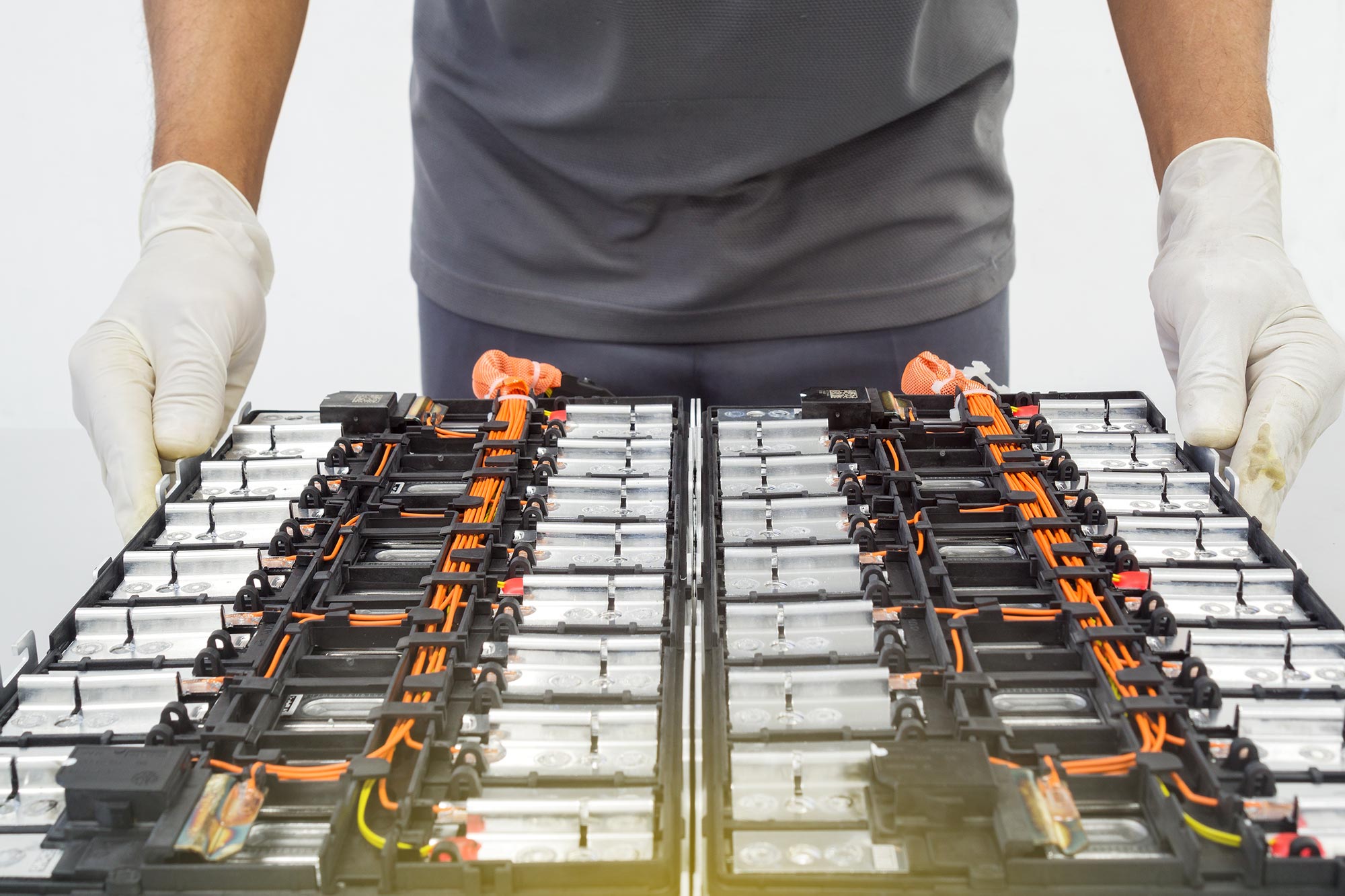
A new study found that a commercial sodium-ion battery from China rivals Tesla’s batteries in manufacturing quality and several key performance benchmarks.
With improvements to cold-weather charging and energy density, sodium-ion batteries could become a more affordable alternative for electric vehicles and grid-scale energy storage.
Sodium-Ion Battery Shows Tesla-Like Quality in New Study
A commercially available sodium-ion battery already being used in cars and large-scale energy storage systems in China has achieved manufacturing quality and performance levels comparable to Tesla’s lithium-ion batteries, according to research published in the Cell Press journal Cell Reports Physical Science.
The findings suggest sodium-ion technology is advancing faster than many expected. Although the battery still needs improvements in cold-weather charging and energy density, researchers believe it could become a lower-cost alternative for future electric vehicles by replacing lithium with sodium, an abundant and widely available material.
“The combination of good uniformity, high power capability, and strong low‑temperature performance makes these cells attractive for stationary storage, grid services, and shorter‑range or commercial vehicles where potential lower cost and resource availability matter more than maximum driving range,” says Moritz Schütte, a battery researcher at RWTH Aachen University in Germany.
Comparing Sodium-Ion Batteries to Tesla Cells
To evaluate how Hina’s sodium-ion batteries stack up against Tesla’s more advanced lithium-ion cells, Schütte and his colleagues analyzed 120 battery cells using a non-destructive method known as impedance spectroscopy to measure manufacturing consistency.
The team also tested each battery under realistic operating conditions, measuring power and energy performance across a range of charging currents and temperatures from −20 °C to 45 °C. X-ray imaging allowed the researchers to examine the batteries’ internal structures before they disassembled the cells to study electrode dimensions, material composition, and microscopic features.
Their analysis revealed a sophisticated design that includes a tabless, double-aluminum current collector. This layout lowers electrical resistance, promotes more even temperature distribution, and closely resembles the architecture used in current Tesla batteries.
“We were positively surprised by how uniform the cells are,” says Schütte.
Strengths and Remaining Challenges
Despite its impressive performance, the sodium-ion battery still falls short of the best lithium-ion batteries in several important areas. The researchers found that while the battery delivers better high-power performance than expected for an early commercial sodium-ion product, charging at low temperatures remains a significant challenge.
“The high-power performance was better than one might expect from an early commercial sodium-ion product,” says Schütte. “However, for applications that require frequent charging at low ambient temperatures, appropriate thermal management or operating strategies will be important because low-temperature charging remains a clear weakness.”
The team also detected unexpectedly high and uneven concentrations of copper in parts of the battery’s cathode.
According to Schütte, this “raises interesting questions about its role in performance and aging,” adding, “It will be exciting to see future sodium-ion technologies that are free of nickel and copper, as well, while achieving competitive energy density.”
Why Sodium Could Become an Important Battery Material
Sodium offers several potential advantages over lithium because it is far more abundant and easier to source worldwide. That could lower raw material costs for battery manufacturers while reducing long-term supply chain concerns.
The study also found that sodium-ion batteries maintain strong performance under heavy loads in cold conditions, making them promising candidates for stationary energy storage as well as vehicles operating in colder climates.
“However, today’s commercial sodium-ion cells generally have lower energy density than the best lithium-ion cells, and the technology is less mature overall,” said Schütte.
Next Steps for Sodium-Ion Technology
The researchers now plan to improve how sodium-ion batteries charge at temperatures below 0°C, with the goal of making charging both safer and more efficient in freezing conditions.
Future work will also focus on refining the materials used inside the batteries.
“Advances in hard-carbon anodes and electrolyte formulations may be especially promising,” he said.
Reference: “Cell teardown and characterization of a Hina commercial sodium-ion battery” by Christian Siebert, Moritz Schütte, Jonas Rinner, Gereon Stahl, Jan Lin, Katharina Quade, Heinrich Ditler, Christiane Rahe and Dirk Uwe Sauer, 28 May 2026, Cell Reports Physical Science.
DOI: 10.1016/j.xcrp.2026.103323
The research was supported by the Federal Ministry of Research, Technology, and Space and the Federal Ministry for Economic Affairs and Energy.
Never miss a breakthrough: Join the SciTechDaily newsletter.
Follow us on Google and Google News.