
Close Menu
    Facebook X (Twitter) Instagram
    SciTechDaily
    • Biology
    • Chemistry
    • Earth
    • Health
    • Physics
    • Science
    • Space
    • Technology
    Facebook X (Twitter) Pinterest YouTube RSS
    SciTechDaily
    Home»Space»This Week @NASA: An Update on Artemis I Moon Mission, Webb Images Distant Planet
    Space

    This Week @NASA: An Update on Artemis I Moon Mission, Webb Images Distant Planet

    By NASASeptember 3, 2022No Comments5 Mins Read
    Facebook Twitter Pinterest Telegram LinkedIn WhatsApp Email Reddit
    Share
    Facebook Twitter LinkedIn Pinterest Telegram Email Reddit
    This Week NASA Artemis I Moon Mission Update
    This week at NASA: the latest on NASA’s Artemis I Moon mission, a groundbreaking achievement for NASA’s James Webb Space Telescope, and a newly scheduled launch date for the next commercial crew mission.

    An update on NASA’s Artemis I Moon mission …

    A first for NASA’s James Webb Space Telescope …

    And a new target launch date for the next commercial crew mission … a few of the stories to tell you about – This Week at NASA!

    An Update on NASA’s Artemis I Moon Mission

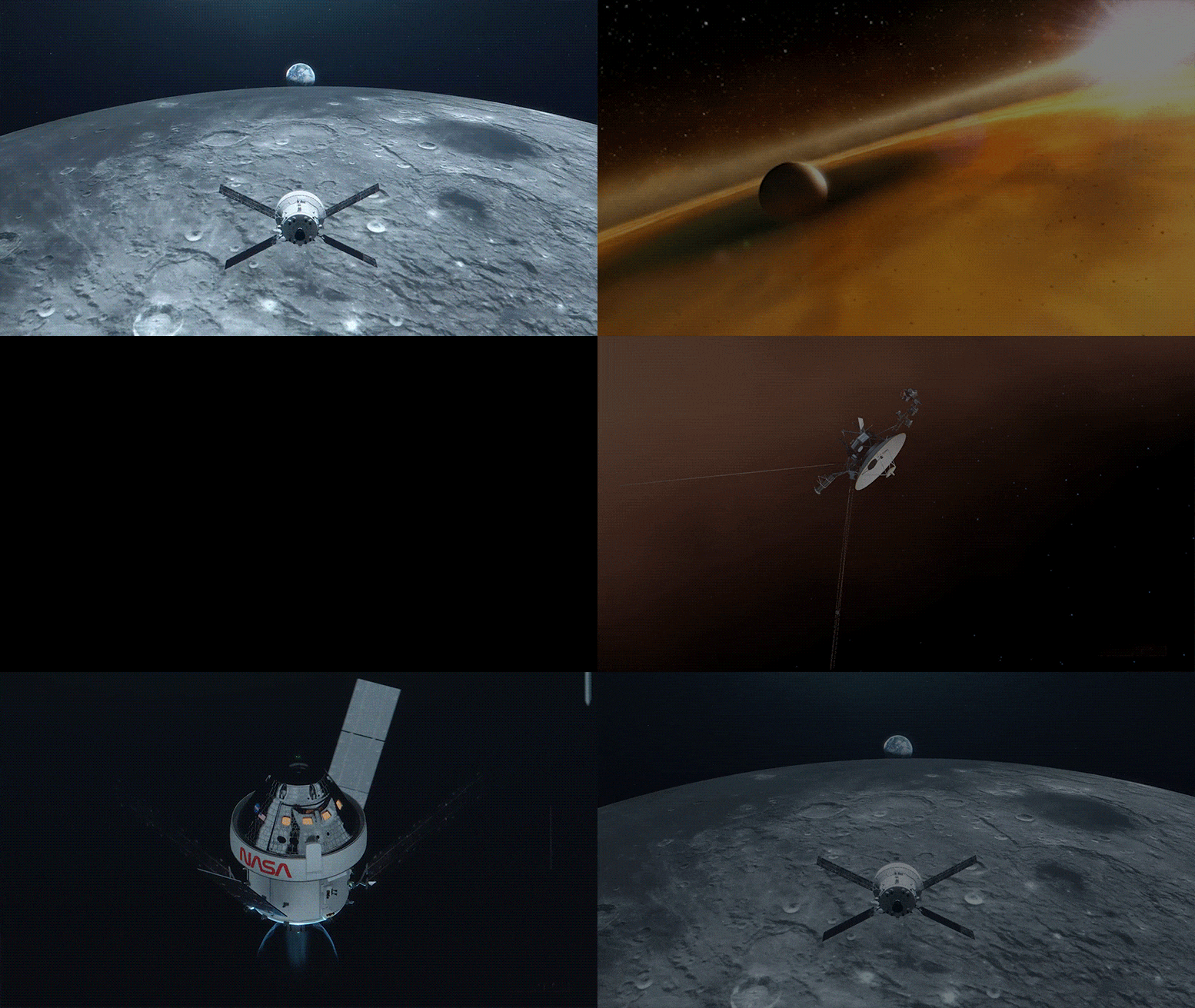
    NASA’s uncrewed Artemis I flight test is the first integrated test of NASA’s Orion spacecraft, Space Launch System, or SLS, the most powerful rocket in the world, and the ground systems at the agency’s Kennedy Space Center in Florida. Over the course of about 38 days, the mission will see Orion travel thousands of miles beyond the Moon, farther than any spacecraft built for humans has ever flown. Artemis I is the first in a series of increasingly complex missions that will provide a foundation for human deep space exploration and demonstrate NASA’s commitment and capability to extend human existence to the Moon and beyond.
    Webb Exoplanet HIP 65426 b
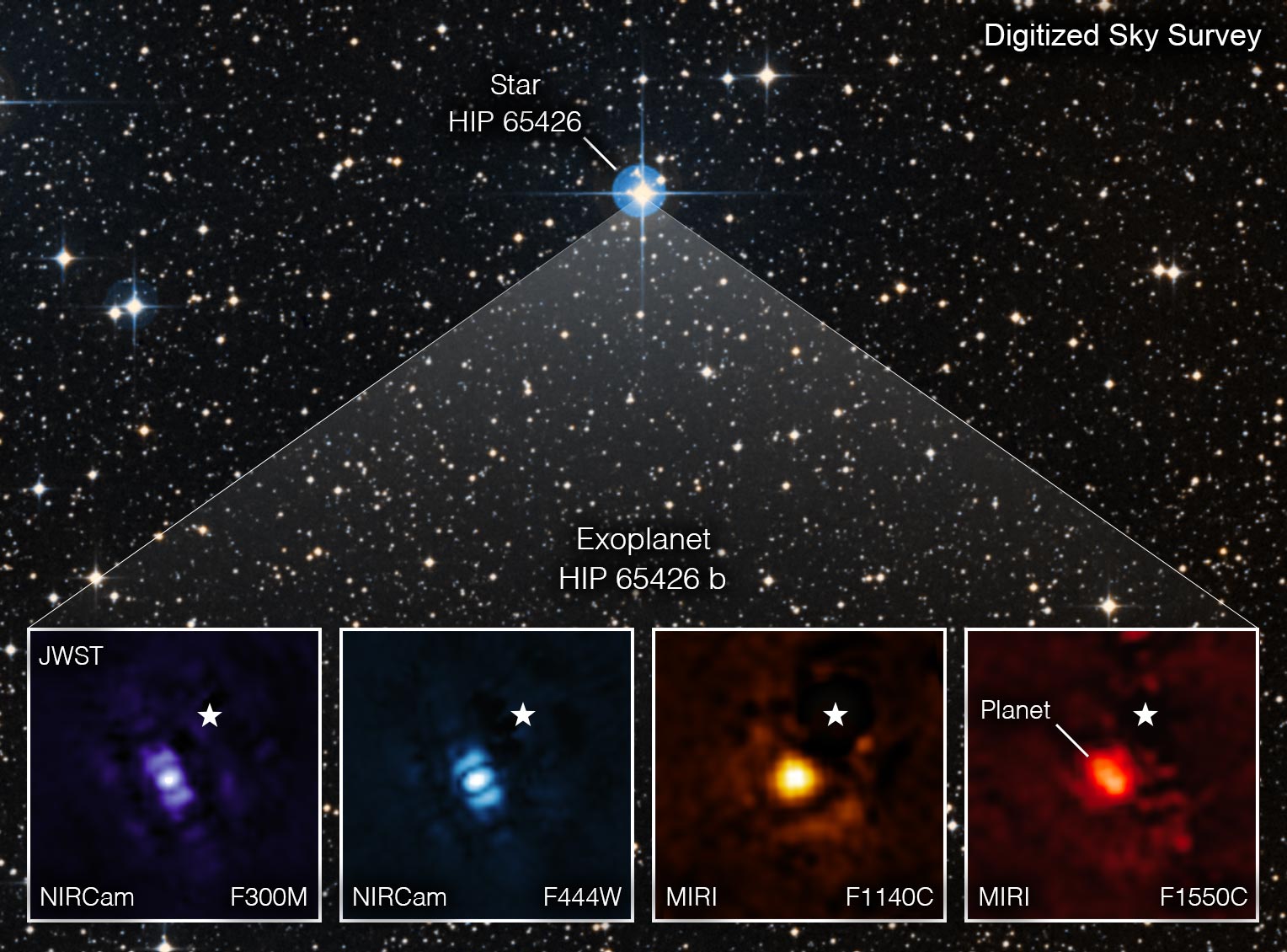
    This image shows the exoplanet HIP 65426 b in different bands of infrared light, as seen from the James Webb Space Telescope: purple shows the NIRCam instrument’s view at 3.00 micrometers, blue shows the NIRCam instrument’s view at 4.44 micrometers, yellow shows the MIRI instrument’s view at 11.4 micrometers, and red shows the MIRI instrument’s view at 15.5 micrometers. These images look different because of the ways the different Webb instruments capture light. A set of masks within each instrument, called a coronagraph, blocks out the host star’s light so that the planet can be seen. The small white star in each image marks the location of the host star HIP 65426, which has been subtracted using the coronagraphs and image processing. The bar shapes in the NIRCam images are artifacts of the telescope’s optics, not objects in the scene. Credit: ASA/ESA/CSA, A Carter (UCSC), the ERS 1386 team, and A. Pagan (STScI).

    Webb Space Telescope’s First Direct Image of an Exoplanet

    For the first time, astronomers have used NASA’s James Webb Space Telescope to take a direct image of an exoplanet. The planet, called HIP65426 b, is a gas giant about five to 10 times the mass of Jupiter. Taking direct images of exoplanets is challenging because stars are so much brighter than planets. But Webb has an instrument called a coronagraph that blocks out starlight and makes it possible to capture direct images of certain exoplanets. This ability could help Webb reveal more information than ever before about exoplanets.
    Crew-5 Chief Training Officer Poses With Crew
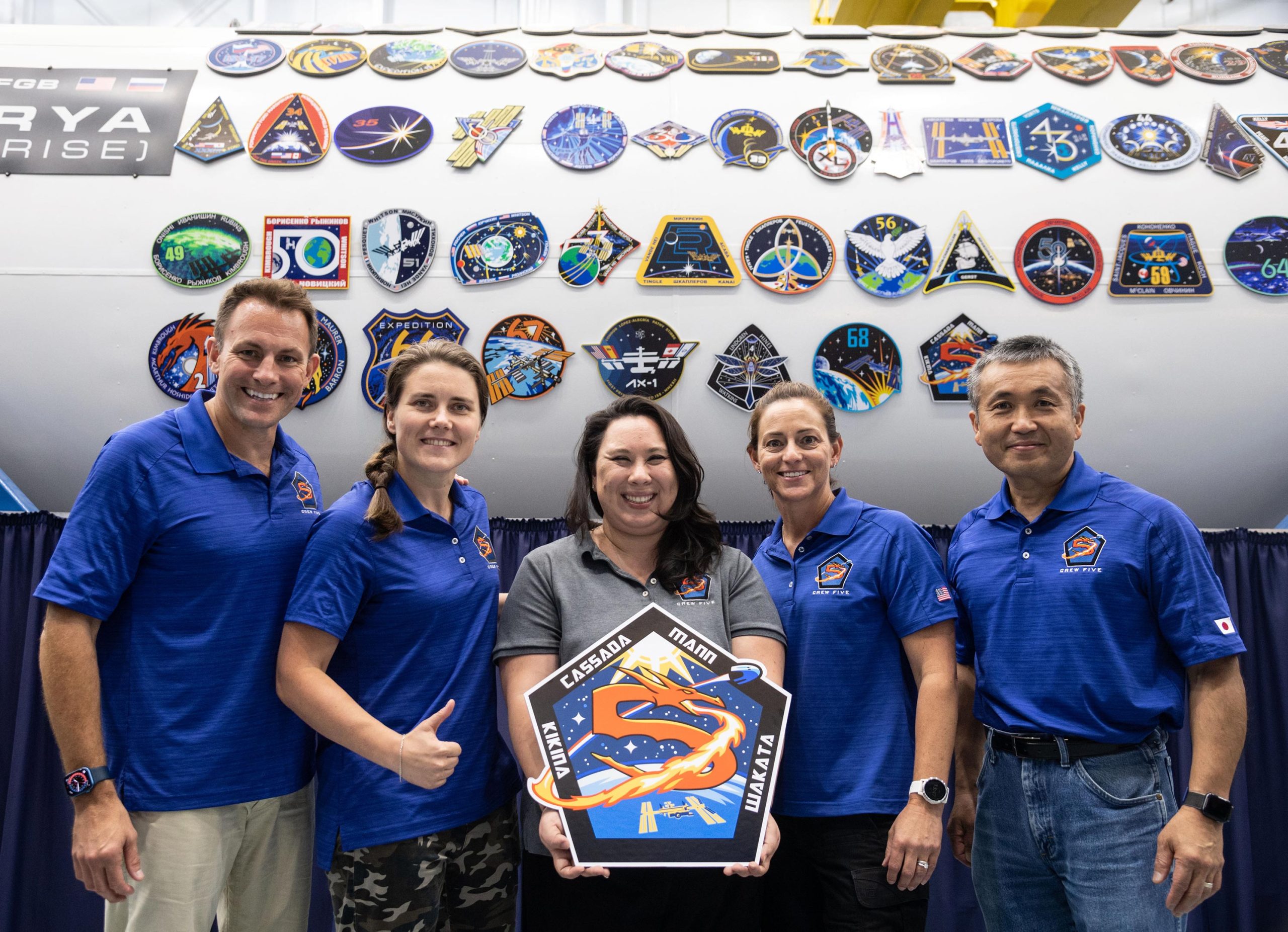
    Cassie Rodriquez, center, Crew-5 chief training officer at Johnson Space Center, poses with mission crew, from left to right, Josh Cassada, Anna Kikina, Nicole Mann, and Koichi Wakata. Credit: Johnson Space Center

    NASA, SpaceX Adjust Crew-5 Launch Date

    NASA and SpaceX are now targeting no earlier than 12:45 p.m. EDT on October 3 for the launch of the agency’s Crew-5 mission to the International Space Station. The launch date adjustment was made to accommodate spacecraft traffic coming to and leaving from the space station. NASA astronauts Nicole Mann and Josh Cassada, Japan Aerospace Exploration Agency astronaut Koichi Wakata, and Roscosmos cosmonaut Anna Kikina will launch aboard a SpaceX Crew Dragon spacecraft from NASA’s Kennedy Space Center.
    SWOT Satellite
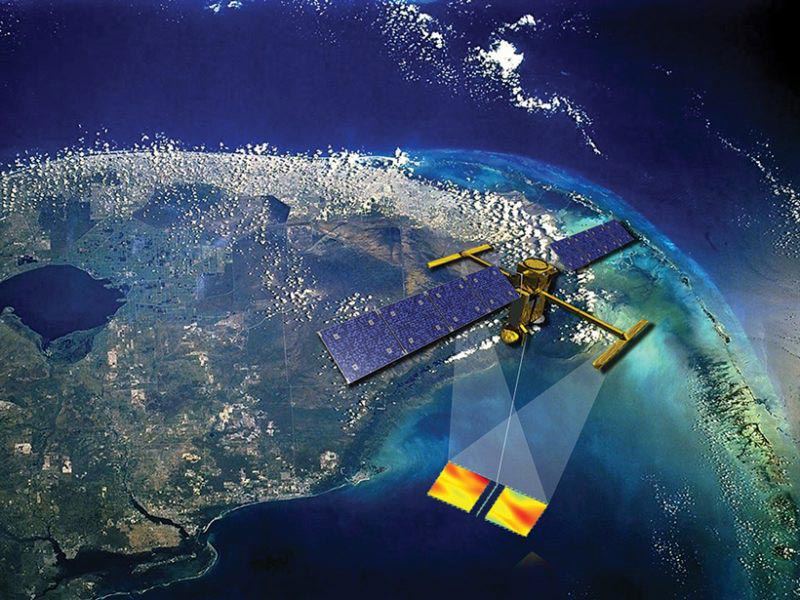
    An artist’s impression of the future SWOT satellite making sea surface observations, even through clouds. Credit: Center National D’Etudes Spatiales (CNES)

    New Target Launch Date for Water and Ocean Observing Mission

    NASA, the French space agency, CNES, and SpaceX are now targeting December 5, for the launch of the Surface Water and Ocean Topography, or SWOT, satellite. SWOT is the first satellite mission that will survey nearly all water on Earth, at an unprecedented level of detail. The mission will help inform water equity and water management decisions, provide new insights into Earth’s water and energy cycle, and help prepare communities for rising seas and changing coastlines resulting from climate change.

    Voyager Spacecraft Illustration
    Voyager’s high-gain antenna, seen at the center of this illustration of the NASA spacecraft, is one component controlled by the attitude articulation and control system (AACS). Credit: NASA/JPL-Caltech

    Engineers Solve Data Glitch on Voyager 1 Spacecraft

    Engineers have fixed an issue that was affecting data from NASA’s Voyager 1 spacecraft. They discovered that Voyager 1’s attitude articulation and control system, or AACS, a critical system aboard the probe, had been sending garbled telemetry data through an onboard computer that stopped working correctly years ago. Consequently, that computer corrupted the information. Voyager 1 and Voyager 2 are celebrating an anniversary. The twin probes, which were launched weeks apart in late August and early September of 1977, have been exploring our solar system for 45 years.

    That’s what’s up this week @NASA

    Never miss a breakthrough: Join the SciTechDaily newsletter.
    Follow us on Google and Google News.

    NASA
    Share. Facebook Twitter Pinterest LinkedIn Email Reddit

    Related Articles

    NASA’s Psyche Could Reveal the Secret Inside This Metal World

    Mars Was Once Warm and Wet. NASA’s ESCAPADE Is About to Learn What Went Wrong

    NASA’s Curiosity Rover Discovers Spiderweb Ridges on Mars That Hint at Ancient Water

    NASA’s DART Impact Actually Changed an Asteroid System’s Orbit Around the Sun

    NASA’s Webb Telescope Reveals an Eerie Nebula That Looks Like a Giant Brain

    “At First, We Thought Something Was Wrong” – NASA DART Mission Reveals a Cosmic Snowball Fight

    What’s Really Happening on Venus? Scientists Reveal Surprising Patterns

    “Ghost Galaxy” Made of 99% Dark Matter Discovered 300 Million Light Years Away

    Hubble Captures a Dying Star Cracking Open the Egg Nebula

    Leave A Reply Cancel Reply

    • Facebook
    • Twitter
    • Pinterest
    • YouTube

    Don't Miss a Discovery

    Subscribe for the Latest in Science & Tech!

    Trending News

    Your Blood Pressure Reading Could Be Wrong Because of One Simple Mistake

    Astronomers Stunned by Ancient Galaxy With No Spin

    Physicists May Be on the Verge of Discovering “New Physics” at CERN

    Scientists Solve 320-Million-Year Mystery of Reptile Skin Armor

    Scientists Say This Daily Walking Habit May Be the Secret to Keeping Weight Off After Dieting

    New Therapy Rewires the Brain To Restore Joy in Depression Patients

    Giant Squid Detected off Western Australia in Stunning Deep-Sea Discovery

    Popular Sugar-Free Sweetener Linked to Liver Disease, Study Warns

    Follow SciTechDaily
    • Facebook
    • Twitter
    • YouTube
    • Pinterest
    • Newsletter
    • RSS
    SciTech News
    • Biology News
    • Chemistry News
    • Earth News
    • Health News
    • Physics News
    • Science News
    • Space News
    • Technology News
    Recent Posts
    • A Crucial Atlantic Current Is Weakening and Weather Could Change Worldwide
    • Scientists Stunned As Volcano Removes Methane From the Air
    • Scientists Discover Signs Africa May Be Splitting Apart Beneath Zambia
    • New Stroke Study Challenges Decades-Old Medical Beliefs
    • These Simple Plant Foods Are Linked to Lower Blood Pressure
    Copyright © 1998 - 2026 SciTechDaily. All Rights Reserved.
    • Science News
    • About
    • Contact
    • Editorial Board
    • Privacy Policy
    • Terms of Use

    Type above and press Enter to search. Press Esc to cancel.