
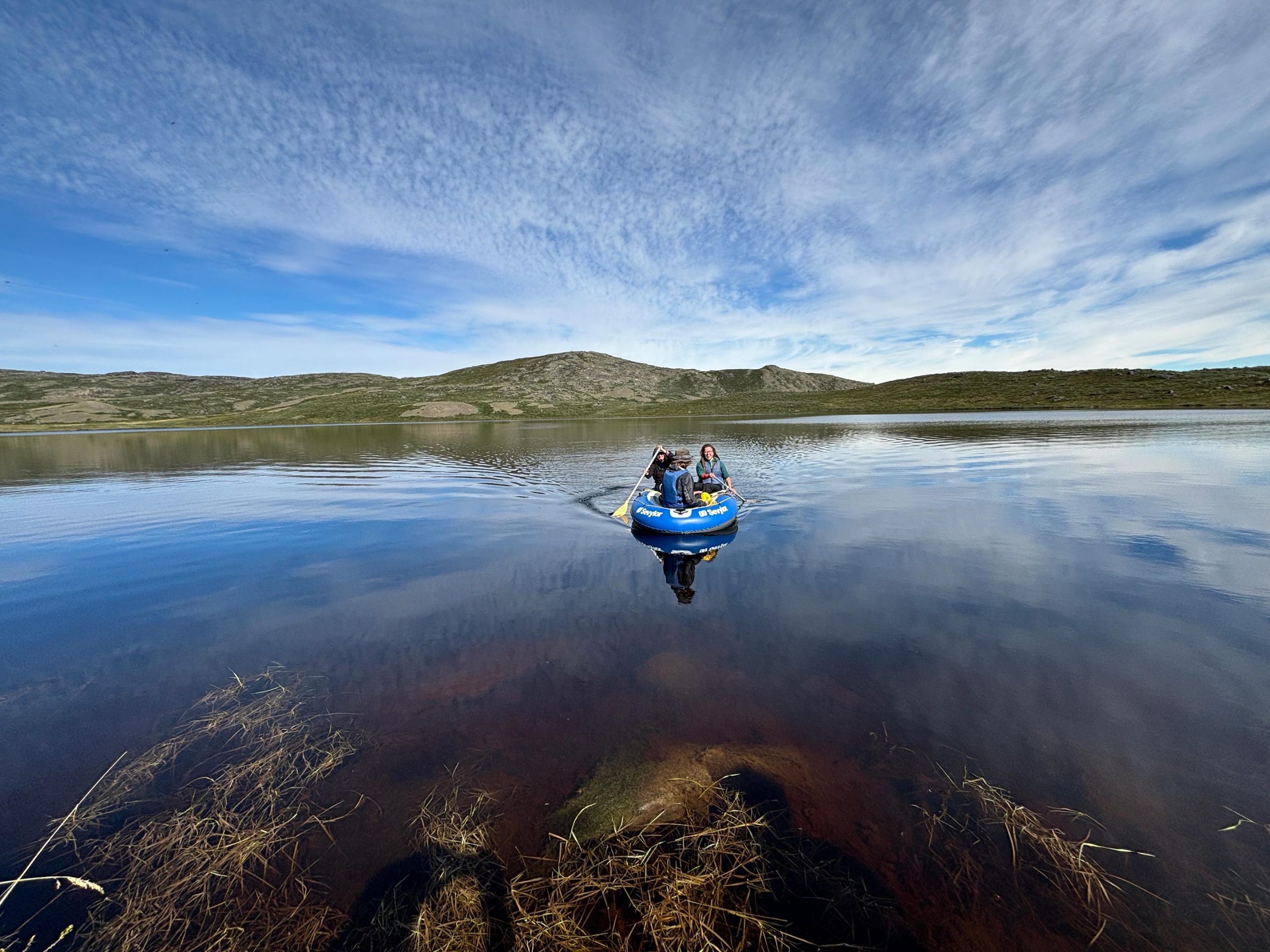
A shocking transformation has gripped West Greenland, where thousands of once-pristine blue lakes turned brown after an extreme climate event.
Heavy rainfall and thawing permafrost flushed carbon and metals into the waters, disrupting the region’s delicate ecological balance. Instead of storing carbon, the lakes now release massive amounts of greenhouse gases, marking a dramatic and rapid environmental shift that would normally take centuries. Scientists warn that these changes could have lasting consequences for both the Arctic and the global climate
Thousands of Lakes Turn Brown Amid Record Heat
West Greenland is home to tens of thousands of clear, blue lakes that supply drinking water and help absorb carbon from the atmosphere. However, after two months of record-breaking heat and rainfall in the fall of 2022, approximately 7,500 of these lakes turned brown, began releasing carbon instead of storing it, and experienced a decline in water quality, according to a new study.
A research team led by Jasmine Saros, a Fulbright Distinguished Arctic Scholar and Associate Director of the University of Maine’s Climate Change Institute, found that these extreme climate events triggered an ecological shift that “pushed Arctic lakes across a tipping point.” Their study, published in the Proceedings of the National Academy of Sciences (PNAS), revealed that by July 2023 — less than a year later — the physical, chemical, and biological characteristics of these lakes had drastically changed. This level of transformation would typically take centuries, Saros noted. Their findings were shared with local communities.
How Rainfall and Thawing Permafrost Fueled the Transformation
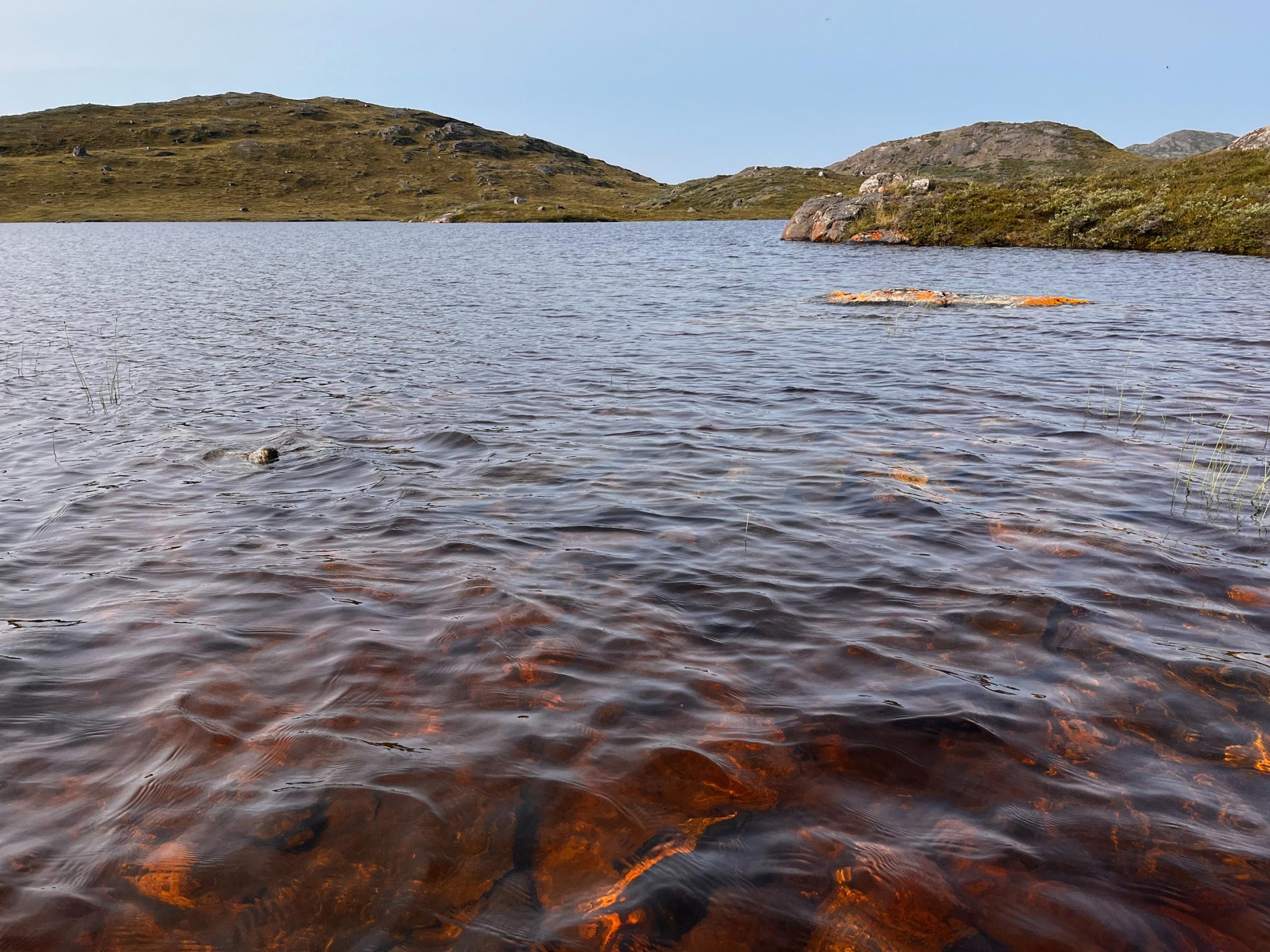
Greenland usually experiences snowfall in the fall, but the unusual heat caused precipitation to fall as rain instead. The warmth also thawed permafrost — frozen ground that holds large amounts of organic carbon — releasing carbon, iron, magnesium, and other elements into the environment. As record-breaking rainfall swept across the region, these newly exposed materials were washed from the soil into the lakes, turning them brown.
Unprecedented Speed of Change in West Greenland’s Lakes
Saros, also a professor of professor of paleolimnology and lake ecology with UMaine’s School of Biology and Ecology, said the rapid alteration in West Greenland’s lakes contrasts with the slow, multi-decade-long browning experienced in lakes across the Northern Hemisphere, including those in Maine.
“The magnitude of this and the rate of change were unprecedented,” Saros said.
Health Risks and Water Quality Concerns
The influx of dissolved organic carbon and nutrients from the permafrost can promote bacteria growth and produce an undesirable taste and odor in the water, in addition to altering color, Saros said. Increased exposure to metals released from permafrost can also cause health problems. By identifying the type and quantity of organic and inorganic materials entering the lakes following the climate extreme events, residents in the surrounding area can better evaluate how to treat their water.
“The increased dissolved organic material can interact with drinking water treatment processes to produce chlorination byproducts called trihalomethanes, which may be carcinogenic,” Saros said.
A Drastic Shift in the Carbon Cycle
With altered physical and chemical properties, the lakes became more opaque and less light was able to penetrate their surface. The reduction in light decreased the biodiversity of plankton, which had significant ramifications for the region’s carbon cycle. Researchers found a decrease in phytoplankton that absorb carbon dioxide from the atmosphere through photosynthesis, and an increase in plankton that break down and release carbon. Instead of sequestering carbon dioxide in the summer, the lakes have become a source of it, with a 350% increase in the flux of this greenhouse gas from them.
“The likely explanation is that so much organic carbon mobilized from the landscape into the surface water, and the organic carbon was available for aquatic organisms to use,” Saros said. “Because the lakes turned so brown, it reduced the light coming into the system, which tends to favor organisms that use organic carbon pathways instead of photosynthesis.”
Atmospheric Rivers and Their Intensifying Impact
Researchers concluded that the rise in heat and precipitation was caused by several atmospheric rivers. An atmospheric river is a long, narrow column of water vapor that produces intense rain or snow when it makes landfall. They affect much of the world, and existing climate models predict that by the end of the century, they will become 50-290% more frequent in Greenland, western North America, east Asia, western Europe and Antarctica.
Saros said additional research and monitoring could help determine how these lakes may recover, providing greater insight into lake dynamics in the region. Further studies can also help scientists examine browning lakes across the Northern Hemisphere, how they may recover and potential treatment and intervention.
“It was such an overwhelming climate force that drove all the lakes to respond in the same way,” Saros said. “When it comes to recovery, will it be the same across lakes or different?”
The Power of Long-Term Data Collection
The study was made possible through extensive data collection obtained through annual water sampling and remote sensors in the lakes that operate year-round.
“Our study demonstrates the power of long-term observation. I’ve been working in this area since 2013, and have worked on many projects here. But in the background, my colleagues and I have been trying to maintain a consistent data set of observations,” Saros said. “That’s how we were able to capture and quantify the effects of this extreme climate event.”
Reference: “Abrupt transformation of West Greenland lakes following compound climate extremes associated with atmospheric rivers” by Jasmine E. Saros, Václava Hazuková, Robert M. Northington, Grayson P. Huston, Avery Lamb, Sean Birkel, Ryan Pereira, Guillaume Bourdin, Binbin Jiang and Suzanne McGowan, 21 January 2025, Proceedings of the National Academy of Sciences.
DOI: 10.1073/pnas.2413855122
In addition to Saros, UMaine Ph.D. students Václava “Vendy” Hazuková, Grayson Huston, Avery Lamb, and Guillaume Bourdin co-authored the study.
Other co-authors include Sean Birkel, Maine state climate scientist and assistant professor with the Climate Change Institute and University of Maine Cooperative Extension; Robert Northington from Elizabethtown College in Pennsylvania; Ryan Pereira from Heriot-Watt University in Edinburgh, Binbin Jiang from Zhejiang University of Science and Technology in China; and Suzanne McGowan from the Netherlands Institute of Ecology. Saros said Binbin and Northington were former postdoctoral associates at UMaine.
“Many Ph.D. students were involved in this work, and were totally instrumental in this work,” she said.
Never miss a breakthrough: Join the SciTechDaily newsletter.
Follow us on Google and Google News.
4 Comments
Terbitity is not a measure of pristine..and causes are presumed
” — releasing carbon, iron, magnesium, and other elements into the environment.”
NO! The meltwater transported sediment composed of organic detritus and mineral grains containing, in part, those elements. When molecules composed of common elements are present on the surface, it is usually because they have low solubility in water, and that means low toxicity because they have low bio-availability. The author has unjustifiably alarmed readers with an inaccurate characterization of what is taking place. If locals depend on surface water for drinking or domestic purposes, perhaps they should drill a well or install a rudimentary filtration system for these currently rare events. However, I wouldn’t be surprised if some of the elders in the communities can remember similar events in the past and they should be asked how they dealt with it then.
“…, and an increase in plankton that break down and release carbon.”
Surely the author isn’t suggesting that the plankton are releasing trails of little pellets of graphite, inasmuch as carbon dioxide was mentioned immediately before this sentence. [For those who are humor impaired, I’m not being serious — just sarcastic about the sophomoric writing.]
“Saros said additional research and monitoring could help determine how these lakes may recover, …”
They are already ‘recovering’ and the evidence for that is the CO2 being released. Bacteria are decomposing the organic material released from the permafrost and will, given sufficient time until a similar future event, exhaust the food source for the bacteria.
I observe that the small island in the second photo’ has patches of orange covering it. I interpret that as being lichen that was growing along the edges of the lake, as also observed in the bluff behind the island, and is in the foreground underwater, affecting the appearance of the water; probably it is the submerged lichen that is responsible for the ‘brown” appearance of the water. I predict that by next Summer, the suspended sediments that have temporarily decreased visibility, will have settled out and restored the visibility, and the water level will have decreased to where the shoreline lichen are again above water.
“Many Ph.D. students were involved in this work, and were totally instrumental in this work,”
It shows. A university education isn’t what it used to be!
The brown algae appears to be Macro Algae / Weeds.
Diatoms are also brown, but when they grow water is a uniform brown and the bloom does not last long, just a few days.
Can you please confirm if the algae is Macro Algae or Weeds or Diatoms?
I would normally expect aquatic micro-algae, of whatever color, to be fairly well mixed, therefore being relatively uniform, as you mention for diatoms. Yet, the second photo shows what appears to be clear water, with the strong coloration in the foreground coming from bright reflectors on the shallow bottom. How would you explain the bright orange reflections from the island on the right-hand side of the picture? The description of the event that resulted in runoff contaminating the lakes implies that the lakes are at a higher level than usual. It is then difficult to explain what the bright-orange patches above the water line are if not lichen.