
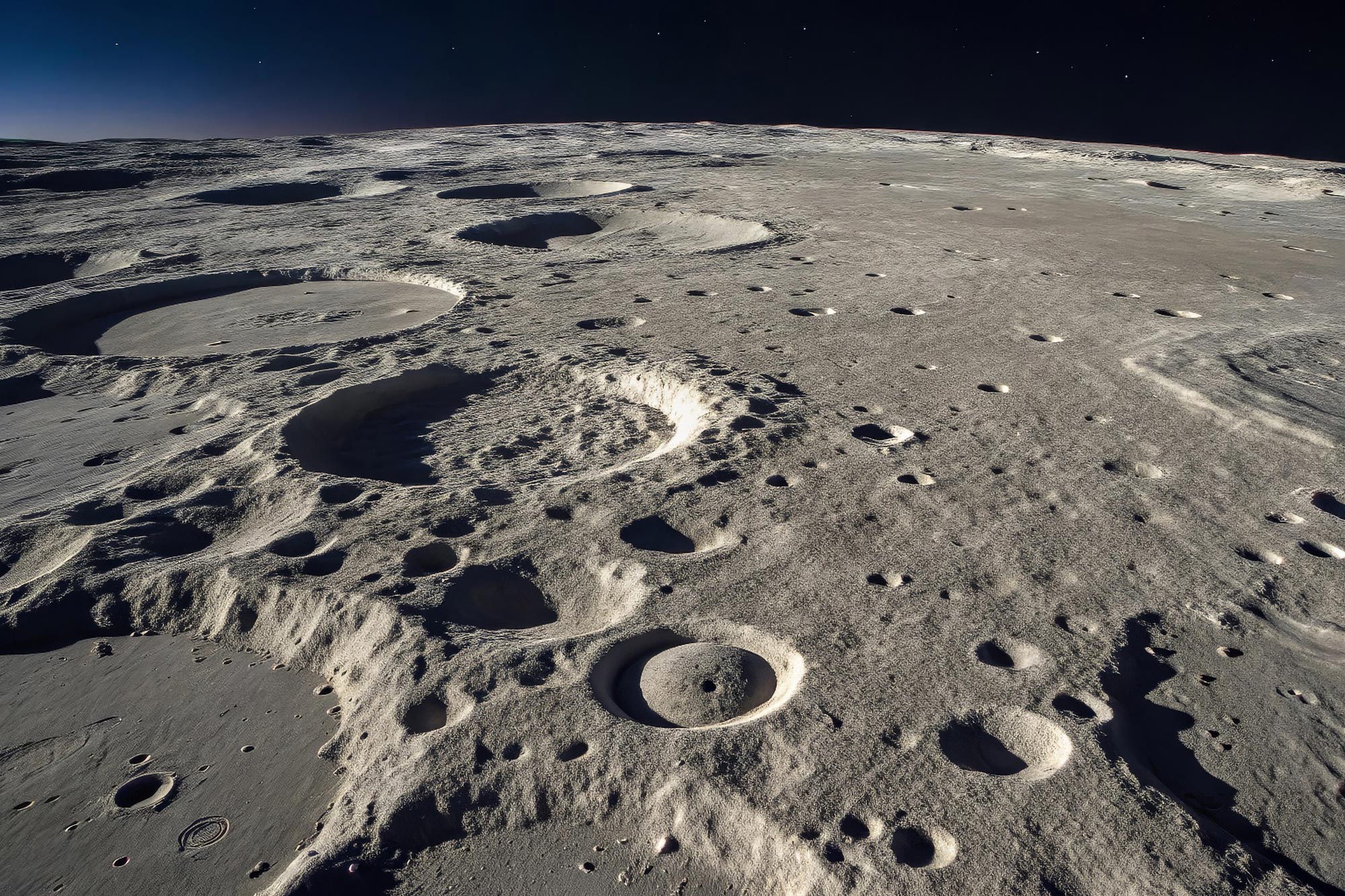
Scientists have narrowed down when three massive collisions reshaped the Moon, bringing them closer to understanding why its Earth-facing side looks so different from its far side.
Billions of years ago, a collision powerful enough to melt enormous quantities of lunar rock created the Moon’s largest impact basin. Subsequent collisions broke apart and scattered some of that ancient material across the surface, leaving behind a geological record that scientists are now piecing together.
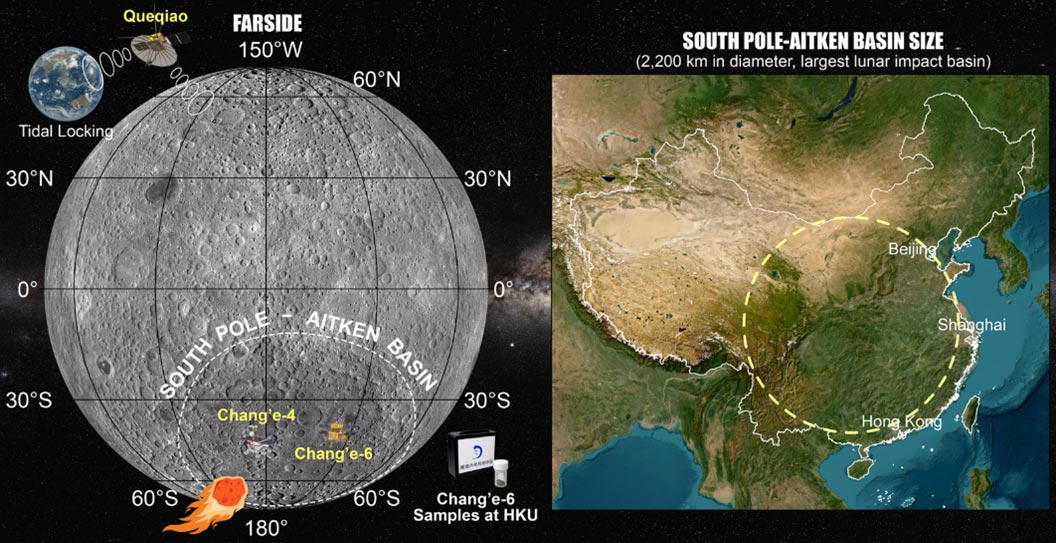
Located on the Moon’s far side, the South Pole-Aitken (SPA) basin is one of the oldest and largest impact structures in the solar system. Understanding its history could help explain why the Moon’s near and far sides are so different, what lies beneath its surface, and when major collisions occurred during its early evolution.
An international research team led by Professor Guochun Zhao, Mok Sau-King, a professor in the Department of Earth and Planetary Sciences (DEPS) at the University of Hong Kong (HKU), and Dr. Yuqi Qian, the study’s first author, has identified two types of magnesium-rich rocks with remarkably different origins. Published in Science Advances, the research also establishes a clearer timeline of the major impacts that shaped the region.
First samples from the far side
For decades, the basin remained largely unexplored. That changed in 2019, when Chang’e-4 completed the first successful landing on the Moon’s far side, followed in 2024 by Chang’e-6, which brought the first rock samples from this largely unexplored region back to Earth.
Using Chang’e-6 samples allocated to HKU DEPS and surface measurements from both missions, the researchers obtained the first direct geological evidence from the two landing sites for reconstructing the basin’s impact history. Satellite observations and numerical simulations helped them trace the origins of rocks across the wider basin.
Two origins for ancient lunar rocks
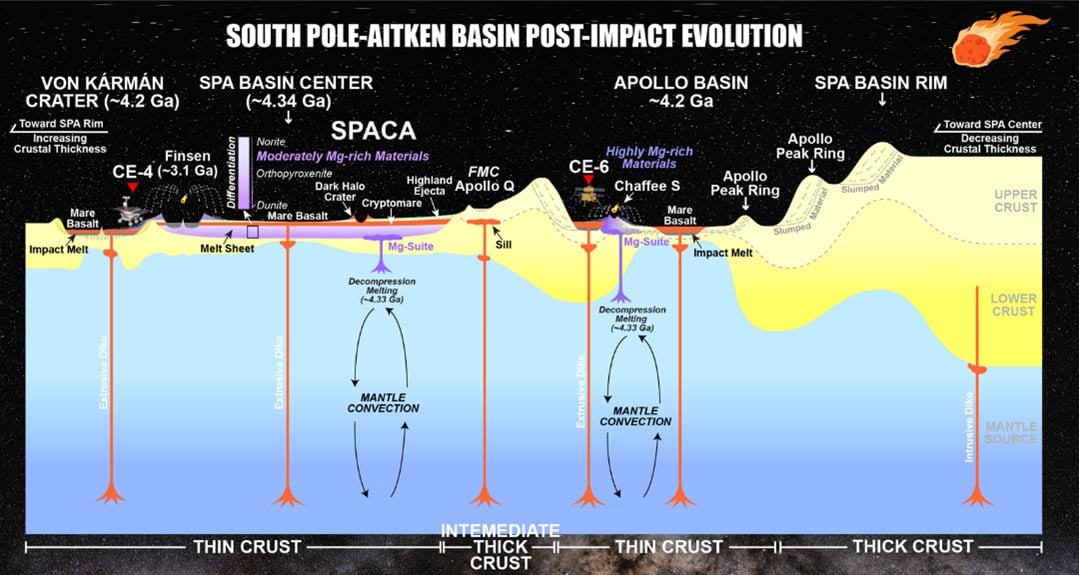
One group of rocks, known as moderately magnesium-rich norites, formed in the aftermath of the original SPA collision. The impact generated a thick sheet of molten rock that gradually cooled, with different minerals crystallizing at different stages. Later collisions exposed these ancient rocks at the central peaks of large craters. Some were eventually blasted toward the Chang’e-4 landing site in Von Kármán crater by the impact that formed Finsen crater.
The second group contained considerably more magnesium and likely formed through a separate process called magnesium-suite magmatism, a type of magma activity associated with the original SPA impact. These rocks were exposed along the western ring of mountain peaks within the Apollo basin before the Chaffee S impact scattered some of them toward the Chang’e-6 landing site.
Earlier research by the HKU-led team had already uncovered evidence of prolonged volcanic activity and previously unrecognized magma activity in the region. Those studies also suggested that underground accumulations of titanium-rich minerals, known as ilmenite-bearing cumulates, helped account for the contrasting volcanic histories of the Moon’s two sides.
Dating three ancient lunar collisions
The latest findings suggest that the South Pole-Aitken basin formed approximately 4.34 billion years ago. Another major collision created the Apollo basin around 4.2 billion years ago, followed by the formation of the Orientale basin approximately 3.87 billion years ago. Together, these three events reveal how successive collisions reshaped the Moon’s largest impact basin over hundreds of millions of years.
Reference: “Postimpact evolution of the South Pole–Aitken basin revealed by Chang’e-4 and Chang’e-6” by Yuqi Qian, Wenlei Song, James Head, Mingyu Tian, Zhuang Guo, Harald Hiesinger, Carolyn H. van der Bogert, Le Zhang, Jingyou Chen, Wanfeng Zhang, Ziqing Li, Lingzhi Sun, Xiangsong Wang, Wei-Ran Li, Jiacheng Liu, Nicolas Dauphas, Yi-Gang Xu and Guochun Zhao, 18 November 2026, Science Advances.
DOI: 10.1126/sciadv.aeh9798
Never miss a breakthrough: Join the SciTechDaily newsletter.
Follow us on Google and Google News.