
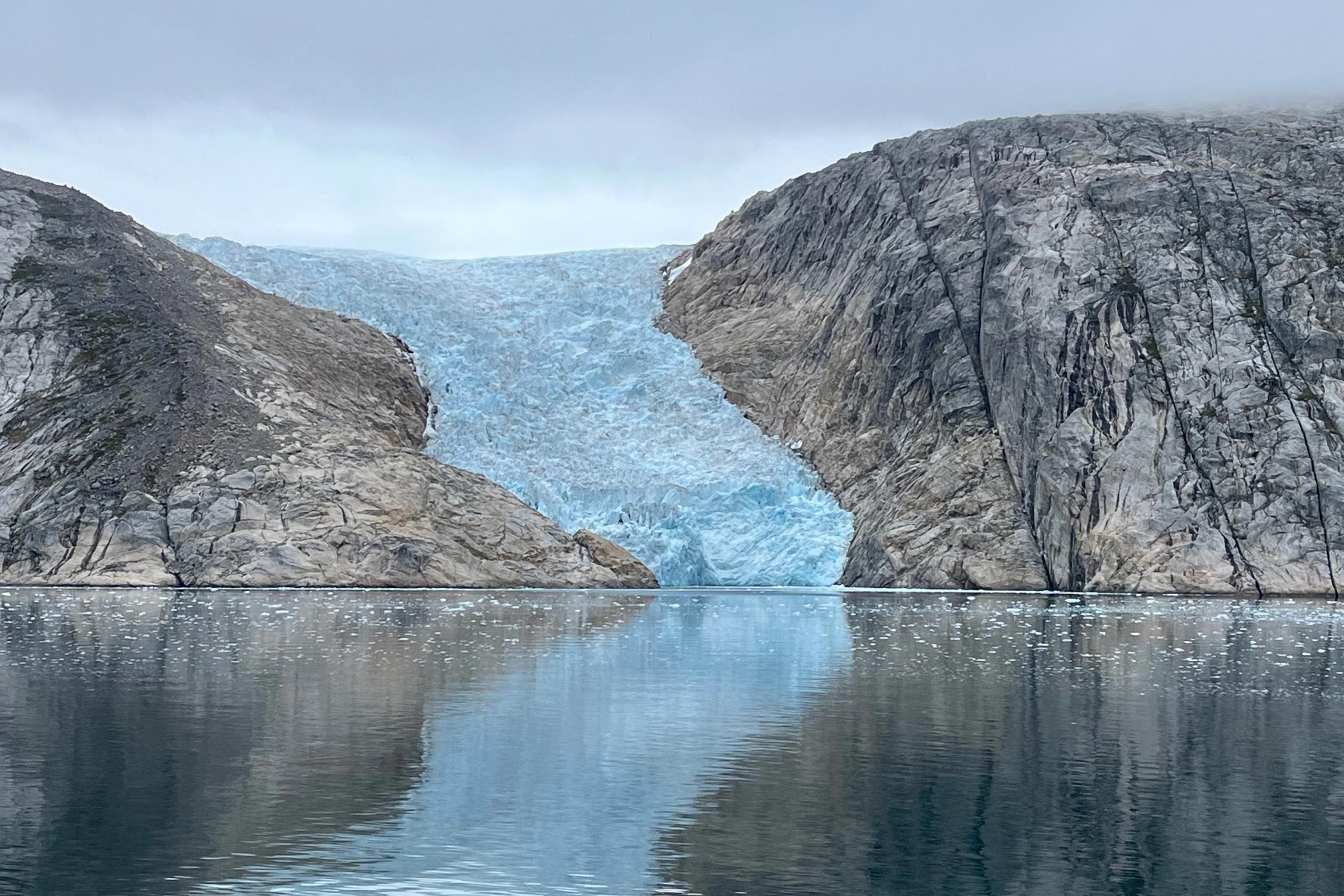
MIT researchers have developed a new model to predict glacier flow by studying microscopic defects in ice, revealing significant variations in how ice responds to environmental stresses.
This model helps better predict the rate of sea-level rise by capturing the nuanced behaviors of ice sheets, particularly in Antarctica, enhancing predictions about climate-driven sea-level changes.
Glacier Flow and Sea-Level Rise
As they melt and calve into the sea, glaciers and ice sheets are raising global water levels at unprecedented rates. Scientists need a better understanding of how fast glaciers melt and what influences their flow to predict and prepare for future sea-level rise.
Now, a study by MIT scientists offers a new picture of glacier flow, based on microscopic deformation in the ice. The results show that a glacier’s flow depends strongly on how microscopic defects move through the ice.
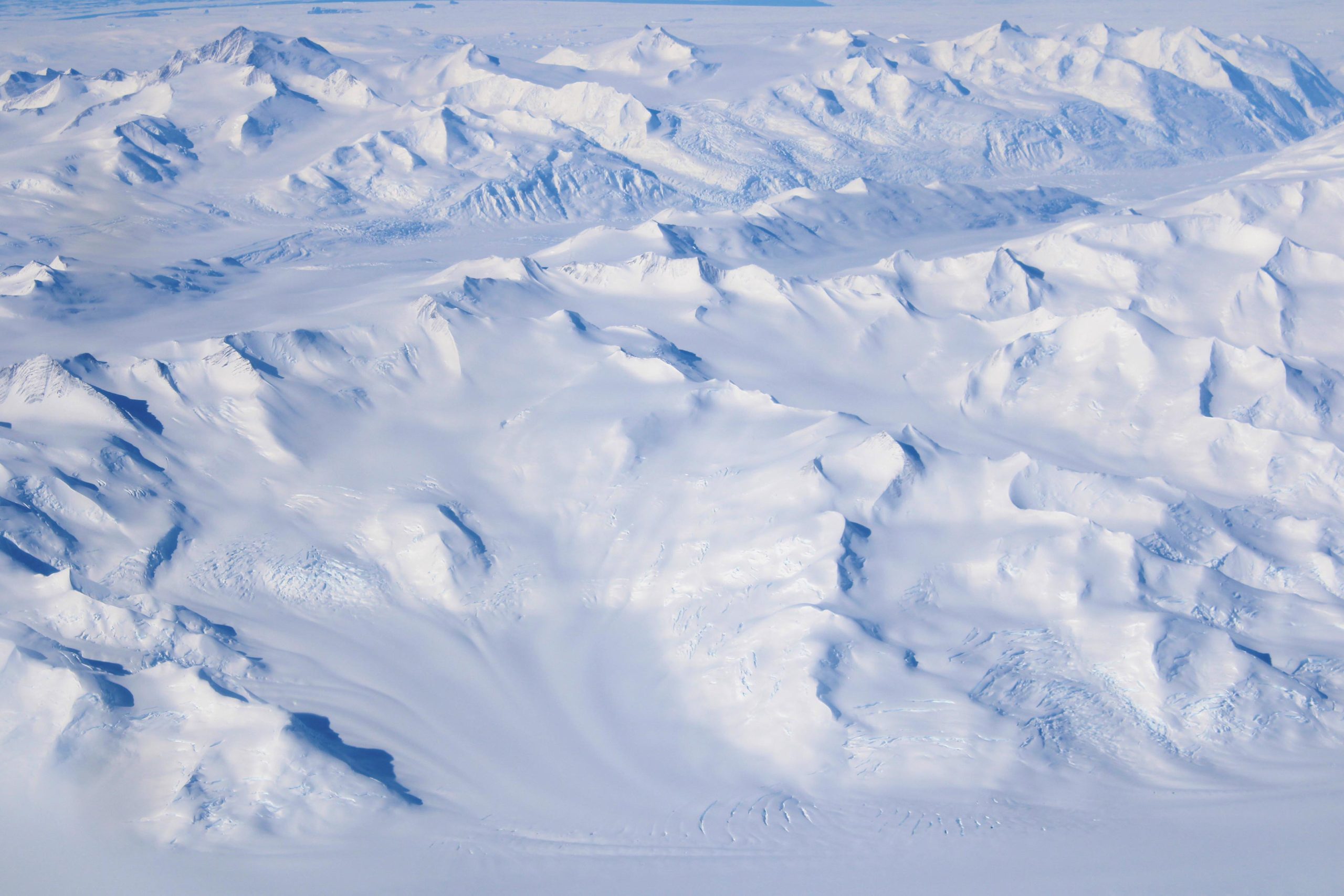
The scientists discovered they could estimate a glacier’s flow based on whether the ice is prone to microscopic defects of one kind versus another. They used this relationship between micro- and macro-scale deformation to develop a new model for how glaciers flow. With the new model, they mapped the flow of ice in locations across the Antarctic Ice Sheet.
Challenging Conventional Wisdom on Ice Flow
Contrary to conventional wisdom, they found, the ice sheet is not a monolith but instead is more varied in where and how it flows in response to warming-driven stresses. The study “dramatically alters the climate conditions under which marine ice sheets may become unstable and drive rapid rates of sea-level rise,” the researchers write in their paper.
“This study really shows the effect of microscale processes on macroscale behavior,” says Meghana Ranganathan PhD ’22, who led the study as a graduate student in MIT’s Department of Earth, Atmospheric and Planetary Sciences (EAPS) and is now a postdoc at Georgia Tech. “These mechanisms happen at the scale of water molecules and ultimately can affect the stability of the West Antarctic Ice Sheet.”
“Broadly speaking, glaciers are accelerating, and there are a lot of variants around that,” adds co-author and EAPS Associate Professor Brent Minchew. “This is the first study that takes a step from the laboratory to the ice sheets and starts evaluating what the stability of ice is in the natural environment. That will ultimately feed into our understanding of the probability of catastrophic sea-level rise.”
Ranganathan and Minchew’s study was published recently in the scientific journal Proceedings of the National Academy of Sciences.
Glacier Movement and Sea-Level Implications
Glacier flow describes the movement of ice from the peak of a glacier, or the center of an ice sheet, down to the edges, where the ice then breaks off and melts into the ocean — a normally slow process that contributes over time to raising the world’s average sea level.
In recent years, the oceans have risen at unprecedented rates, driven by global warming and the accelerated melting of glaciers and ice sheets. While the loss of polar ice is known to be a major contributor to sea-level rise, it is also the biggest uncertainty when it comes to making predictions.
Pinpointing Microphysical Processes of Ice Flow
“Part of it’s a scaling problem,” Ranganathan explains. “A lot of the fundamental mechanisms that cause ice to flow happen at a really small scale that we can’t see. We wanted to pin down exactly what these microphysical processes are that govern ice flow, which hasn’t been represented in models of sea-level change.”
The team’s new study builds on previous experiments from the early 2000s by geologists at the University of Minnesota, who studied how small chips of ice deform when physically stressed and compressed. Their work revealed two microscopic mechanisms by which ice can flow: “dislocation creep,” where molecule-sized cracks migrate through the ice, and “grain boundary sliding,” where individual ice crystals slide against each other, causing the boundary between them to move through the ice.
The geologists found that ice’s sensitivity to stress, or how likely it is to flow, depends on which of the two mechanisms is dominant. Specifically, ice is more sensitive to stress when microscopic defects occur via dislocation creep rather than grain boundary sliding.
Ranganathan and Minchew realized that those findings at the microscopic level could redefine how ice flows at much larger, glacial scales.
“Current models for sea-level rise assume a single value for the sensitivity of ice to stress and hold this value constant across an entire ice sheet,” Ranganathan explains. “What these experiments showed was that actually, there’s quite a bit of variability in ice sensitivity, due to which of these mechanisms is at play.”
A New Model for Predicting Glacier Flow
For their new study, the MIT team took insights from the previous experiments and developed a model to estimate an icy region’s sensitivity to stress, which directly relates to how likely that ice is to flow. The model takes in information such as the ambient temperature, the average size of ice crystals, and the estimated mass of ice in the region, and calculates how much the ice is deforming by dislocation creep versus grain boundary sliding. Depending on which of the two mechanisms is dominant, the model then estimates the region’s sensitivity to stress.
The scientists fed into the model actual observations from various locations across the Antarctic Ice Sheet, where others had previously recorded data such as the local height of ice, the size of ice crystals, and the ambient temperature. Based on the model’s estimates, the team generated a map of ice sensitivity to stress across the Antarctic Ice Sheet. When they compared this map to satellite and field measurements taken of the ice sheet over time, they observed a close match, suggesting that the model could be used to accurately predict how glaciers and ice sheets will flow in the future.
Future Predictions and Climate Change Impacts
“As climate change starts to thin glaciers, that could affect the sensitivity of ice to stress,” Ranganathan says. “The instabilities that we expect in Antarctica could be very different, and we can now capture those differences, using this model.”
Reference: “A modified viscous flow law for natural glacier ice: Scaling from laboratories to ice sheets” by Meghana Ranganathan and Brent Minchew, 30 May 2024, Proceedings of the National Academy of Sciences.
DOI: 10.1073/pnas.2309788121
Never miss a breakthrough: Join the SciTechDaily newsletter.
Follow us on Google and Google News.
1 Comment
It’s all about the predictive models, isn’t it? Fancy toys that serve no actual purpose because they can’t predict dick. But they get funding and that’s what it’s all about.
Predictive modeling is not science. It may use science during construction, but it’s not science itself. It’s fancy guesswork.