
Close Menu
    Facebook X (Twitter) Instagram
    SciTechDaily
    • Biology
    • Chemistry
    • Earth
    • Health
    • Physics
    • Science
    • Space
    • Technology
    Facebook X (Twitter) Pinterest YouTube RSS
    SciTechDaily
    Home»Health»Tiny Metal Nanodots Obliterate Cancer Cells While Largely Sparing Healthy Tissue
    Health

    Tiny Metal Nanodots Obliterate Cancer Cells While Largely Sparing Healthy Tissue

    By RMIT UniversityDecember 5, 2025No Comments4 Mins Read
    Facebook Twitter Pinterest Telegram LinkedIn WhatsApp Email Reddit
    Share
    Facebook Twitter LinkedIn Pinterest Telegram Email Reddit
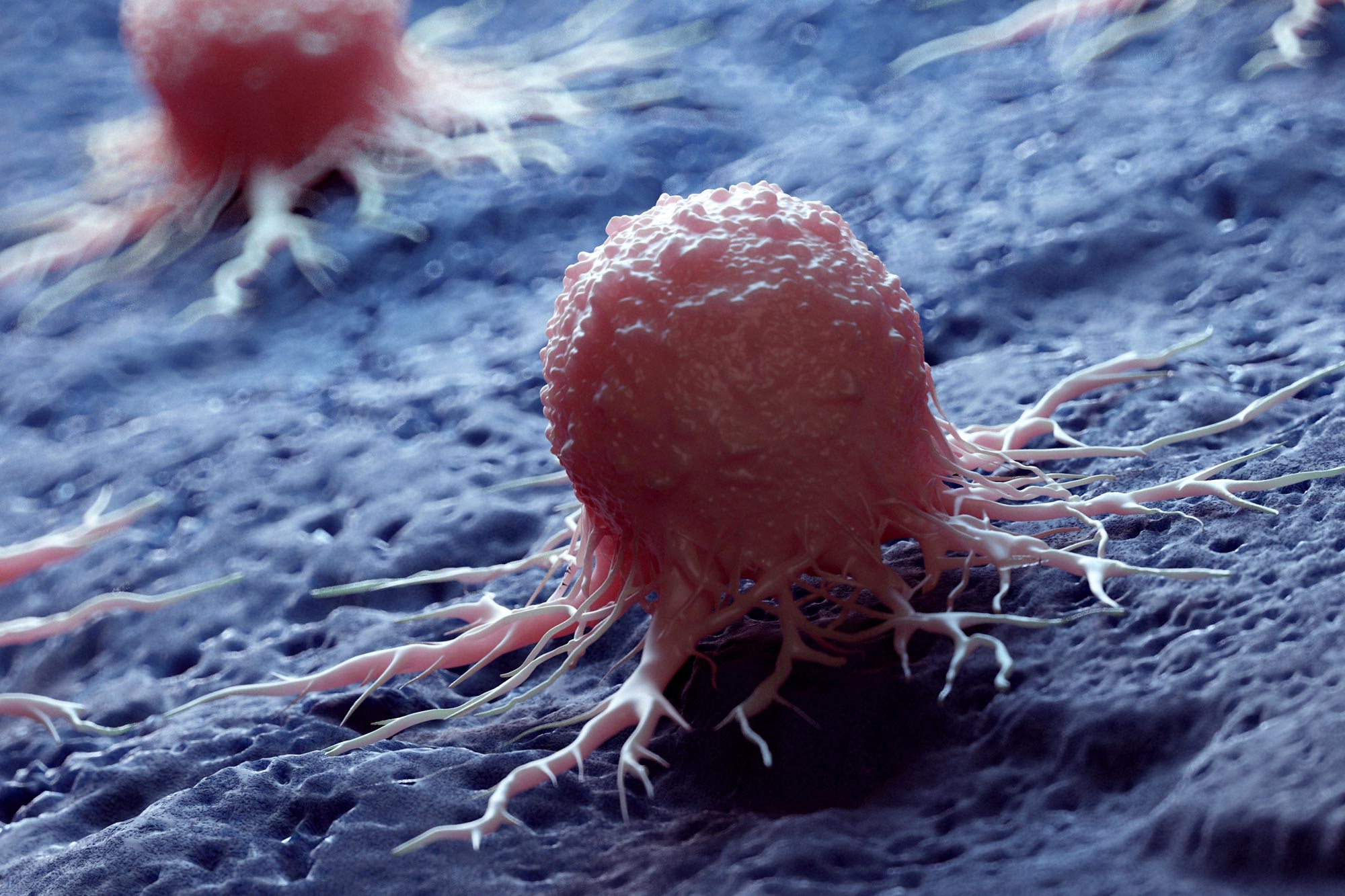
    Cancer Cell 3D Rendering
    Researchers have engineered molybdenum-oxide “nanodots” that selectively overwhelm cancer cells with oxidative stress, hinting at a new class of treatments that exploit cancer’s built-in vulnerabilities. Credit: Shutterstock

    Scientists have developed tiny metal-oxide particles that push cancer cells past their stress limits while sparing healthy tissue.

    An international team led by RMIT University has developed tiny particles called nanodots, crafted from a metallic compound, that can destroy cancer cells while largely preserving healthy ones.

    Although the research is still limited to cell cultures and has not yet been evaluated in animals or humans, the findings suggest a promising new approach for creating cancer treatments that take advantage of vulnerabilities within cancer cells.

    These nanodots consist of molybdenum oxide, a material derived from the rare metal molybdenum, which is commonly used in electronics and metal alloys.

    According to lead researchers Professor Jian Zhen Ou and Dr. Baoyue Zhang of the School of Engineering, slight adjustments to the particles’ chemistry caused them to release reactive oxygen molecules. These unstable oxygen forms can harm vital parts of a cell and initiate cell death.

    In laboratory experiments, the nanodots eliminated cervical cancer cells at three times the rate observed in healthy cells over a 24-hour period. Notably, they were effective without the need for light, which is uncommon for technologies of this type.

    “Cancer cells already live under higher stress than healthy ones,” Zhang said.

    “Our particles push that stress a little further – enough to trigger self-destruction in cancer cells, while healthy cells cope just fine.”
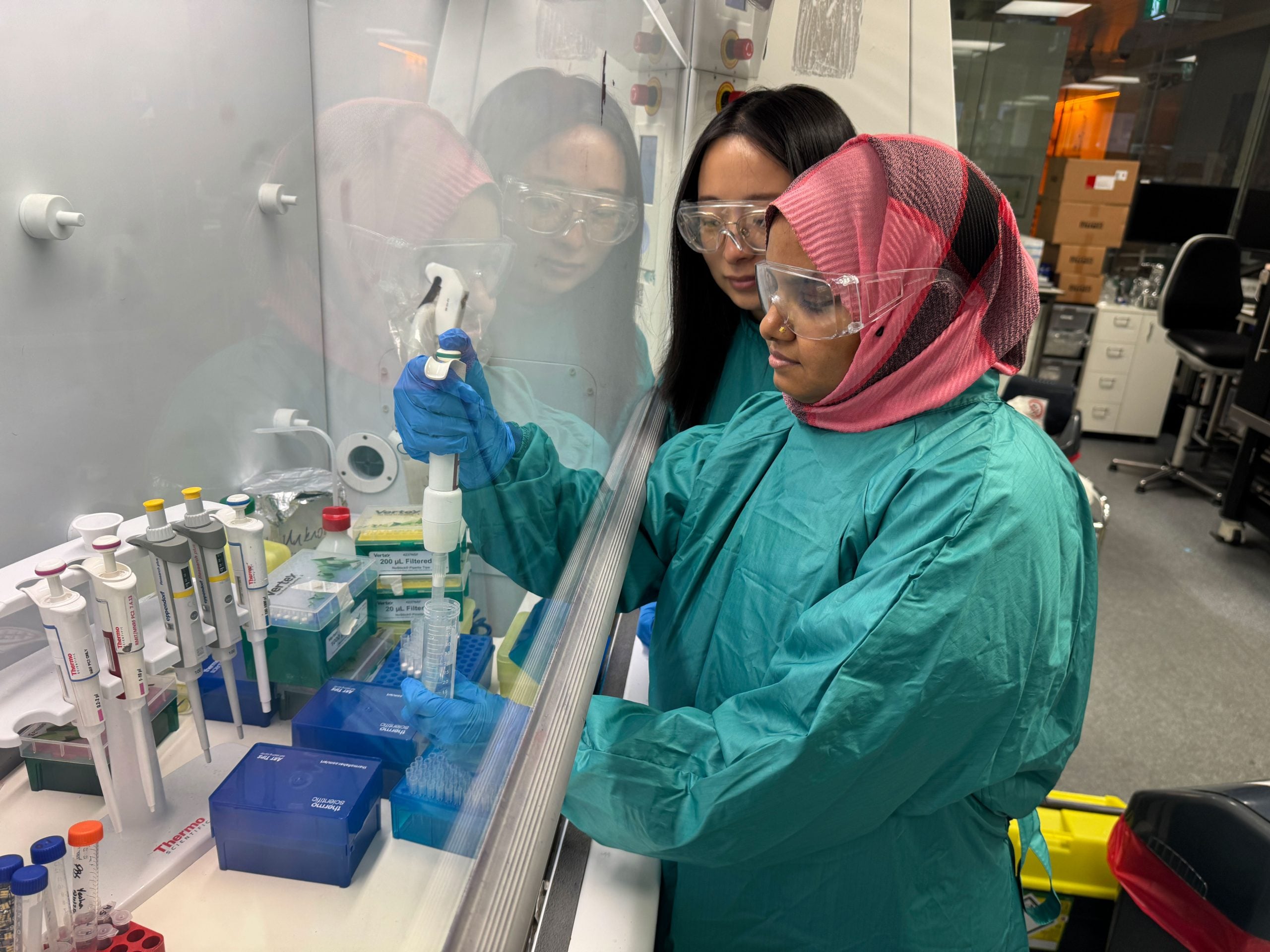
    Baoyue Zhang and Sanjida Afrin
    Dr. Baoyue Zhang and Dr. Sanjida Afrin (right) work under a fume hood at RMIT University’s Micro Nano Research Facility, which is part of the Victorian Node of the Australian National Fabrication Facility (ANFF). Credit: Will Wright, RMIT University

    The collaboration involved Dr Shwathy Ramesan at The Florey Institute of Neuroscience and Mental Health in Melbourne and researchers from institutions in China including Southeast University, Hong Kong Baptist University and Xidian University, with support from the ARC Centre of Excellence in Optical Microcombs (COMBS).

    “The result was particles that generate oxidative stress selectively in cancer cells under lab conditions,” she said.

    How the innovation works

    The team adjusted the recipe of the metal oxide, adding tiny amounts of hydrogen and ammonium.

    This fine-tuning changed how the particles handled electrons, helping them produce more of the reactive oxygen molecules that drive cancer cells into apoptosis – the body’s natural clean-up process for damaged cells.

    In another test, the same particles broke down a blue dye by 90 per cent in just 20 minutes, showing how powerful their reactions can be even in darkness.

    Most current cancer treatments affect both cancerous and healthy tissue. Technologies that more selectively stress cancer cells could lead to gentler, more targeted therapies.

    Because these particles are based on a common metal oxide rather than expensive or toxic noble metals like gold or silver, they could also be cheaper and safer to develop.

    Next steps for industry and clinical researchers

    The COMBS team at RMIT is continuing this work, with next steps including:

    • targeting delivery systems so the particles activate only inside tumors.
    • controlling the release of reactive oxygen species to avoid damage to healthy tissue.
    • seeking partnerships with biotech or pharmaceutical companies to test the particles in animal models and develop scalable manufacturing methods.

    Reference: “Ultrathin Multi-Doped Molybdenum Oxide Nanodots as a Tunable Selective Biocatalyst” by Bao Yue Zhang, Farjana Haque, Shwathy Ramesan, Sanjida Afrin, Muhammad Waqas Khan, Haibo Ding, Xin Zhou, Qijie Ma, Jiaru Zhang, Rui Ou, Md Mohiuddin, Enamul Haque, Yichao Wang, Azmira Jannat, Yumin Li, Robi S. Datta, Kate Fox, Guolang Li, Hujun Jia and Jian Zhen Ou, 3 October 2025, Advanced Science.
    DOI: 10.1002/advs.202500643

    Organizations that want to partner with RMIT researchers can contact [email protected]

    Funding: Australian Research Council

    Never miss a breakthrough: Join the SciTechDaily newsletter.
    Follow us on Google and Google News.

    Biomedical Engineering Cancer Nanotechnology Popular RMIT University
    Share. Facebook Twitter Pinterest LinkedIn Email Reddit

    Related Articles

    A Promising Fatty Liver Treatment May Actually Trigger Cancer

    Using Tiny Nanodevices Made Out of DNA To Treat Cancer

    New MIT Cancer Treatment Jump-Starts the Immune System

    A Noninvasive Test Using Nanoparticles to Detect Cancer Cells and Pinpoint Their Location

    New Sensor Detects COVID-19 and Variants on People’s Breath – Even When They Are Asymptomatic

    Innovative New Nanotechnology Will Enable “Healthy” Electric Current Production Inside the Human Body

    Using Biodegradable Nanoparticles to Shut Down the Power Stations of Cancer Cells

    Vaccination by Inhalation – Boosts Immune Responses to Respiratory Infections and Lung Cancer

    New Graphene Face Masks Offer Very High Anti-bacterial Efficiency, Deactivation of Coronaviruses

    Leave A Reply Cancel Reply

    • Facebook
    • Twitter
    • Pinterest
    • YouTube

    Don't Miss a Discovery

    Subscribe for the Latest in Science & Tech!

    Trending News

    Scientists Uncover Potential Brain Risks of Popular Fish Oil Supplements

    Scientists Discover a Surprising Way To Make Bread Healthier and More Nutritious

    After 60 Years, Scientists Uncover Unexpected Brain Effects of Popular Diabetes Drug Metformin

    New Research Uncovers Hidden Side Effects of Popular Weight-Loss Drugs

    Scientists Rethink Extreme Warming After Surprising Ocean Discovery

    Landmark Study Links Never Marrying to Significantly Higher Cancer Risk

    Researchers Discover Unknown Beetle Species Just Steps From Their Lab

    Largest-Ever Study Finds Medicinal Cannabis Ineffective for Anxiety, Depression, PTSD

    Follow SciTechDaily
    • Facebook
    • Twitter
    • YouTube
    • Pinterest
    • Newsletter
    • RSS
    SciTech News
    • Biology News
    • Chemistry News
    • Earth News
    • Health News
    • Physics News
    • Science News
    • Space News
    • Technology News
    Recent Posts
    • Powerful Lasers Reveal How Matter Becomes Plasma in Trillionths of a Second
    • A Simpler Path to Super-Resolution: Scientists Reinvent Microscopy
    • Scientists Uncover Hidden Genetic Cause of Diabetes in Babies
    • Amazonian Chocolate Could Become the Next Superfood, Scientists Say
    • Challenging the Narrative: New Study Shows U.S. Life Expectancy Is Rising Across All States
    Copyright © 1998 - 2026 SciTechDaily. All Rights Reserved.
    • Science News
    • About
    • Contact
    • Editorial Board
    • Privacy Policy
    • Terms of Use

    Type above and press Enter to search. Press Esc to cancel.