
Close Menu
    Facebook X (Twitter) Instagram
    SciTechDaily
    • Biology
    • Chemistry
    • Earth
    • Health
    • Physics
    • Science
    • Space
    • Technology
    Facebook X (Twitter) Pinterest YouTube RSS
    SciTechDaily
    Home»Health»Trying Not to Overeat? Researchers Videotaped People Eating and Discovered That How You Eat Matters
    Health

    Trying Not to Overeat? Researchers Videotaped People Eating and Discovered That How You Eat Matters

    By American Society for NutritionJune 13, 2021No Comments3 Mins Read
    Facebook Twitter Pinterest Telegram LinkedIn WhatsApp Email Reddit
    Share
    Facebook Twitter LinkedIn Pinterest Telegram Email Reddit
    Videotaping Meals
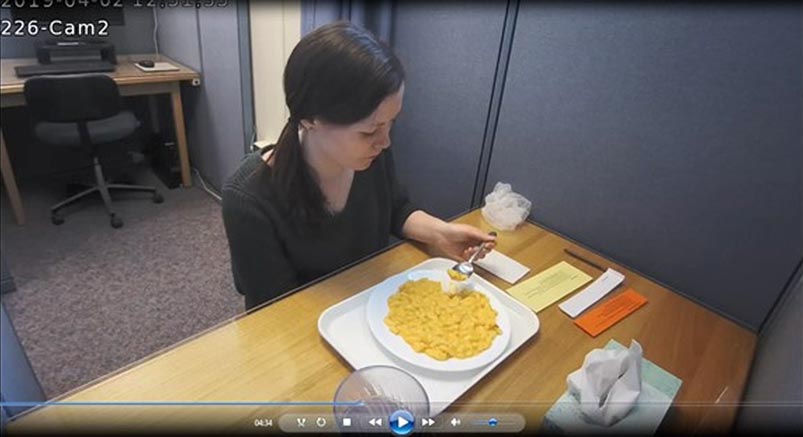
    The researchers videotaped each meal to assess the speed at which participants ate and the size of their bites. Credit: Laboratory for the Study of Human Ingestive Behavior, The Pennsylvania State University

    Study Finds People Who Eat More Tend To Take Larger Bites or Eat Faster

    According to a new study, people who eat faster or take larger bites are more likely to eat more at a meal. The research, which was presented at NUTRITION 2021 LIVE ONLINE, provides new insight into the factors that might contribute to overeating.

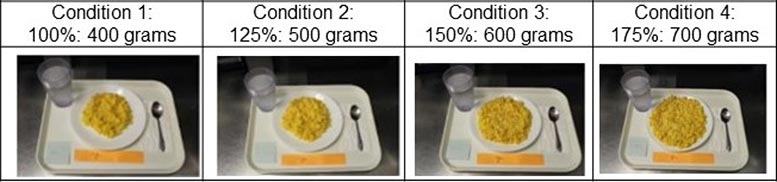
    The study also adds more evidence that people eat more when given larger portions. The researchers found that study participants ate, on average, 43% more when the portion size of a meal was increased by 75%.

    “Although studies have consistently found that people eat more when they are served larger portions, less is known about why this happens or why some people are more responsive to the effects of large portions than others,” said first author Paige Cunningham, a doctoral student at The Pennsylvania State University. “This is one of the first studies to explore whether the characteristics of eating speed and bite-size have an effect on people’s food consumption in response to larger portions.”
    Meal Portions
    The researchers asked 44 men and women to each lunch in their laboratory once a week for 4 weeks. For each meal, the study participants received, in random order, a different portion of macaroni and cheese with water to drink. Credit: Laboratory for the Study of Human Ingestive Behavior, The Pennsylvania State University

    For the new study, the researchers served 44 men and women lunch once a week for four weeks. For each meal, the study participants received, in random order, a different portion of macaroni and cheese with water to drink. The researchers videotaped each meal to assess the speed at which participants ate and the size of their bites.

    The fact that participants ate meals that were all four sizes, meant that they could each serve as their own comparison. The researchers expect the results to be generalizable to other groups since the study participants were diverse in terms of age, sex, body weight, income and education.

    Practical Tips for Reducing Overeating

    “Based on our findings, being aware of portion size, slowing down when you eat, and taking smaller bites of food could help avoid overconsumption,” said Cunningham. “Also, since people eat more when served more, overconsumption of calories from large portions can be reduced by choosing foods that have less calories per bite. This lets you eat the same filling portions of foods while consuming fewer calories.”

    The researchers plan to perform more studies to see if their findings apply to a longer, more complex meal that includes a variety of foods, textures, and flavors.

    Cunningham presented this research during NUTRITION 2021 LIVE ONLINE.

    Never miss a breakthrough: Join the SciTechDaily newsletter.
    Follow us on Google and Google News.

    Food Science Nutrition Obesity Weight Loss
    Share. Facebook Twitter Pinterest LinkedIn Email Reddit

    Related Articles

    Unlocking Your Body’s Natural Weight Loss System That Works Like Wegovy, Ozempic and Mounjaro

    5 Terrible Eating Habits That Cause Weight Gain

    Intense Exercise While Dieting May Reduce Cravings for High-Fat Food

    7 Health Food “Imposters” That Aren’t as Healthy as You Think

    Obesity: Unhealthy Diet Leads to Fatal Activation of Immune Cells

    Burn Twice as Many Calories: Eat a Big Breakfast Rather Than a Large Dinner

    Brain Circuit Linked to Food Impulsivity Discovered – May Lead to Therapeutics That Curb Overeating

    Simply Eating a Handful of Nuts a Day May Help Stave Off Gradual Weight Gain

    Harvard Studies Show Improvements in U.S. Diet Lower Premature Deaths

    Leave A Reply Cancel Reply

    • Facebook
    • Twitter
    • Pinterest
    • YouTube

    Don't Miss a Discovery

    Subscribe for the Latest in Science & Tech!

    Trending News

    Largest-Ever Study Finds Medicinal Cannabis Ineffective for Anxiety, Depression, PTSD

    250-Million-Year-Old Egg Solves One of Evolution’s Biggest Mysteries

    Living With Roommates Might Be Changing Your Gut Microbiome Without You Knowing

    Century-Old Cleaning Chemical Linked to 500% Increased Risk of Parkinson’s Disease

    What if Your Memories Never Happened? Physicists Take a New Look at the Boltzmann Brain Paradox

    One of the Universe’s Largest Stars May Be Getting Ready To Explode

    Scientists Discover Enzyme That Could Supercharge Ozempic-Like Weight Loss Drugs

    Popular Sweetener Linked to DNA Damage – “It’s Something You Should Not Be Eating”

    Follow SciTechDaily
    • Facebook
    • Twitter
    • YouTube
    • Pinterest
    • Newsletter
    • RSS
    SciTech News
    • Biology News
    • Chemistry News
    • Earth News
    • Health News
    • Physics News
    • Science News
    • Space News
    • Technology News
    Recent Posts
    • Want Less Stress? Landmark Study Points to a Simple Habit
    • Scientists Reveal Eating Fruits and Vegetables May Increase Your Risk of Lung Cancer
    • AI Reveals Explosive Growth of Floating Algae Across the World’s Oceans
    • 5.5 Million Bees Discovered Living Beneath a New York Cemetery
    • Scientists Reverse Brain Aging With Simple Nasal Spray
    Copyright © 1998 - 2026 SciTechDaily. All Rights Reserved.
    • Science News
    • About
    • Contact
    • Editorial Board
    • Privacy Policy
    • Terms of Use

    Type above and press Enter to search. Press Esc to cancel.