
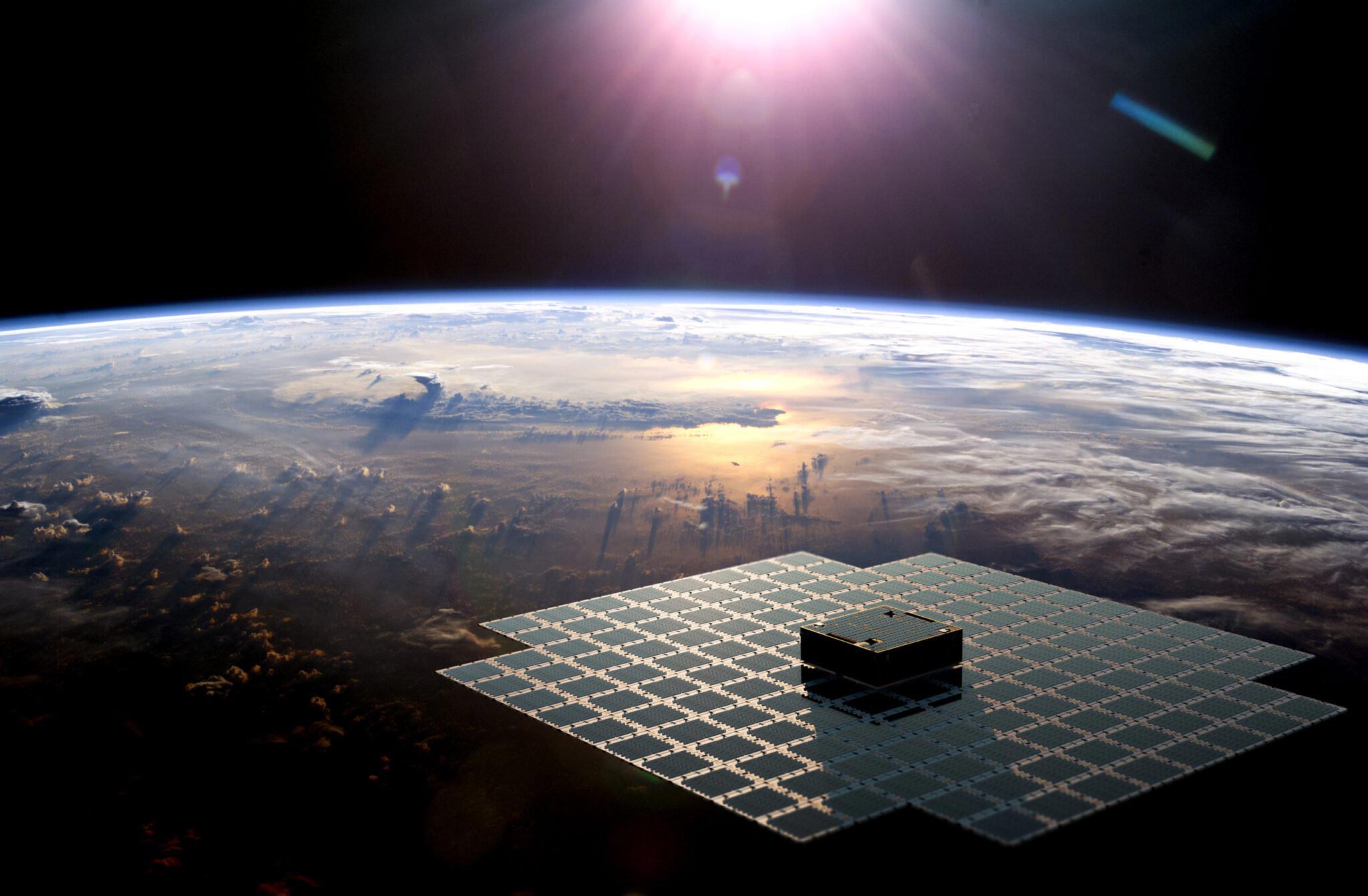
Satellites meant to expand global communication are becoming so bright they could outshine stars and ruin telescope images. Scientists are urgently seeking ways to protect astronomical research as the sky gets more crowded.
It’s easy to take global internet and mobile service for granted these days—after all, you can stream a movie or send a message from almost anywhere on Earth. But the very satellites that power this convenience are becoming an unexpected problem: they’re too bright.
Aerospace engineer Siegfried Eggl from the University of Illinois Urbana-Champaign led an international team that discovered some newly launched satellites are now as bright as the stars we see with the naked eye. One in particular, AST SpaceMobile’s BlueWalker 3, was found to shine at a magnitude of 0.4, making it one of the brightest objects in the night sky. That’s brighter than many stars and planets.
“From our observations, we learned that AST Space Mobile’s BlueWalker 3—a constellation prototype satellite featuring a roughly 700 square-foot phased-array antenna—reached a peak brightness of magnitude 0.4, making it one of the brightest objects in the night sky,” Eggl said. “Although this is record-breaking, the satellite itself is not our only concern. The untracked Launch Vehicle Adapter had an apparent visual magnitude of 5.5, which is also brighter than the International Astronomical Union recommendation of magnitude 7.”
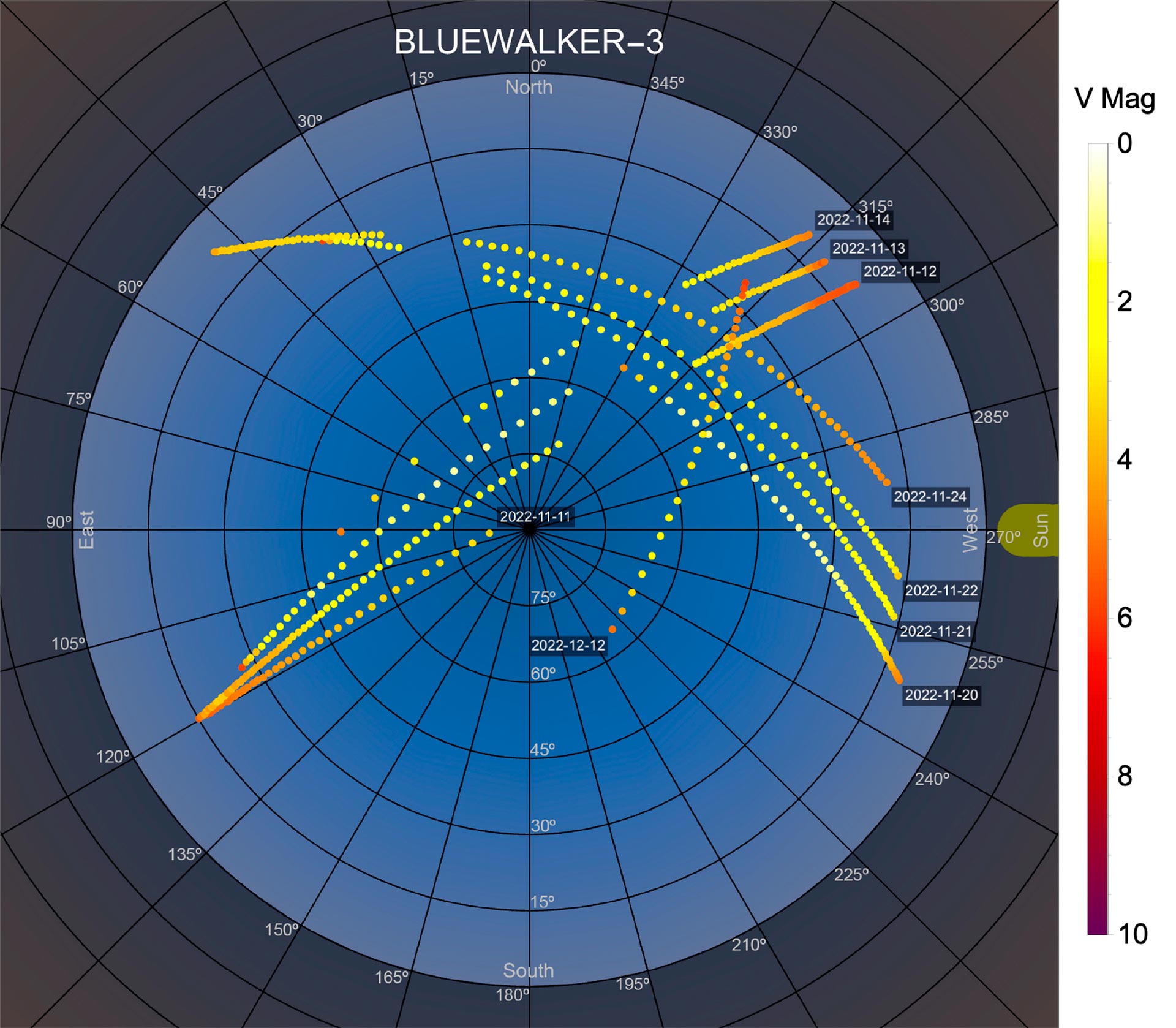
For context, the human eye can typically see stars with a brightness between magnitude 6 (faint) and -1 (extremely bright, like Sirius). Venus, the brightest planet, can sometimes hit magnitude -4. So when satellites start competing with these celestial objects, it’s a big deal—especially for ground-based telescopes that rely on dark, clear skies.
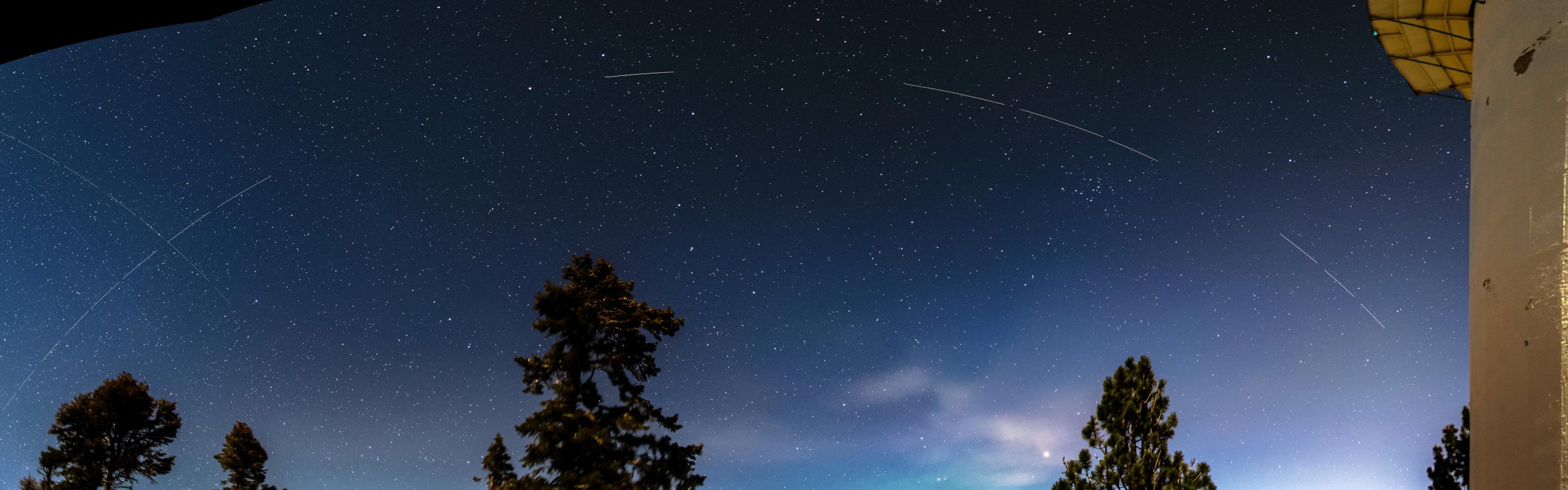
The BlueWalker 3 satellite captured on April 3, 2023. The optical brightness of the 8-meter x 8-meter satellite — one of the brightest objects in the night sky having reached a peak brightness of magnitude 0.4 — is exhibited here as it travels across the starry backdrop. For comparison, two fainter satellites can also be seen in the footage; Starlink-4781 (in front of BlueWalker) and Starlink-4016 (parallel and slightly behind BlueWalker in a few frames). Credit: Delft Technical University/M. Langbroek
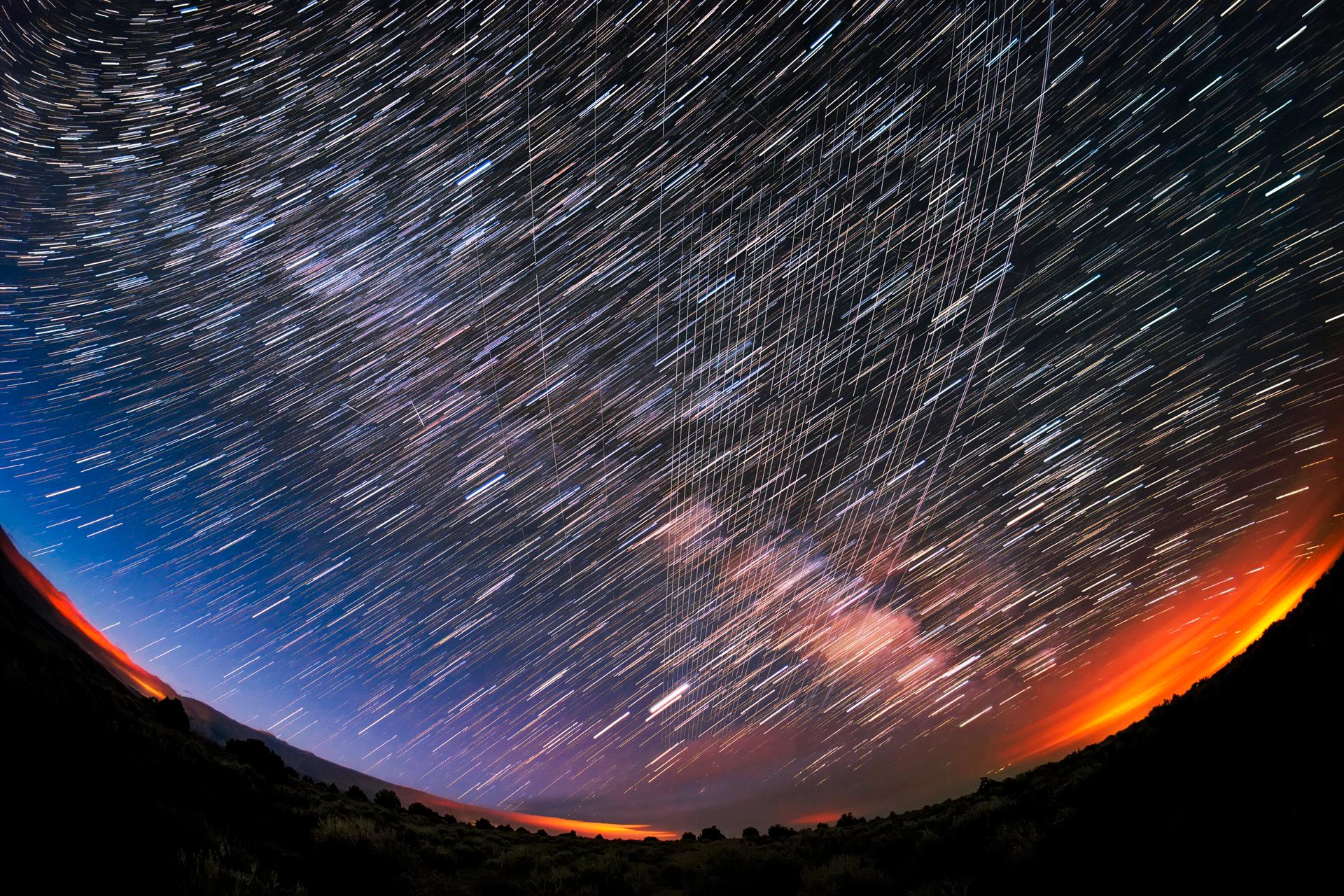
“One might think if there are bright stars, a few more bright satellites won’t make a difference. But several companies plan to launch constellations,” Eggl said. “For example, Starlink already has permission to launch thousands of satellites, but they’ll probably get their full request of tens of thousands granted eventually.
“And that’s just one constellation of satellites. Europe and China want their own constellations, and so does Russia. Just those in the United States being negotiated with the FCC amount to 400,000 satellites being launched in the near future. There are only 1,000 stars you can see with the unaided eye. Adding 400,000 bright satellites that move could completely change the night sky.”
Eggl is a member of the International Astronomical Union Centre for the Protection of the Dark and Quiet Sky from Satellite Constellation Interference, IAU.
“BlueWalker 3 is so bright that most of the big telescopes such as the Rubin Observatory believe it could obliterate large parts of exposures,” Eggl said. “They already have to avoid observing Mars and Venus for the same reason, but we know where the planets are so we can dodge them. We cannot accurately predict where all the satellites will be years in advance. Just accepting recurring data loss in multi-billion-dollar observatories is not an option either.”
He said that although satellites won’t necessarily damage the telescope’s CCDs, or charge-coupled devices, they will still cause data loss from the streaks. Extremely bright satellites could ruin the entire field of view, like trying to stargaze when someone periodically shines a flashlight into your eyes.
Eggl said several solutions to the problem are being explored in collaboration with the Laboratory for Advanced Space Systems at Illinois and satellite operators such as SpaceX.
“Starlink is looking at making their satellites’ surfaces darker, which absorbs more and reflects less visible sunlight. But the absorption generates heat. The satellites then have to emit infrared light, which means observations in optical wavelengths don’t have as large of a problem, but infrared observations might. And heat is one of the biggest engineering problems that we have in space. So, painting everything black comes with repercussions,” he said.
Another idea from SpaceX is to make satellites’ solar panels more reflective with dielectric mirrors. The mirrors allow the satellites to change the direction of the reflection so that it’s not pointing directly at the Earth.
“If SpaceX can make the solar panels point in a different direction to avoid glints, or use these mirror tricks, they might solve a lot of the problems we have with the optical flaring of Starlink satellites,” Eggl said. “With other providers, it’s not quite as easy. AST has gigantic satellites, with hundreds of square feet of electronic phased arrays, that they need to communicate with cell phones on the ground. If they made satellites smaller more of their radio signals would leak out through so-called ‘side lobes’ potentially affecting radio astronomy sites.
Eggl said AST also prefers to keep the satellite pointed toward the surface of the Earth to achieve maximum efficiency. Starlink solutions may not easily translate to AST satellites and new mitigation strategies are needed.
“We are trying to work with the space industry, where possible,” he said. “We want to solve this together so it’s a collaborative effort that everybody can sign onto because that’s the fastest route to get things done.”
For more on this research:
- Massive Satellite Outshines All but the Brightest Stars
- BlueWalker 3’s Unprecedented Impact on Night Sky Observations
Reference: “The high optical brightness of the BlueWalker 3 satellite” by Sangeetha Nandakumar, Siegfried Eggl, Jeremy Tregloan-Reed, Christian Adam, Jasmine Anderson-Baldwin, Michele T. Bannister, Adam Battle, Zouhair Benkhaldoun, Tanner Campbell, J. P. Colque, Guillermo Damke, Ilse Plauchu Frayn, Mourad Ghachoui, Pedro F. Guillen, Aziz Ettahar Kaeouach, Harrison R. Krantz, Marco Langbroek, Nicholas Rattenbury, Vishnu Reddy, Ryan Ridden-Harper, Brad Young, Eduardo Unda-Sanzana, Alan M. Watson, Constance E. Walker, John C. Barentine, Piero Benvenuti, Federico Di Vruno, Mike W. Peel, Meredith L. Rawls, Cees Bassa, Catalina Flores-Quintana, Pablo García, Sam Kim, Penélope Longa-Peña, Edgar Ortiz, Ángel Otarola, María Romero-Colmenares, Pedro Sanhueza, Giorgio Siringo and Mario Soto, 2 October 2023, Nature.
DOI: 10.1038/s41586-023-06672-7
Ph.D. student Nandakumar analyzed the data for this first international study to be published from the center. Nandakumar works with Jeremy Tregloan-Reed at the Universidad de Atacama in Chile.
Never miss a breakthrough: Join the SciTechDaily newsletter.
Follow us on Google and Google News.