
A healthy lifestyle consists of a mixture of habits. Diet, exercise, sleep, and other factors all must be in balance. Similarly, a sustainable farm operates on a balanced plan of soil, crop, and water management techniques.
The western United States is a region with scarce water resources. In this case, water management techniques make up a larger piece of a sustainability plan. There is mounting concern around the globe about water scarcity. This is due to urban sprawl, depleting water supplies in some areas, and predicted water shortages in the future with less snowpack.

Water management techniques that lead to the optimal use of limited resources are not well-identified. Yet. Matt Yost, a researcher at Utah State University, is working to find the best combination of practices to maximize yield, profit, and water efficiency.
“Most cropland in Utah and the western United States is irrigated,” explains Yost. “There are areas where groundwater from aquifers is being used faster than it can be replaced. Some of these areas are under intense pressure to conserve water.”
Water for irrigation comes from aquifers far below the farm’s surface. Aquifers are naturally refilled by water from the surface by precipitation. Increased water use can lower the water table. Eventually wells can go dry. These factors make water optimization crucial for food security.
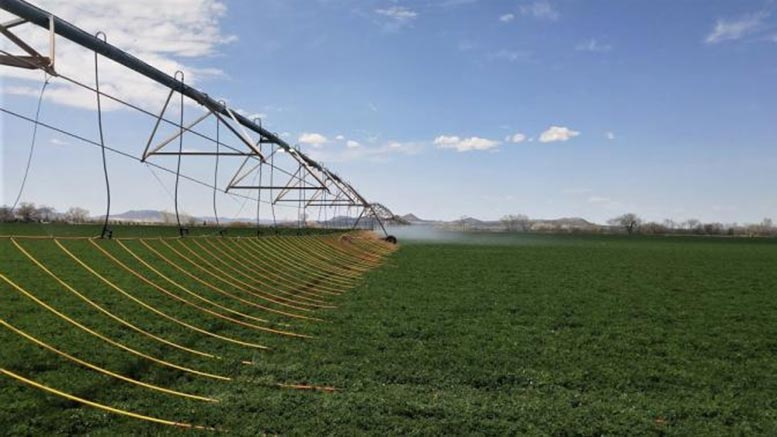
Yost researches many water management techniques. These include using irrigation scheduling and advanced pivot irrigation technology. In addition, his team researches crop and soil management practices. They look at rotating in drought-tolerant crops, cover crops, and reduced tillage.
Yost’s team works together with many farmers across Utah to do farm-scale trials.
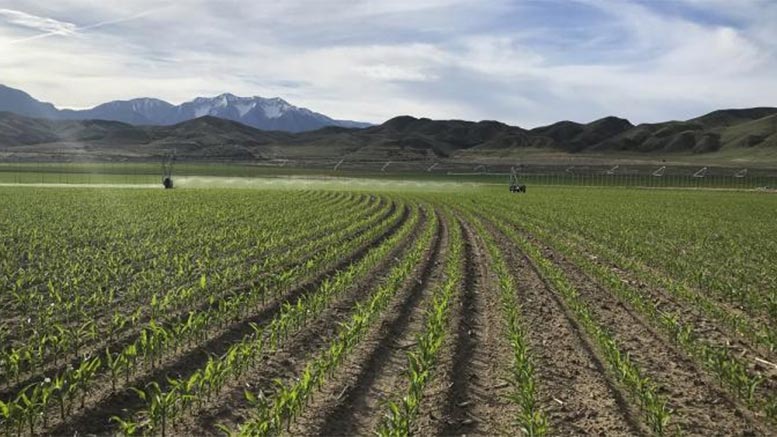
“Irrigation research is tough and costly on farmer’s fields,” says Yost. “It’s especially true when it comes to irrigation scheduling. Though difficult, this on-farm research and collaboration is crucial for the understanding and adoption of new water optimization techniques.”
So, what is the best combination of management techniques to maximize yield, profit, and water efficiency? The answer isn’t clear, yet. Results and analyses are still pending, but Yost offers some initial recommendations:
- Advanced pivot irrigation technologies, such as mobile drip and low-energy precision application or spray application, are beneficial. They can usually maintain crop yields with about 20% less applied water.
- Most farmers may be able to reduce irrigation rates by 10% without affecting crop yields.
- Biochar applications are showing few short-term crop yield or water saving benefits.
“We are beginning to answer questions about new irrigation techniques and scheduling approaches,” says Yost. “But many still exist for discovery.”
Next, Yost and his team hope to secure funding for long-term irrigation research sites. Water is a limited and vital resource. Strategies to optimize water use will be crucial to the sustainability of irrigated agriculture.
“In irrigated agriculture, agronomy and irrigation go hand-in-hand,” explains Yost. “Nearly everything about one influences the other. Most irrigation programs focus more on engineering than on irrigation science. With my original training in agronomy, I’ve noticed knowledge gaps and have identified opportunities to unite irrigation science and agronomy.” Yost’s unique perspective offers a holistic approach to integrated water, soil, and crop management.
Yost presented his work at the November International Annual Meeting of the American Society of Agronomy, Crop Science Society of America, and Soil Science Society of America in San Antonio. Funding for this research came from an Innovator Award from the Foundation for Food and Agriculture, Western Sustainable Agriculture Research and Education, and the Utah State University Water Initiative and Extension Service.
Reference: “Combinations of Soil and Water Management for Water Optimization” by M. A. Yost, M. Harper, E. Creech, N. Allen, C. Reid and B. Kitchen, 13 November 2019, ASA, CSSA and SSSA International Annual Meetings (2019), San Antonio, TX.
l
Never miss a breakthrough: Join the SciTechDaily newsletter.
Follow us on Google and Google News.