
Close Menu
    Facebook X (Twitter) Instagram
    SciTechDaily
    • Biology
    • Chemistry
    • Earth
    • Health
    • Physics
    • Science
    • Space
    • Technology
    Facebook X (Twitter) Pinterest YouTube RSS
    SciTechDaily
    Home»Chemistry»Unlocking the Secrets Behind Crystal Formation: A Milestone Discovery
    Chemistry

    Unlocking the Secrets Behind Crystal Formation: A Milestone Discovery

    By Laurie Fickman, University of HoustonFebruary 12, 2024No Comments4 Mins Read
    Facebook Twitter Pinterest Telegram LinkedIn WhatsApp Email Reddit
    Share
    Facebook Twitter LinkedIn Pinterest Telegram Email Reddit
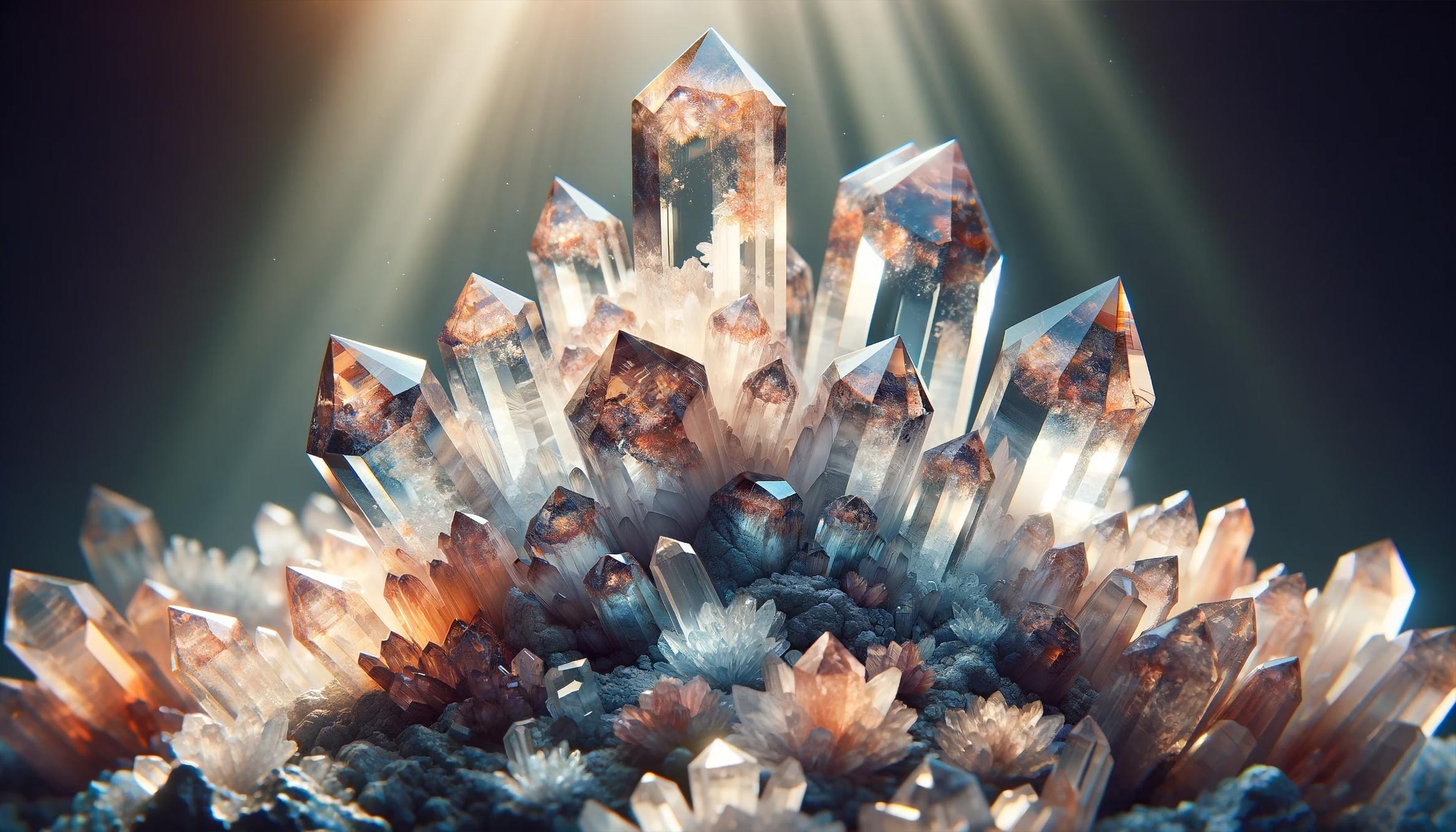
    Crystal Formation Concept
    Newly published research unveils a revolutionary two-step process in crystal formation, challenging existing theories and proposing a new paradigm. This discovery sheds light on the molecular incorporation into crystals, offering insights that could influence future technological advancements. Credit: SciTechDaily.com

    Groundbreaking research reveals a new two-step process in crystal growth, challenging old theories and setting a new direction for future technological developments in the field.

    A million years ago, the oldest known species to walk upright like a human, the Homo Erectus, had a human-like fascination with crystals. Historians can even pin down the possible reasons – crystals didn’t look like anything around at the time — trees, valleys, mountains. Crystals were a material to ponder, a fascinating diversion for the mind.

    To this day, the human preoccupation with the magic of crystals continues to fill the mind’s eye of scientists who have developed ways to use crystals for everything from malaria cures to solar cells and semiconductors, catalysts, and optical elements. Over the years crystals have become crucial constituents of the technologies that enable modern civilization.
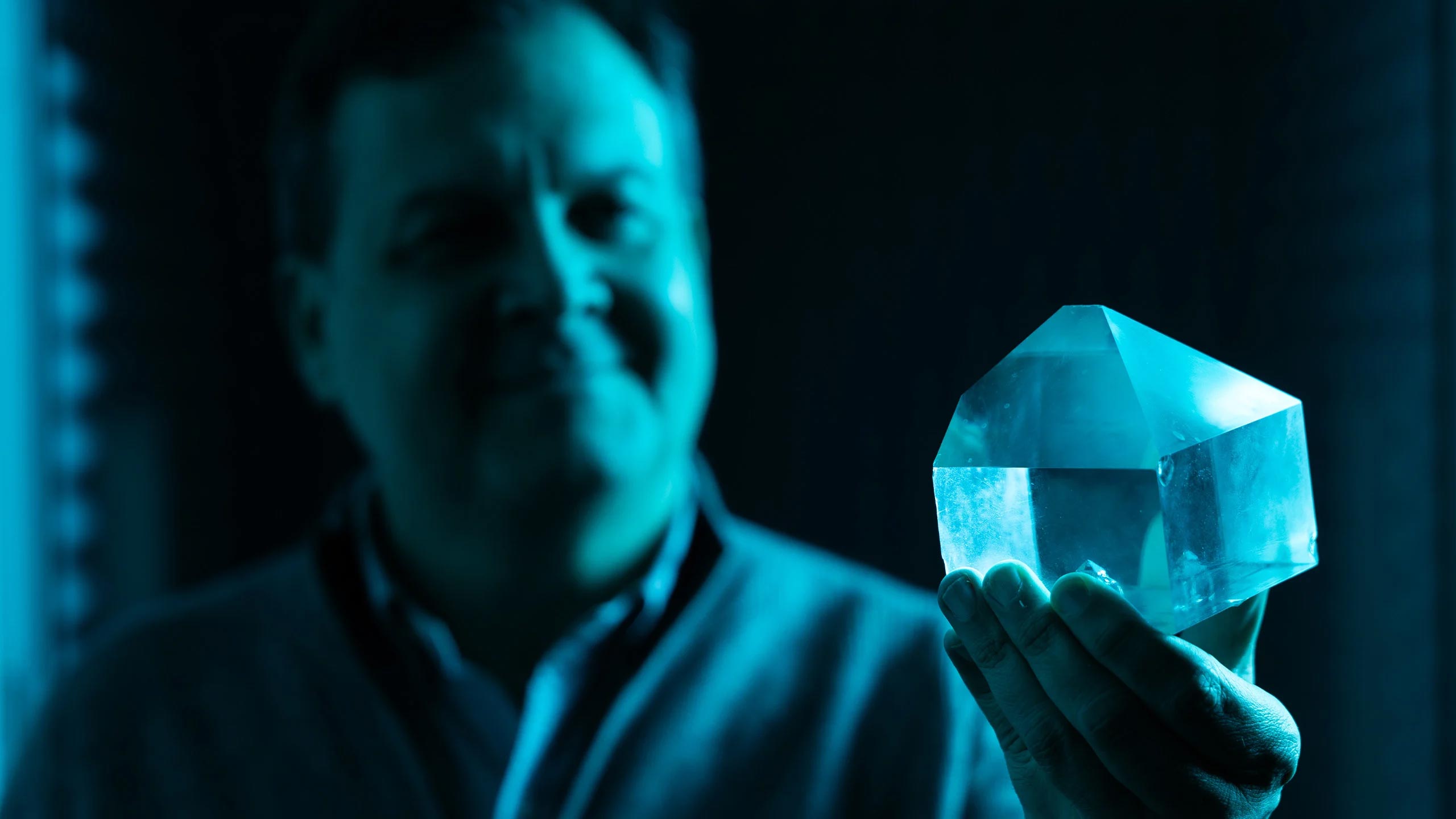
    Peter Vekilov Holding Crystal
    Peter Vekilov, University of Houston Frank Worley Professor of Chemical and Biomolecular Engineering, has published that incorporation of molecules into crystals occurs in two steps, divided by an intermediate state. Credit: University of Houston

    So, for historians creating a timeline of crystal fascination and research spanning a million years, mark January 2024 as the time that University of Houston researcher Peter Vekilov, Frank Worley Professor of Chemical and Biomolecular Engineering, published in PNAS an answer to how crystals are formed and how molecules become a part of them.

    “For decades crystal growth researchers have dreamt of elucidating the chemical reaction between incoming molecules and the unique sites on a crystal surface that accept them, the kinks,” said Vekilov. The mechanism of that reaction, i.e., the characteristic time scale and length scale, possible intermediates and their stabilities, has remained elusive and subject to speculation for over 60 years.”

    The main obstacle to deeper understanding has been the lack of data on how molecules join in, connected to the complicated process of moving from the solution to where they grow.
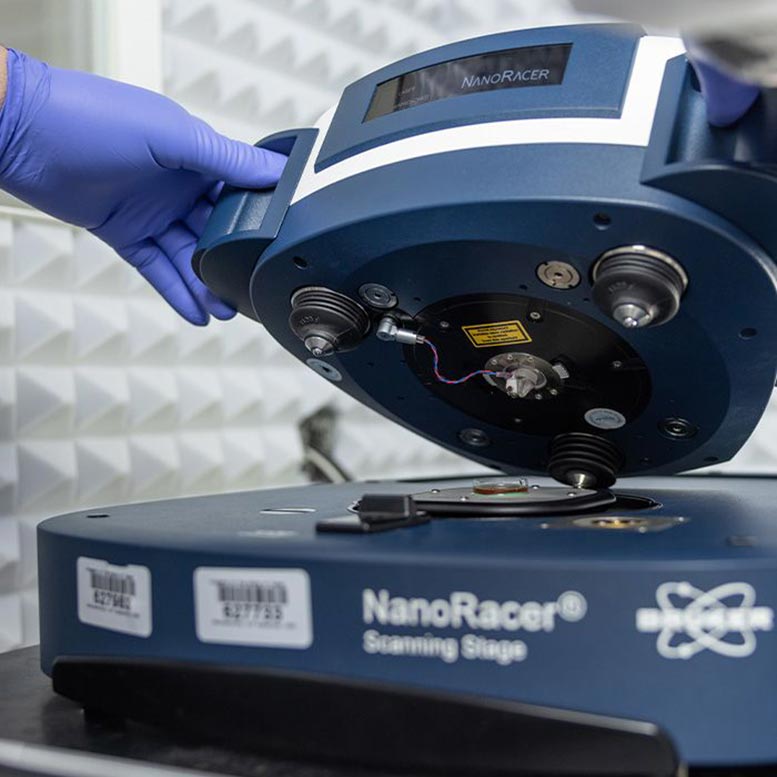
    NanoRacer to Scan Crystal Molecular Structure
    Vekilov uses the NanoRacer, which uses atomic force microscopy, to scan samples at high speeds and obtain crucial insights into the crystals’ molecular structure. Credit: University of Houston

    To unravel the chemical reaction between a molecule that dissolves in liquid (solute) and a kink, Vekilov mobilized two transformational strategies, one using full organic pairs and the second, using four solvents with distinct structures and functions. Working with the molecules, he combined state-of-the-art experimental techniques including time-resolved in situ atomic-force microscopy at near-molecular resolution, x-ray diffraction, absorption spectroscopy, and scanning electron microscopy.

    That’s when Vekilov made a revolutionary discovery: Incorporation into kinks may occur in two steps divided by an intermediate state and the stability of this middle state is key in how crystals grow. It basically decides how fast or slow the crystals form because it affects how easily things can join in during the process

    Though the new discoveries don’t date back to Homo sapien times, they do solve a 40-year-old riddle for Vekilov.

    Vekilov Holds Potassium Dihydrogen Phosphate Crystal
    Vekilov holds a crystal of potassium dihydrogen phosphate (KDP). Credit: University of Houston

    “The notions of an intermediate state and its decisive role in crystal growth refute and replace the dominant idea in the field, brought up by A.A. Chernov, my PhD advisor, that the activation barrier for growth is determined by the solute-solvent interactions in the solution bulk,” he said.

    The new paradigm of two step incorporation, mediated by an intermediate state, could help in understanding how small parts in a liquid can influence the detailed shapes of crystals found in nature.

    “Equally important, this paradigm will guide the search for solvents and additives that stabilize the intermediate state to slow down the growth of, for instance, undesired polymorphs,” Vekilov said.

    Reference: “The elementary reactions for incorporation into crystals” by Rajshree Chakrabarti, Lakshmanji Verma, Viktor G. Hadjiev, Jeremy C. Palmer and Peter G. Vekilov, 5 February 2024, Proceedings of the National Academy of Sciences.
    DOI: 10.1073/pnas.2320201121

    Vekilov’s team includes Jeremy Palmer, Ernest J and Barbara M Henley Associate Professor of chemical and biomolecular engineering; former graduate students Rajshree Chakrabarti and Lakshmanji Verma; and Viktor G. Hadjiev, Texas Center for Superconductivity at UH.

    Never miss a breakthrough: Join the SciTechDaily newsletter.
    Follow us on Google and Google News.

    Crystals University of Houston
    Share. Facebook Twitter Pinterest LinkedIn Email Reddit

    Related Articles

    A Flash of Light Can Build and Erase Crystals Instantly

    The Crystal That Wasn’t Supposed to Exist – Now It’s Reinventing 3D-Printed Metal

    These “Weird” Crystals Explode in Light

    Breaking the Rules of Chemistry: New Theory Shatters Old Ideas About Crystal Formation

    125 Years After Its Discovery, Actinium’s Chemistry Still Baffles Scientists

    Lightning Bonds: Capturing Halogen Magic in the Blink of an Eye

    Inside the Crystal Matrix: New “X-Ray Vision” Technique Sees Inside Crystals

    Unlocking the Secrets of Space Chemistry With Cold Coulomb Crystals

    Crystallography for Misfit Crystals: Advanced Algorithms Reveal Material Structures

    Leave A Reply Cancel Reply

    • Facebook
    • Twitter
    • Pinterest
    • YouTube

    Don't Miss a Discovery

    Subscribe for the Latest in Science & Tech!

    Trending News

    Your Blood Pressure Reading Could Be Wrong Because of One Simple Mistake

    Astronomers Stunned by Ancient Galaxy With No Spin

    Physicists May Be on the Verge of Discovering “New Physics” at CERN

    Scientists Solve 320-Million-Year Mystery of Reptile Skin Armor

    Scientists Say This Daily Walking Habit May Be the Secret to Keeping Weight Off After Dieting

    New Therapy Rewires the Brain To Restore Joy in Depression Patients

    Giant Squid Detected off Western Australia in Stunning Deep-Sea Discovery

    Popular Sugar-Free Sweetener Linked to Liver Disease, Study Warns

    Follow SciTechDaily
    • Facebook
    • Twitter
    • YouTube
    • Pinterest
    • Newsletter
    • RSS
    SciTech News
    • Biology News
    • Chemistry News
    • Earth News
    • Health News
    • Physics News
    • Science News
    • Space News
    • Technology News
    Recent Posts
    • Scientists Just Measured an Energy Pulse Smaller Than a Trillionth of a Billionth of a Joule
    • 540-Million-Year-Old Fossils Reveal a Huge Surprise About Early Life on Earth
    • Scientists Create “Living” Materials That Crawl, Walk, and Dig on Their Own
    • Dante’s Inferno May Secretly Be About a Planet-Destroying Asteroid Strike
    • Mixing Edible Cannabis and Alcohol May Impair Driving More Than Scientists Expected
    Copyright © 1998 - 2026 SciTechDaily. All Rights Reserved.
    • Science News
    • About
    • Contact
    • Editorial Board
    • Privacy Policy
    • Terms of Use

    Type above and press Enter to search. Press Esc to cancel.