
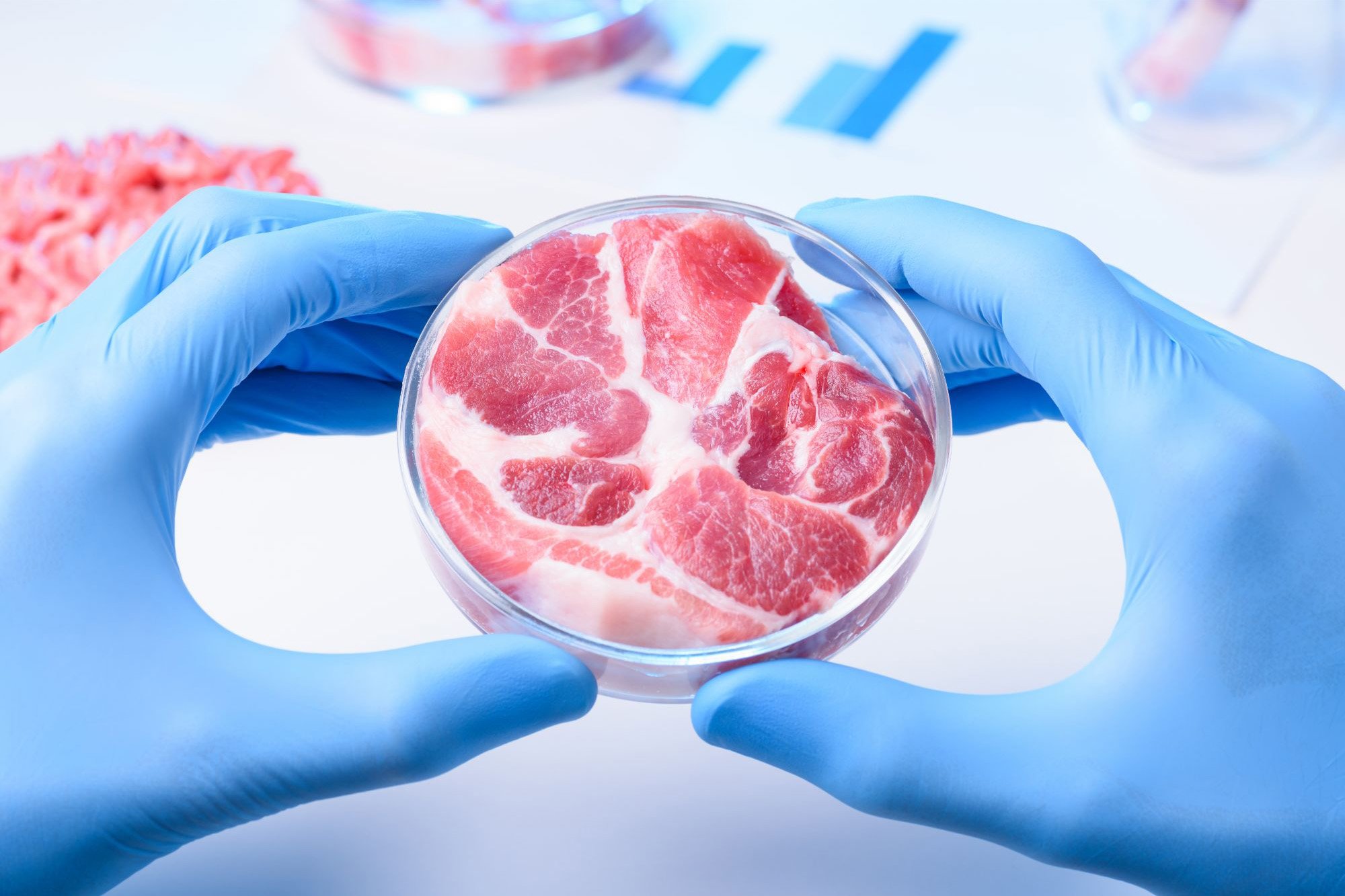
A new study showcases a scalable, cost-effective method for producing cultivated meat, marking a significant step towards sustainable and ethical food production.
A pioneering study unveils the first affordable method for producing cultivated meat. The research highlights that continuous manufacturing effectively overcomes the main challenges of scalability and cost, bringing cultivated meat closer to everyday consumers and paving the way for a more sustainable and ethical food system.
In an extraordinary stride for cellular agriculture, Professor Yaakov Nahmias, founder of Believer Meats, and a multidisciplinary team at the Hebrew University of Jerusalem and the cultivated meat industry unveiled a pioneering continuous manufacturing process for cultivated meat. This innovation tackles the industry’s critical challenges of scalability and cost-effectiveness.
The study, published in Nature Food, demonstrates the use of tangential flow filtration (TFF) for the continuous manufacturing of cultivated meat. The new bioreactor assembly permits biomass expansion to 130 billion cells per liter, achieving yields of 43% weight per volume. The process was carried out continuously over 20 days, enabling daily biomass harvests. Additionally, the research introduces an animal component-free culture medium, priced at just $0.63 per liter, which supports the long-term, high-density culture of chicken cells. In other words, this continuous manufacturing method could significantly reduce the cost and complexity of cultivated meat production, potentially bringing it closer to everyday consumers.
Economic Impact and Sustainability
“We were inspired by how Ford’s automated assembly line revolutionized the car industry 110 years ago,” stated Prof. Nahmias. “Our findings show that continuous manufacturing enables cultivated meat production at a fraction of current costs, without resorting to genetic modification or mega-factories. This technology brings us closer to making cultivated meat a viable and sustainable alternative to traditional animal farming.”
Bruce Friedrich, President of The Good Food Institute, expressed his support, stating, “GFI applauds the spirit of openness that continues to characterize cultivated meat researchers like Dr. Koby Nahmias and his colleagues, who understand that showing the scientific potential of cultivated meat will benefit all scientists working in the field.”
This research represents a significant advance in the economic feasibility of cultivated meat, addressing previous concerns about high costs and low yields. Utilizing this empirical data, the team conducted a techno-economic analysis of a hypothetical 50,000-liter production facility. The analysis indicates that the cost of production of cultivated chicken could theoretically be reduced to $6.20 per pound, aligning with the price of organic chicken.
Real-World Data and Cost Reduction
Dr. Elliot Swartz, Principal Scientist at Cultivated Meat, The Good Food Institute emphasized the significance of the study’s findings, stating “This important study provides numerous data points that demonstrate the economic feasibility of cultivated meat. The study confirms early theoretical calculations that serum-free media can be produced at costs well below $1/L without forfeiting productivity, which is a key factor for cultivated meat achieving cost-competitiveness.”
Dr. Swartz added that “Empirical data is the bedrock for any cost model of scaled cultivated meat production, and this study is the first to provide real-world empirical evidence for key factors that influence the cost of production, such as media cost, metabolic efficiency, and achievable yields in a scalable bioprocess design.”
While the authors acknowledged that various other factors would affect the final market price of cultivated meat, this research underscores the potential of continuous manufacturing to significantly lower production costs, making cultivated meat more accessible to consumers and competitive with conventional meat products.
This study not only highlights the promise of cellular agriculture in meeting the global demand for animal products but also aligns with broader environmental and ethical objectives by reducing reliance on traditional livestock farming.
The research represents the first demonstration of cost-efficient manufacturing of cultivated meat and the first empirical economic analysis based on solid data. It is a collaborative effort involving engineers, biologists, and chemists at the Hebrew University of Jerusalem and ADM-funded Believer Meats, which is currently building the world’s first large-scale industrial production facility for cultivated chicken.
Broader Implications and Future Outlook
As global demand for animal protein is expected to double by 2050, cellular agriculture offers a solution to meet this demand, especially as resource-intensive livestock production reaches its peak capacity. Despite recent FDA approvals for cultivated meat production, large-scale production of cultivated meat has yet to become a reality. Previous techno-economic analyses suggested economic challenges, ranging from factory to raw materials costs, casting doubt about the viability of cultivated meat production.
This work presents groundbreaking solutions, including novel filter stack perfusion that reduced factory costs, an animal component-free medium that reduced raw material costs, and continuous manufacturing that increased factory capacity, projecting an annual production of 2.14 million kg of cultivated chicken at cost parity with USDA organic chicken even for a small 50,000-liter facility.
This technological advancement could have a profound impact on animal welfare, food safety, and food security, addressing the needs of a global population increasingly affected by climate change. The study is expected to generate significant interest across multiple disciplines and resonate in popular media due to its implications for the future of humanity.
Reference: “Empirical economic analysis shows cost-effective continuous manufacturing of cultivated chicken using animal-free medium” by Laura Pasitka, Guy Wissotsky, Muneef Ayyash, Nir Yarza, Gal Rosoff, Revital Kaminker and Yaakov Nahmias, 21 August 2024, Nature Food.
DOI: 10.1038/s43016-024-01022-w
Never miss a breakthrough: Join the SciTechDaily newsletter.
Follow us on Google and Google News.
5 Comments
Sounds like a great way to double or maybe even triple the numbers of people who become chronically ill and/or die prematurely since the wonderful US FDA approvals of artificial and/or nutritionally deficient modified soy protein (late 1960s), the cooking oil preservative TBHQ (1972), added cultured “free” MSG (1980) and aspartame (1981), minimally. It’s totally arrogant, ignorant and incompetent for so-called “scientists” to even think they are smarter than millions of years of evolution. As to Henry Ford’s automobiles, they were worn on the outside, not ingested.
The real solutions to human overpopulation problems are to promote family planning and birth control in populations prone and/or created to procreate excessively, like religious groups and growth industry workers, with care for rapidly rising numbers of already sickly seniors provided for with well paid retrained unemployed industry workers, funded with proportionally fairer additional taxes on the idle rich, religious and secular. ‘Growth’ is no longer desirable.
The United States grew and thrived on innovation. John Tyson took the most expensive meat on the market, chicken, and standardized production to make lean protein available for millions around the world. The idea that the chicken you eat today is the same as the one your great-grandfather couldn’t afford is ridiculous, the hens are three times bigger, and eat a carefully formulated scientific diet. Cultivated meat is the next step in the same innovation process that made America great. Don’t laugh it off just because democrats support it, even a broken clock is right twice a day.
Yum yum!!! Chicken Tumors!!!!
Dear Mr. Raulins, I take this comment seriously. In 2021 we published a paper in Nature Food showing critically that our cells did not transform into cancer (https://www.foodnavigator-usa.com/Article/2023/01/11/Believer-Meats-study-in-Nature-Food-shines-light-on-cultivated-meat-metrics#) this was acknowledged, albeit grudgingly by Joe Fassler’s very biased article in Bloomberg.
If you want to read the science behind this, see here:
https://www.nature.com/articles/s43016-022-00658-w
Professor Nahmias, I don’t like to rain on anyone’s parade but there are serious problems with your accomplishment that you haven’t learned of yet. First, it fails to address the real problem; overpopulation. Then, if fails to factor-in that then renowned American immunologist Arthur F. Coca, MD identified, studied and reported on a (my) kind of nearly subclinical non-IgE-mediated food (minimally) allergy reactions by 1935, that mainstream medicine still fails to recognize, research, practice and/or teach as true allergies in 2024. Consequently, all so-called “evidence-based” medicine/science (e.g., countless cohort studies) is fatally flawed. Next, you use soy protein in your process. In addition to soy being a rather common allergen, an incomplete protein and phytoestrogen (akin to human female estrogen) rich, by the early 1970s about 95% of US soy was being processed more cheaply (e.g., ‘growing and thriving on innovation?’) with toxic hexane with some residue said to be safe by the FDA. Minimally, the US female breast cancer epidemic presented by 1979 (ACS and NCI data). In 1980 the FDA approved the expanded use of added artificially cultured “free” (can cross the blood-brain barrier) MSG as an alleged “flavor enhancer.” The US obesity epidemic presented by 1990 (CDC/NCHS data). Lastly, for now, you want to foist micronutrient deficient industrial chicken on all of us. “Chicken Tumors” may be the least of that problem.