
Close Menu
    Facebook X (Twitter) Instagram
    SciTechDaily
    • Biology
    • Chemistry
    • Earth
    • Health
    • Physics
    • Science
    • Space
    • Technology
    Facebook X (Twitter) Pinterest YouTube RSS
    SciTechDaily
    Home»Science»Cutting Food Losses Could Feed an Additional Billion People
    Science

    Cutting Food Losses Could Feed an Additional Billion People

    By Aalto UniversityOctober 10, 20121 Comment3 Mins Read
    Facebook Twitter Pinterest Telegram LinkedIn WhatsApp Email Reddit
    Share
    Facebook Twitter LinkedIn Pinterest Telegram Email Reddit
    Crops Corn Field Daytime
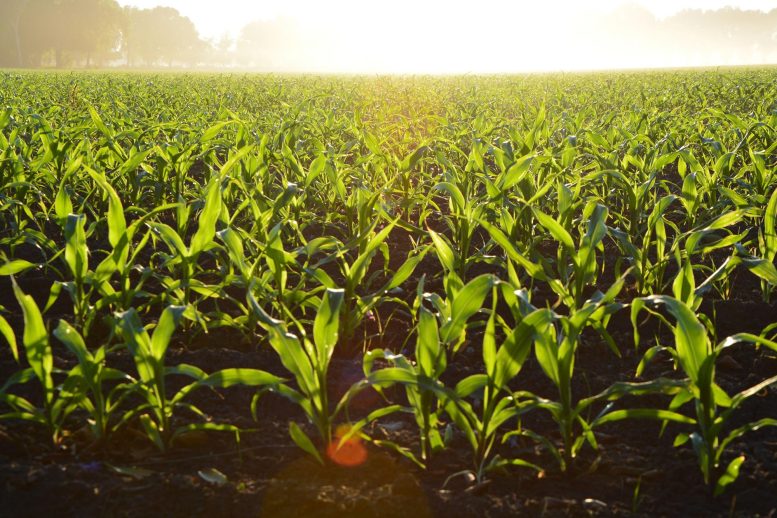
    If food losses were halved, our current resources could feed an additional one billion people.

    A newly published study in Science of the Total Environment is the first to evaluate the impact of food losses and its relationship to resources on a global scale, finding that an additional one billion people can be fed from our current resources if the food losses could be halved.

    More efficient use of the food production chain and a decrease in the amount of food losses will dramatically help maintain the planet’s natural resources and improve people’s lives. Researchers at Aalto University have proved a valid estimation, for the first time, of how many people could be fed by reducing food losses.

    The world’s population is an estimated seven billion people. An additional one billion can be fed from our current resources, if the food losses could be halved. This can be achieved if the lowest loss percentage achieved in any region could be reached globally.

    “There isn’t enough clean water everywhere on Earth. Significantly more agricultural land cannot be cleared as well as certain raw material minerals for fertilizers are running low. At the same time, a quarter of the amount of calories in produced food is lost or wasted at different stages of food production chain, which results in unnecessary resources loss,” says Matti Kummu, a post-doctoral researcher at Aalto University.

    The new study is the first to evaluate the impact of food losses and its relationship to resources on a global scale. Annually 27 m3 (7,000 gallons) of clean water, 0.031 hectares (0.077 acres) of agricultural land, and 4.3 kilos (9.5 pounds) of fertilizers per every inhabitant in the world is wasted in food losses.

    “Agriculture uses over 90 percent of the freshwater consumed by humans and most of the raw materials used in fertilizers. More efficient food production and the reduction of food losses are very important matters for the environment as well as future food security,” Kummu adds.

    Further, for the first time, the global food losses in terms of kilocalories per person were estimated.

    As a result of food loss in the food production chain, it was determined that globally 614 kilocalories per person a day are lost. Without this loss, present global food production would yield 2,609 kilocalories of edible food a day for every inhabitant in the world. Thus, by halving the food losses, we could feed 8 billion people with the currently used resources.

    This study was published in the journal Science of the Total Environment.

    Reference: “Lost food, wasted resources: Global food supply chain losses and their impacts on freshwater, cropland, and fertiliser use” by M. Kummu, H. de Moel, M. Porkka, S. Siebert, O. Varis and P. J. Ward, 29 September 2012, Science of the Total Environment.
    DOI: 10.1016/j.scitotenv.2012.08.092

    The researchers of VU University Amsterdam and the University of Bonn also participated in the research. In addition to Aalto University, the research was also funded by Maa- ja vesitekniikan tuki ry, IWT Flanders and NWO, the Netherlands Organization for Scientific Research.

    Never miss a breakthrough: Join the SciTechDaily newsletter.
    Follow us on Google and Google News.

    Aalto University Environment Food Science Population
    Share. Facebook Twitter Pinterest LinkedIn Email Reddit

    Related Articles

    Scientists Spin Food Processing Waste Into “Gold”

    Simple Changes to Animal Feed Could Supply Food for One Billion People

    Many U.S. Metro Areas Could Grow All the Food They Need Locally

    Serious Challenges From Unsustainable Food Systems: Can We Reverse Current Trends?

    Here’s How We Can Feed the World Without Wrecking the Planet – Comprehensive Solution

    Climate Change Could Shrink Wine Regions Dramatically – 85% Loss for 4°C of Warming

    Herbicide Overuse Costs UK Economy £400 Million per Year

    The Health Challenges of the Growing Class of Megacities

    Experimental Validation on How Populations Collapse

    1 Comment

    1. Madanagopal.V.C. on October 11, 2012 9:38 am

      An indirect method of green revolution is to avoid wasting food which can feed one billion additionally. A good message to be understood and followed. Thank You.

      Reply
    Leave A Reply Cancel Reply

    • Facebook
    • Twitter
    • Pinterest
    • YouTube

    Don't Miss a Discovery

    Subscribe for the Latest in Science & Tech!

    Trending News

    First-of-Its-Kind Discovery: Homer’s Iliad Found Embedded in a 1,600-Year-Old Egyptian Mummy

    Beyond Inflammation: Scientists Uncover New Cause of Persistent Rheumatoid Arthritis

    A Simple Molecule Could Unlock Safer, Easier Weight Loss

    Scientists Just Built a Quantum Battery That Charges Almost Instantly

    Researchers Unveil Groundbreaking Sustainable Solution to Vitamin B12 Deficiency

    Millions of People Have Osteopenia Without Realizing It – Here’s What You Need To Know

    Researchers Discover Boosting a Single Protein Helps the Brain Fight Alzheimer’s

    World-First Study Reveals Human Hearts Can Regenerate After a Heart Attack

    Follow SciTechDaily
    • Facebook
    • Twitter
    • YouTube
    • Pinterest
    • Newsletter
    • RSS
    SciTech News
    • Biology News
    • Chemistry News
    • Earth News
    • Health News
    • Physics News
    • Science News
    • Space News
    • Technology News
    Recent Posts
    • New Research Challenges Long-Held Beliefs About How the Brain Makes Decisions
    • Breakthrough Technology Reveals New Treatment Targets for Cancer
    • Scientists Discover New Way To Make Drug-Resistant Cancer Treatable Again
    • This Simple Exercise Trick Builds Muscle With Less Effort, Study Finds
    • Middle Age Is Becoming a Breaking Point in America, Study Reveals
    Copyright © 1998 - 2026 SciTechDaily. All Rights Reserved.
    • Science News
    • About
    • Contact
    • Editorial Board
    • Privacy Policy
    • Terms of Use

    Type above and press Enter to search. Press Esc to cancel.