
Close Menu
    Facebook X (Twitter) Instagram
    SciTechDaily
    • Biology
    • Chemistry
    • Earth
    • Health
    • Physics
    • Science
    • Space
    • Technology
    Facebook X (Twitter) Pinterest YouTube RSS
    SciTechDaily
    Home»Space»Unusual Microcrystals Discovered in Meteorite Dust
    Space

    Unusual Microcrystals Discovered in Meteorite Dust

    By SpringerAugust 3, 20221 Comment2 Mins Read
    Facebook Twitter Pinterest Telegram LinkedIn WhatsApp Email Reddit
    Share
    Facebook Twitter LinkedIn Pinterest Telegram Email Reddit
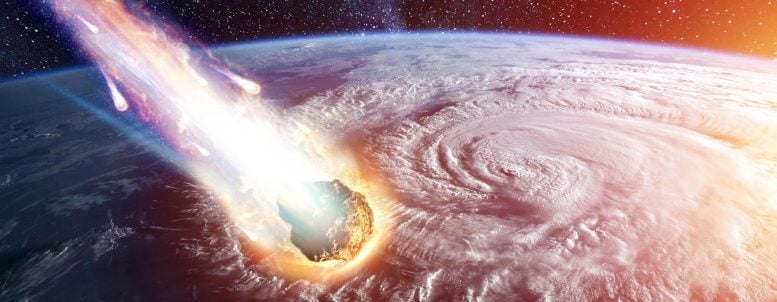
    Meteor Earth Storm
    An investigation employing X-ray crystallography and Raman spectroscopy revealed that the carbon crystals were indeed unusually formed varieties of graphite.

    Unusual carbon microcrystals found in the Chelyabinsk meteorite’s dust may offer insights into meteorite identification through their unique formation process.

    On February 15, 2013, above Chelyabinsk in Russia’s Southern Urals, the biggest meteorite that was ever seen this century entered the Earth’s atmosphere. Unusually, the meteorite’s surface dust survived its impact and is now the subject of in-depth research. Some carbon microcrystals in this dust have odd shapes. A group led by Sergey Taskaev and Vladimir Khovaylo from Chelyabinsk State University in Russia has recently published a paper on the morphology and simulations of the formation of these crystals in the European Physical Journal Plus.

    A meteor’s surface develops meteorite dust as it enters the atmosphere and is subjected to very high temperatures and tremendous pressures. The Chelyabinsk meteor was exceptional in terms of its size, the intensity of the air burst it created as it exploded, the size of the biggest pieces that fell to Earth, and the destruction it caused. More importantly, it landed on snowy terrain, and the snow helped keep the dust intact.

    Taskaev, Khovaylo, and their team first observed micrometer-sized carbon microcrystals in this dust under a light microscope. They, therefore, examined the same crystals using scanning electron microscopy (SEM) and found that they took up a variety of unusual shapes: closed, quasi-spherical shells and hexagonal rods. Further analysis using Raman spectroscopy and X-ray crystallography showed that the carbon crystals were, actually, exotically shaped forms of graphite.

    Most likely, these structures will have been formed by repeatedly adding graphene layers to closed carbon nuclei. The researchers explored this process through molecular dynamics simulations of the growth of a number of such structures. They found two ‘likely suspects’ as nuclei for microcrystal growth: the spherical fullerene (or buckminsterfullerene), C60, and the more complex hexacyclooctadecane (-C18H12-). In conclusion, Taskaev and Khovaylo suggest that classifying these crystals could help identify past meteorites.

    Reference: “Exotic carbon microcrystals in meteoritic dust of the Chelyabinsk superbolide: experimental investigations and theoretical scenarios of their formation” by Sergey Taskaev, Konstantin Skokov, Vladimir Khovaylo, Wolfgang Donner, Tom Faske, Alexander Dudorov, Nick Gorkavyi, Dmitry S. Muratov, Galina Savosteenko, Alexander Dyakonov, Woohyeon Baek, Artem Kuklin, Pavel Avramov and Oliver Gutfleisch, 7 May 2022, The European Physical Journal Plus.
    DOI: 10.1140/epjp/s13360-022-02768-7

    Never miss a breakthrough: Join the SciTechDaily newsletter.
    Follow us on Google and Google News.

    Carbon Crystals Meteorites Meteors Popular
    Share. Facebook Twitter Pinterest LinkedIn Email Reddit

    Related Articles

    Moon Rocks Challenge Long-Held Theory About the Origin of Earth’s Water

    The Stunning Meteor Shower That Has Scientists Worried

    Don’t Miss October’s Dazzling Supermoon and Twin Meteor Showers

    NASA TV Will Broadcast Perseid Meteor Shower Program

    Scientists Discover Evidence of Methane in Martian Meteorites

    Martian Meteorites Yield Clues to the Planet’s Early Atmosphere

    Scientists Discover Evidence of Water in Martian Meteorite

    High-Energy UV Radiation Triggers Methane on Mars

    Meteorite Shows Existence of Reduced Carbon on Mars

    1 Comment

    1. Marcy on August 3, 2022 1:00 pm

      I have not visited Russia in my mind’s eye so imagineing a beautiful meteorite landing in snow is fun. Peace and love marcy

      Reply
    Leave A Reply Cancel Reply

    • Facebook
    • Twitter
    • Pinterest
    • YouTube

    Don't Miss a Discovery

    Subscribe for the Latest in Science & Tech!

    Trending News

    Scientists Discover How Coffee Impacts Memory, Mood, and Gut Health

    Why Did the Neanderthals Disappear? Scientists Reveal Humans Had a Hidden Advantage

    Physicists Propose Strange Experiment Where Time Goes Quantum

    Magnesium Magic: New Drug Melts Fat Even on a High-Fat, High-Sugar Diet

    Weight-Loss Drugs Like Ozempic May Come With an Unexpected Cost

    Mezcal “Worm” in a Bottle Mystery: DNA Testing Reveals a Surprise

    New Research Reveals That Your Morning Coffee Activates an Ancient Longevity Switch

    This Is What Makes You Irresistible to Mosquitoes

    Follow SciTechDaily
    • Facebook
    • Twitter
    • YouTube
    • Pinterest
    • Newsletter
    • RSS
    SciTech News
    • Biology News
    • Chemistry News
    • Earth News
    • Health News
    • Physics News
    • Science News
    • Space News
    • Technology News
    Recent Posts
    • Blue Origin’s New Moon Lander Passes a Crucial Test for NASA Missions
    • NASA Fires Up Record-Breaking Plasma Thruster for Future Mars Missions
    • This Popular Supplement May Boost Your Brain, Not Just Your Muscles
    • What Happened in Childhood Could Be Causing Your Gut Issues Today
    • Scientists Say This Simple Supplement May Actually Reverse Heart Disease
    Copyright © 1998 - 2026 SciTechDaily. All Rights Reserved.
    • Science News
    • About
    • Contact
    • Editorial Board
    • Privacy Policy
    • Terms of Use

    Type above and press Enter to search. Press Esc to cancel.