
Close Menu
    Facebook X (Twitter) Instagram
    SciTechDaily
    • Biology
    • Chemistry
    • Earth
    • Health
    • Physics
    • Science
    • Space
    • Technology
    Facebook X (Twitter) Pinterest YouTube RSS
    SciTechDaily
    Home»Space»Using 3D Printing in Search for Black Holes
    Space

    Using 3D Printing in Search for Black Holes

    By European Space Agency (ESA)May 7, 2021No Comments3 Mins Read
    Facebook Twitter Pinterest Telegram LinkedIn WhatsApp Email Reddit
    Share
    Facebook Twitter LinkedIn Pinterest Telegram Email Reddit
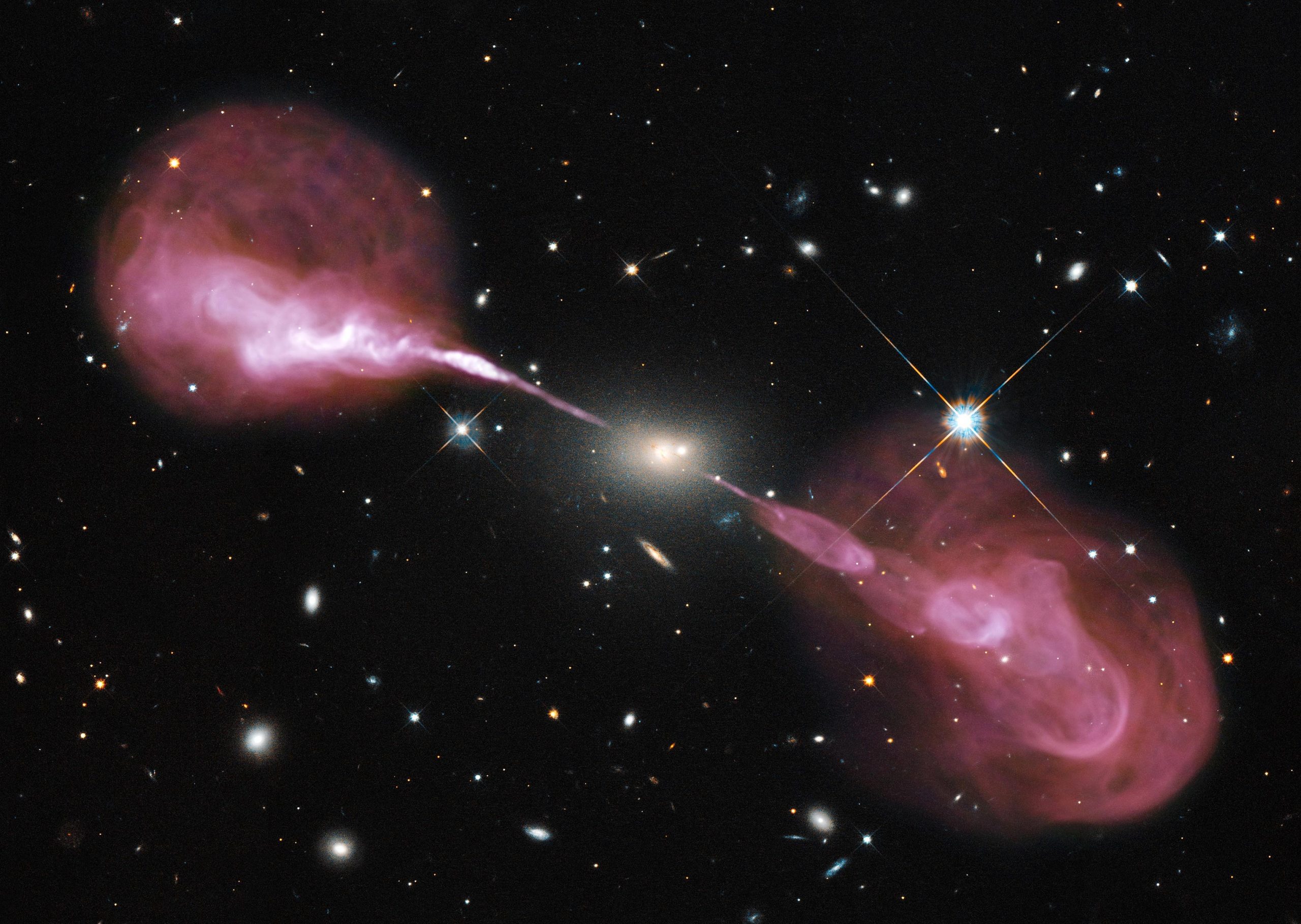
    Supermassive Black Hole in Action
    A novel 3D-printing technique called plasma metal deposition could be used to build an X-ray telescope designed to search for supermassive black holes. Credit: NASA, ESA, S. Baum & C. O’Dea (RIT), R. Perley & W. Cotton (NRAO/AUI/NSF), and the Hubble Heritage Team (STScI/AURA)

    An X-ray telescope designed to search for supermassive black holes could be built using a novel 3D-printing technique called plasma metal deposition.

    The ESA space telescope – which would also be used to map hot gas structures and determine their physical properties – is due to be launched in 2033.

    As part of a project to evaluate whether plasma metal deposition could be used to help build large structure components of the telescope – called Athena, which is short for Advanced Telescope for High-ENergy Astrophysics – Austrian company RHP Technology used the technique to manufacture six demonstrator parts.

    Building Athena’s Eye in Titanium

    The prototypes are a 3D-printed and partly processed version of what may someday become the ‘eye’ of Athena.

    Plasma metal deposition is also a candidate for manufacturing large-scale components in the future, such as Athena’s optical bench, which will align and secure around 600 mirror modules – and will be the largest part ever printed in titanium.

    The overall shape with a diameter of around 3 meters must be accurate to within a few tens of micrometers.

    ESA materials engineer Laurent Pambaguian says: “We examined the entire process chain as well as 3D printing, using titanium alloys either as metal powder or as wire material. The result has demonstrated good mechanical properties and finishing, signifying that we are capable to advance the technology, including the investigation of alternative materials.”

    RHP Technology developed the prototypes in cooperation with two other Austrian companies: AAC Aerospace and Advanced Composites; and FOTEC Forschungs und Technologietransfer.

    Cutting Waste with Additive Manufacturing

    Erich Neubauer, Managing Director of RHP Technology, says: “More than 80% of material is wasted by using a traditional method of manufacturing, which is typically milling from a block. By using our plasma metal deposition technology, we were able to demonstrate a significant material and cost saving.”

    The work was supported by ESA Space Solutions, which aims to support entrepreneurs in Europe in the development of businesses using satellite applications and space technology to improve everyday life.

    Susanne Katzler Fuchs from Brimatech, the technology transfer broker for ESA Space Solutions in Austria, says: “RHP demonstrated that large 3D parts can be printed for space applications. In the future this technology can be used for applications on Earth such as industrial, aeronautics or automotive applications.”

    Never miss a breakthrough: Join the SciTechDaily newsletter.
    Follow us on Google and Google News.

    3D Printing Astronomy Black Hole European Space Agency
    Share. Facebook Twitter Pinterest LinkedIn Email Reddit

    Related Articles

    XRISM’s X-Ray Insights Uncover the Hidden Structures of Black Holes and Supernovas

    Mystery in the Stars: Hubble Unveils Omega Centauri’s Hidden Monster

    Scientists Surprised by Sleeping Giant – Most Massive Stellar Black Hole in Our Galaxy Found Lurking Nearby

    XMM-Newton Spacecraft Detects Black Hole Winds Hindering Star Formation

    Webb Telescope Unravels Cosmic Puzzle: Galaxy Mergers Illuminate Early Universe Mystery

    Astronomy & Astrophysics 101: Black Hole

    Spiral Snapshot Hides an Astronomical Monstrosity

    Black Holes Could Be Dark Matter – And May Have Existed Since the Beginning of the Universe

    Light Echo From Behind a Black Hole Confirms Einstein’s Theory of General Relativity

    Leave A Reply Cancel Reply

    • Facebook
    • Twitter
    • Pinterest
    • YouTube

    Don't Miss a Discovery

    Subscribe for the Latest in Science & Tech!

    Trending News

    One of the Universe’s Largest Stars May Be Getting Ready To Explode

    Scientists Discover Enzyme That Could Supercharge Ozempic-Like Weight Loss Drugs

    Popular Sweetener Linked to DNA Damage – “It’s Something You Should Not Be Eating”

    Ancient “Rock” Microbes May Reveal How Complex Life Began

    Researchers Capture Quantum Interference in One of Nature’s Rarest Atoms

    “A Plague Is Upon Us”: The Mass Death That Changed an Ancient City Forever

    Scientists Discover Game-Changing New Way To Treat High Cholesterol

    This Small Change to Your Exercise Routine Could Be the Secret to Living Longer

    Follow SciTechDaily
    • Facebook
    • Twitter
    • YouTube
    • Pinterest
    • Newsletter
    • RSS
    SciTech News
    • Biology News
    • Chemistry News
    • Earth News
    • Health News
    • Physics News
    • Science News
    • Space News
    • Technology News
    Recent Posts
    • Natural Compounds Boost Bone Implant Success While Killing Bacteria and Cancer Cells
    • After 60 Years, Scientists Uncover Unexpected Brain Effects of Popular Diabetes Drug Metformin
    • New Research Uncovers Hidden Side Effects of Popular Weight-Loss Drugs
    • Scientists Rethink Extreme Warming After Surprising Ocean Discovery
    • The Surprising Role of Asteroids in the Origin of Life
    Copyright © 1998 - 2026 SciTechDaily. All Rights Reserved.
    • Science News
    • About
    • Contact
    • Editorial Board
    • Privacy Policy
    • Terms of Use

    Type above and press Enter to search. Press Esc to cancel.