

Recent research suggests the exceptional fossils from China’s Yixian Formation were preserved through natural sediment processes rather than volcanic activity, revising previous scientific assumptions.
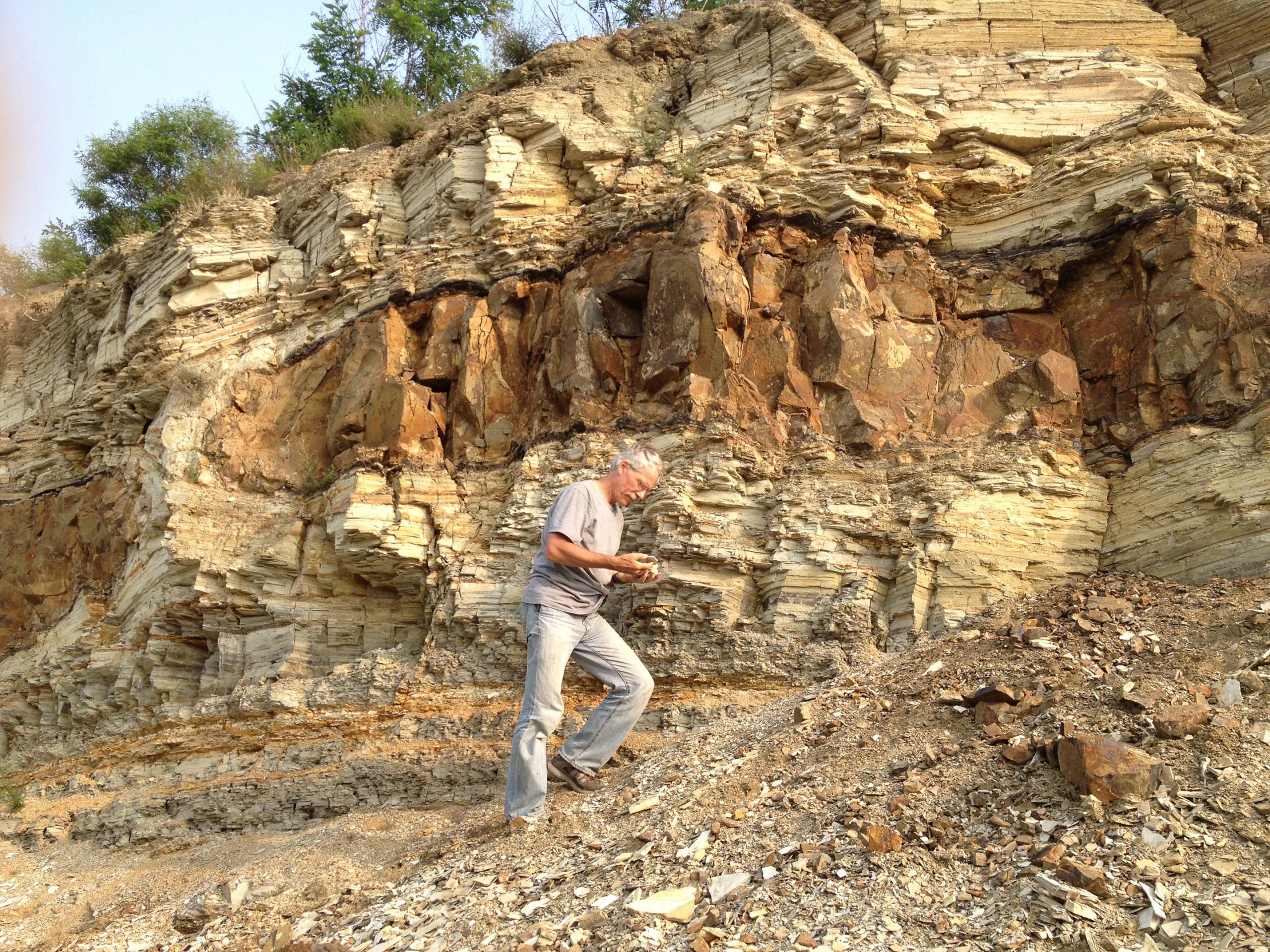
Approximately 120 million to 130 million years ago, during the age of dinosaurs, temperate forests and lakes in present-day northeast China hosted a lively ecosystem. Diverse fossils from this period remained largely undisturbed until the 1980s, when villagers began uncovering exceptionally well-preserved specimens that fetched high prices from collectors and museums, sparking a fossil gold rush. The scale of these excavations has become so extensive that they can be seen from space–possibly the largest paleontological digs on the planet.
The Yixian Formation: A Treasure Trove of Prehistoric Life
By the 1990s, it became apparent that the region, known as the Yixian Formation, was home to remarkably well-preserved fossils of dinosaurs, birds, mammals, insects, frogs, turtles, and other species. Unlike the skeletal and often fragmentary fossils unearthed elsewhere, many specimens included internal organs, feathers, scales, fur, and stomach contents, indicating an unusual and sudden preservation process. Among these finds were a cat-size mammal and a small dinosaur locked in mortal combat, stopped in mid-action when they died.
The site also yielded the world’s first known non-avian feathered dinosaurs, some so intact that scientists could determine the feathers’ colors. The discoveries revolutionized paleontology, clarifying the evolution of feathered dinosaurs and confirming that modern birds are their descendants.
Reassessing Fossil Preservation Theories
Previously, it was hypothesized that the remarkable preservation of these fossils could be attributed to a sudden burial by volcanism, perhaps like the waves of hot ash from Mt. Vesuvius that entombed many citizens of Pompeii in A.D. 79. As a result, the Yixian deposits have been popularly dubbed the “Chinese Pompeii.”
However, a new study published in the Proceedings of the National Academy of Sciences has debunked this theory. Instead, it suggests the creatures were preserved by more mundane events including collapses of burrows and rainy periods that built up sediments that buried the dead in oxygen-free pockets. Earlier studies have suggested that multiple Pompeii-type events took place in pulses over about a million years. The current study uses newly sophisticated technology to date the fossils to a compact period of less than 93,000 years when no notable events occurred.
“These are probably the most important dinosaur discoveries of the last 120 years,” said study coauthor Paul Olsen, a paleontologist at the Columbia Climate School’s Lamont-Doherty Earth Observatory. “But what was said about their method of preservation highlights an important human bias. That is, to ascribe extraordinary causes, i.e. miracles, to ordinary events when we don’t understand their origins. These [fossils] are just a snapshot of everyday deaths in normal conditions over a relatively brief time.”
Revolutionary Findings and Techniques
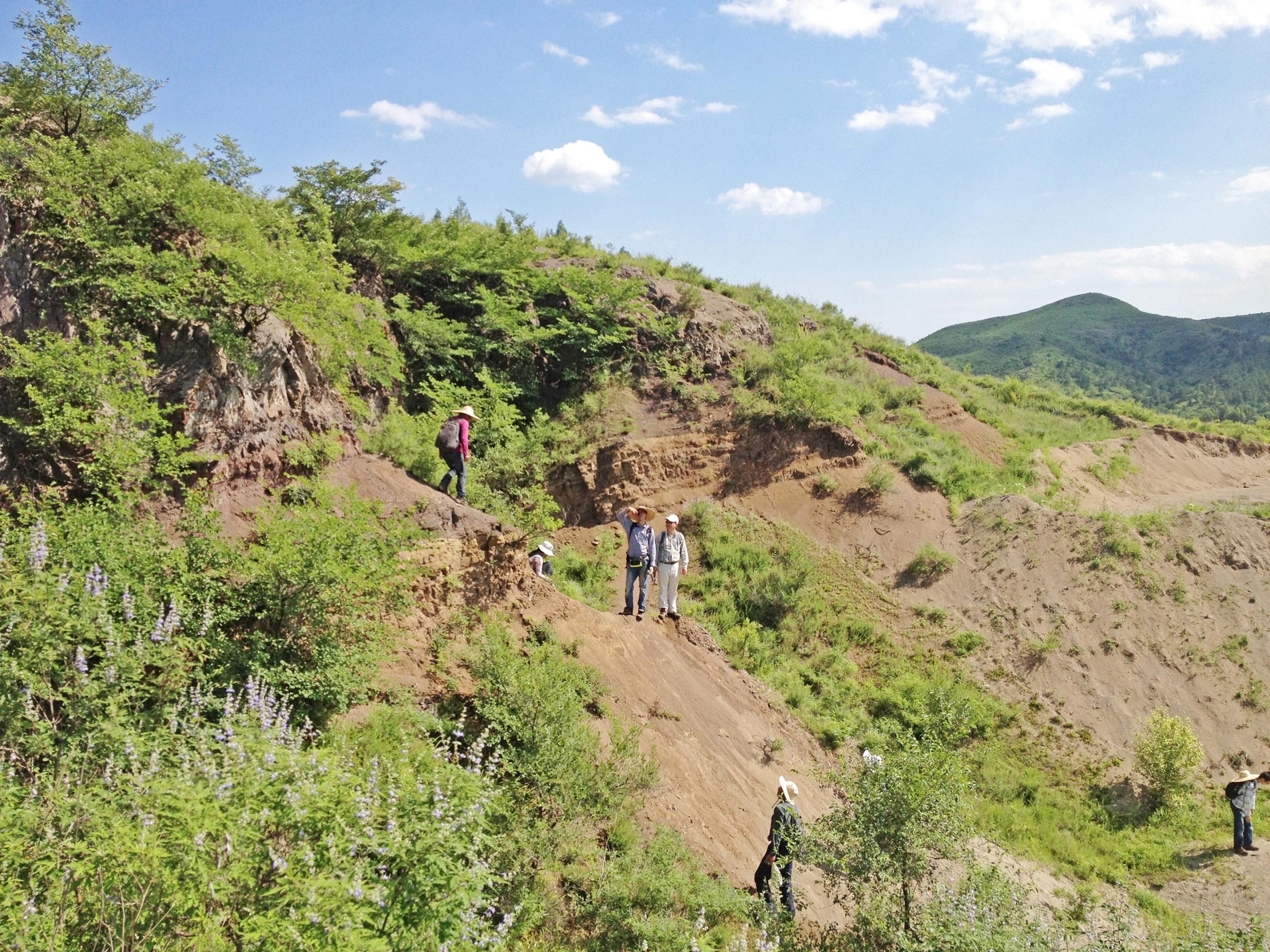
The Yixian Formation fossils come in two basic varieties: intact, perfectly articulated 3D skeletons from deposits formed mainly on land, and flattened but highly detailed carcasses found in lake sediments, some containing soft tissues.
To come up with fossil ages, the study’s lead author, Scott MacLennan of South Africa’s University of the Witwatersrand, analyzed tiny grains of the mineral zircon, taken from both surrounding rocks and the fossils themselves. Within these, he measured ratios of radioactive uranium against lead, using a new, extremely precise method called chemical abrasion isotope dilution thermal ionization mass spectroscopy, or CA-ID-TIMS. The fossils and surrounding material consistently dated to 125.8 million years ago, centered around a period of less than 93,000 years, though the exact number is not clear.
Further calculations showed that this timeframe contained three periods controlled by variations in the Earth’s orbit when the weather was relatively wet. This caused sediments to build up in lakes and on land far more rapidly than previously had been thought. Many deceased creatures were quickly buried, and oxygen that normally would fuel decomposition was sealed out. The sealing effect was fastest in lakes, resulting in the preservation of soft tissues.
The researchers rule out volcanism on multiple counts. Some previous studies have suggested that creatures were encased by lahars, fast-moving concrete-like slurries of mud that flow off volcanoes following eruptions. But lahars are extremely violent, said Olsen, and apt to rip apart any living or dead thing they encounter, so this explanation does not work.
Others have said pyroclastic flows―fast-moving waves of searing ash and poisonous gases á la Mt. Vesuvius―were responsible. These struck down residents of Pompeii, then wrapped the bodies in protective layers of material that preserved them as they were at the moment of death. Even when remains decayed, voids in the ashes remained, from which investigators have made lifelike plaster casts. The remains characteristically are curled in so-called pugilistic positions, torturously doubled over and with limbs severely drawn up, as blood boiled and bodies crumpled in the explosive heat. Victims of modern fires exhibit similar poses.
While there are in fact layers of volcanic ash, lava, and intrusions of magma in the Yixian Formation, the remains there don’t match those of the unfortunate Pompeiians. For one thing, feathers, fur, and everything else would almost certainly have been burned in a pyroclastic flow. For another, the dinosaurs and other animals are not in pugilistic positions; rather, many are found with arms and tails tucked cozily around their bodies, as if they were sleeping, perhaps dreaming dinosaur dreams, when death found them.
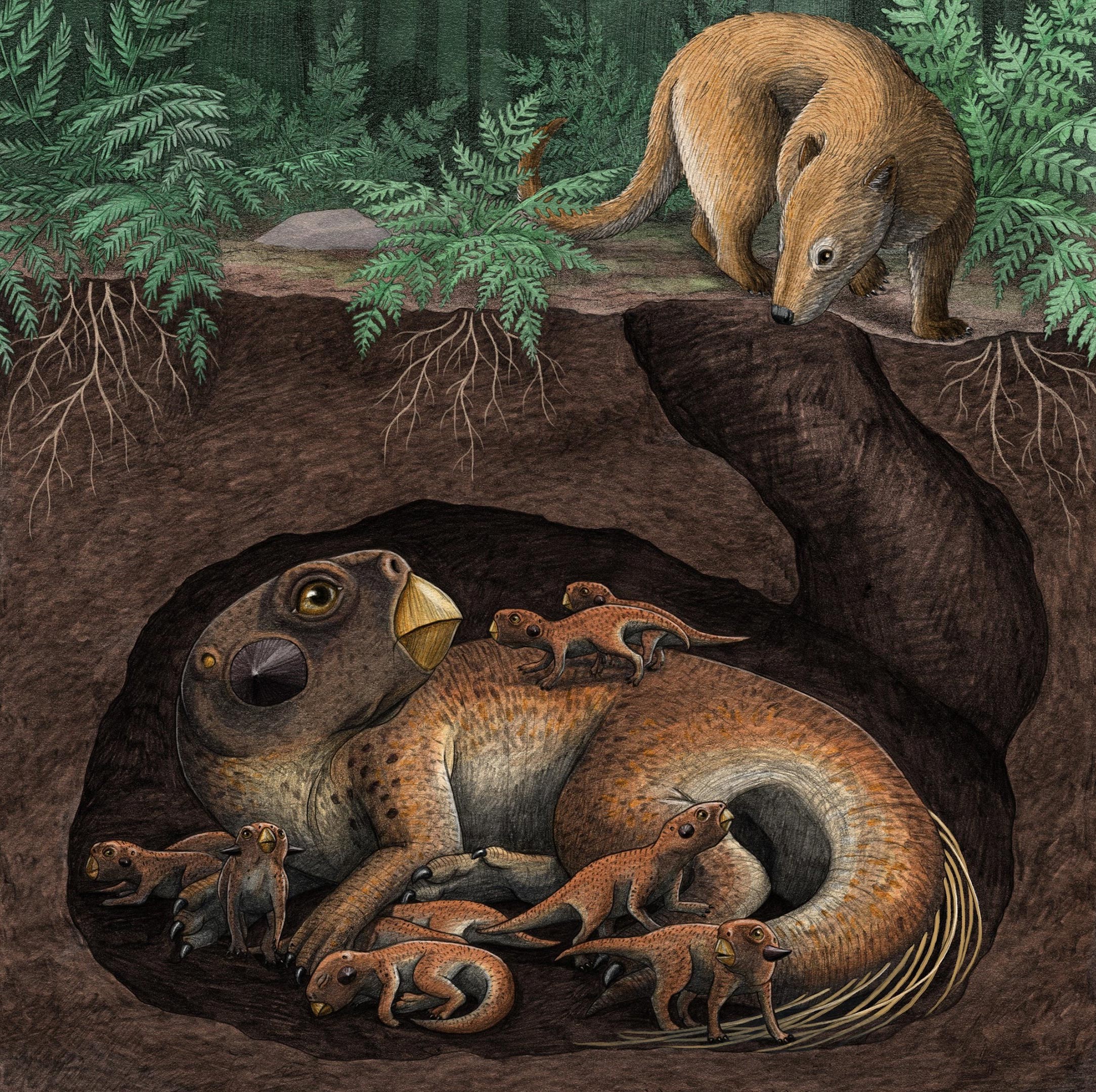
The evidence points instead to sudden burrow collapses, say the researchers. Cores of rock surrounding the skeletonized fossils generally consist of coarse grains, but grains immediately around and within the skeletons tend to be much finer. The researchers interpret this to mean that there was enough oxygen around for a while for bacteria or insects to degrade at least the animals’ skin and organs, and as this happened, whatever fine grains were in the surrounding material preferentially seeped in and filled the voids; the more decay-resistant bones remained intact. Even today, burrow collapses are a common cause of death for birds such as penguins, said Olsen. The frozen-in-time mammal-dinosaur battle may well have happened as the mammal invaded the dinosaur’s burrow to try and eat it or its babies, he said.
As to what caused the burrow collapses, this is speculation, he said. One thought: bigger dinosaurs (whose remains don’t appear here but who were almost certainly around) could have squished burrows simply by tromping around. Exceptionally rainy times could have helped destabilize the ground.
Implications for Other Potential Sites
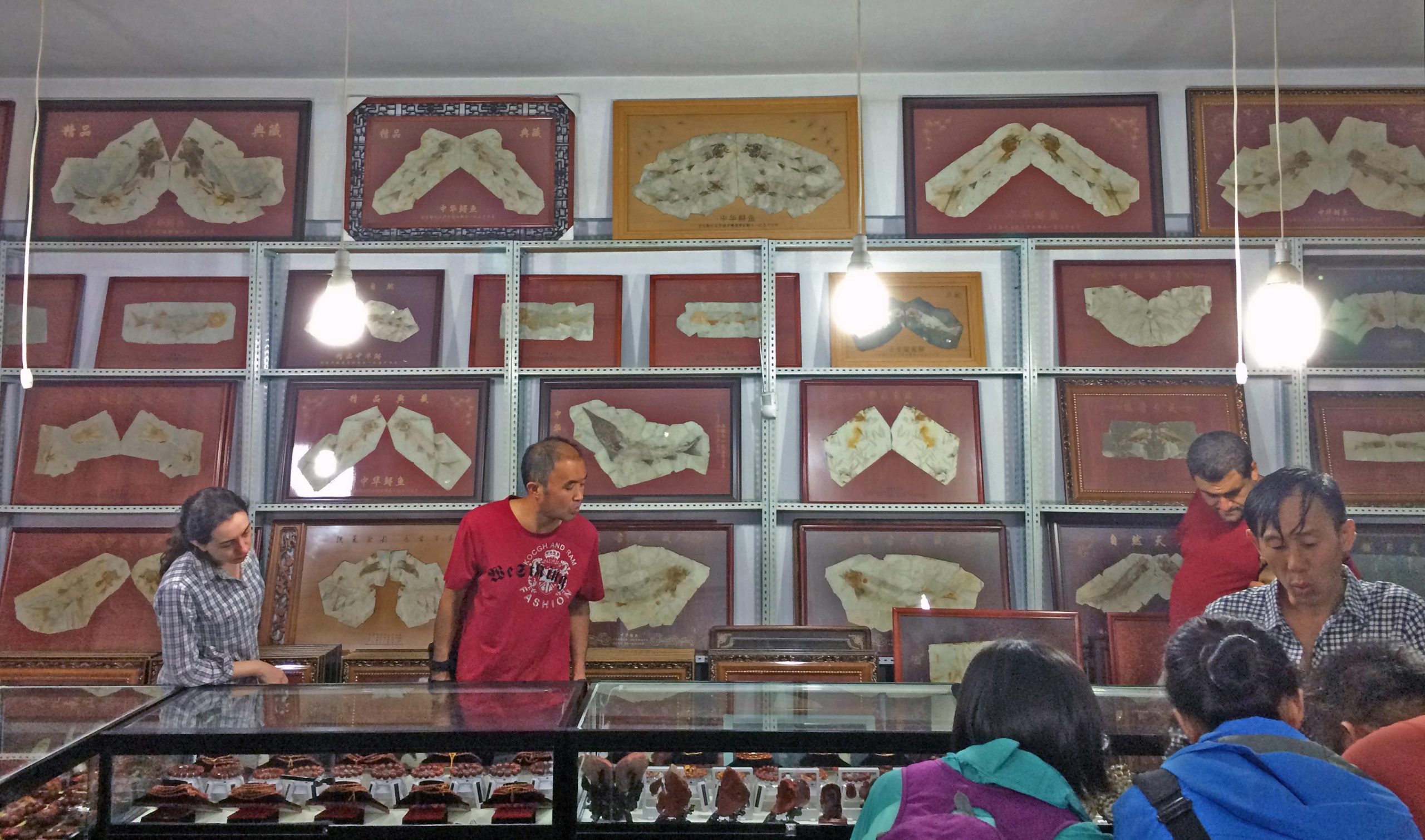
Olsen believes the Yixian Formation is not unique. “It’s just that there is no place else where such intense collecting has been done in this kind of environment,” he said. China has tried to limit for-profit fossil sales, but the market is still thriving, and huge government resources are going into the development of tourism around the fossil sites.
Olsen’s personal Holy Grail is feathered dinosaurs, but these are exceedingly rare even in the richest deposits, he pointed out. “You have to dig out, say, 100,000 fish to find one feathered dinosaur, and no one is digging on the Yixian scale,” he said. Just in the eastern United States, several places that once had environments similar to the Yixian could yield such fossils, Olsen said. These include a rock quarry straddling the North Carolina-Virginia border where he has found thousands of perfectly preserved insects; sites in Connecticut where small excavations have shown promise; and a former quarry in North Bergen, N.J., now sandwiched between a highway and a strip mall that in the past yielded fabulously preserved fish and reptiles. Systematic excavations of such spots are more or less the size of a bathroom, he said.
“It takes enormous effort, which is expensive. And land is valuable in these areas,” he said. “So no one is doing it. At least not yet.”
The study was coauthored by Sean Kinney and Clara Chang of Lamont-Doherty Earth Observatory, and researchers from the Nanjing Institute of Geology and Paleontology, the Institute of Paleontology and Paleoanthropology at the Chinese Academy of Sciences, and Princeton University.
Reference: “Extremely rapid, yet noncatastrophic, preservation of the flattened-feathered and 3D dinosaurs of the Early Cretaceous of China” by Scott A. MacLennan, Jingeng Sha, Paul E. Olsen, Sean T. Kinney, Clara Chang, Yanan Fang, Jun Liu, Bennett B. Slibeck, Elaine Chen and Blair Schoene, 4 November 2024, Proceedings of the National Academy of Sciences.
DOI: 10.1073/pnas.2322875121
Never miss a breakthrough: Join the SciTechDaily newsletter.
Follow us on Google and Google News.
6 Comments
Crocodilian do not have feather like all dinosaur modern crocodilian is the last surviving dinosaur a spinosauridae dinosaur allso call mesoeucrocodylia.there are no links between bird and a gator the gator is a thecodont which mean crocodilian teeth like dinosaur teeth the thecodontia.insulation feather is not needed in modern crocodilian they are cold hardy they are native to artic weather North Carolina they are diverse that can live in desert the night are very cold that why house cat live in many place they said that a million time.so modern crocodilian primitve ancestor the dinosaur have these features too they can live in subtropic or artic weather like today dinosaur modern crocodilian
In time of primitive dinosaur it was subtropic it could be like Miami or North Carolina so we do not know if they will survive extreme artic weather found in Pennsylvania today dinosaur the gator survive many winter in Pennsylvania a feral gator later was shot .since gator is a dinosaur there primitive ancestor can survive Pennsylvania too.on YouTube a gator playing in the snow the pond was heated but snowy land was not this was on Colorado news
Modern crocodilian is not like other reptiles it’s more simular to mammal that why it can survive cold desert night in its native land.all modern crocodilian are cold hardy because they are descendant of Nile crocodile the desert night weather.all are dinosaur too.they are fossil of gator in Canadian island.allways was a bias of crocodilian as dinosaur by history so stop throwing your pet gator in Alaska they will survive and no modern crocodilian should be a pet they are too fast and dangerous .dinosaur should not be a pet .why would you want the most dangerous dinosaur as a pet modern crocodilian should be ban as a pet.ban spinosauridae as a pet
The usagator salt glands does not work but closes relative the China gator live in China they got there by Alaska when they were a bridge a land bridge .because it has cold blooded primitive nose like spinosaurus and t.rex most modern crocodilian has a warm blooded nose the South American gator the caiman has warm blooded nose like great Nile crocodile the dwarf crocodile is like the usa gator .the usa gator choose bite force over more oxygen to the muscle all modern crocodilian have advance pubis hip to take in more oxygen so they do not need a mammal nose.usa gator is more advance than the the Nile crocodile .the warmblooded nose is not fuse in the bony skull.mammal and Nile crocodile only one nose hole in the skull
The primitive reptile the dinosaur and tuatara and lizard have 2 nose hole in the skull.is dinosaur warmblooded like there great descendants the great modern crocodilian of course they have mobile hip like the gator the advance once they have digitigrade toes like mammal they are the same animal of course modern crocodilian is king of dinosaur and are responsible for there death as Darwin says the strong will survive.modern crocodilian are responsible for early mesoeucrocodylia death the early eusuchian mesoeucrocodylia death the last spinosauridae dinosaur is king they have superior technology
How can I take this story serious they believe in feather dinosaur i mite believer the other story .protofeather no won know how protofeather looks like it is theory this is same protofeather found in today sea snakes and dolphin who is bias.?and they do not believe that spinosauridae is a fully form mesoeucrocodylia